


 效果预览
效果预览
 分享
分享 分享
分享
 详情
详情 指南
指南

 下载
下载
 相似作品
相似作品 X射线
X射线 幻灯片播放
幻灯片播放 统计数据
统计数据The Outsider
 Expressionism
 100.0 x 50.0 cm
 Barjeel Art Foundation
 展开详情
展开详情
手工油画复制品
由我们的艺术家按需定制,为您提供您所选尺寸及画框的布面手工油画。 ( 切换至版画销售渠道 切换至数字图像销售渠道)




































从与原作比例一致的预设尺寸中进行选择。

您可以输入自定义尺寸,以适配特定的画框或空间。如果所选尺寸与原图比例不符,我们将通过裁剪作品或添加手绘元素来扩展画面。数字样稿将在制作开始前发送给您确认。
请注意,屏幕预览无法准确反映实际的裁剪或扩展效果,只有样稿才能真实呈现最终的构图。
虽然我们提供定制尺寸服务,但为了保留原作比例,建议您从预设列表中选择尺寸。
下单后,ArtsDot.com 团队将通过电子邮件联系客户获取具体要求,并提供效果预览图。


 玻璃选项仅适用于110厘米以下的尺寸。

The Outsider
复制材质
复制品尺寸
-


最终总价
$ 263
相似艺术品


艺术家简介
Early Life and Artistic Foundations
Nazir Nabaa, born in Damascus, Syria, in 1938, emerged as a pivotal figure in the landscape of modern Syrian art—an artist whose work eloquently bridges the ancient visual heritage of his homeland with the currents of contemporary thought. His early life was steeped in the traditions of a simple, familial existence; his father’s diverse occupations and his mother's artistry as an embroiderer provided fertile ground for Nabaa’s nascent creativity. Even as a young boy, he demonstrated a remarkable inclination towards visual expression, adorning his mother’s embroidery with imaginative flourishes that hinted at the symbolic depth to come. This early encouragement, particularly from his professor Nazem al-Jaafari, culminated in a competitive exhibition showcasing a watercolor work when Nabaa was just fourteen years old—a testament to his innate talent and burgeoning artistic vision.
Nabaa’s formal training began in 1959 at the College of Fine Arts in Cairo, a period coinciding with the United Arab Republic. This formative experience exposed him to a vibrant artistic milieu and introduced him to influential figures like Hussein Bicar, Hamid Nada, and Abdel Hadi Al-Gazzar, whose guidance helped refine his painting techniques. He found resonance within Egyptian art, viewing it as a close cultural counterpart to Syria, and developed a style rooted in heroic realism, often focusing on themes of social justice and labor.
A Synthesis of Tradition and Modernity
Returning to Syria in 1964, Nabaa embarked on a period of exploration and pedagogical engagement. Teaching drawing in the remote schools of Deir Ezzor allowed him to immerse himself in the region’s rich history, particularly the remnants of Sumerian civilization. This immersion profoundly impacted his artistic trajectory, leading him away from strict realism towards a more rebellious, expressionistic style imbued with contemplative depth. His first solo exhibition in Damascus in 1965 marked a turning point, showcasing works inspired by the rugged landscapes and ancient narratives of Deir Ezzor—a bold statement that resonated within the local art scene.
The subsequent move to Damascus in 1968 saw Nabaa become deeply involved in politically charged creative projects. He lent his artistic talents to progressive causes, designing posters, contributing to puppet theater, and engaging in critical discourse about art’s role in social mobilization. This period underscored a commitment to using art as a vehicle for change—a theme that would continue to permeate his work throughout his career.
Parisian Refinement and Mature Style
From 1971 to 1974, Nabaa pursued further studies at the École Nationale Supérieure des Beaux-Arts in Paris. This experience broadened his artistic horizons, exposing him to new techniques and perspectives while simultaneously reinforcing his commitment to blending ancient visual culture with modern themes. Upon returning to Damascus, he joined the faculty of the College of Fine Arts at Damascus University, dedicating himself to nurturing a new generation of Syrian artists.
Nabaa’s mature style is characterized by its evocative symbolism and masterful use of color and texture. His best-known works often feature depictions of Arab women set against rich Oriental backdrops—archetypal representations that serve as potent symbols of homeland, history, and national identity. As regional conflicts intensified, his subject matter evolved to address pressing political issues such as the Palestinian crisis, the Lebanese Civil War, and the American invasion of Iraq.
Recognition and Legacy
Throughout his career, Nazir Nabaa received numerous accolades for his artistic achievements. He was honored with the Judges Panel’s Award at the Alexandria Biennial in 1968, a Diploma at the Bratislava International Exhibition in 1979, and another Judges Panel’s Award at the Cairo International Biennial in 1995—testaments to his growing international recognition. His work has been exhibited at prestigious institutions such as the Jordan National Gallery of Fine Arts and is held in prominent collections including those of Jalanbo Collection, Barjeel Art Foundation and Dalloul Art Foundation.
Nazir Nabaa passed away in 2016, leaving behind a rich artistic legacy that continues to inspire. He is remembered as a pioneer of modern Syrian art—an artist who fearlessly explored the complexities of his cultural heritage while remaining deeply engaged with the social and political realities of his time. His paintings are not merely aesthetic objects; they are powerful statements about identity, history, and the enduring human spirit.

nazir nabaa
1938 - 2016 , Syrian Arab Republic
艺术家简介
- Artistic Movement Or Style: Modern Syrian art
- Date Of Birth: 1938
- Date Of Death: 2016
- Full Name: Nazir Nabaa
- Nationality: Syrian
- Notable Artworks: ['The Outsider']
- Place Of Birth: Damascus, Syria
相关文章

The Enduring Legacy of Oil on Canvas: Technique, History & Aesthetic Impact
Explore the rich history & techniques of oil painting – from Renaissance masters to Impressionism. Discover pigments, layering methods, and why this timeless medium endures. Expert insights for artists & art enthusiasts.

画布上的流光溢彩:油画技法、历史沿革与当代实践
深入探索油画技法的历史沿革,从文艺复兴到卡拉瓦乔的革命性创新。了解多层涂布技术如何塑造色彩与光影,并洞悉当代油画实践中的传统与突破。ArtsDot为您提供专业的艺术品咨询和定制服务。

Oil on Canvas: A Historical & Technical Exploration of a Timeless Artistic Medium
Explore the rich history & enduring techniques of oil painting on canvas. Discover the science behind its longevity, conservation practices, and contemporary relevance. Expert insights for art enthusiasts.

The Enduring Power of Painting: A Historical & Contemporary Exploration of Form and Emotion
Explore the rich history & enduring techniques of oil painting with ArtsDot. Discover masterpieces, learn about art collecting, and find authentic handmade reproductions crafted by skilled artists.
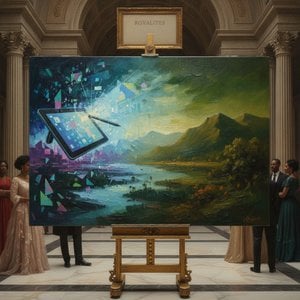
将数字艺术升华为手绘油画,凭借ArtsDot实现高额版税与精品复制品的轻松售卖
ArtsDot以专业手绘油画复制技术,将数字艺术与NFT作品转化为博物馆级精品,兼具高端美感与可观版税收益。我们提供定制肖像、限量版复制及全球物流保障,让您在家中拥有可信赖的艺术传承与投资价值。