

 实景预览

 分享
 分享
 详情
 指南


 下载作品
 相似作品
 X射线
 幻灯片播放
 问答
 统计数据
My Reflection

- 91.0 x 65.0cm

 展开全文
艺术微喷/版画
博物馆级艺术微喷或帆布版画,制作高效,并提供多种饰面选择。 ( 订购纯手工绘制画作 切换至数字图像销售渠道)




































您可以从与原作比例一致的预设尺寸中进行选择。

请输入您所需的宽度和高度,以适配您的画框或墙面。由于印刷品只能进行裁剪,无法超出原图尺寸,因此若比例不一致,画面的一部分将会被裁切。在正式印刷之前,我们会为您发送一份数字效果图供您确认。本页面显示的图片并非最终裁剪后的效果——只有效果图才能展示真实的裁剪情况。


 玻璃选项仅适用于110厘米以下的尺寸。

My Reflection
艺术微喷/版画
复刻品尺寸
-


最终结算价
¥ 421
相似作品


艺术家简介
Early Life, Family and Training
Alexander Demetrius Goltz was born on 25 January 1857 in Püspökladány. He was the son of a railway engineer, a background that suggests a structured upbringing before his move to the urban center of Vienna. After the age of two, his life became centered in Vienna, the city that would define his professional identity as an artist of Austria-Hungary and later Austria.
His formal training followed a rigorous path through the most significant academies of the era. Between 1874 and 1875, he studied under Otto Seitz at the Academy of Fine Arts in Munich. This period of instruction provided a technical foundation before he transitioned to the Academy of Fine Arts in Vienna. There, he became a student of Anselm Feuerbach, a connection that placed him directly within the academic traditions of the time.
Artistic Career and Travels
Goltz’s trajectory was defined by a constant movement between the major European art centers. After his initial training, he spent significant time in Munich from 1884 to 1888. This period of residency was followed by a move to Paris, where he studied under Pierre Puvis de Chavannes. Such exposure to the French academic tradition clearly informed his technical approach. He eventually returned to Vienna in 1892, bringing with him a refined perspective shaped by these diverse urban environments.
His stylistic evolution shows a decisive shift in subject matter. He began his career focused on history painting, a demanding genre that required rigorous composition and narrative clarity. However, his later output moved away from these grand historical themes. He eventually turned his attention to landscapes and portraits, demonstrating a versatility that allowed him to navigate different market demands. This transition from the monumental to the observational is evident in his varied subject matter.
- Christ and the Women (1885)
- Breton Coast (1900)
- My Reflection (1910)
Theatrical and Scenic Design Work
Goltz’s influence extended far beyond the canvas and into the physical architecture of the stage. Between 1904 and 1907, he managed the scenic equipment at the Burgtheater, a role that required a precise understanding of space and visual impact. This technical expertise was not merely a secondary pursuit; it was a central component of his professional identity in Vienna. He later transitioned to the Vienna State Opera, holding a similar position from 1909 to 1910.
His proximity to the theatrical world naturally led to a series of portrait commissions. While working within these institutions, he captured the likenesses of numerous performers, documenting the faces of the era's stage talent. His portrait of Josef Kainz remains a notable example of this period, reflecting the intersection of his scenic sensibilities and his skill as a portraitist.
Affiliations and Military Service
Goltz’s professional standing was cemented early through his institutional connections. Following his first exhibition in 1876, he secured membership in the Vienna Künstlerhaus. This was not a mere formality; it established his presence within the central nervous system of the Austrian art scene. Later, his influence expanded through the Hagenbund, where he was a member from 1900 to 1911. His leadership within this group was absolute during the 1906/07 term when he served as its President.
The First World War forced a shift from the studio to the front lines. Goltz functioned as a battle painter for the Imperial Kriegspressequartier, a role that demanded direct observation of conflict. He moved through several active theaters of war, documenting the realities of the era. His work from this period took him to the fronts in Belgium, Russia, Italy, Serbia, and Turkey. These paintings, many of which are now held in the Museum of Military History, provide a stark, unvarnished record of the conflict.
Later Years and Death
The final decade of Goltz's life was marked by institutional leadership and shifting civic identity. Between 1925 and 1929, he held the presidency of the Artists' Cooperative at the Künstlerhaus. This period of administrative influence coincided with his formal transition into Viennese citizenship in 1927. His personal life was defined by two marriages; his second wife was Mary Mell, the sister of the writer Max Mell.
Goltz died in Vienna on 14 May 1944. He is buried at the Zentralfriedhof. His presence in the city's history remains anchored to these final years of professional governance and personal settlement.

Alexander Demetrius Goltz
1857 - 1944 , Hungary
艺术家简介
- Artists Who Influenced This Artist:
- Otto Seitz
- Anselm Feuerbach
- Pierre Puvis de Chavannes
- Full Name: Alexander Demetrius Goltz
- Nationality: Austria-Hungary, later Austria
- Notable Artworks:
- Christ and the Women
- Breton Coast
- My Reflection
- Place Of Birth: Püspökladány, Hungary
- Date Of Birth: 1857
- Date Of Death: 1944
相关文章

Evoking Yesterday: 10 Nostalgic Artworks for Timeless Home Decor |
Journey back in time with 10 iconic artworks evoking nostalgia. Explore romanticism, impressionism & timeless landscapes by masters like Monet & Renoir. Find museum-quality art reproductions and decor inspiration at – Discover all masterpieces online!

The Echo of Self: Reflectivity as a Core Theme in Art History & Contemporary Practice
Explore the rich history of self-representation in art, from Renaissance masters to modern innovators. Discover how artists use portraiture to reveal identity, emotion & the depths of the human psyche. Expert insights for collectors.

Kuzma Petrov-Vodkin: A Pioneer of Russian Spiritual Symbolism & the Avant-Garde
Explore the captivating world of Kuzma Petrov-Vodkin, a pivotal figure in Russian avant-garde and spiritual symbolism. Discover his iconic works, unique style & lasting influence on 20th-century art.
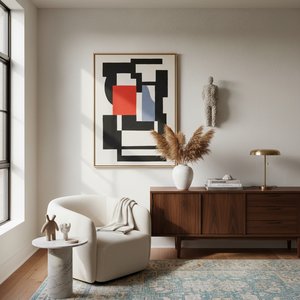
Modern Masters: 10 Defining Artworks & Timeless Home Decor Inspiration
Explore 10 defining masterpieces of early modern art – from Picasso & Matisse to Dalí! Discover the stories behind iconic paintings, movements like Cubism & Surrealism. Find museum-quality art reproductions for your home at ArtsDot.com.

Reflective Art: 10 Masterpieces for Contemplation |
Explore 10 iconic artworks – from Van Gogh to Rembrandt – that stir deep reflection. Discover their stories, techniques & emotional power. Find museum-quality art reproductions and curated decor ideas at . Explore the full collection online.