


 效果预览
效果预览
 购买印刷品
购买印刷品 分享
分享 分享
分享
 详情
详情

 下载
下载
 相似作品
相似作品 X射线
X射线 幻灯片播放
幻灯片播放David


 展开详情
展开详情




P118B $10

P118H $10

P118W $10

P438Z $10

P508JH $12

P508YH $12

P805H $10

P805Z $10

P919BZ $10

P919G $10

P919XJ $10

P959ZH $10

P968JZ $12

W106C $8

W218G $10

W218JH $8

W218Y $10

W307PJ $10

W316G $10

W316PJ $8

W316Y $10

W398PJ $8

W4111J $10

W500HY $15

W500JH $15

W692G $12

W849H $8

W940BG $15

W953PJ $8




从与原作比例一致的预设尺寸中进行选择。

您可以输入自定义尺寸,以适配特定的画框或空间。如果所选尺寸与原图比例不符,我们将通过裁剪作品或添加手绘元素来扩展画面。数字样稿将在制作开始前发送给您确认。
请注意,屏幕预览无法准确反映实际的裁剪或扩展效果,只有样稿才能真实呈现最终的构图。
虽然我们提供定制尺寸服务,但为了保留原作比例,建议您从预设列表中选择尺寸。
下单后,ArtsDot.com 团队将通过电子邮件联系客户获取具体要求,并提供效果预览图。


 玻璃选项仅适用于110厘米以下的尺寸。

David
复制材质
复制品尺寸
-


最终总价
$ 263
A Colossus of the Renaissance: Michelangelo’s David
Michelangelo’s *David*, sculpted between 1501 and 1504, is arguably the most recognizable sculpture in the world – a breathtaking embodiment of High Renaissance ideals. Standing at an imposing 5.17 meters (17 feet) tall, this marble masterpiece transcends mere representation; it *is* power, beauty, and human potential realized in stone. Originally intended for Florence Cathedral as part of a series depicting Old Testament prophets, its placement before the Palazzo della Signoria – the seat of Florentine government – transformed it into a potent symbol of civic pride and republican values. Today, it resides within the protective walls of the Galleria dell'Accademia in Florence, continuing to inspire awe in countless visitors.Subject & Historical Context
The sculpture depicts David, the biblical hero who famously slew Goliath. However, Michelangelo’s interpretation diverges from earlier depictions which typically showed David *after* his victory, often with Goliath’s severed head at his feet. Instead, Michelangelo captures David in a moment of intense concentration *before* battle – a psychological portrait brimming with contained energy and resolve. This choice was deliberate. Florence, a small republic surrounded by powerful rivals and the looming threat of the Medici family's return, identified strongly with David’s underdog status and his courageous defense of liberty. The statue became an emblem of Florentine independence and strength in the face of adversity.Style & Technique
*David* is a quintessential example of High Renaissance sculpture. Michelangelo masterfully employed *contrapposto*, a classical technique where the weight of the body is shifted to one leg, creating a naturalistic S-curve and imbuing the figure with dynamic potential. His anatomical accuracy is astonishing – every muscle, vein, and tendon meticulously rendered in marble. This dedication to realism wasn’t merely about imitation; it was about celebrating the beauty and perfection of the human form, reflecting Renaissance Humanist philosophy. The surface polish is remarkable, creating a luminous quality that seems to bring the stone to life. Michelangelo's skill lay not only in carving but also in *revealing* the figure already present within the block of marble – as he himself described it.Symbolism & Emotional Impact
Beyond its political connotations, *David* is rich with symbolic meaning. His nudity alludes to classical ideals of heroism and vulnerability. The sling draped over his shoulder and the stone held in his right hand are subtle yet powerful indicators of his impending action. But perhaps most striking is David’s gaze – focused, determined, and slightly apprehensive. This expression conveys not just physical strength but also intellectual and moral courage. The sculpture evokes a profound emotional response: admiration for its beauty, respect for its power, and contemplation of the human condition.A Legacy in Stone
Michelangelo’s *David* has been endlessly replicated throughout history – in plaster, fiberglass, even snow! However, none can truly capture the majesty and emotional depth of the original. Its influence on subsequent generations of artists is immeasurable. For those seeking to bring a touch of Renaissance grandeur into their spaces, a meticulously crafted reproduction offers an opportunity to own a piece of art history. At ArtsDot, our skilled artisans create handmade oil painting reproductions that faithfully capture the essence and beauty of Michelangelo’s masterpiece, ensuring a lasting tribute to this iconic work. Key Features:- Sculpted from a single block of Carrara marble.
- Exemplifies High Renaissance ideals of humanism and anatomical accuracy.
- Originally commissioned for Florence Cathedral, later became a symbol of Florentine Republic.
- Now housed in the Galleria dell'Accademia, Florence.


艺术家简介
米开朗基罗·博纳罗蒂:文艺复兴的化身
米开朗基罗·博纳罗蒂,一个与文艺复兴时期紧密相连的名字,几个世纪以来,他的名字代表着人类艺术潜力的巅峰。1475年3月6日出生于托斯卡纳山丘中的卡普雷塞·米开朗基罗,他的一生是天赋、雄心和神圣灵感的非凡结合。尽管最初他的父亲对他的艺术道路表示抵制,但年轻的米开朗基罗天生的绘画天赋是不容否认的,这使他踏上了重新定义雕塑、绘画和建筑界限的道路。他在多梅尼科·吉兰达伊欧手下的早期学徒生涯为他在壁画和素描方面提供了坚实的基础,但真正点燃了他艺术灵魂的是在美第奇花园中——一个古典时代的天堂。沉浸在对希腊罗马雕塑的研究中,米开朗基罗吸收了成为他风格标志的解剖学、比例和理想美的原则。这个形成期的不仅仅是技术训练;它还是对文艺复兴时期蓬勃发展的的人文主义思想的哲学沉浸,强调人类尊严和潜力,深刻地塑造了他的艺术愿景。从《怜悯》的悲伤到《大卫》的力量
米开朗基罗在艺术界的崛起是惊人的迅速。到了1496年,他前往罗马,并获得了他的第一个主要委托:雕刻《怜悯》。这件杰作于1499年为让·德·比勒斯红衣主教完成,立即确立了米开朗基罗作为一名具有无与伦比的技能和情感深度的雕塑家。玛利亚抱着基督身体的脸庞中捕捉到的宁静之美和令人心碎的悲伤是革命性的,证明了他将冰冷的石头注入深刻的人类情感的能力。这项早期的成功为他下一次巨大的事业铺平了道路:《大卫》。这尊超过十七英尺高的雕像,由卡拉拉大理石从一块单独的大理石中雕刻出来,已成为佛罗伦萨共和国理想的象征——力量、勇气和公民美德的 defiant 体现。解剖学精度、动态姿势以及心理强度是空前的,巩固了米开朗基罗作为能够将石头变成生命的艺术大师的声誉。并非仅仅体型令人印象深刻;正是蕴含的能量感,凝固在石头的即将发生的行为,吸引着当时的观众,并继续吸引着今天的观众。西斯廷教堂:神圣的画布
米开朗基罗最持久的遗产可能在于西斯廷教堂的墙壁之内。1508年,教皇朱利叶斯二世委托他绘制教堂的天花板——这是一项将耗费他生命中四年时间并永远改变西方艺术进程的任务。最初不情愿,认为自己主要是一名雕塑家,米开朗基罗还是接受了挑战,开始了一项宏伟的壁画周期,描绘了创世纪中的场景。在艰苦的环境下工作,有时不得不倒着工作数小时,他以令人惊叹的细节和构图巧妙地绘制了 300 多个人物。《亚当之造》无疑是教堂天花板上最著名的图像之一,捕捉了神圣火花在上帝和人类之间传递的过程——创造和潜力的有力象征。除了这个著名的面板之外,整个周期都是米开朗基罗叙事能力、解剖学掌握以及通过视觉故事讲述传达复杂的神学概念的能力的证明。与此同时,他开始为教皇朱利叶斯二世陵墓的工作——这是一个雄心勃勃的项目,但最初的宏伟愿景将未完成,尽管如此,它产生了强大的雕塑作品,如《摩西》。建筑、风格化和持久的影响
在人生的后期,米开朗基罗的天赋扩展到建筑领域。1520年,他成为罗马圣彼得大教堂的建筑师,大大改变了布拉曼特的原始设计,采用了更具压迫性和结构上合理的计划。这种转变标志着向风格化的转变——一种以细长的形式、夸张的姿势和戏剧性的构图为特征的风格。这种风格上的进化在《最后的审判》中显而易见,《最后的审判》是在 1536 年至 1541 年间绘制在西斯廷教堂祭坛墙上的壁画。这幅画描绘了基督的再来,充满了压倒性的戏剧性和情感强度,反映了一种更动荡的精神气候。米开朗基罗的影响远远超出了他自己的生命。他对文艺复兴时期和风格化艺术运动都产生了深远的影响,以他的解剖学精度、动态构图以及对人类状况的深刻探索激励了许多代艺术家。镌刻在时间中的遗产
1564年2月18日,米开朗基罗在罗马去世,留下了一系列无与伦比的作品,这些作品继续吸引和鼓舞人心。他仍然是艺术史上的一个高耸的人物——典型的“文艺复兴人”——他的雕塑、绘画和建筑设计已经塑造了我们对美、力量和人类潜力的理解。他的遗产不仅仅是艺术成就;它是对创造力、奉献精神和对完美的不懈追求的持久证明。《他证明了艺术可以超越单纯的再现,成为深刻的精神和情感表达的载体》。 他的天才的回声在世界各地的博物馆和教堂中回响,确保米开朗基罗·博纳罗蒂将永远被铭记为有史以来最伟大的艺术家之一。- 影响: 古典时代(希腊和罗马雕塑)、文艺复兴人文主义、佛罗伦萨艺术传统(多纳泰罗、马萨乔)。
- 主要作品:《怜悯》、《大卫》、《西斯廷教堂天花板壁画》(《亚当之造》)、《最后的审判》、朱利叶斯二世陵墓。
- 艺术风格: 最初是古典理想主义,逐渐转向充满活力和表现力的风格化。

米开朗基罗
1475 - 1564 , 意大利
艺术家简介
- Artistic Movement Or Style: 文艺复兴时期,盛期和晚期风格
- Artists Or Movements Influenced By This Artist:
- 盛期文艺复兴
- 曼陀罗主义
- Artists Who Influenced This Artist:
- 多纳泰罗
- 马萨乔
- Date Of Birth: 1475年3月6日
- Date Of Death: 1564年2月18日
- Full Name: 米开朗基罗·博纳罗蒂
- Nationality: 意大利人
- Notable Artworks:
- 《圣母怜子像》
- 《大卫像》
- 西斯廷教堂天顶画
- Place Of Birth: 卡普雷塞·米开朗琪罗, 意大利
相关文章

米开朗基罗25幅杰作:文艺复兴巨匠的艺术传奇与家居装饰灵感
探索米开朗基罗25幅杰作,领略文艺复兴巨匠的艺术传奇!从《大卫像》到西斯廷教堂天顶画,深入了解每件作品背后的故事与精湛技艺。ArtsDot.com提供高品质艺术复制品和家居装饰灵感,点亮您的生活空间。探索完整系列尽在ArtsDot.com。

Bronze Sculptures That Defined Art History | ArtsDot
Journey through art history with our Top 10 bronze sculptures! Explore masterpieces by Rodin, Michelangelo & more. Discover stories behind iconic statues and find museum-quality reproductions for your home decor at ArtsDot.com.
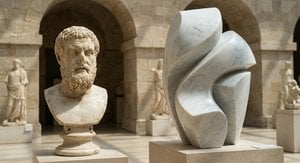
The Enduring Allure of Marble in Art History: From Classical Sculpture to Modern Abstraction
Explore the captivating history of marble sculpture from ancient Greece to modern art. Discover renowned artists like Canova & Michelangelo, carving techniques, and investment insights at ArtsDot.

Bronze Age to Modern Masters: 10 Sculptures That Redefined Art | ArtsDot
Journey through art history with 10 legendary bronze sculptures – from Michelangelo's David to Rodin’s Thinker. Explore the stories, techniques & timeless beauty of these masterpieces. Find museum-quality reproductions & elevate your home decor on ArtsDot.com.

The Enduring Form: Sculpture Across History, Technique & Emotional Resonance
Explore the rich history of sculpture with ArtsDot. Discover key techniques, influential artists & investment potential for discerning collectors. Expert insights into valuing and collecting timeless masterpieces.



