

 实景预览
实景预览
 分享
分享 分享
分享
 详情
详情 指南
指南

 下载作品
下载作品
 相似作品
相似作品 X射线
X射线 幻灯片播放
幻灯片播放 问答
问答 统计数据
统计数据Holoëder sulfate

 展开全文
展开全文
艺术微喷/版画
博物馆级艺术微喷或帆布版画,制作高效,并提供多种饰面选择。 ( 订购纯手工绘制画作 切换至数字图像销售渠道)




P118B ¥10

P118H ¥10

P118W ¥10

P438Z ¥10

P508JH ¥12

P508YH ¥12

P805H ¥10

P805Z ¥10

P919BZ ¥10

P919G ¥10

P919XJ ¥10

P959ZH ¥10

P968JZ ¥12

W106C ¥8

W218G ¥10

W218JH ¥8

W218Y ¥10

W307PJ ¥10

W316G ¥10

W316PJ ¥8

W316Y ¥10

W398PJ ¥8

W4111J ¥10

W500HY ¥15

W500JH ¥15

W692G ¥12

W849H ¥8

W940BG ¥15

W953PJ ¥8




您可以从与原作比例一致的预设尺寸中进行选择。

请输入您所需的宽度和高度,以适配您的画框或墙面。由于印刷品只能进行裁剪,无法超出原图尺寸,因此若比例不一致,画面的一部分将会被裁切。在正式印刷之前,我们会为您发送一份数字效果图供您确认。本页面显示的图片并非最终裁剪后的效果——只有效果图才能展示真实的裁剪情况。


 玻璃选项仅适用于110厘米以下的尺寸。

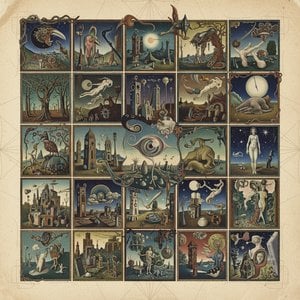
Holoëder sulfate
艺术微喷/版画
复刻品尺寸
-


最终结算价
¥ 423
Max Ernst’s *Holoëder sulfate*: A Surrealist Reverie
Max Ernst's Holoëder sulfate (circa 1930) is not merely a painting; it’s an immersion into the subconscious, a meticulously constructed dreamscape rendered with the unsettling precision characteristic of the artist’s surrealist explorations. This captivating work, featuring a central umbrella dominating a chaotic yet strangely ordered arrangement of books and figures, embodies Ernst's profound engagement with psychological themes and his pioneering role in shaping 20th-century art. The painting immediately draws the viewer into an atmosphere of quiet disorientation, inviting contemplation on memory, perception, and the hidden landscapes of the mind.
A Synthesis of Disciplines: Ernst’s Intellectual Framework
Understanding Holoëder sulfate requires acknowledging the intellectual currents that fueled Max Ernst's artistic practice. Born in Brühl, Germany, in 1891, Ernst was a voracious reader and student of philosophy, psychology, and literature – disciplines he pursued with an almost obsessive intensity at the University of Bonn. This wasn’t simply academic curiosity; it was a deliberate strategy to dismantle conventional notions of reality and explore the realms of the irrational. His studies in psychiatry, particularly his interest in Freud's theories on dreams and the unconscious, profoundly influenced his artistic techniques, leading him to employ methods like frottage (rubbing textures) and decalcomania (transferring paint from one surface to another) to tap into these hidden depths. The inclusion of seemingly mundane objects – books, umbrellas – elevates them to symbolic weight, reflecting Ernst’s desire to reveal the underlying structures of thought.
Composition and Technique: Building a Dream
The composition of Holoëder sulfate is deliberately unsettling. The oversized umbrella, a recurring motif in Ernst's work, acts as a focal point, drawing the eye while simultaneously suggesting protection or concealment. Surrounding it are smaller umbrellas, creating a sense of claustrophobia and echoing the fragmented nature of memory. The books, stacked haphazardly or standing alone, represent knowledge, but also its potential for confusion and misinterpretation. Ernst’s technique is characterized by meticulous detail combined with an almost childlike spontaneity. He employed oil paints with a delicate touch, layering colors to create subtle gradations and textures that enhance the painting's dreamlike quality. The use of contrasting light and shadow further contributes to the work’s dramatic effect.
Symbolism and Emotional Resonance
While precise interpretations remain open to debate, Holoëder sulfate is rich in symbolic potential. The umbrella itself can be seen as a shield against overwhelming emotions or an attempt to control one's thoughts. The figures within the scene are ambiguous, their identities obscured, suggesting that they represent aspects of the self – perhaps memories, desires, or anxieties. The overall effect is profoundly unsettling and evokes a sense of unease, prompting viewers to confront their own subconscious fears and fantasies. Ernst’s work resonates with a deep emotional current, inviting us to explore the darker corners of our minds.
A Legacy of Surrealist Innovation
Holoëder sulfate stands as a testament to Max Ernst's groundbreaking contribution to the surrealist movement. It exemplifies his ability to transform personal anxieties and intellectual explorations into powerful visual narratives. As a hand-painted reproduction, this artwork offers an unparalleled opportunity to experience the full impact of Ernst’s vision – a captivating journey into the heart of the subconscious.
常见问题与解答
“Holoëder sulfate”这一Surrealist Exploration背后蕴含着怎样的国族渊源?
通过创作者的出生地,《Holoëder sulfate》将Surrealist Exploration运动与德国紧密联系在了一起。
考虑到其色调,建议将"Holoëder sulfate"陈列在哪个房间?
考虑到其Earthy的色调,建议将“Holoëder sulfate”布置于Living Room中。
"Holoëder sulfate" 是否属于公有领域作品?
马克·恩斯特 的《Holoëder sulfate》 属于 仍受版权保护。此版权状态决定了该作品图像的复制方式。


艺术家简介
马克斯·恩斯特:超现实主义的先驱与创新
马克斯·恩斯特(Max Ernst,1891-1976),原名马克西米利安·玛丽亚·恩斯特,出生于德国布吕尔,是20世纪最具影响力的艺术家之一。他的艺术生涯并非循规蹈矩的学院派训练,而是一场自我驱动的探索之旅,这场旅程深受哲学思辨、心理学兴趣以及对社会规范深刻幻灭的影响。恩斯特的父亲是一位聋哑学校教师兼业余画家,他不仅在恩斯特心中播下了对世界的敏感性,也激发了他对既定权威的反叛精神。这种早期的二元性成为了他艺术愿景中一个重要的特征。
恩斯特在波鸿大学的学习经历——涵盖哲学、艺术史、文学、心理学和精神病学——并非简单的消遣,而是深刻地影响了他的后世作品。他不仅仅关心“如何”绘画,更关切“为何”。这种求知欲促使他在1912年的科隆森德布尔德展览上接触到毕加索、梵高和高更的开创性作品,这一刻彻底改变了他艺术的轨迹。现代主义的种子已经播下。
从达达主义的颠覆到超现实主义的启示
一战的爆发成为了恩斯特生命中的一个转折点。他在东西线战场上的经历令他深受震动,对既定秩序产生了深刻的怀疑,并渴望新的表达方式。这种幻灭感在蓬勃发展的达达运动中找到了肥沃的土壤。1918年返回科隆后,恩斯特欣然投入其中。与终生的好友兼合作者汉斯·阿普一起,他成为了科隆达达主义团体的核心人物,拒绝了传统的艺术惯例,拥抱荒诞、偶然性和非理性。
然而,达达主义仅仅是他前进的垫脚石。在20世纪20年代初,恩斯特移居巴黎,并加入了以安德烈·布雷东为首的超现实主义阵营。这标志着他转向探索梦境领域、潜意识和非理性。受到西格蒙德·弗洛伊德的精神分析理论的影响,恩斯特试图通过他的艺术揭示人类经验中隐藏的深度。他并非致力于描绘事物如其所见,而是致力于揭示塑造它的潜在心理力量。
创新技法:摩擦画、刮擦画与拼贴
恩斯特的艺术创新不仅体现在主题上,还在于他对技巧的不懈探索。他不仅仅采用现有的方法——他发明了新的方法。也许他最著名的贡献是摩擦画(frottage),这是一种将铅笔或炭笔擦过纹理表面的过程,以创造出意想不到的和富有表现力的图像。这种技术诞生于观察木纹时的无聊时刻,使恩斯特能够进入潜意识并产生违背有意识控制的形式。紧密相关的还有刮擦画(grattage),即在画布上刮擦油漆,从而揭示其下方的图层。
他还巧妙地运用拼贴(collage),将不同的元素——杂志图像、科学插图、照片——组装成超现实的构图,挑战了对表征的传统观念。这些技术并非简单的风格选择;它们是探索潜意识和扰乱传统艺术边界的组成部分。他的画作经常出现重复的象征性意象:鸟类(尤其是他的化身洛普洛普)、荒凉的景观、令人不安的并置以及一种普遍的神秘感。
创新遗产与影响
二战爆发迫使恩斯特逃离欧洲,在美利坚合众国找到了庇护。他在流亡期间继续绘画和尝试新的技术,最终在战争结束后返回法国,并在那里保持活跃直到1976年4月1日在巴黎去世。他为后世艺术家带来的影响是不可估量的。
恩斯特对达达主义和超现实主义的贡献非同寻常。他挑战了艺术规范,深入探索了潜意识的深渊,并发明了继续激励着当代艺术家的创新技术。他不仅仅是一位画家;他是一位探险家、一位挑衅者和一位远见卓识的艺术家,拓展了艺术本身的边界。他的作品仍然是对想象力的证明,对非理性的吸引力以及理解人类心灵复杂性的持久追求。
- 主要作品:《整个城市》、《欧克利德斯》、《关于此人将不得而知》、《森林与鸽子》
- 影响:毕加索、梵高、高更、弗洛伊德、乔治·德·基里科
- 运动:达达主义,超现实主义

马克·恩斯特
1891 - 1976 , 德国
艺术家简介
- Artistic Movement Or Style: 达达主义, 超现实主义
- Artists Or Movements Influenced By This Artist:
- 超现实主义
- 达达
- Artists Who Influenced This Artist:
- 毕加索
- 梵高
- 高更
- 德·奇里科
- Date Of Birth: 1891年4月2日
- Date Of Death: 1976年4月1日
- Full Name: 马克·恩斯特
- Nationality: 德裔美国籍,法籍
- Notable Artworks:
- 《葬礼祭品》
- 《含蓄的女人》
- 《壁炉的天使》
- Place Of Birth: 布吕尔,德国
相关文章
马克斯·恩斯特:25幅大师级作品,探索超现实主义的视觉盛宴 | ArtsDot
探索马克斯·恩斯特25幅大师级作品,领略超现实主义的奇幻魅力!深入了解达达主义先驱的艺术生涯、创新技法与梦境般的视觉世界。ArtsDot.com提供高品质艺术复制品,为您的家居装饰增添永恒之美。立即在线探索完整系列!

Echoes of Time: Exploring the Enduring Appeal & Historical Context of Vintage Art Prints
Explore the captivating world of vintage art prints! Discover their history, collecting tips & enduring appeal. Expert insights on chromolithography and building a legacy collection with ArtsDot.

高檔藝術品複製技術:Giclée微噴的檔案品質與鑑賞細節
深入了解Giclée微噴技術:檔案品質、色彩還原的專業解析。探索高檔藝術品複製的細節與保存技巧,為您的收藏提供博物館級別的選擇。專家指導,確保完美呈現原作神韻。

Transforming Spaces: A Comprehensive Exploration of Wall Decor Through Art History & Contemporary Practice
Explore the art of transforming spaces with our comprehensive guide to wall decor. From historical movements to contemporary trends, discover how to curate impactful interiors and commission bespoke artwork for a truly personalized aesthetic.

浮世奇想:十幅定义超现实主义的艺术杰作
探索超现实主义的十幅艺术瑰宝!从达利到马格里特,重温这些定义了梦境与想象力的杰作。深入了解艺术家故事、创作技法,感受色彩与情感的力量。ArtsDot.com为您提供博物馆品质画作复制及精选家居装饰方案。尽在ArtsDot.com!


