


 效果预览
效果预览
 购买手绘画作
 分享
分享 分享
分享
 详情
详情

 下载
下载
 相似作品
相似作品 X射线
X射线 幻灯片播放
幻灯片播放Drapery Study
 Charcoal
- WallArt
- Renaissance
 1512
1512 131.0 x 182.0 cm
 Smith College Museum of Art
 展开详情
展开详情




P118B $10

P118H $10

P118W $10

P438Z $10

P508JH $12

P508YH $12

P805H $10

P805Z $10

P919BZ $10

P919G $10

P919XJ $10

P959ZH $10

P968JZ $12

W106C $8

W218G $10

W218JH $8

W218Y $10

W307PJ $10

W316G $10

W316PJ $8

W316Y $10

W398PJ $8

W4111J $10

W500HY $15

W500JH $15

W692G $12

W849H $8

W940BG $15

W953PJ $8




从与原作比例一致的预设尺寸中进行选择。

您可以输入自定义尺寸,以适配特定的画框或空间。如果您选择的尺寸与原图比例不符,我们将对作品进行裁剪,或通过镜像填充/纯色填充边缘的方式来扩展图像。在开始制作之前,我们会向您发送一份数字效果图供您确认。
请注意,屏幕上的预览并不能反映实际的裁剪或扩展效果。只有效果图才能准确展示最终的构图。
虽然我们提供定制尺寸,但为了保持原图比例,我们建议您从预设列表中选择尺寸。


 玻璃选项仅适用于110厘米以下的尺寸。

Drapery Study
艺术微喷/版画
复制品尺寸
-


最终总价
$ 62
藏品详情
A Study in Light and Shadow: Matthias Grünewald's "Drapery Study"
Within the hallowed halls of art history, certain works transcend their immediate subject matter, becoming profound meditations on form, light, and the very essence of materiality. Matthias Grünewald’s “Drapery Study,” created in 1512, stands as a prime example. This seemingly simple charcoal drawing—a depiction of draped fabric—is far more than a mere preparatory sketch; it is a testament to Grünewald's mastery of observation and his ability to imbue the mundane with an almost spiritual quality. The piece resides within the collection of the Smith College Museum of Art, offering viewers a rare opportunity to contemplate this intimate exploration of texture and volume.
The Northern Renaissance and Grünewald’s Unique Vision
To fully appreciate "Drapery Study," it's essential to understand its historical context. Grünewald flourished during the German Renaissance, a period marked by a fascinating tension between the burgeoning influence of Italian humanism and the enduring traditions of late medieval Northern European art. While artists across Europe were embracing classical ideals of beauty and proportion, Grünewald remained deeply rooted in his regional heritage—a world characterized by intense emotional expression, meticulous detail, and a profound connection to religious themes. He wasn't part of humanist circles; instead, his artistic purpose was primarily devotional, reflecting the spiritual anxieties and fervent piety of his time. This is evident in his most famous work, the Isenheim Altarpiece, a monumental masterpiece that showcases Grünewald’s ability to convey both profound suffering and transcendent hope.
Technique: The Dance of Charcoal on Paper
The power of "Drapery Study" lies not only in its subject but also in the remarkable skill with which it is executed. Created entirely using charcoal on paper, the drawing demonstrates Grünewald’s exceptional command of tonal variation and line work. He doesn't rely on blending or washes; instead, he builds up layers of charcoal through varying degrees of pressure, creating a mesmerizing interplay of light and shadow. The darkest areas recede into deep pools of obscurity, while lighter passages seem to shimmer with an ethereal glow. Notice how the artist uses delicate, almost feathery strokes to suggest the softness and fluidity of the fabric, contrasting them with bolder, more assertive lines that define the sharp folds and creases. This careful manipulation of charcoal creates a palpable sense of three-dimensionality, as if one could reach out and touch the very texture of the cloth.
Symbolism and Emotional Resonance
While "Drapery Study" lacks overt symbolic imagery—there are no figures or narrative scenes to interpret—its emotional impact is undeniable. The sheer beauty of the draped fabric, rendered with such exquisite detail, evokes a sense of quiet contemplation and serene observation. It’s an invitation to slow down, to appreciate the subtle nuances of form and texture that often go unnoticed in our busy lives. Some art historians suggest this study may have been a preparatory work for one of the Apostle figures within Dürer's Heller Altarpiece, highlighting Grünewald's collaborative spirit and his ability to seamlessly integrate into existing artistic frameworks. Regardless of its specific purpose, "Drapery Study" stands as a testament to the power of art to elevate the ordinary—to transform a simple piece of cloth into an object of profound beauty and enduring fascination.
相似艺术品


艺术家简介
马蒂亚斯·格吕内瓦尔德:生命与传承
早年生活与艺术启蒙
马蒂亚斯·格吕内瓦尔德(Matthias Grünewald),原名 Mathis Gothart Neithardt,约于 1470 年至 1475 年间出生于德国维尔茨堡,是德国文艺复兴时期举足轻重的人物。尽管他所处的时代正日益受到意大利文艺复兴理想的影响,但格吕内瓦尔德的艺术灵魂却深深植根于中欧中世纪晚期的艺术传统之中。虽然关于他早年生活的记载十分稀少,但可以确定的是,他曾在当地的工作坊中接受了系统的艺术训练。
艺术演进与风格影响
格吕内瓦尔德的艺术成长深受当时盛行的北欧传统影响,这些传统强调写实主义、情感强度以及细腻的观察力。他的作品中可见阿尔布雷希特·丢勒(Albrecht Dürer)和马丁·雄哥(Martin Schongauer)等大师的影子,但他并未止步于模仿,而是开辟了一条独树一帜的道路,以戏剧性的表现力和鲜艳夺目的色彩著称。他并未直接参与意大利盛行的那种人文主义圈子;相反,他的艺术创作主要服务于宗教目的,深刻地反映了那个时代人们内心深处的精神焦虑。
传世杰作与艺术风格
- 《伊森海姆祭坛画》(1512-1516): 这件现藏于科尔马下林登博物馆的旷世杰作,被公认为格吕内瓦尔德的巅峰之作。它以一种令人震撼的写实主义手法描绘了基督生平的场景,尤其聚焦于苦难与救赎的主题。
- 《受难图》(约 1502-1503): 这是一件早期的作品,展示了他尚在成型中的艺术风格,体现了强烈的情感冲击力和精湛的解剖细节。
- 《摩西》(1511): 这幅素描彰显了格吕内瓦尔德捕捉富有表现力的形体与戏剧性姿态的高超技艺。
格吕内瓦尔德的艺术风格具有以下显著特征:
- 戏剧性的构图: 他运用动态的布局来增强画面的情感冲击力。
- 鲜艳的色彩运用: 他对强烈且往往具有对比性的色彩的掌控,创造出了一种震撼人心的视觉体验。
- 对苦难的写实描绘: 格吕内瓦尔德从不回避宗教叙事中所蕴含的肉体与精神上的痛苦。
- 富有表现力的人物: 他笔下的人物充满了强烈的情感波动与心理深度。
历史地位与艺术遗产
格吕内瓦尔德的作品见证了文艺复兴时期德国中世纪艺术传统持久的生命力。他在晚期哥特式风格与新兴的文艺复兴风格之间架起了一座桥梁,创造出一种能与同时代人产生共鸣的独特视觉语言。他的影响力在后世那些致力于探索宗教热忱与情感强度的德国艺术家身上得到了延续。 尽管在 1528 年去世后的几个世纪里,他的名声一度沉寂,但在 19 世纪,格吕内瓦尔德迎来了艺术史上的复兴。如今,他被公认为德国文艺复兴时期最重要的画家之一。他的艺术作品凭借其原始的情感张力、精湛的技艺以及深邃的精神深度,至今仍令无数观众为之倾倒。
进一步探索
欲了解更多关于马蒂亚斯·格吕内瓦尔德的生平与作品,请访问: ArtsDot

马蒂亚斯·格吕内瓦尔德
1480 - 1528 , 德国
艺术家简介
- Birth Date: 约 1470–1475 年
- Birth Place: 德国,维尔茨堡
- Death Date: 1528 年
- Movement: 德国文艺复兴,中世纪晚期
- Name: 马蒂亚斯·格吕内瓦尔德
- Nationality: 德国
- Notable Works: 伊森海姆祭坛画,《受难图》
相关文章

Charcoal & Canvas: 10 Masterpieces of Shadow & Light |
Explore 10 iconic paintings dominated by charcoal tones – from Rembrandt's dramatic chiaroscuro to Goya’s expressive portraits. Discover the stories behind these masterpieces & find museum-quality art reproductions for your home at .

The Nuances of Graphite: Exploring Emotional Depth & Technical Mastery in Pencil Drawing
Explore the captivating world of graphite drawing! Discover its rich history, master essential techniques like chiaroscuro, and learn how artists evoke emotion through this timeless medium. Expert insights for art enthusiasts.

达芬奇25幅杰作:艺术、科学与永恒的辉煌 | ArtsDot
探索达芬奇25幅杰作!深入了解文艺复兴大师列奥纳多·达·芬奇的艺术传奇,欣赏《蒙娜丽莎》、《最后的晚餐》等经典绘画。ArtsDot.com提供博物馆级复制品和家居装饰灵感。在线探索完整系列!
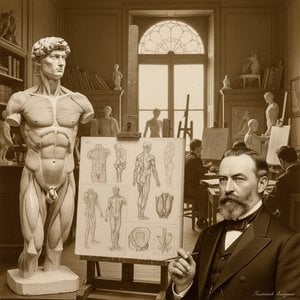
Frederick Bridgman: Anatomical Mastery & the Evolution of Figure Drawing Instruction
Explore the anatomical mastery of George B. Bridgman & his revolutionary figure drawing techniques. Discover how his methods transformed art instruction and continue to inspire artists today. Learn more at ArtsDot.

The Eloquent Line: Exploring the Artistic Significance of Sketches Across Movements and Media
Explore the profound artistic significance of sketches throughout history. From Renaissance masters to modern innovators like Van Gogh & Guston, discover how these foundational works reveal technique, emotion, and vision. Learn more at ArtsDot.



