


 效果预览
效果预览
 购买印刷品
购买印刷品 分享
分享 分享
分享
 详情
详情

 下载
下载
 相似作品
相似作品 X射线
X射线 幻灯片播放
幻灯片播放Mourning
 Painting
- Contemporary Art
 2003
2003- Contemporary
 150.0 x 205.0 cm
 Albertina Klosterneuburg
 展开详情
展开详情




P118B $10

P118H $10

P118W $10

P438Z $10

P508JH $12

P508YH $12

P805H $10

P805Z $10

P919BZ $10

P919G $10

P919XJ $10

P959ZH $10

P968JZ $12

W106C $8

W218G $10

W218JH $8

W218Y $10

W307PJ $10

W316G $10

W316PJ $8

W316Y $10

W398PJ $8

W4111J $10

W500HY $15

W500JH $15

W692G $12

W849H $8

W940BG $15

W953PJ $8




从与原作比例一致的预设尺寸中进行选择。

您可以输入自定义尺寸,以适配特定的画框或空间。如果所选尺寸与原图比例不符,我们将通过裁剪作品或添加手绘元素来扩展画面。数字样稿将在制作开始前发送给您确认。
请注意,屏幕预览无法准确反映实际的裁剪或扩展效果,只有样稿才能真实呈现最终的构图。
虽然我们提供定制尺寸服务,但为了保留原作比例,建议您从预设列表中选择尺寸。
下单后,ArtsDot.com 团队将通过电子邮件联系客户获取具体要求,并提供效果预览图。


 玻璃选项仅适用于110厘米以下的尺寸。

Mourning
复制材质
复制品尺寸
-


最终总价
$ 263
The Visceral Language of Emotion
In the profound and haunting masterpiece Mourning, the late Austrian visionary Maria Lassnig invites us into a raw, unfiltered exploration of human vulnerability. Created in 2003, this expansive work serves as a powerful testament to the artist's lifelong dedication to her theory of "body awareness." At the heart of the composition, a central female figure emerges with an open-moutched cry, a visceral expression of grief that transcends mere depiction to become a shared human experience. Surrounded by figures that exist in varying states of nakedness and color, the painting dissolves the boundaries between the physical self and the psychological landscape, creating a scene that is as much about internal sensation as it is about external form.
The technique employed here is nothing short of transformative. Lassnig utilizes a vibrant, almost feverish color palette to communicate the intensity of the subject matter. The central figure, bathed in searing reds and warm oranges, acts as a focal point of heat and passion, contrasting sharply with the more varied, multi-colored tones of the surrounding figures. This use of color does not merely decorate the canvas; it functions as a rhythmic pulse, guiding the viewer's eye through a chaotic yet deeply structured emotional journey. The brushwork, characteristic of her later mastery, feels spontaneous and urgent, capturing the fleeting, often painful sensations of being alive.
A Legacy of Subjectivity and Form
To understand Mourning, one must look to the historical context of Lassnig’s evolution within the Austrian art scene. As a pioneer of Informalism and Tachisme, Lassnig moved away from traditional representation toward a style that prioritized the "inner body." This piece stands as a culmination of decades spent navigating the complexities of identity, influenced by her early life in Kappel am Krappfeld and her formative years at the Academy of Fine Arts in Vienna. The figures surrounding the central protagonist—some draped, some bare, some looming in the background—suggest a communal weight to grief, implying that sorrow is never an isolated event but one that ripples through our social and physical connections.
For the discerning collector or interior designer, this artwork offers more than just visual splendor; it provides a profound emotional anchor for any space. The sheer scale of the piece, measuring 150 x 205 cm, allows its commanding presence to dominate a room, turning a wall into a window into the human soul. A high-quality reproduction of this work preserves the delicate nuances of Lassnig's color transitions and the raw energy of her strokes, making it an ideal centerpiece for those seeking to infuse their environment with intellectual depth and avant-garde sophistication. It is a piece that demands conversation, inviting viewers to contemplate the beautiful, tragic, and inescapable nature of our shared existence.
相似艺术品


艺术家简介
early life and education
maria lassnig, an austrian artist known for her painted self-portraits and her theory of 'body awareness', was born on september 8, 1919, in kappel am krappfeld, austria. her early life was marked by her mother's troubled relationship with a much older man, leading to lassnig being raised primarily by her grandmother. this complex family dynamic would later influence her artistic themes. lassnig attended the academy of fine arts in vienna during world war ii, where she began to develop her unique style and approach to art.artistic career and contributions
maria lassnig's artistic career is distinguished by several key contributions:- introduction of informalism and tachisme: lassnig played a pivotal role in introducing these styles into post-war austrian art.
- participation in the hundsgruppe ('dog pack') group: alongside notable artists like arnulf rainer, ernst fuchs, and wolfgang hollegha, lassnig was part of this influential group that shaped the austrian art scene in the 1950s.
- development of 'body awareness' theory: this concept, coined by lassnig in 1948, emphasizes depicting only body parts felt during the creative process, leading to innovative self-portraits with missing body parts or unnatural colors.
awards and legacy
- first female artist to win the grand austrian state prize (1988) - awarded the austrian decoration for science and art in 2005 - received the golden lion award for lifetime achievement at the 55th venice biennale in 2013notable works and exhibitions
- selfportrait with telephone (lentos kunstmuseum linz, austria), showcasing her unique approach to self-portraits - featured in various exhibitions, including those at the kunsthistorisches museum and museum of applied arts in viennateaching and later life
from 1980 until her death, lassnig lived and taught in vienna, becoming a professor at the vienna university of applied arts in 1980. her later work continued to explore themes of body awareness and self-portraits.- view maria lassnig's artworks on ArtsDot
- explore selfportrait with telephone by maria lassnig
- discover more about the museum of applied arts and its significance in austrian art history on ArtsDot's blog.
conclusion
maria lassnig's pioneering work in 'body awareness' has left an indelible mark on austrian art, inspiring generations with her innovative approach to self-portraits and her contributions to the development of informalism and tachisme. her legacy continues to be celebrated through her artworks and the impact she had on the art world.
Maria Lassnig
1919 - 2014 , Austria
艺术家简介
- Artistic Movement Or Style: Informalism & Tachisme
- Artists Or Movements Influenced By This Artist: ['Feminist Art History']
- Artists Who Influenced This Artist:
- Arnulf Rainer
- Ernst Fuchs
- Date Of Birth: September 8, 1919
- Date Of Death: 2014
- Full Name: Maria Lassnig
- Nationality: Austrian
- Notable Artworks:
- Selfportrait with telephone
- Atlas
- Woman Power
- Place Of Birth: Kappel am Kraffeld, Austria
相关文章

Crimson Threads of Narrative: Exploring Symbolism & Representation in Artworks Featuring the Red Dress
Explore the rich symbolism of the red dress in art history! From ancient power displays to iconic portraits like Cézanne’s 'Madame Cezanne', discover the cultural and artistic significance behind this captivating color. Expert analysis & insights.
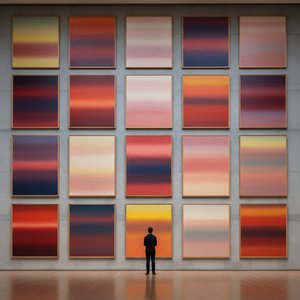
马克·罗斯科25幅杰作:色彩与情感的深度之旅 | ArtsDot
探索马克·罗斯科25幅杰作,感受抽象表现主义的色彩力量与深刻情感。从经典色域绘画到无题系列,了解艺术史上的大师及其作品背后的故事。ArtsDot.com提供博物馆级高质量复制品,为您的家居装饰带来艺术灵感!立即探索完整收藏。

The Evocative Power of Warmth: Exploring Emotional Resonance in Paintings
Explore the power of warm colors in art history! Discover how masters used reds, oranges & yellows to evoke emotion. Expert insights on Baroque drama, interior design & finding your perfect palette. ArtsDot offers handmade reproductions.

Reflecting the Self: A History of Portraiture & Psychological Insight
Explore the fascinating history of self-portraiture from Renaissance masters like Dürer & Rembrandt to modern interpretations. Discover the psychological insights and artistic techniques behind these iconic works. Expert analysis for art enthusiasts.

马蒂斯大师25幅杰作:色彩与光影的艺术传奇 | ArtsDot
探索亨利·马蒂斯25幅杰作,感受野兽派色彩的魅力!从《舞蹈》到《红色和谐》,揭秘大师背后的故事与艺术灵感。ArtsDot.com提供博物馆级高质量油画复制品,为您的家居增添奢华艺术气息。立即在线探索完整系列!

