


 实景预览
实景预览
 发送
发送 分享
分享
 详情
详情 指南
指南

 下载图片
下载图片
 相似作品
相似作品 X射线
X射线 幻灯片播放
幻灯片播放 统计数据
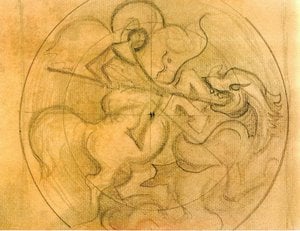
统计数据Floating Circle
 35.0 x 43.0 cm
 Royal West of England Academy
 阅读全文
阅读全文
获取远超网页预览效果的印刷级文件。我们销售的每一张数字图像均源自库存数据库中的高分辨率母版——宽度通常在 5,000 至 15,000 像素之间——因此您可以放心地进行大幅打印、局部裁剪或还原细腻的细节。
每一件作品在离开我们的工作室前都经过了精心的处理。数字影像专家会对照原作核对色彩,并在必要时进行校正,随后利用专业修图工具提升清晰度与细节表现——且始终忠实于艺术家的笔触与风格。最终呈现的图像宛如原作本身,而非仅仅是一张加了滤镜的扫描件。
您可以在完成前进行审核:我们的专家将在 72 小时内通过电子邮件向您发送图像以供审阅。如果不满意?您可以要求改进或修正,若质量未达预期,亦可申请退款。
这也是出版商、设计工作室、画廊及印刷厂所信赖的品质。
数字图像
下载高分辨率文件,用于个人展示、打印及创意项目。 ( 切换至版画销售渠道 订购此收藏品的纯手工复刻画作)
每份数字图像订单均包含的内容
专业级数字交付,品质无忧
选择 ArtsDot.com,您获得的不仅仅是一张图像——您收到的是经过专业级增强、精雕细琢的数字艺术作品,并享有满意保证。以下是您的订单中自动包含的所有内容:

即时邮件交付
您的高分辨率数字图像文件将在下单后 72 小时内通过电子邮件发送给您 —— 即可立即使用。

AI 增强型数字图像
您的艺术品经过专业优化,结合先进的 AI 技术与人工修饰,确保呈现极致的细节、清晰度与色彩准确度。

终身免费重发服务
不小心删除了文件或找不到了?没关系——我们将随时为您免费重发。

无需进口税费,始终如一
即刻拥有您的艺术作品,无需支付任何关税、税费或运费——数字下载始终免税。

色彩精准保障
我们通过专业工具与色彩管理技术,确保您的数字图像尽可能真实地还原原作色彩。

100天满意保证
如果您对所购数字图像不满意,我们将在100天内为您进行修改或提供100%的全额退款——无需任何理由。

100% 退款保证
不满意?在收到数字文件后的100天内,您可以申请全额退款——无需任何理由。

批量订购优惠
购买 3 张享 10% 折扣 - 购买 5 张享 15% 折扣 - 购买 10 张以上享 20% 折扣。非常适合创意项目、画廊及机构使用。
相关艺术品


艺术家简介
Margaret Gregory: A Weaver of Myth and Memory
Margaret Gregory (1927-2011) wasn’t merely an artist; she was a chronicler, a storyteller deeply rooted in the folklore and landscape of County Galway. Her work, particularly her monumental “Homage to Joseph Beuys” series, transcends simple abstraction, becoming intricate tapestries woven with personal memory, Irish mythology, and a profound engagement with the social and political currents of her time. Born Margaret Parry in Cheltenham, England, she inherited a rich artistic lineage through her mother’s family, steeped in Victorian art patronage and a deep appreciation for the visual arts. This early exposure fostered a lifelong fascination with color, texture, and the evocative power of image – elements that would become central to her distinctive style.
Gregory's formative years were spent largely at Coole Park, the ancestral home of Lady Gregory, a pivotal figure in the Irish Literary Revival. Living within this vibrant intellectual community—a gathering place for Yeats, Joyce, Synge, and countless others—shaped her artistic sensibilities profoundly. She witnessed firsthand the struggles for cultural identity and independence that defined Ireland’s 20th-century experience. This engagement with national narratives, coupled with a deep connection to the rural landscape, fueled a desire to capture not just visual appearances but also the spirit of place – the whispers of history embedded within the stones and fields of Galway.
Her artistic journey began in earnest after marrying Robert Gregory, son of Lady Gregory, in 1907. This union brought her firmly into the heart of Irish cultural life, providing access to a wealth of knowledge and experience. She initially worked as an illustrator for her mother-in-law’s books, meticulously rendering scenes from Irish mythology – tales of fairies, giants, and ancient heroes—with a remarkable attention to detail and a subtle infusion of personal interpretation. These early illustrations reveal a nascent talent for layering symbolism and creating images that resonate with both the literal and the metaphorical.
The “Homage to Joseph Beuys” Series: A Dialogue Across Generations
Gregory’s most celebrated work, the “Homage to Joseph Beuys” series (1986-1993), represents a significant shift in her artistic practice. Inspired by the German artist's concept of ‘shamanic art,’ which sought to connect with ancestral spirits and revitalize communities through ritualistic creation, Gregory developed a complex visual language that blended abstract expressionism with elements of Irish folk art. The panels—each measuring approximately six feet tall—are not simply representations of Beuys’s work; they are layered meditations on his ideas, filtered through her own experiences and memories.
The series is characterized by a rich palette of earthy tones – ochres, siennas, and umbers – punctuated by bursts of vibrant color. Gregory employed a variety of techniques: layering acrylic paint, incorporating collage elements (including fragments of Irish newspapers and textiles), and applying textured surfaces to create a tactile and immersive experience for the viewer. Recurring motifs—circles, spirals, and animal figures—evoke ancient symbols and connect her work to the pre-Christian traditions of Ireland. The deliberate ambiguity of these images invites multiple interpretations, suggesting a dialogue between past and present, personal and collective memory.
Minimalist Compositions: “Floating Circle” and Beyond
Alongside the “Homage” series, Gregory produced a body of smaller, more restrained works—often referred to as her minimalist compositions. These pieces, exemplified by "Floating Circle" (1998), demonstrate a remarkable control over color and form. She pared down her palette to its essential elements – often just two or three colors – and employed simple geometric shapes to create visually arresting arrangements. The “Floating Circle,” for instance, is a deceptively complex work that suggests both stability and movement, inviting the viewer to contemplate the relationship between interiority and exteriority.
These minimalist works can be seen as a counterpoint to the more elaborate scale of her larger paintings. They represent a distillation of her artistic principles—a commitment to clarity, precision, and the power of suggestion. They also reflect a growing interest in exploring the fundamental elements of visual perception – color, line, and space – without relying on narrative or symbolic content.
Legacy and Historical Context
Margaret Gregory’s work occupies a unique position within the history of Irish art. She was part of a generation grappling with questions of national identity in the wake of independence, yet she resisted easy categorization. Her paintings are not simply portraits of Ireland; they are reflections on its past, present, and future—a complex tapestry woven from personal memory, folklore, and social commentary.
Her engagement with Joseph Beuys’s ideas is particularly significant. Beuys's emphasis on the transformative power of art resonated deeply with Gregory’s own belief in the potential of creativity to heal and revitalize communities. Her “Homage” series can be interpreted as a gesture of solidarity—a recognition of shared struggles and aspirations across generations and cultures. Margaret Gregory died in 2011, leaving behind a substantial body of work that continues to inspire and challenge viewers today. Her paintings serve as a powerful reminder of the enduring relevance of folklore, myth, and memory in shaping our understanding of the world.

Margaret Gregory
1927 - 2011
概览
- Artistic Movement Or Style: Abstract expressionism, Color field painting, Minimalist art
- Artists Or Movements Influenced By This Artist:
- Color field painting
- Minimalist art
- Artists Who Influenced This Artist: ['Joseph Beuys']
- Date Of Birth: 1927
- Date Of Death: 2011
- Full Name: Margaret Gregory
- Nationality: American
- Notable Artworks:
- Homage to Joseph Beuys
- Floating Circle
- Place Of Birth: WahooArt