


The picture follows your choices: , .
藏品详情
 展开全文
展开全文
艺术家简介
布莱尼维尔-苏尔-默 法国 马塞尔·杜尚 罗丝·塞拉维 挑战艺术定义的革命性艺术家杜尚,以达达主义和《泉》等现成品闻名。探索他的标志性作品及其哲学影响。 立体主义 观念艺术 19 世纪 80 年代 7 月 28 日 20 世纪 60 年代 10 月 2 日 马塞尔·杜尚 法国裔美国人 《泉》 立体主义 3 马塞尔·杜尚最著名的与哪个艺术运动有关?
手工油画复制品
由我们的艺术家按需定制,为您提供您所选尺寸及画框的布面手工油画。 ( 切换至版画销售渠道 切换至数字图像销售渠道)
More about this painting
 实景预览
实景预览
 分享
分享 分享
分享
 详情
详情 指南
指南

 下载作品
下载作品
 相似作品
相似作品 X射线
X射线 幻灯片播放
幻灯片播放 Q&A
Q&A 统计数据
统计数据Order your painting in four simple steps
Take your time. You can change any answer; the price in your order card follows each choice.
1 Step one of four
Which size would you like?
These sizes keep the proportions of the original painting. The drawing shows your choice on a wall, above a two-metre sofa.
Or give your own measurements
您可以从与原作比例一致的预设尺寸中进行选择。

请输入您需要的宽度和高度,以适配您的画框或墙面。由于作品为手工绘制,若选择不同比例的尺寸,艺术家可能会在画面边缘多画一些或稍作裁剪 —— 由您决定。在开始绘画之前,我们会为您发送一份数字效果图供您确认。本页面上展示的图片并非最终实物 —— 只有效果图才能反映真实结果。
2 Step two of four
How should it be prepared: rolled, stretched or framed?
The prices below are for the size you chose in step one.
Choose the edges of the stretched canvas
Choose your frame

White ¥1

Blurside ¥1

Extended ¥1

P118B ¥10

P118H ¥10

P118W ¥10

P438Z ¥10

P508JH ¥12

P508YH ¥12

P805H ¥10

P805Z ¥10

P919BZ ¥10

P919G ¥10

P919XJ ¥10

P959ZH ¥10

P968JZ ¥12

W106C ¥8

W218G ¥10

W218JH ¥8

W218Y ¥10

W307PJ ¥10

W316G ¥10

W316PJ ¥8

W316Y ¥10

W398PJ ¥8

W4111J ¥10

W500HY ¥15

W500JH ¥15

W692G ¥12

W849H ¥8

W940BG ¥15

W953PJ ¥8

H24-GOLD ¥30

H24-SILVER ¥30

H36-GOLD ¥45

H36-SILVER ¥45
带框
Moulding: . Overall size with the frame: .
3 Step three of four
Would you like anything changed in the painting?
Most people answer no. Because each painting is made by hand, our artist can also adapt it for you.
After order, ArtsDot.com team will email client for instructions and provide a mockup preview
4 Step four of four
A few finishing options
All of them are optional. The answers already selected cost nothing extra.
Who paints it?
A nameplate, as in a museum?
青铜铭牌雕刻详情
This elegant plaque features the artist's name and the title of the artwork, finely engraved for a timeless presentation.
It is made from bronze with a refined, elegant finish. The text is precisely laser-engraved for a sharp and permanent result. Measuring 9x2 cm, the plaque is compact yet easy to read. It's built to be durable and scratch-resistant, offering a professional, museum-quality look. Mounting is simple thanks to the included adhesive backing.
透明亚克力铭牌详情
The plaque includes essential engraved details such as the artist's name, the title of the artwork, the date it was created, the type of media used-like oil on canvas or watercolor-a brief description of the piece, and a QR code that links to the complete artwork information.
It is crafted from clear acrylic, offering a sleek, modern appearance. The text is UV-engraved in black to ensure strong visual contrast. With a size of 10x15 cm, it ensures optimal readability. It comes equipped with two metal hooks for secure wall mounting. The plaque is designed to be weather-resistant, making it suitable for various environments, and it includes interactive features that work seamlessly with smartphone scanning.
黑色亚克力铭牌详情
This elegant plaque includes engraved information such as the artist's name, the title of the artwork, the date it was created, the type of media used (like oil on canvas or watercolor), a short description of the artwork, and a QR code for quick access to more information.
The plaque itself is made from refined black acrylic with a premium finish. The text is laser-engraved in white for high contrast and readability. Its size is 10x15 cm, designed to be easy to read. It comes with two metal hooks for professional mounting. The design is sleek and fits any interior style. It is also weather-resistant and durable, with built-in digital integration for mobile compatibility.
A protective varnish?
When do you need it?
✓ Check and order
Your painting, as you ordered it

Landscape, Study for 'Paradise'
复制品材质
复刻品尺寸
-

精选资深艺术家
更丰富的细节、更精湛的工艺以及更充裕的制作时间
-

复制画装裱选项
-
-
对于任何边长超过 105 厘米(约 41 英寸)的艺术品或复制品,画框将以拆解后的组件形式发货。此方法可确保安全送达并防止运输过程中的损坏。
需由专业人员组装 —— 本产品不适用于 DIY 操作。
该组件必须由经验丰富的专业装裱师进行组装及画布绷装,过程中需使用木工胶(不随附)、画布绷边钳以及夹具,以确保在胶水干燥期间保持内框方正。组装不当或画布张力不均可能会对艺术品造成永久性损坏,且此类情况不在我们的保修范围之内。
 对于任何边长超过 105 厘米(约 41 英寸)的艺术品或复制品,画框将以拆解后的组件形式发货。此方法可确保安全送达并防止运输过程中的损坏。
包含所有实木条,尺寸精确,便于组装。
使用随附的螺丝进行组装,另需准备用于角部连接的木工胶(本品不含木工胶),请由您的装裱师自行准备。
需另备专业工具(本套件不含):画布绷紧钳以及用于在胶水干燥过程中保持木条方正的夹具。
重要提示:
角部连接处需要使用木工胶,边框条必须使用夹具固定直至胶水完全干透,且在组装好的框架上绷紧画布需要用到画布拉伸钳。以上工具均不包含在套装内。请在订购此尺寸前,预先联系经验丰富的专业装裱师。

展品铭牌
-
-

保护性清漆
光泽清漆(提亮色彩,防光防潮)
-

定制我的艺术品
定制化示例:替换面部为客户照片;添加宠物(例如,将猫替换为狗);在背景中加入隐藏信息;更改背景风景或元素。
-

加急
全球配送()仅需 3-4 周即可送达,无需等待标准时效的 5 周。(3 November)。品质始终如一,绝不妥协。
-
极速达
全球配送(),预计 5 周送达。(10 November)。
已包含
最终结算价
¥ 1765
玻璃选项仅适用于110厘米以下的尺寸。
Included with every order
- 全球免运费特快专递服务
- 优质亚麻画布
- 全程运输保险
- 关税退款保证
- 色彩精准还原保证
- 100天退货保障(仅限制造缺陷)
- 100% 退款保证
- 多件购买优惠


Landscape, Study for 'Paradise' – Marcel Duchamp: A Pioneering Vision of Impressionistic Minimalism
Marcel Duchamp’s “Landscape, Study for ‘Paradise’” stands as a pivotal work within his artistic trajectory and embodies the core tenets of Expressionism. Created in 1911, this unassuming canvas transcends mere depiction; it's an invitation to contemplate the fundamental questions surrounding art itself – a characteristic hallmark of Duchamp’s intellectual engagement with the burgeoning avant-garde movement.
- Subject Matter: The painting captures a serene rural vista—a hillside bathed in diffused sunlight, populated by mature trees bearing crimson foliage. This deliberate choice eschews grand narratives or dramatic vistas, prioritizing instead the quiet beauty of the natural world.
- Style & Technique: Duchamp’s approach aligns closely with Impressionism's focus on capturing fleeting moments of light and color, yet he strips away much of its decorative embellishment. The brushstrokes are loose and textured, conveying a palpable sense of atmosphere rather than precise representation. This technique prioritizes feeling over factual accuracy—a deliberate rejection of academic conventions.
- Historical Context: Produced during the early years of Dadaism – a movement born from disillusionment with the horrors of World War I – “Landscape, Study for ‘Paradise’” reflects Duchamp’s broader philosophical stance. Dada artists sought to dismantle accepted artistic values and challenge societal norms through absurdity and provocation; this painting embodies that spirit of questioning established traditions.
- Symbolism: The dominant red hue of the tree leaves isn't merely a visual element but carries symbolic weight. Red often represents passion, vitality, and even sacrifice—themes pertinent to Duchamp’s exploration of existential concerns. It serves as a subtle reminder that beauty can reside in simplicity and contemplation.
- Emotional Impact: Despite its understated appearance, “Landscape, Study for ‘Paradise’” evokes a profound sense of tranquility and introspection. The painting encourages viewers to pause and appreciate the subtleties of perception—a testament to Duchamp’s belief that art should stimulate thought rather than merely pleasing the eye.
This artwork exemplifies Duchamp's commitment to conceptual art, prioritizing intellectual exploration over technical virtuosity. Its enduring appeal lies in its ability to communicate a powerful emotional resonance through deceptively simple visual elements—a legacy of artistic innovation that continues to inspire artists and collectors alike.
常见问题与解答
马塞尔·杜尚 的《Landscape, Study for 'Paradise'》 属于哪种艺术流派,又处于哪个时代?
马塞尔·杜尚 的《Landscape, Study for 'Paradise'》 属于 Post-Impressionism 流派,创作于其作者的 现代主义 时期。
马塞尔·杜尚 的《Landscape, Study for 'Paradise'》 的版权情况是如何界定的?
马塞尔·杜尚 的《Landscape, Study for 'Paradise'》 已进入 仍受版权保护。版权保护期自艺术家逝世之日起计算,该艺术家于 1968 年逝世。
这幅 马塞尔·杜尚 的《Landscape, Study for 'Paradise'》 的复制品会为房间增添怎样的氛围?
马塞尔·杜尚 的《Landscape, Study for 'Paradise'》 营造出 Serene 的氛围,与推荐的陈设空间——Living Room 完美契合。
相似作品


马塞尔·杜尚
1887 - 1968, 法国
艺术家简介
马塞尔·杜尚:观念艺术的先驱与艺术定义的颠覆者
马塞尔·杜尚(Marcel Duchamp,1887-1968)并非仅仅一位艺术家,更是一位深刻的思想家和艺术界的革命者。他以其独特的视角和前卫的实践,彻底改变了人们对艺术的理解,为20世纪现代艺术的发展奠定了基石。出生于法国布莱尼维尔-叙默的小镇,杜尚早年便展现出对艺术的热情,并在巴黎美术学院学习过短暂的一段时间。然而,他很快意识到传统的艺术教育并不能满足他对艺术本质的深刻探究。他并非仅仅追求绘画技巧的精湛,而是渴望挑战艺术的定义、目的以及其在社会中的角色。这种不安于现状的精神,最终促使他走上了颠覆传统艺术观念的道路。从立体主义到达达:对传统的决绝
杜尚的艺术生涯充满了不断地探索和转变。早期的作品受到立体主义的影响,例如《象棋棋手肖像》(1911),展现了他对碎片化形式和多重视角的兴趣。然而,他很快超越了单纯的视觉美学追求,意识到仅仅通过重新排列视觉元素并不能触及更深层次的问题。一战的残酷现实进一步加剧了他的不满,促使他投身于达达主义运动。在达达主义的影响下,杜尚开始对艺术的传统观念发起挑战。他不再致力于创造令人愉悦的美丽物体,而是希望通过作品引发思考、质疑假设,并揭示审美判断的任意性。《着装下楼的裸女》(1912)激怒了许多立体主义画家,因为它既借鉴了立体主义的色彩和形式,又融入了对运动的描绘以及对女性形象的解构。杜尚逐渐将艺术创作从视觉愉悦转向观念表达。“现成品”:颠覆艺术定义的钥匙
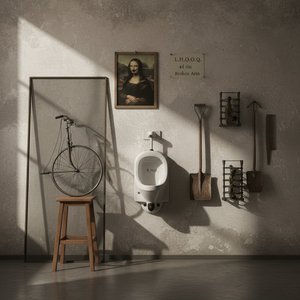
杜尚最伟大的贡献莫过于“现成品”(readymade)的概念。这是一种将日常工业制品作为艺术品的做法,是对传统艺术技能和作者概念的直接挑战。他选择的物品往往是普通到难以想象的事物,例如小便池(《泉》,1917),经过他的重新命名和署名“R. Mutt”,便被提升为一件艺术品。这件作品提交给独立艺术家展览时,引发了巨大的争议,迫使人们重新思考什么是艺术、谁可以定义艺术以及艺术的价值所在。《L.H.O.O.Q》(1919)则是一张蒙娜丽莎的明信片,上面被杜尚画上了胡须和猴子的眼睛,是对艺术史经典作品的戏仿与解构。这些“现成品”并非仅仅是简单的物品摆设,而是艺术家观念的具象化,它们挑战了人们对艺术的固有认知,强调了思想在艺术创作中的主导地位。《巨大的玻璃》:象征主义的迷宫
杜尚耗费近十年时间创作的巨幅作品《巨大的玻璃》(The Large Glass,1915-1923)是其艺术生涯中最具野心的项目之一。这件作品由两块巨大的玻璃面板组成,上面绘制着复杂的符号和图像,构成了一个神秘而迷人的世界。它被解读为对浪漫主义、工业化以及人类欲望的复杂思考。《巨大的玻璃》并非一件容易理解的作品,它的象征意义充满了歧义,但正是这种模糊性和开放性吸引了无数观众和艺术评论家。杜尚本人也从未明确解释其含义,而是鼓励观者进行自由的解读和想象。持久的影响与遗产
马塞尔·杜尚对后世艺术家的影响是深远的。他为观念艺术的发展铺平了道路,启发了极简主义、波普艺术等一系列重要的艺术运动。他对艺术定义的质疑以及对艺术家角色重新审视的态度,至今仍激励着当代艺术家不断探索艺术的边界。《现成品》的概念彻底改变了人们对艺术创作方式的理解,强调了观念在艺术中的重要性。杜尚的作品并非仅仅是视觉上的享受,更是思想的挑战和精神的启迪。他是一位真正的革命者,用他的作品颠覆了传统的艺术观念,为现代艺术的发展开辟了新的道路。他留下的遗产,不仅仅是一系列具有历史意义的艺术品,更是一种对艺术本质的深刻思考,一种永不妥协的精神。


相关文章

康斯塔布尔大师之作:25幅传世风景画赏析 | ArtsDot
探索康斯塔布尔的25幅传世杰作!沉浸于英国田园风光,感受浪漫主义绘画大师的光影与色彩。高清油画复制、艺术品购买尽在ArtsDot.com,为您的家居增添经典之美。立即在线探索完整系列!

Evocations of Place: A Historical Journey Through Landscape Art
Explore the rich history of landscape art with ArtsDot. Discover renowned artists, movements like Impressionism & Romanticism, and expert guidance for collecting timeless pieces. Find your perfect serene escape today!
Marcel Duchamp: Challenging Conventions & Redefining Art in the 20th Century
Explore the revolutionary art of Marcel Duchamp! Discover how his Dadaist readymades challenged artistic conventions & redefined modern art. A deep dive into 'Fountain', conceptual shifts, and his lasting impact.