

 实景预览
实景预览
 分享
分享 分享
分享
 详情
详情 指南
指南

 下载作品
下载作品
 相似作品
相似作品 X射线
X射线 幻灯片播放
幻灯片播放 Q&A
Q&A 统计数据
统计数据The Fiddler


 展开全文
展开全文
艺术微喷/版画
博物馆级艺术微喷或帆布版画,制作高效,并提供多种饰面选择。 ( 订购纯手工绘制画作 切换至数字图像销售渠道)




P118B ¥10

P118H ¥10

P118W ¥10

P438Z ¥10

P508JH ¥12

P508YH ¥12

P805H ¥10

P805Z ¥10

P919BZ ¥10

P919G ¥10

P919XJ ¥10

P959ZH ¥10

P968JZ ¥12

W106C ¥8

W218G ¥10

W218JH ¥8

W218Y ¥10

W307PJ ¥10

W316G ¥10

W316PJ ¥8

W316Y ¥10

W398PJ ¥8

W4111J ¥10

W500HY ¥15

W500JH ¥15

W692G ¥12

W849H ¥8

W940BG ¥15

W953PJ ¥8




您可以从与原作比例一致的预设尺寸中进行选择。

请输入您所需的宽度和高度,以适配您的画框或墙面。由于印刷品只能进行裁剪,无法超出原图尺寸,因此若比例不一致,画面的一部分将会被裁切。在正式印刷之前,我们会为您发送一份数字效果图供您确认。本页面显示的图片并非最终裁剪后的效果——只有效果图才能展示真实的裁剪情况。


 玻璃选项仅适用于110厘米以下的尺寸。

The Fiddler
艺术微喷/版画
复刻品尺寸
-


最终结算价
¥ 417
A Portrait of Rural Reverie: Marc Chagall’s “The Fiddler”
Marc Chagall's "The Fiddler," painted in 1914 during his formative years in Paris, isn’t merely a depiction of a man playing an instrument; it’s a shimmering portal into a world steeped in folklore, memory, and the quiet beauty of rural life. This oil on canvas, currently residing within the Kunstsammlung Nordrhein-Westfalen in Düsseldorf, embodies the artist's unique synthesis of influences – a potent blend of Cubism’s fractured perspectives, the vibrant hues of Fauvism, and the deeply personal symbolism rooted in his Jewish heritage.
The scene unfolds with an immediate sense of dreamlike tranquility. A solitary fiddler, rendered with bold, almost childlike strokes, stands before a modest dwelling, its snow-dusted roof hinting at a harsh winter landscape. His face, etched with a gentle melancholy and framed by a flowing red coat, is instantly recognizable – a figure both familiar and profoundly enigmatic. Around him, the composition isn’t concerned with strict realism; instead, Chagall employs Cubist principles to deconstruct forms into geometric shapes, layering planes and creating an intriguing sense of spatial ambiguity. The figures observing from afar are rendered in muted tones, almost dissolving into the background, suggesting a community witnessing this solitary moment.
The Language of Cubism and Jewish Folklore
Chagall’s embrace of Cubism is evident not as a rigid adherence to its tenets but rather as a means to express his inner vision. The fragmented forms, tilted perspectives, and overlapping planes aren't simply stylistic choices; they mirror the artist’s desire to capture fleeting memories and emotional states. Crucially, however, “The Fiddler” transcends mere Cubist experimentation. It’s deeply intertwined with Chagall’s personal iconography – a vocabulary of symbols drawn from his childhood in Vitebsk, Belarus, a region where Jewish culture thrived alongside Orthodox Christianity.
The fiddle itself is a potent symbol, representing not just music but also storytelling, tradition, and the preservation of cultural memory. The red coat, a recurring motif in Chagall’s work, often signifies passion, vitality, or even sacrifice. The presence of the boy – presumably the fiddler's son – adds another layer of meaning, evoking themes of lineage, continuity, and the passing down of heritage. Furthermore, the snow-covered house suggests both hardship and resilience—a testament to the enduring spirit of a rural community.
A Window into Chagall’s Artistic Evolution
Painted in the wake of World War I, “The Fiddler” reflects a period of profound artistic upheaval. Chagall was grappling with new ideas and experimenting with different styles, seeking to forge his own distinct voice amidst the revolutionary currents sweeping through the art world. This work demonstrates his early exploration of abstraction while retaining a strong connection to representational imagery and deeply personal symbolism. It’s a pivotal piece in understanding his artistic trajectory – a bridge between his formative years in Vitebsk and his later, more overtly expressive works.
The influence of artists like Pablo Picasso and Henri Matisse is undeniable, yet Chagall skillfully integrates these influences into his own unique style. His use of bold colors—particularly the vibrant red against the muted blues and whites—creates a dynamic visual impact, drawing the viewer’s eye through the composition. The painting's emotional resonance stems from its ability to evoke a sense of nostalgia, solitude, and the quiet dignity of everyday life. It is a testament to Chagall’s extraordinary talent for transforming personal memories into universal symbols.
Reproductions and Experiencing Chagall’s Vision
Art enthusiasts now have the opportunity to bring the magic of “The Fiddler” into their homes through meticulously crafted oil painting reproductions offered by ArtsDot.com and similar platforms. These reproductions strive to capture not only the visual details of the original but also its emotional essence – the dreamlike quality, the vibrant colors, and the profound sense of human connection. By owning a reproduction of “The Fiddler,” one gains access to a timeless masterpiece that continues to resonate with viewers across generations.
For further exploration into Marc Chagall’s life and work, we encourage you to visit ArtsDot.com or the Stedel museum for a deeper understanding of this extraordinary artist.
常见问题与解答
哪里可以买到 马尔克·夏加尔 的《The Fiddler》 的版画?
您可以在马尔克·夏加尔 的《The Fiddler》的艺术版画页面直接订购其版画:采用棉质帆布或档案级画布纸制作的艺术版画。
马尔克·夏加尔 的《The Fiddler》 的整体基调是什么?
马尔克·夏加尔 的《The Fiddler》 的整体基调为 Romantic,这种基调传达了作品的整体氛围。
"The Fiddler" 的作者是谁?
"The Fiddler" 的创作者是 马尔克·夏加尔。该作品以 马尔克·夏加尔 的名义编入目录。
相似作品


艺术家简介
梦幻之笔下的生命:马克·夏加尔的世界
马克·夏加尔,原名莫伊谢·沙格尔,1887年出生于白俄罗斯小镇里奥兹纳附近的维特布斯克。他不仅仅是一位画家,更是一位色彩的诗人、梦想的编织者和记忆的记录者。他的生命跨越了二十世纪的动荡波澜,却始终将艺术根植于一种深刻而个人化的视角——这种视角充满了他在哈西德犹太教传统中汲取的民间传说,以及对想象力的坚定信念。维特布斯克本身不仅仅是他的故乡,更是他艺术宇宙的情感核心,一个反复出现的意象,充斥着飞翔的人物、异想天开的动物和记忆中的风景所呈现的鲜艳色彩。这个小镇独特的文化融合——俄罗斯东正教教堂与熙熙攘攘的犹太市场并存——塑造了一种审美敏感性,这贯穿了他漫长职业生涯始终,难以被简单地归类于任何一种艺术运动。尽管他最初在当地油漆匠那里学习,后来又在圣彼得堡跟随列昂·巴克特,并在巴黎的格兰德肖米埃学院进修,夏加尔从未完全拥抱任何单一的艺术流派。他吸收了立体主义、象征主义和野兽派的元素,但总能通过自己强烈而个人化的视角来过滤它们,创造出一种独一无二、不可否认是夏加尔风格的艺术形式。独特的视觉语言的塑造
夏加尔早期的作品已经暗示了他将要发展出的独特语言。《我和村庄》(1911)并非仅仅是对场所的描绘;它是对身份、记忆以及个人与社会之间关系的探索。这个村庄不是以现实主义的方式呈现,而是作为一系列回忆的碎片集合,充满了象征意义。他将个人经历转化为普遍主题的能力成为了他艺术的标志。他的调色板大胆而富有表现力,经常采用鲜艳的非自然色彩来传达情感而非字面上的表征。人物在画布上漂浮和舞蹈,无视重力和逻辑,创造出一种梦幻般的氛围,邀请观众进入他的内心世界。这种风格化的方法并非偶然;它源于一种摆脱对现实简单模仿的愿望,而是要捕捉到感觉的本质、记忆的重量以及民间传说的力量。俄国革命将夏加尔带回维特布斯克,在那里他参与了文化倡议,建立了一所艺术学校,这所学校短暂地繁荣一时,但最终屈服于新政权强加的限制。这段时期既充满了创造性的活力,也充满了政治幻灭感,这种紧张关系将继续塑造他的艺术轨迹。漂泊的世界:巴黎、纽约及其他
最终,夏加尔离开了俄罗斯,定居在法国(1923年)。这标志着国际认可和多产创造力的开端。《维特布斯克之上》(1920-1922)展示了他对童年记忆的持续关注,而灵感来自圣经故事的绘画——例如《雅各伯之梦》——则揭示了他日益增长对宗教主题的兴趣。第二次世界大战爆发迫使他逃离被占领的法国前往美国,在那里他在纽约市度过了七年。这段时期充满了深刻的情感动荡和艺术实验。他在艺术中找到了慰藉,创作了能够反映时代焦虑和不确定性的强大作品。《白色受难》(1938)是一幅令人心碎的苦难和迫害描绘,证明了这一时代的真实性。战后,夏加尔返回法国,在那里他继续绘画和创作,直到 1985 年去世,享年 97 岁。遗产与持久的影响
在晚年,马克·夏加尔获得了许多著名的委托,包括巴黎歌剧院的天花板(1964),这是一个色彩和形式的令人惊叹的爆发,庆祝了音乐杰作,以及耶路撒冷哈达萨医学院犹太大学附属医院的彩色玻璃窗。这些大型项目使他能够将他的艺术愿景转化为建筑空间,创造出持续激发敬畏和奇迹的沉浸式环境。夏加尔对后世艺术家影响深远。他的抒情性、情感深度和想象力吸引了超现实主义者和其他拥抱幻想和象征主义的运动。他弥合了欧洲现代主义与犹太文化认同之间的差距,被誉为“二十世纪最典型的犹太艺术家”。他将个人经历、民间传说和普遍主题融为一体的能力继续引起世界各地观众的共鸣。 他的作品提醒我们艺术的力量可以超越界限,将我们与共同的人性联系起来,并照亮生命的美丽和神秘。持久的印象
马克·夏加尔的遗产超越了他的绘画和彩色玻璃;它存在于他愿景的持久力量中——一种庆祝爱、记忆和人类想象力的无限可能性的愿景。他留下了一部既深刻而又普遍易懂的作品,邀请观众沉浸在一个用梦想描绘并充满希望的世界里。尼斯市的马克·夏加尔博物馆是其持久影响力的证明,收藏了他的作品,并为游客提供了一个窥视这位非凡艺术家的内心世界的机会。他的艺术继续激励、挑战和感动着我们,确保了他的鲜活而富有想象力的精神将世代相传。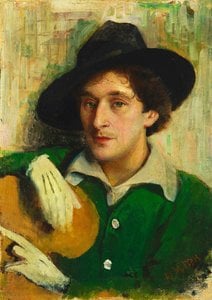
马尔克·夏加尔
1887 - 1985 , 白俄罗斯
艺术家简介
- 全名: 马克·夏加尔
- 出生地点: 白俄罗斯利奥兹纳
- 出生日期: 1887年7月6日
- 去世日期: 1985年3月28日
- 受影响的艺术家或流派:
- 超现实主义
- 现代艺术家
- 国籍: 俄罗斯-法国
- 影响艺术家:
- 巴斯特
- 德拉奈
- 博罗维科夫斯基
- 艺术风格: 现代主义,立体主义
- 著名作品:
- 我与村庄
- 维特布斯克上空
- 白色圣殇
相关文章

Jean Dominique Antony Metzinger: Pioneering Cubism & the Evolution of Abstract Form
Explore the life & work of Jean Metzinger, a pivotal Cubist painter and theorist. Discover his innovations in proto-Cubism, 'Du Cubisme,' and Crystal Cubism – a journey through modern art's evolution.

解构现实:立体主义的演变与影响深度探索
深入探索立体主义的演变历程,从对传统绘画的反叛到色彩与材质的重构。了解毕加索、布拉克等大师的关键作品,洞悉其深远影响。ArtsDot.com提供专业的艺术咨询和高品质油画复制服务。

乔治·布拉克:25幅大师杰作,重塑现代艺术与家居美学 | ArtsDot
探索乔治·布拉克25幅大师杰作,领略立体主义的魅力与现代艺术的精髓。从早期作品到经典油画,ArtsDot为您呈现法式优雅与家居装饰灵感。高清艺术复制品,点亮您的空间!立即在ArtsDot.com发现更多。

Deconstructing Reality: Cubism's Evolution, Impact & Enduring Legacy
Explore the revolutionary world of Cubism with expert insights from ArtsDot. Discover Picasso & Braque's groundbreaking techniques, its philosophical roots, and lasting impact on modern art. Expert appraisal & custom reproductions available.

解构现实:立体主义对二十世纪艺术的革命性影响
深入探索立体主义对二十世纪艺术的革命性影响。了解毕加索、布拉克等大师的作品,分析风格演变及现代建筑中的应用。专业艺术收藏指南与价值评估建议,助您慧眼识佳作!


