


 实景预览
实景预览
 发送
发送 分享
分享
 详情
详情 指南
指南

 下载图片
下载图片
 相似作品
相似作品 X射线
X射线 幻灯片播放
幻灯片播放 统计数据
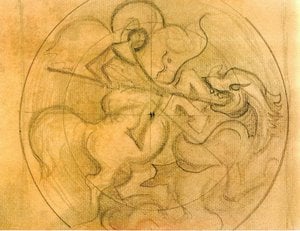
统计数据Untitled
 38.0 x 46.0 cm
 阅读全文
阅读全文
艺术微喷/版画
博物馆级艺术微喷或帆布版画,制作高效,并提供多种饰面选择。 ( 订购此收藏品的纯手工复刻画作 切换至数字图像销售渠道)




































您可以从与原作比例一致的预设尺寸中进行选择。

请输入您所需的宽度和高度,以适配您的画框或墙面。由于印刷品只能进行裁剪,无法超出原图尺寸,因此若比例不一致,画面的一部分将会被裁切。在正式印刷之前,我们会为您发送一份数字效果图供您确认。本页面显示的图片并非最终裁剪后的效果——只有效果图才能展示真实的裁剪情况。


 玻璃选项仅适用于110厘米以下的尺寸。

Untitled
艺术微喷/版画
复刻品尺寸说明
-


总计金额
¥ 417
相关艺术品



艺术家简介
A Legacy Forged in Color and Resilience
The story of Manabu Mabe is one of profound transformation, a narrative that begins far from the bright galleries of São Paulo and moves through the shadows of hardship into the luminous heights of international abstraction. Born in Japan in 1924 to a family once graced by prosperity, Mabe’s early years were defined by a sudden and devastating financial collapse that forced his family to emigrate to Brazil in 1934. This journey, a grueling fifty-day voyage in steerage, marked the beginning of a life shaped by immense physical labor and an unyielding creative spirit. As a young boy on a São Paulo coffee plantation, Mabe labored amidst the coffee trees, tending to rice and vegetables, yet even in the midst of such demanding toil, his mind remained tether of paper scraps and the quiet pursuit of self-taught literacy. It was under the dim glow of a kerosene lamp that he mastered Portuguese, a linguistic bridge that would eventually connect his Japanese heritage with his Brazilian home.
Before ascending to the pinnacle of the fine arts, Mabe’s creative journey took a more tactile, artisanal path. In the late 1950s, he established himself in São Paulo as a craftsman specializing in the delicate art of hand-painted ties. This period of meticulous detail and color application served as a precursor to his later mastery of much larger, more expansive canvases. The transition from the small-scale precision of silk to the sweeping gestures of oil on canvas was nothing short of meteoric. By the late 1950s, Mabe had emerged as a formidable force in the contemporary art scene, securing the top prize at São Paulo’s Contemporary Art Salon and earning Brazil's highest honor at the São Paulo Bienal. His talent even caught the eye of the international community, earning him prestigious accolades as one of the "artists under 35" at the inaugural Paris Biennial, signaling the arrival of a truly global voice.
The Vibrancy of Lyrical Abstraction
Mabe’s mature style is characterized by an extraordinary command of Color Field painting, a technique that allowed him to explore the emotional weight of pure pigment. Drawing inspiration from the monumental works of Mark Rothko and the expressive energy of Willem de Kooning, Mabe developed a visual language that prioritized texture, tonal gradation, and luminous hues. His canvases often became vast landscapes of light, dominated by warm yellows, deep reds, and striking teals. In works such as Esperança du Jouém, one can witness his ability to blend Pop Art sensibilities with the fluid, organic movements of lyrical abstraction, creating compositions that feel both dynamic and serene.
Central to his artistic evolution was his involvement with Grupo Seibi, a collective founded in 1963. This group provided a vital sanctuary for artists dedicated to exploring abstract forms and engaging in deep dialogues regarding the future of modernism in Brazil. Through this collective, Mabe helped shape a movement that sought to transcend representational boundaries, pushing toward an art that spoke directly to the soul through color and form. His work during this era was not merely about decoration; it was an attempt to capture the essence of light and emotion, using thick, expressive brushstrokes to create a sense of depth and movement that invited the viewer into a meditative state.
A Tragic Loss and Enduring Triumph
The trajectory of Mabe’s career is inextricably linked to one of the most heartbreaking mysteries in art history. In 1979, a catastrophic event involving Varig Flight 707—a cargo plane carrying fifty of his significant paintings en route from Tokyo to Rio de Janeiro—resulted in the total disappearance of much of his work. This loss was more than a theft of objects; it was a rupture in the historical record of his development. Yet, rather than allowing this tragedy to silence his voice, Mabe’s legacy endured through the works that remained and the profound impact he had already left on the Brazilian landscape.
Today, the significance of Manabu Mabe is preserved in the permanent collections of the world's most esteemed institutions. His presence can be felt in the halls of:
- The São Paulo Museum of Contemporary Art (MASP)
- The Museum of Modern Art (MoMA) in Rio de Janeiro
- The Beaux-Arts Museum of Dallas
- The Boston Contemporary Art Museum
Mabe remains a pivotal figure whose life serves as a testament to the resilience of the human spirit. From the coffee plantations of Brazil to the prestigious biennials of Paris, his journey was one of constant reinvention. He transformed the hardship of displacement into a vibrant, abstract language that continues to resonate with anyone moved by the power of color and the enduring beauty of light.

Manabu Mabe
1924 - 1997
快速概览
- Full Name: Manabu Mabe
- Nationality: Japanese
- Date Of Birth: 1924
- Date Of Death: 1997
- Place Of Birth: Japan
- Notable Artworks:
- TA SO GA RE
- Esperança du Jouém
- Artistic Movement Or Style: Abstract Painting / Grupo Seibi
- Artists Or Movements Influenced By This Artist: ['Color Field']