


 发送
发送 分享
分享
 详情
详情 指南
指南

 下载图片
下载图片
 相似作品
相似作品 幻灯片播放
幻灯片播放 统计数据
统计数据(Untitled)


 阅读全文
阅读全文
手工油画复制品
由我们的艺术家按需定制,为您提供您所选尺寸及画框的布面手工油画。 ( 切换至版画销售渠道 切换至数字图像销售渠道)




































您可以从与原作比例一致的预设尺寸中进行选择。

请输入您需要的宽度和高度,以适配您的画框或墙面。由于作品为手工绘制,若您选择不同的尺寸比例,艺术家可能会在画面边缘多画一些或稍作裁剪 —— 由您决定。在开始绘画之前,我们会为您发送一份数字效果图供您确认。本页面上展示的图片并非最终实物 —— 只有效果图才能反映真实结果。
下单后,ArtsDot.com 团队将通过电子邮件联系客户获取具体要求,并提供效果预览图


 玻璃选项仅适用于110厘米以下的尺寸。

(Untitled)
复制品材质
复刻品尺寸说明
-


总计金额
¥ 1763
A Symphony of Shadow and Light
In the quiet, evocative realm of Man Ray’s photography, we encounter a profound dialogue between the mundane and the metaphysical. This stark black and white composition, often associated with the enigmatic spirit of “The Gift,” transcends mere documentation to become a window into the avant-garde mind. At first glance, the viewer is presented with an abstract arrangement of draped fabric—perhaps a heavy wool—rendered in exquisite detail against a textured surface. There is no recognizable landscape or portrait here; instead, the artist invites us into a world of pure form. The vertical orientation of the piece emphasizes a sense of soaring height, while intersecting lines of shadow create a dynamic diagonal element that pulls the eye upward, much like a dancer caught in a moment of suspended motion.
The power of this work lies in its masterful manipulation of light and shadow, a technique Man Ray honed to perfection during his most prolific years. Through high-contrast photography, he captures the very essence of texture, making the weave of the fabric feel almost tactile to the viewer. The lighting, appearing to emanate from a single, strong source above and slightly to the left, casts long, dramatic shadows that obscure the underlying form, creating an atmosphere of deep mystery. This interplay between visibility and obscurity serves as a metaphor for the human experience—the way certain truths are illuminated while others remain shrouded in the velvet darkness of the unknown.
The Legacy of the Avant-Garde
To understand this piece is to understand the radical intellectual currents of Dadaism and Surrealism that defined the early 20th century. Born Emmanuel Radnitzky in Philadelphia, Man Ray emerged as an iconoclast who rejected traditional artistic conventions in favor of experimentation and the power of imagination. Influenced by the "ready-mades" of Marcel Duchamp, Ray sought to challenge established norms and redefine what could be considered art. This photograph embodies that spirit of rebellion; it strips away the need for a literal subject, focusing instead on the raw, formal elements of line, shape, and light.
For the discerning collector or interior designer, this artwork offers a timeless elegance that complements both modern and classic spaces. Its monochromatic palette provides a sophisticated anchor for a room, offering a sense of depth and intellectual weight without overwhelming the surrounding decor. The piece does not merely decorate a wall; it commands contemplation. It evokes a sense of vulnerability and concealment, making it an ideal selection for those seeking to infuse their environment with a touch of mystery, historical significance, and the enduring allure of the Surrealist movement.
问答详情
哪里可以买到 马奈·雷 (Mǎ Nài Léi) 的《(Untitled)》 的版画?
若想订购 马奈·雷 (Mǎ Nài Léi) 的《(Untitled)》 的版画,只需前往其 艺术版画 页面进行订购即可:采用棉质帆布或档案级画布纸制作的艺术版画。
是否可以下载"(Untitled)"的高分辨率版本?
您可以在 马奈·雷 (Mǎ Nài Léi) 的《(Untitled)》 的 数字图像 页面购买其数字图像:高分辨率数字图像下载。
在购买之前,我可以在自己的墙上预览 马奈·雷 (Mǎ Nài Léi) 的《(Untitled)》 吗?
“(Untitled)” 具备增强现实预览功能:通过作品的 AR 预览 页面,您可以在兼容设备上查看该作品呈现在您专属空间的效果。
相关艺术品


艺术家简介
A Life Illuminated by Shadows
Emmanuel Radnitzky, known to the world as Man Ray, was a restless spirit who defied easy categorization. Born in 1890 in Philadelphia to Russian Jewish immigrant parents, his journey from aspiring painter to pioneering photographer and filmmaker embodies the radical artistic ferment of the early 20th century. The shift from “Manny” Radnitzky to the enigmatic “Man Ray” itself speaks volumes about an artist determined to forge a new identity, one unbound by convention. His family’s move to New York City proved pivotal, exposing him to the burgeoning modernist scene and instilling in him a lifelong fascination with experimentation. Early influences included the European avant-garde showcased at Alfred Stieglitz's 291 gallery, and the gritty realism of the Ashcan School – a blend that would subtly inform his later work. Though initially dedicated to painting, it was photography that ultimately became Ray’s most potent medium for exploring the boundaries of perception and reality. He wasn't merely capturing images; he was inventing new ways of *seeing*. His early artistic endeavors were marked by a desire to break from traditional styles, influenced by his exposure to both European modernism and the raw energy of New York City life. The Ferrer Centre, with its anarchist leanings and emphasis on free expression, proved particularly formative during this period, fostering an environment where experimentation was not just encouraged but expected.Dada, Surrealism, and the Pursuit of the Impossible
Man Ray's artistic trajectory took a dramatic turn with his encounter with Marcel Duchamp in New York around 1915. This meeting sparked a shared fascination with challenging traditional notions of art, leading to explorations of “ready-mades” – ordinary manufactured objects elevated to the status of artwork. This rebellious spirit propelled Ray into the heart of the Dada movement, an anti-art protest born from the disillusionment of World War I. In 1921, he made the momentous decision to relocate to Paris, becoming a central figure in both the Dada and Surrealist circles that flourished there. While never fully aligning himself with any rigid artistic dogma, Ray embraced the Surrealists’ exploration of the unconscious mind, dreams, and the irrational. His work during this period is characterized by a dreamlike quality, often unsettling yet undeniably captivating. He wasn't interested in depicting reality as it *is*, but rather as it *feels* – fragmented, distorted, and imbued with hidden meanings. This embrace of the subconscious allowed him to move beyond mere representation towards an exploration of psychological states and emotional resonance within his art. His collaborations with other Surrealist artists, like Salvador Dalí, further solidified his position within the movement, though he always maintained a degree of independence in his artistic vision.Rayographs and the Alchemy of Light
Perhaps Man Ray is most celebrated for his invention of the “rayograph,” a cameraless photographic technique he stumbled upon almost by accident. These images—created by placing objects directly onto light-sensitive paper and exposing them to light—resulted in ethereal, ghostly compositions that defied conventional photographic representation. The rayograph wasn't simply an alternative method; it was a philosophical statement about the nature of photography itself. By eliminating the camera lens, Ray stripped away the illusion of objectivity, revealing the inherent subjectivity of the medium. These weren't representations *of* things, but rather direct imprints *from* them, imbued with a sense of mystery and otherworldliness. Beyond rayographs, his photographic portraits – particularly those of artists like Lee Miller (who would become both his muse and collaborator) – are renowned for their striking compositions and psychological depth. He experimented relentlessly with solarization, multiple exposures, and darkroom manipulation, pushing the boundaries of what photography could achieve. Solarization, in particular, became a signature technique, creating dramatic reversals of tone that added an element of the uncanny to his portraits.Beyond Stillness: Film and a Lasting Legacy
Man Ray’s artistic curiosity extended beyond still images into the realm of filmmaking. His experimental films, such as *Le Retour à la Raison* (1923) and *L'Étoile de Mer* (1928), were characterized by their surreal imagery, unconventional editing techniques, and rejection of narrative conventions. These weren’t stories told in a traditional sense; they were visual poems, explorations of form, rhythm, and the subconscious. He often employed innovative techniques like stop-motion animation and superimposition to create disorienting and dreamlike effects. Though his film work remained relatively small in volume, it was profoundly influential on subsequent generations of avant-garde filmmakers. Throughout his long career, Man Ray continued to challenge artistic norms, refusing to be confined by labels or expectations. He died in Paris in 1976, leaving behind a body of work that continues to inspire and provoke. His legacy lies not only in his technical innovations but also in his unwavering commitment to artistic freedom and his relentless pursuit of the impossible—a true pioneer who forever altered our perception of art and reality. His influence can be seen across various disciplines, from contemporary photography and film to fashion and design, demonstrating the enduring power of his vision.A Continuing Influence
- Photography: Man Ray’s techniques, particularly rayography and solarization, continue to be explored by contemporary photographers.
- Surrealism: His contributions solidified the movement's visual language and inspired countless artists across disciplines.
- Experimental Film: His pioneering work in film laid the groundwork for future generations of avant-garde filmmakers.
- Fashion Photography: Ray’s innovative approach to portraiture and composition influenced the development of modern fashion photography.

马奈·雷 (Mǎ Nài Léi)
1890 - 1976 , 美国
快速概览
- Artistic Movement Or Style: 达达主义、超现实主义
- Artists Or Movements Influenced By This Artist:
- 超现实主义
- 实验电影
- Artists Who Influenced This Artist: ['马塞尔·杜尚']
- Date Of Birth: 1890年8月27日
- Date Of Death: 1976年11月18日
- Full Name: 伊曼纽埃尔·拉德尼茨基
- Nationality: 美国国籍
- Notable Artworks (List Of Titles):
- 光线画
- 理性回归
- 海星
- Place Of Birth (City And Country): 美国费城
相关文章

Beyond the Lens: Photography's Enduring Influence on Modern & Contemporary Art
Explore photography's pivotal role in shaping modern & contemporary art. Discover key movements, influential artists like Stieglitz, and expert collecting advice from ArtsDot.

White on Canvas: 10 Masterpieces & Timeless Elegance for Your Home Decor
Explore 10 iconic white paintings by Monet, Whistler & Rothko! Discover the stories behind these serene masterpieces and their impact on art history. Find museum-quality reproductions for your home decor at .

Monochrome Visions: Exploring the Aesthetic & Historical Significance of Black & White Photography
Explore the rich history & artistic power of black and white photography. From early techniques to iconic masters like Ansel Adams, discover why monochrome continues to captivate art lovers today. Expert insights for collectors.

Dark Masterpieces: 10 Iconic Paintings Dominated by Black Tones |
Explore 10 iconic paintings dominated by black tones, from Rembrandt’s chiaroscuro to Goya's dark expressions. Discover the stories behind these masterpieces & find museum-quality art reproductions for your home at .
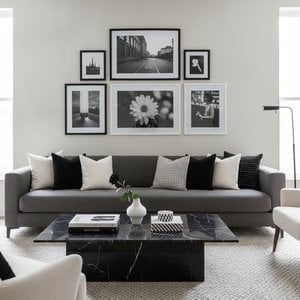
Timeless & Chic: Elevating Your New Home with the Sophistication of Black and White Photography
Transform your new home with the timeless allure of black and white photography. ArtsDot.com specializes in elegant monochrome decor and custom hand-painted wedding portraits that turn cherished milestones into lasting, soulful masterpieces. Elevate your space with ease.