
- 首页

- 帆布打印
- 马奈·雷 (Mǎ Nài Léi)
- Marcel Duchamp, Belle Haleine Eau de Voilette [Belo Hálito Água de Veuzinho]
![马奈·雷 (Mǎ Nài Léi) - Marcel Duchamp, Belle Haleine Eau de Voilette [Belo Hálito Água de Veuzinho]](/media/artworks/images/full/27/29/2729bfbe24d845e884682870ab4af335.Jpg)
 定制手绘复刻品
 分享
分享 分享
分享
 Details

 下载
下载
 相似作品
相似作品 X-Ray
X-Ray 幻灯片播放
幻灯片播放Marcel Duchamp, Belle Haleine Eau de Voilette [Belo Hálito Água de Veuzinho]


 了解更多
了解更多



































从与原作比例一致的预设尺寸中进行选择。

您可以输入自定义尺寸,以适配特定的画框或空间。如果您选择的尺寸与原图比例不符,我们将对作品进行裁剪,或通过镜像填充/纯色填充边缘的方式来扩展图像。在开始制作之前,我们会向您发送一份数字效果图供您确认。
请注意,屏幕上的预览并不能反映实际的裁剪或扩展效果。只有效果图才能准确展示最终的构图。
虽然我们提供定制尺寸,但为了保持原图比例,我们建议您从预设列表中选择尺寸。


 玻璃选项仅适用于110厘米以下的尺寸。

Marcel Duchamp, Belle Haleine Eau de Voilette [Belo Hálito Água de Veuzinho]
艺术微喷/版画
复制品尺寸
-


最终总价
-
藏品详情
A Surrealist Echo: Marcel Duchamp’s *Belle Haleine Eau de Voilette*
Man Ray's photograph of Marcel Duchamp’s *Belle Haleine Eau de Voilette*, created in 1921, isn’t merely a depiction of a perfume bottle; it’s an invitation into the heart of Dadaism and Surrealism—a deliberate disruption of conventional art and perception. This “assisted readymade,” as Duchamp himself termed it, transcends its humble origins to become a potent symbol of artistic rebellion, gender fluidity, and the very nature of representation itself. The image, often reproduced in galleries and design publications alike, holds an undeniable allure, prompting viewers to question what constitutes art and how we engage with it.
At first glance, the composition appears straightforward: a black-and-white photograph centered on a Rigaud perfume bottle, its label bearing the enigmatic title “Belle Haleine – Eau de Voilette.” However, closer inspection reveals layers of carefully orchestrated detail. The bottle itself is an ordinary object—a utilitarian vessel for fragrance—yet Duchamp elevates it through his intervention. The woman’s face, subtly embedded within the glass, isn't a portrait in the traditional sense; rather, it’s a ghostly presence, a suggestion of femininity and allure that simultaneously destabilizes the image. The delicate ribbon cascading from the bottle’s neck adds an element of fragility and grace, further emphasizing the object’s transformation.
The Genesis of Rrose Sélavy
The creation of *Belle Haleine* is inextricably linked to the emergence of Rrose Sélavy, a female alter ego conceived by Duchamp in 1921. This persona, presented through a series of signatures and visual representations—including the label on this very perfume bottle—represented a deliberate challenge to conventional notions of identity and artistic authorship. The name itself is a clever pun, combining “rose” (French for rose) with “selavy,” a word Duchamp invented, evoking both beauty and concealment. Man Ray’s photographic documentation of Duchamp in drag – a striking image of the artist adorned in feminine attire – solidified Rrose Sélavy as a key figure within Duchamp's artistic universe.
The decision to replace the original label—which simply stated “Eau de Violette”—with the altered inscription "Belle Haleine - Eau de Voilette" is itself a significant act. The subtle shift in vowels transforms the phrase, creating a new meaning that hints at both luxury and secrecy. This linguistic manipulation underscores Duchamp’s broader interest in challenging established conventions and disrupting the viewer's expectations.
Technique and Symbolism
Ray’s photographic technique is deliberately understated, favoring a straightforward frontal view that emphasizes the bottle’s form and the woman’s face. The soft, diffused lighting creates subtle shadows, lending an air of mystery and sophistication to the image. The textured background—resembling draped fabric or wall – provides a grounding element, preventing the composition from feeling overly ethereal. Lines are primarily geometric, defining the bottle's shape with precision, while subtle linear textures in the background add depth and visual interest. The photograph itself appears to be an analog print, lending it a tactile quality that contrasts with the conceptual nature of the artwork.
Beyond its aesthetic qualities, *Belle Haleine* is rich in symbolism. The perfume bottle represents luxury, beauty, and perhaps even nostalgia—elements often associated with femininity. However, the inclusion of the woman’s face introduces an element of ambiguity and intrigue, suggesting a hidden identity or a subversive commentary on traditional gender roles. The act of transforming a mundane object into a work of art speaks to Duchamp's core philosophy: that art can be found in everyday life, challenging viewers to reconsider their perceptions and assumptions.
A Legacy of Conceptual Art
*Belle Haleine Eau de Voilette* stands as a pivotal work in the history of modern art. It exemplifies the radical experimentation of Dadaism and Surrealism, paving the way for the development of conceptual art—an approach that prioritizes ideas over traditional artistic techniques. Duchamp’s willingness to challenge established norms and redefine the boundaries of art continues to resonate with artists and critics today. Reproductions of this iconic image are frequently used in interior design contexts, bringing a touch of intellectual curiosity and surrealist elegance to spaces.
相似艺术品


艺术家简介
A Life Illuminated by Shadows
Emmanuel Radnitzky, known to the world as Man Ray, was a restless spirit who defied easy categorization. Born in 1890 in Philadelphia to Russian Jewish immigrant parents, his journey from aspiring painter to pioneering photographer and filmmaker embodies the radical artistic ferment of the early 20th century. The shift from “Manny” Radnitzky to the enigmatic “Man Ray” itself speaks volumes about an artist determined to forge a new identity, one unbound by convention. His family’s move to New York City proved pivotal, exposing him to the burgeoning modernist scene and instilling in him a lifelong fascination with experimentation. Early influences included the European avant-garde showcased at Alfred Stieglitz's 291 gallery, and the gritty realism of the Ashcan School – a blend that would subtly inform his later work. Though initially dedicated to painting, it was photography that ultimately became Ray’s most potent medium for exploring the boundaries of perception and reality. He wasn't merely capturing images; he was inventing new ways of *seeing*. His early artistic endeavors were marked by a desire to break from traditional styles, influenced by his exposure to both European modernism and the raw energy of New York City life. The Ferrer Centre, with its anarchist leanings and emphasis on free expression, proved particularly formative during this period, fostering an environment where experimentation was not just encouraged but expected.Dada, Surrealism, and the Pursuit of the Impossible
Man Ray's artistic trajectory took a dramatic turn with his encounter with Marcel Duchamp in New York around 1915. This meeting sparked a shared fascination with challenging traditional notions of art, leading to explorations of “ready-mades” – ordinary manufactured objects elevated to the status of artwork. This rebellious spirit propelled Ray into the heart of the Dada movement, an anti-art protest born from the disillusionment of World War I. In 1921, he made the momentous decision to relocate to Paris, becoming a central figure in both the Dada and Surrealist circles that flourished there. While never fully aligning himself with any rigid artistic dogma, Ray embraced the Surrealists’ exploration of the unconscious mind, dreams, and the irrational. His work during this period is characterized by a dreamlike quality, often unsettling yet undeniably captivating. He wasn't interested in depicting reality as it *is*, but rather as it *feels* – fragmented, distorted, and imbued with hidden meanings. This embrace of the subconscious allowed him to move beyond mere representation towards an exploration of psychological states and emotional resonance within his art. His collaborations with other Surrealist artists, like Salvador Dalí, further solidified his position within the movement, though he always maintained a degree of independence in his artistic vision.Rayographs and the Alchemy of Light
Perhaps Man Ray is most celebrated for his invention of the “rayograph,” a cameraless photographic technique he stumbled upon almost by accident. These images—created by placing objects directly onto light-sensitive paper and exposing them to light—resulted in ethereal, ghostly compositions that defied conventional photographic representation. The rayograph wasn't simply an alternative method; it was a philosophical statement about the nature of photography itself. By eliminating the camera lens, Ray stripped away the illusion of objectivity, revealing the inherent subjectivity of the medium. These weren't representations *of* things, but rather direct imprints *from* them, imbued with a sense of mystery and otherworldliness. Beyond rayographs, his photographic portraits – particularly those of artists like Lee Miller (who would become both his muse and collaborator) – are renowned for their striking compositions and psychological depth. He experimented relentlessly with solarization, multiple exposures, and darkroom manipulation, pushing the boundaries of what photography could achieve. Solarization, in particular, became a signature technique, creating dramatic reversals of tone that added an element of the uncanny to his portraits.Beyond Stillness: Film and a Lasting Legacy
Man Ray’s artistic curiosity extended beyond still images into the realm of filmmaking. His experimental films, such as *Le Retour à la Raison* (1923) and *L'Étoile de Mer* (1928), were characterized by their surreal imagery, unconventional editing techniques, and rejection of narrative conventions. These weren’t stories told in a traditional sense; they were visual poems, explorations of form, rhythm, and the subconscious. He often employed innovative techniques like stop-motion animation and superimposition to create disorienting and dreamlike effects. Though his film work remained relatively small in volume, it was profoundly influential on subsequent generations of avant-garde filmmakers. Throughout his long career, Man Ray continued to challenge artistic norms, refusing to be confined by labels or expectations. He died in Paris in 1976, leaving behind a body of work that continues to inspire and provoke. His legacy lies not only in his technical innovations but also in his unwavering commitment to artistic freedom and his relentless pursuit of the impossible—a true pioneer who forever altered our perception of art and reality. His influence can be seen across various disciplines, from contemporary photography and film to fashion and design, demonstrating the enduring power of his vision.A Continuing Influence
- Photography: Man Ray’s techniques, particularly rayography and solarization, continue to be explored by contemporary photographers.
- Surrealism: His contributions solidified the movement's visual language and inspired countless artists across disciplines.
- Experimental Film: His pioneering work in film laid the groundwork for future generations of avant-garde filmmakers.
- Fashion Photography: Ray’s innovative approach to portraiture and composition influenced the development of modern fashion photography.

马奈·雷 (Mǎ Nài Léi)
1890 - 1976 , 美国
艺术家简介
- Artistic Movement Or Style: 达达主义、超现实主义
- Artists Or Movements Influenced By This Artist:
- 超现实主义
- 实验电影
- Artists Who Influenced This Artist: ['马塞尔·杜尚']
- Date Of Birth: 1890年8月27日
- Date Of Death: 1976年11月18日
- Full Name: 伊曼纽埃尔·拉德尼茨基
- Nationality: 美国国籍
- Notable Artworks (List Of Titles):
- 光线画
- 理性回归
- 海星
- Place Of Birth (City And Country): 美国费城
相关文章

萨尔瓦多·达利:25幅大师级作品,重塑超现实主义艺术与家居美学
探索萨尔瓦多·达利25幅大师级作品,领略超现实主义的奇幻魅力!深入了解达利的艺术风格、梦境般的色彩与象征意义。ArtsDot.com提供博物馆品质的达利画作复制品,为您的家居带来艺术灵感。立即探索完整系列!


Mystical Masterpieces: 10 Artworks That Transcends Reality |
Journey into the ethereal with our Top 10 mystical artworks! Explore iconic paintings by Klimt, Dali & more. Discover symbolic art, dreamlike landscapes, and evocative colors – find museum-quality reproductions to transform your home on .
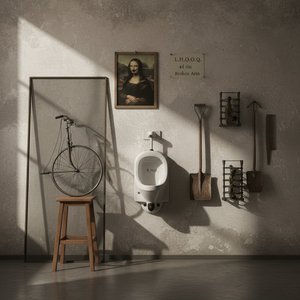
Marcel Duchamp: Challenging Conventions & Redefining Art in the 20th Century
Explore the revolutionary art of Marcel Duchamp! Discover how his Dadaist readymades challenged artistic conventions & redefined modern art. A deep dive into 'Fountain', conceptual shifts, and his lasting impact.

Marcel Dyf: A Study in Belgian Surrealist Landscape and the Poetics of Memory
Explore the captivating landscapes of Marcel Dyf (1899-1985). Discover his Impressionist roots, subtle Surrealism, and enduring legacy. Learn about his life, art, and value with ArtsDot.

马格里特大师25幅经典之作:超现实主义艺术与家居装饰灵感 | ArtsDot
探索马格里特25幅超现实主义经典画作!深入了解比利时艺术家René Magritte的艺术世界,感受梦幻与哲思。ArtsDot.com提供高清油画复制品及家居装饰灵感,将大师作品带入您的生活空间。立即在线探索完整系列!

