


 实景预览
实景预览
 发送
发送 分享
分享
 详情
详情 指南
指南

 下载图片
下载图片
 相似作品
相似作品 X射线
X射线 幻灯片播放
幻灯片播放 统计数据
统计数据Glass Tears


 阅读全文
阅读全文
艺术微喷/版画
博物馆级艺术微喷或帆布版画,制作高效,并提供多种饰面选择。 ( 订购此收藏品的纯手工复刻画作 切换至数字图像销售渠道)




P118B ¥10

P118H ¥10

P118W ¥10

P438Z ¥10

P508JH ¥12

P508YH ¥12

P805H ¥10

P805Z ¥10

P919BZ ¥10

P919G ¥10

P919XJ ¥10

P959ZH ¥10

P968JZ ¥12

W106C ¥8

W218G ¥10

W218JH ¥8

W218Y ¥10

W307PJ ¥10

W316G ¥10

W316PJ ¥8

W316Y ¥10

W398PJ ¥8

W4111J ¥10

W500HY ¥15

W500JH ¥15

W692G ¥12

W849H ¥8

W940BG ¥15

W953PJ ¥8




您可以从与原作比例一致的预设尺寸中进行选择。

请输入您所需的宽度和高度,以适配您的画框或墙面。由于印刷品只能进行裁剪,无法超出原图尺寸,因此若比例不一致,画面的一部分将会被裁切。在正式印刷之前,我们会为您发送一份数字效果图供您确认。本页面显示的图片并非最终裁剪后的效果——只有效果图才能展示真实的裁剪情况。


 玻璃选项仅适用于110厘米以下的尺寸。

Glass Tears
艺术微喷/版画
复刻品尺寸说明
-


总计金额
¥ 416
A Frozen Moment of Melancholy: Man Ray’s “Glass Tears”
Man Ray's "Glass Tears," created between 1930 and 1932, isn’t merely a photograph; it’s a distilled emotion captured in stark black and white. The image, a close-up of a woman’s face, immediately draws the viewer into a world of profound sadness and quiet contemplation. It's a deceptively simple composition—a single eye, framed by long, dark lashes adorned with glistening droplets of water – yet within that simplicity lies a complex narrative about grief, performance, and the very nature of representation.
The photograph’s genesis is rooted in the turbulent period following Man Ray's painful separation from his lover, Lee Miller. Following their breakup, Ray embarked on a deliberate act of emotional excavation, creating a series of images intended to both confront and exorcise his feelings. “Glass Tears” emerged during this time, serving as one poignant expression of that inner turmoil. The model, a fashion mannequin, becomes an embodiment of vulnerability—a silent witness to the artist’s heartbreak. Ray's choice to utilize a mannequin rather than a live subject speaks volumes about his desire to control and manipulate the image, transforming a manufactured object into a vehicle for raw emotion.
The Language of Photograms: Technique and Innovation
Man Ray was a pioneer in photographic techniques, and “Glass Tears” exemplifies his innovative approach. The photograph itself is a photogram – an image created directly onto photographic paper without the use of a camera. This process involved placing glass beads on the woman’s face and then exposing the sheet to light through a negative. The resulting effect is remarkably tactile; the beads create a shimmering, almost crystalline texture that mimics the appearance of tears. The stark contrast between the dark lashes and the bright highlights of the eye further emphasizes the image's dramatic intensity.
Ray’s mastery lies in his ability to imbue this seemingly straightforward technique with layers of meaning. He wasn’t simply documenting a face; he was constructing an emotional landscape, manipulating light and texture to evoke a specific mood. The deliberate blurring around the edges contributes to the photograph's dreamlike quality, suggesting that the image exists outside of conventional reality.
Symbolism and Emotional Resonance
The symbolism within “Glass Tears” is both subtle and deeply affecting. The tears themselves are the most obvious symbol – a universal representation of sorrow, loss, and vulnerability. However, Ray’s choice to depict them as glass beads adds another layer of complexity. Glass, often associated with fragility and preciousness, suggests that these tears are not merely expressions of sadness but also represent something valuable—perhaps memories or emotions that cannot be easily replaced.
The woman's gaze – upward and slightly averted – invites the viewer to share in her unspoken grief. It’s a look of quiet contemplation, suggesting an internal struggle with overwhelming emotion. The photograph taps into a primal human response to sadness, creating a powerful connection between the viewer and the subject.
A Legacy of Surrealist Vision
“Glass Tears” is a quintessential example of Man Ray's contribution to the Surrealist movement. While he resisted strict categorization, his work consistently explored themes of dreamlike imagery, psychological states, and the subconscious mind. The photograph’s unsettling beauty and emotional depth align perfectly with the Surrealists’ fascination with challenging conventional perceptions of reality. It stands as a testament to Ray's ability to transform everyday objects—a mannequin, glass beads—into potent symbols of human experience.
Reproductions of “Glass Tears” offer a remarkable opportunity to bring this evocative image into your home or office. The meticulous detail and dramatic lighting of the original are faithfully captured in high-quality reproductions, allowing you to appreciate the artistry and emotional power of this iconic photograph for years to come.
问答详情
"Glass Tears" 是否支持增强现实 (AR) 预览?
“Glass Tears” 具备增强现实预览功能:通过作品的 AR 预览 页面,您可以在兼容设备上查看该作品呈现在您专属空间的效果。
马奈·雷 (Mǎ Nài Léi) 的《Glass Tears》 的色彩是如何与其情感表达相联系的?
马奈·雷 (Mǎ Nài Léi) 的《Glass Tears》 将 Neutrals 色调与 Melancholic 的基调完美融合。
我能否更详细地查看“Glass Tears”?
马奈·雷 (Mǎ Nài Léi) 的《Glass Tears》 的 X 光视图可在作品的 X射线检测 页面查看:通过十一层光学图层对图像进行交互式深度解析。
相关艺术品


艺术家简介
A Life Illuminated by Shadows
Emmanuel Radnitzky, known to the world as Man Ray, was a restless spirit who defied easy categorization. Born in 1890 in Philadelphia to Russian Jewish immigrant parents, his journey from aspiring painter to pioneering photographer and filmmaker embodies the radical artistic ferment of the early 20th century. The shift from “Manny” Radnitzky to the enigmatic “Man Ray” itself speaks volumes about an artist determined to forge a new identity, one unbound by convention. His family’s move to New York City proved pivotal, exposing him to the burgeoning modernist scene and instilling in him a lifelong fascination with experimentation. Early influences included the European avant-garde showcased at Alfred Stieglitz's 291 gallery, and the gritty realism of the Ashcan School – a blend that would subtly inform his later work. Though initially dedicated to painting, it was photography that ultimately became Ray’s most potent medium for exploring the boundaries of perception and reality. He wasn't merely capturing images; he was inventing new ways of *seeing*. His early artistic endeavors were marked by a desire to break from traditional styles, influenced by his exposure to both European modernism and the raw energy of New York City life. The Ferrer Centre, with its anarchist leanings and emphasis on free expression, proved particularly formative during this period, fostering an environment where experimentation was not just encouraged but expected.Dada, Surrealism, and the Pursuit of the Impossible
Man Ray's artistic trajectory took a dramatic turn with his encounter with Marcel Duchamp in New York around 1915. This meeting sparked a shared fascination with challenging traditional notions of art, leading to explorations of “ready-mades” – ordinary manufactured objects elevated to the status of artwork. This rebellious spirit propelled Ray into the heart of the Dada movement, an anti-art protest born from the disillusionment of World War I. In 1921, he made the momentous decision to relocate to Paris, becoming a central figure in both the Dada and Surrealist circles that flourished there. While never fully aligning himself with any rigid artistic dogma, Ray embraced the Surrealists’ exploration of the unconscious mind, dreams, and the irrational. His work during this period is characterized by a dreamlike quality, often unsettling yet undeniably captivating. He wasn't interested in depicting reality as it *is*, but rather as it *feels* – fragmented, distorted, and imbued with hidden meanings. This embrace of the subconscious allowed him to move beyond mere representation towards an exploration of psychological states and emotional resonance within his art. His collaborations with other Surrealist artists, like Salvador Dalí, further solidified his position within the movement, though he always maintained a degree of independence in his artistic vision.Rayographs and the Alchemy of Light
Perhaps Man Ray is most celebrated for his invention of the “rayograph,” a cameraless photographic technique he stumbled upon almost by accident. These images—created by placing objects directly onto light-sensitive paper and exposing them to light—resulted in ethereal, ghostly compositions that defied conventional photographic representation. The rayograph wasn't simply an alternative method; it was a philosophical statement about the nature of photography itself. By eliminating the camera lens, Ray stripped away the illusion of objectivity, revealing the inherent subjectivity of the medium. These weren't representations *of* things, but rather direct imprints *from* them, imbued with a sense of mystery and otherworldliness. Beyond rayographs, his photographic portraits – particularly those of artists like Lee Miller (who would become both his muse and collaborator) – are renowned for their striking compositions and psychological depth. He experimented relentlessly with solarization, multiple exposures, and darkroom manipulation, pushing the boundaries of what photography could achieve. Solarization, in particular, became a signature technique, creating dramatic reversals of tone that added an element of the uncanny to his portraits.Beyond Stillness: Film and a Lasting Legacy
Man Ray’s artistic curiosity extended beyond still images into the realm of filmmaking. His experimental films, such as *Le Retour à la Raison* (1923) and *L'Étoile de Mer* (1928), were characterized by their surreal imagery, unconventional editing techniques, and rejection of narrative conventions. These weren’t stories told in a traditional sense; they were visual poems, explorations of form, rhythm, and the subconscious. He often employed innovative techniques like stop-motion animation and superimposition to create disorienting and dreamlike effects. Though his film work remained relatively small in volume, it was profoundly influential on subsequent generations of avant-garde filmmakers. Throughout his long career, Man Ray continued to challenge artistic norms, refusing to be confined by labels or expectations. He died in Paris in 1976, leaving behind a body of work that continues to inspire and provoke. His legacy lies not only in his technical innovations but also in his unwavering commitment to artistic freedom and his relentless pursuit of the impossible—a true pioneer who forever altered our perception of art and reality. His influence can be seen across various disciplines, from contemporary photography and film to fashion and design, demonstrating the enduring power of his vision.A Continuing Influence
- Photography: Man Ray’s techniques, particularly rayography and solarization, continue to be explored by contemporary photographers.
- Surrealism: His contributions solidified the movement's visual language and inspired countless artists across disciplines.
- Experimental Film: His pioneering work in film laid the groundwork for future generations of avant-garde filmmakers.
- Fashion Photography: Ray’s innovative approach to portraiture and composition influenced the development of modern fashion photography.

马奈·雷 (Mǎ Nài Léi)
1890 - 1976 , 美国
快速概览
- Artistic Movement Or Style: 达达主义、超现实主义
- Artists Or Movements Influenced By This Artist:
- 超现实主义
- 实验电影
- Artists Who Influenced This Artist: ['马塞尔·杜尚']
- Date Of Birth: 1890年8月27日
- Date Of Death: 1976年11月18日
- Full Name: 伊曼纽埃尔·拉德尼茨基
- Nationality: 美国国籍
- Notable Artworks (List Of Titles):
- 光线画
- 理性回归
- 海星
- Place Of Birth (City And Country): 美国费城
相关文章

Pictorialism: A Search for Artistic Photography's Soul – Aesthetics, Techniques & Legacy
Explore the captivating world of Pictorialism – a pivotal movement that transformed photography into fine art. Discover key artists like Stieglitz & Käsebier, techniques, and collecting tips from experts.

Monochrome Visions: Exploring the Aesthetic & Historical Significance of Black & White Photography
Explore the rich history & artistic power of black and white photography. From early techniques to iconic masters like Ansel Adams, discover why monochrome continues to captivate art lovers today. Expert insights for collectors.

Beyond the Lens: Photography's Enduring Influence on Modern & Contemporary Art
Explore photography's pivotal role in shaping modern & contemporary art. Discover key movements, influential artists like Stieglitz, and expert collecting advice from ArtsDot.
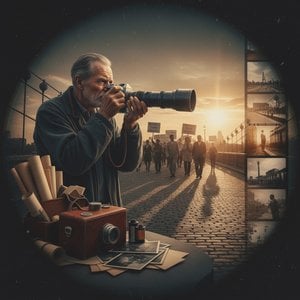
Witnessing History Through Lens & Light: Documentary Photography's Enduring Legacy
Explore the powerful history of documentary photography – from its origins to contemporary masters like Gordon Parks & W. Eugene Smith. Discover how this art form shapes our understanding of society and witness pivotal moments in time.

Dark Masterpieces: 10 Iconic Paintings Dominated by Black Tones |
Explore 10 iconic paintings dominated by black tones, from Rembrandt’s chiaroscuro to Goya's dark expressions. Discover the stories behind these masterpieces & find museum-quality art reproductions for your home at .