

 实景预览
实景预览
 分享
分享 分享
分享
 详情
详情 指南
指南

 下载作品
下载作品
 相似作品
相似作品 X射线
X射线 幻灯片播放
幻灯片播放 问答
问答 统计数据
统计数据Summer Landscape

- 113.0 x 39.0 cm


 展开全文
展开全文
艺术微喷/版画
博物馆级艺术微喷或帆布版画,制作高效,并提供多种饰面选择。 ( 订购纯手工绘制画作 切换至数字图像销售渠道)




































您可以从与原作比例一致的预设尺寸中进行选择。

请输入您所需的宽度和高度,以适配您的画框或墙面。由于印刷品只能进行裁剪,无法超出原图尺寸,因此若比例不一致,画面的一部分将会被裁切。在正式印刷之前,我们会为您发送一份数字效果图供您确认。本页面显示的图片并非最终裁剪后的效果——只有效果图才能展示真实的裁剪情况。


 玻璃选项仅适用于110厘米以下的尺寸。

Summer Landscape
艺术微喷/版画
复刻品尺寸
-


最终结算价
¥ 423
常见问题与解答
在哪里可以找到关于“Summer Landscape”的指南?
Kano Tan'Yū 的《Summer Landscape》 的 指南 页面提供了一份可打印的两页式学生资料单:包含作品及其基本信息表、将其置于艺术家生平中的年代轴、艺术家的其他作品、经测量的色板,以及四种格式的即用型引用文献。
"Summer Landscape"创作于哪一年,属于哪种艺术流派?
"Summer Landscape"创作于1662年,属于Japanese Landscape Painting运动时期的作品。其创作年代与艺术流派确立了该作品在艺术史上的地位。
在“Summer Landscape”中,对比与和谐是如何交织融合的?
在“Summer Landscape”中,Bold的对比与Unified Palette的和谐交相辉映。
相似作品


艺术家简介
Early Life and Lineage
Kanō Tan’yū, born in Kyoto in 1602, emerged from a lineage steeped in the traditions of the Kanō school—the most influential force in Japanese painting for centuries. His father, Kano Takanobu, was a prominent artist within this established system, and Tan’yū inherited not only his artistic skill but also a profound understanding of the aesthetic principles that had defined generations of painters. The Kanō school, originating with Kanō Masanobu in the 15th century, blended elements of Zen Buddhism, Chinese landscape painting, and classical Japanese styles. Tan'yū’s early training would have been rigorous, focusing on meticulous brushwork, an understanding of compositional balance, and a deep respect for historical precedents. However, he wasn’t simply destined to replicate the past; his career would be marked by a unique synthesis of tradition and innovation.
The Kajibashi Style and Shogunate Patronage
At the remarkably young age of seventeen, Tan’yū received an appointment as painter to the Tokugawa shogunate. This pivotal moment dramatically altered the course of his artistic development. He was granted an estate in Edo (modern-day Tokyo) called Kajibashi, and it became synonymous with a distinct branch of the Kanō school—the Kajibashi-Kano style. This patronage wasn’t merely financial; it came with the responsibility of establishing a new visual language that reflected the power and authority of the shogunate. Tan'yū responded by deliberately returning to earlier, more restrained forms of Kanō painting, eschewing some of the flamboyant excesses that had crept into the style during the late 16th century. He favored historical subjects—particularly those embodying Confucian ethical precepts—and landscapes imbued with a sense of solemn dignity.
Large-Scale Commissions and Architectural Decoration
Tan’yū's influence extended far beyond individual paintings; he became renowned for his large-scale decorative projects within the castles and palaces of the Tokugawa regime. He left an indelible mark on Nijō Castle in Kyoto, decorating its walls with scenes that celebrated the shogunate’s authority and legitimacy. Similar commissions followed at Nagoya Castle and the Kyoto Imperial Palace. These weren't isolated artistic endeavors; they were integral to the political messaging of the era. The paintings served as powerful visual statements, reinforcing the shogun’s position and projecting an image of stability and cultural refinement. His approach involved not only his own hand but also that of a growing workshop—a testament to the scale of these undertakings and his role as a master organizer.
Themes and Techniques: A Synthesis of Tradition
Tan'yū’s paintings are characterized by a remarkable balance between technical virtuosity and philosophical depth. He excelled in both monochrome ink wash painting (sumi-e) and colorful, detailed compositions. His subject matter often revolved around historical figures—Confucius and his disciples being particularly favored—and scenes from nature, such as landscapes populated with tigers, birds, and bamboo. The tiger motif, for example, wasn’t simply a display of artistic skill; it symbolized courage, strength, and protection—qualities highly valued by the warrior class. His technique involved meticulous brushwork, subtle gradations of tone, and a masterful use of negative space. He was also known for his numerous sketches of flora and fauna, demonstrating an acute observational ability that informed his larger compositions. His style is often described as conservative, but this conservatism wasn’t stagnation; it was a deliberate effort to revive the core principles of the Kanō school while adapting them to the needs of his time.
Legacy and Historical Significance
Kanō Tan’yū died in Edo in 1674, leaving behind a legacy that profoundly shaped Japanese painting for generations. He established the dominant style of Edo-period art, laying the foundation for a vast organization of official shogunate painters. His emphasis on historical subjects and Confucian values resonated with the ruling class, solidifying his position as a cultural icon. While later artists would explore new avenues of expression, Tan’yū's influence remained pervasive. He is remembered not only as a skilled painter but also as a master collector, a shrewd administrator, and a pivotal figure in the development of Japanese art history. His work continues to be admired for its technical brilliance, philosophical depth, and enduring aesthetic appeal.

Kano Tan'Yū
1602 - 1674
艺术家简介
- Artistic Movement Or Style: Kanō school, Momoyama style
- Artists Or Movements Influenced By This Artist: ['Later Kanō artists']
- Artists Who Influenced This Artist: ['Kano Takanobu']
- Date Of Birth: 1602
- Date Of Death: 1674
- Full Name: Kanō Tan'yū
- Nationality: Japanese
- Notable Artworks:
- Bluish-Green Fish Scales
- Summer Landscape
- Squirrel on Bamboo
- Confucius and Two Disciples
相关文章

Evocations of Place: A Historical Journey Through Landscape Art
Explore the rich history of landscape art with ArtsDot. Discover renowned artists, movements like Impressionism & Romanticism, and expert guidance for collecting timeless pieces. Find your perfect serene escape today!

浪漫主义画派的十部巨作:定义风景画的艺术传奇
探索浪漫主义风景画的巅峰!本文精选十部经典名作,带您领略莫奈、库尔贝等大师的艺术魅力。感受色彩与光影的诗意,重温自然风光的震撼。ArtsDot.com为您提供博物馆级别的艺术复制品和个性化家居装饰方案。尽在ArtsDot.com!


葛饰北斋:25幅传世名作,浮世绘大师的艺术传奇 (Katsushika Hokusai: 25 Masterpieces, The Art Legacy of the Ukiyo-e Master)
探索葛饰北斋的25幅传世名作!深入了解浮世绘大师的艺术传奇,感受《神奈川冲浪波》等经典作品背后的故事与魅力。ArtsDot.com提供博物馆级高质量复制品,为您的家居带来日本风情和艺术灵感。立即探索完整系列!
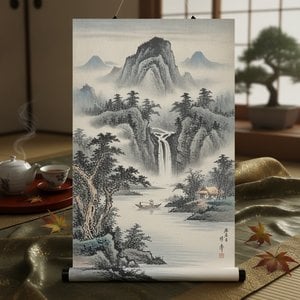
Serenity on Canvas: A Guide to the Timeless Beauty of Japanese Landscape Painting
Discover the serene beauty of Japanese landscape painting. From Hokusai's iconic woodblock prints to meditative sumi-e ink washes, explore a visual journey through the 'floating world' and learn how to bring this timeless Zen aesthetic into your modern home decor.