

 实景预览
实景预览
 分享
分享 分享
分享
 详情
详情 指南
指南

 下载作品
下载作品
 相似作品
相似作品 X射线
X射线 幻灯片播放
幻灯片播放 问答
问答 统计数据
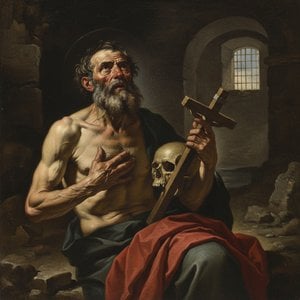
统计数据St. Jerome

- 125.0 x 100.0 cm


 展开全文
展开全文
艺术微喷/版画
博物馆级艺术微喷或帆布版画,制作高效,并提供多种饰面选择。 ( 订购纯手工绘制画作 切换至数字图像销售渠道)




P118B ¥10

P118H ¥10

P118W ¥10

P438Z ¥10

P508JH ¥12

P508YH ¥12

P805H ¥10

P805Z ¥10

P919BZ ¥10

P919G ¥10

P919XJ ¥10

P959ZH ¥10

P968JZ ¥12

W106C ¥8

W218G ¥10

W218JH ¥8

W218Y ¥10

W307PJ ¥10

W316G ¥10

W316PJ ¥8

W316Y ¥10

W398PJ ¥8

W4111J ¥10

W500HY ¥15

W500JH ¥15

W692G ¥12

W849H ¥8

W940BG ¥15

W953PJ ¥8




您可以从与原作比例一致的预设尺寸中进行选择。

请输入您所需的宽度和高度,以适配您的画框或墙面。由于印刷品只能进行裁剪,无法超出原图尺寸,因此若比例不一致,画面的一部分将会被裁切。在正式印刷之前,我们会为您发送一份数字效果图供您确认。本页面显示的图片并非最终裁剪后的效果——只有效果图才能展示真实的裁剪情况。


 玻璃选项仅适用于110厘米以下的尺寸。

St. Jerome
艺术微喷/版画
复刻品尺寸
-


最终结算价
¥ 423
The Shadowed Saint: Jusepe de Ribera’s ‘St. Jerome Penitente’
Jusepe de Ribera's “St. Jerome Penitente,” painted in 1652 during his prolific Neapolitan period, isn’t merely a portrait; it’s a visceral embodiment of spiritual anguish and the relentless pursuit of redemption. This arresting work, currently housed within the National Museum of Capodimonte in Naples, immediately commands attention with its dramatic chiaroscuro – a technique so characteristic of Ribera that it practically vibrates from the canvas. The painting depicts St. Jerome, not as a serene scholar or pious hermit, but as a man consumed by his own torment, wrestling with the demons of his past and the weight of his prophetic duty.
Ribera’s genius lay in his ability to capture raw emotion, and “St. Jerome Penitente” is a masterclass in this regard. The figure is rendered with an almost brutal realism; the deep folds of his ragged robe, the furrowed brow, the clenched fist beating against his chest – every detail speaks of profound suffering. The skull positioned prominently on the right side isn’t simply a morbid symbol of mortality; it's a potent reminder of human vanity and the fleeting nature of earthly existence, a visual anchor for Jerome’s introspection. The arrow piercing his forehead, a recurring motif in Ribera’s work, suggests divine guidance or perhaps even punishment – a constant pressure on the saint’s soul.
A Master of Tenebrism: Technique and Influence
Ribera's mastery of tenebrism—the dramatic contrast between light and dark—is arguably his most defining characteristic. He eschewed the soft, diffused lighting favored by many of his contemporaries, instead employing a stark, almost theatrical illumination that throws the figure into sharp relief against a shadowy background. This technique wasn’t simply an aesthetic choice; it served to heighten the emotional intensity of the scene and draw the viewer's eye directly to Jerome’s tormented face. His use of impasto – applying paint thickly to create texture – further enhances this effect, giving the surface of the canvas a palpable sense of physicality.
Ribera’s style was deeply influenced by Caravaggio, whom he encountered in Rome and subsequently adopted many of his techniques. However, Ribera pushed these influences even further, imbuing them with a distinctly Spanish sensibility – a darker, more dramatic intensity than is often associated with Caravaggio's work. The painting’s composition, reminiscent of classical sculpture, contributes to its monumental quality, reinforcing the saint’s stature as a figure of immense spiritual significance.
Historical Context: Naples Under Spanish Rule
To fully appreciate “St. Jerome Penitente,” it’s crucial to understand the historical context in which it was created – Naples under Spanish rule in the mid-17th century. This period was marked by political instability, economic hardship, and religious fervor. Ribera's work reflects these realities, often depicting scenes of suffering, poverty, and martyrdom—themes that resonated deeply with the populace. His choice to set the scene within a desolate, almost monastic interior underscores the saint’s isolation and his dedication to a life of prayer and penance.
The painting was produced during a time when religious art held immense social and political power in Spain and its colonies. The Catholic Church commissioned countless works of art to inspire piety and reinforce its authority, and Ribera's paintings were highly sought after by wealthy patrons and ecclesiastical institutions. “St. Jerome Penitente” exemplifies this trend, offering a powerful visual representation of religious devotion and the promise of salvation.
Symbolism and Emotional Resonance
Beyond its technical brilliance, “St. Jerome Penitente” is rich in symbolism. The act of beating his breast with a stone is a traditional gesture of repentance, signifying remorse for past sins and a desire to atone for wrongdoing. The skull represents the inevitability of death and the vanity of earthly pursuits—a stark reminder that all worldly ambitions are ultimately futile. The arrow piercing Jerome’s forehead symbolizes divine intervention or perhaps even punishment, highlighting the saint's role as a messenger of God’s judgment.
Ultimately, “St. Jerome Penitente” is a profoundly moving work of art that speaks to the universal human experience of suffering, regret, and the enduring quest for spiritual redemption. It’s a painting that lingers in the memory long after it has been viewed, prompting reflection on our own mortality and the importance of living a life guided by faith and compassion. Its dramatic intensity and masterful execution make it a cornerstone of Baroque art and a testament to Ribera's unparalleled artistic vision.
常见问题与解答
里贝拉 (Lǐbèi Lā) 是否还有其他别名或曾用名?
里贝拉 (Lǐbèi Lā) 也以 何塞·德·里贝拉 (Hé Sài Dé Lǐbèi Lā), 约瑟夫·德·里贝拉 (Yuēsèfú Dé Lǐbèi Lā), 洛·斯帕尼奥列托 (Luò Sīpāní Ào Liè Tuō), 哈蒂瓦的里贝拉 (Hātìwǎ De Lǐbèi Lā), 何塞·德·里贝拉·伊·佩雷斯 (Hé Sài Dé Lǐbèi Lā Yí Pèilèisī) 等其他名称为人所知。
如何预览里贝拉 (Lǐbèi Lā) 的《St. Jerome》的复制品?
您可以在作品的效果预览页面查看里贝拉 (Lǐbèi Lā) 的《St. Jerome》的预览。
在 里贝拉 (Lǐbèi Lā) 的《St. Jerome》 中,艺术流派与时代背景是如何交汇的?
"St. Jerome" 属于 Baroque Tenebrism 流派,其创作者活跃于 近代早期 时期。
相似作品


艺术家简介
生平与时代背景
何塞·德·里贝拉,又名“小西班牙人”(Lo Spagnoletto),是巴洛克时代的杰出人物,他的画作充满戏剧张力和毫不妥协的现实主义。1591年出生于西班牙哈蒂瓦(Xàtiva)的他,远离了瓦伦西亚的故土,最终在当时由西班牙统治的那不勒斯确立了自己的艺术地位。里贝拉的一生不仅仅是艺术发展的编年史,更是一个充满艰辛、抱负和坚定致力于描绘人类状况复杂性的故事。虽然早期的传记细节仍然笼罩在神秘之中,但我们知道他大约于1607年抵达意大利,最初定居罗马,然后逐渐转向那不勒斯——这座城市既是他艺术的家园,也是其独特风格的熔炉。与当地画家的女儿卡特琳娜·阿佐利诺(Caterina Azzolino)结婚,进一步巩固了他与那不勒斯艺术界的联系,使他能够在充满活力但又动荡不安的气氛中蓬勃发展。对明暗对比法的运用及现实主义视野
里贝拉的艺术形成深受意大利绘画潮流的影响。卡拉瓦乔的影响是不可否认的;里贝拉吸收了这位大师革命性的明暗对比法——光影之间的戏剧性互动——来创作充满情感力量的场景。然而,他并非简单地模仿。他将这种技巧与其他大师如圭多·雷尼(Guido Reni)的元素融合在一起,将古典感融入到他的构图中,同时保留了卡拉瓦乔现实主义的冲击力。这种融合造就了一种独一无二的风格:其特点是鲜明的对比、高度集中的人物形象以及毫不掩饰地描绘人类苦难和精神狂喜。他早期的作品,如《圣巴托罗缪殉难》,很好地体现了这种方法——对痛苦的令人震惊的描绘,以毫不妥协的细节呈现。他不回避描绘殉难的身体现实,扭曲的身躯、紧绷的肌肉以及皮肤和骨骼的纹理。这种对现实主义的承诺超越了宗教题材;他经常画的乞丐和平民,通常被描绘成哲学家或圣徒,在当时具有开创性意义,将边缘群体提升到以前很少在艺术中看到的尊严和重要程度。跨越多种体裁与不断演变的风格
里贝拉的艺术创作成果非常多样化。虽然他最出名的是他的宗教绘画——殉难场景、圣徒画像以及戏剧性的圣经叙事——但他也在肖像画、静物画甚至风景画方面表现出色。《圣耶柔尼摩与天使》例如,展示了他作品中更柔和、更沉思的一面,同时仍然保留了定义其作品的标志性戏剧性光线。在他的职业生涯中,里贝拉的风格经历了微妙但重要的演变。他早期的绘画以一种近乎禁欲的现实主义和对明暗对比法的强烈运用为特征。随着他在那不勒斯站稳脚跟,他的调色板变得更加丰富,他的构图更加复杂,他的光线也略微柔化。然而,他的巴洛克美学核心要素——情感强度、戏剧性叙事以及坚定致力于以诚实的方式描绘人类体验——仍然保持不变。他是一位技艺精湛的大师,能够以惊人的精确度渲染纹理,从乞丐斗篷的粗糙面料到年轻圣徒光滑的皮肤。遗产与持久的影响
何塞·德·里贝拉对艺术世界的影响超越了他的那不勒斯工作室。他成为西班牙巴洛克绘画的关键人物,与维拉斯开兹(Velázquez)、苏尔巴兰(Zurbarán)和穆里略(Murillo)等大师并列。他对明暗对比法的创新运用以及毫不妥协的现实主义影响了欧洲几代艺术家。他的作品引起了那些寻求摆脱文艺复兴艺术理想形式,拥抱更具活力、情感冲击力的风格的人们的共鸣。即使后来的艺术家也从他戏剧性的构图和对人类苦难的有力描绘中汲取灵感。今天,里贝拉的画作被收藏在世界各地的著名博物馆——马德里的普拉多博物馆(Museo del Prado)、华盛顿特区的国家艺术馆以及欧洲众多机构——确保了他的遗产几个世纪以来继续激励和吸引观众。他证明了艺术的力量在于直面艰难的真相,探索人类情感的深度,并照亮信仰和韧性的持久精神。大师的持久魅力
人们对里贝拉作品持续着迷的原因在于它超越时间和文化界限的能力。他的画作不仅仅是历史文物;它们是对人类状况——关于苦难、信仰、希望和绝望——的有力声明。他毫不妥协的现实主义迫使我们面对不舒服的真相,而他戏剧性的构图和对光影的大师运用创造了一种强烈的感情共鸣氛围。正如他所爱称的那样,“小西班牙人”留下了一部既深刻感人又具有智力刺激的作品——这一遗产确保了他成为巴洛克时代最伟大的大师之一的地位。他的画作不仅仅是用来欣赏的;它们是要体验的——在人的内心深处感受到的。
里贝拉 (Lǐbèi Lā)
1591 - 1652 , 西班牙
艺术家简介
- Artistic Movement Or Style: 巴洛克风格
- Artists Or Movements Influenced By This Artist:
- José de Ribera
- 欧洲大师
- Artists Who Influenced This Artist:
- 卡拉瓦乔
- 圭多·雷尼
- Date Of Birth: 1591年
- Date Of Death: 1652年
- Full Name: Jusepe de Ribera
- Nationality: 西班牙国籍
- Notable Artworks (List Of Titles):
- 圣巴托罗缪殉难
- 圣耶柔尼莫与天使
- Place Of Birth (City And Country): 西班牙哈蒂瓦
相关文章

巴洛克艺术巅峰:十部巨作定义时代,点亮您的臻品格调
探索巴洛克艺术的辉煌!本文精选十部巨作,带您领略卡拉瓦乔、伦勃朗等大师的光影魔法与戏剧张力。从黄金时代到宗教绘画,感受奢华与精致。ArtsDot.com为您提供博物馆品质的艺术复制品和家居装饰灵感。尽在ArtsDot.com!
Jusepe de Ribera: Dramatic Realism & Spiritual Intensity in the Spanish Golden Age
Explore the powerful Baroque paintings of Jusepe de Ribera, master of tenebrism and dramatic realism. Discover his spiritual intensity, influence on Spanish art, and considerations for collectors. Expert insights at ArtsDot.

巴洛克艺术的戏剧性辉煌:历史背景、风格特征与持久影响
深入探索巴洛克艺术的辉煌历史、独特风格与持久影响。了解卡拉瓦乔、贝尼尼等大师的作品,洞悉反宗教改革运动下的艺术变革。ArtsDot.com为您提供专业的艺术解读与高清画作欣赏。

The Visceral Stage: Exploring Dramatic Narratives & Emotional Intensity in Baroque Art
Explore the dramatic world of Baroque art! Discover iconic masters like Caravaggio & Rembrandt, their techniques, and the movement's lasting impact. Expert insights for collectors & enthusiasts at ArtsDot.

Theatricality & Triumph: Baroque Drama in Painting & Sculpture
Explore the dramatic world of Baroque art! Discover its history, defining characteristics, & lasting influence on painting & sculpture. Expert insights into Caravaggio, Zurbarán, and Bernini – plus high-quality reproductions at ArtsDot.
