


 效果预览
效果预览
 购买手绘画作
 分享
分享 分享
分享
 详情
详情

 下载
下载
 相似作品
相似作品 X射线
X射线 幻灯片播放
幻灯片播放Flower Piece
 Oil
Oil- WallArt
- Biedermeier
 1835
1835- 19th Century
 80.0 x 64.0 cm
 奧匈藝廊貝爾維德宮
 展开详情
展开详情




P118B $10

P118H $10

P118W $10

P438Z $10

P508JH $12

P508YH $12

P805H $10

P805Z $10

P919BZ $10

P919G $10

P919XJ $10

P959ZH $10

P968JZ $12

W106C $8

W218G $10

W218JH $8

W218Y $10

W307PJ $10

W316G $10

W316PJ $8

W316Y $10

W398PJ $8

W4111J $10

W500HY $15

W500JH $15

W692G $12

W849H $8

W940BG $15

W953PJ $8




从与原作比例一致的预设尺寸中进行选择。

您可以输入自定义尺寸,以适配特定的画框或空间。如果您选择的尺寸与原图比例不符,我们将对作品进行裁剪,或通过镜像填充/纯色填充边缘的方式来扩展图像。在开始制作之前,我们会向您发送一份数字效果图供您确认。
请注意,屏幕上的预览并不能反映实际的裁剪或扩展效果。只有效果图才能准确展示最终的构图。
虽然我们提供定制尺寸,但为了保持原图比例,我们建议您从预设列表中选择尺寸。


 玻璃选项仅适用于110厘米以下的尺寸。

Flower Piece
艺术微喷/版画
复制品尺寸
-


最终总价
$ 62
相似艺术品


艺术家简介
A Life Dedicated to Floral Delicacy: The World of Joseph Nigg
Joseph Nigg, born in Vienna on October 13th, 1782, and passing away in the same city on September 19th, 1863, was a pivotal figure in Austrian Biedermeier painting. While his name might not be as instantly recognizable as some of his contemporaries, Nigg’s contribution to the art of still life – particularly floral arrangements and compositions featuring grapes – remains significant. His career unfolded during a period marked by a shift towards intimacy and domesticity in art, reflecting the values of the burgeoning middle class. He wasn't merely documenting flowers; he was capturing fleeting moments of beauty, imbued with a sense of quiet contemplation that resonated deeply with his audience. Nigg’s artistic journey began with formal training at the Academy of Fine Arts Vienna under Johann Baptist Drechsler, laying the foundation for a career deeply rooted in meticulous observation and technical skill.Early Career and Porcelain Mastery
For over four decades, from 1800 to 1843, Nigg dedicated himself to the art of flower painting within a Viennese porcelain factory. This wasn’t simply a commercial endeavor; it was an immersive apprenticeship in precision and detail. The demands of decorating delicate porcelain surfaces honed his ability to render textures, light, and form with extraordinary accuracy. He didn't just paint *on* porcelain—he became intimately familiar with its unique qualities, understanding how colors interacted with the glaze and how light played across its curves. In 1835, Nigg’s role expanded to include teaching painting at the factory, demonstrating his mastery of the craft and solidifying his position as a respected figure within the artistic community. The rise of the Biedermeier era proved crucial for Nigg's success. This period saw an increased appreciation for domestic scenes, natural beauty, and accessible art forms—precisely what flower painting on porcelain offered. His work wasn’t confined to small decorative pieces; he also created larger plaques showcasing elaborate floral arrangements, demonstrating a growing ambition and artistic scope. A notable achievement during this time was his contribution to the Great Exhibition of 1851 in London, where a thirty-inch high porcelain plaque representing Viennese artistry garnered attention and acclaim.The Flourishing of Oil Painting and Pastel
While renowned for his work on porcelain, Nigg’s talents extended beyond this medium. He also excelled in oil painting, watercolor, and pastel drawing, showcasing versatility and a commitment to exploring different artistic techniques. His oil paintings, often depicting lush bouquets and still lifes with grapes, reveal a refined understanding of composition, color theory, and light manipulation. These works weren't merely copies of nature; they were carefully constructed arrangements designed to evoke specific emotions and aesthetic experiences. The influence of Dutch Golden Age masters is evident in his dramatic lighting and detailed textures, yet Nigg infused these traditions with a distinctly Austrian sensibility—a sense of warmth, intimacy, and quiet elegance. Paintings like “Grandmother’s Bouquet I” and “Grandmother’s Bouquet II” achieved lasting popularity through reproductions, bringing his art into countless homes and solidifying his legacy as a painter of everyday beauty.Influences and Artistic Development
Nigg's artistic development was shaped by several key influences. The meticulous realism of Dutch Golden Age still life painters—artists like Jan van Huysum and Rachel Ruysch—provided a foundational model for his technical approach. He admired their ability to capture the ephemeral beauty of flowers, their mastery of light and shadow, and their attention to detail. However, Nigg wasn’t simply imitating these masters; he adapted their techniques to suit his own aesthetic sensibilities and the cultural context of Biedermeier Austria. The emphasis on domesticity and natural beauty within the Biedermeier movement also played a significant role in shaping his artistic vision. He responded to the growing demand for art that celebrated everyday life, creating works that were both visually appealing and emotionally resonant. His work can be seen as a bridge between the Baroque traditions of the 18th century and the more intimate aesthetic of the Biedermeier period.Legacy and Historical Significance
Joseph Nigg’s legacy lies in his ability to elevate the art of still life to new heights, particularly within the context of Austrian painting. His meticulous technique, refined color palette, and sensitive portrayal of floral arrangements continue to captivate audiences today. While he may not be a household name, his work is represented in prominent museums such as the Museum für Kunst und Industrie in Vienna, the Brera Gallery in Milan, and the Hermitage Museum in St Petersburg—testament to his enduring artistic merit. He embodies the spirit of the Biedermeier era: a dedication to craftsmanship, an appreciation for natural beauty, and a commitment to creating art that resonated with the values of everyday life. His paintings offer a glimpse into a world of quiet contemplation, reminding us of the fleeting moments of beauty that surround us.- Born: October 13th, 1782, Vienna, Austria
- Died: September 19th, 1863, Vienna, Austria
- Style: Biedermeier, Still Life Painting
- Key Subjects: Floral Arrangements, Grapes, Porcelain Decoration

艺术家简介
- Artistic Movement Or Style: Biedermeier, Still life
- Date Of Birth: October 13, 1782
- Date Of Death: September 19, 1863
- Full Name: Joseph Nigg
- Nationality: Austrian
- Notable Artworks:
- Still Life with Grapes
- Flower Piece
- Grandmother's Bouquet I
- Grandmother's Bouquet II
- Place Of Birth: Vienna, Austria
相关文章

Silent Narratives: Exploring the Enduring Appeal of Still Life Painting Across Centuries
Explore the rich history of still life painting with ArtsDot. Discover Dutch Masters, decode vanitas symbolism & learn about collecting timeless art. Expert insights and museum-quality reproductions.
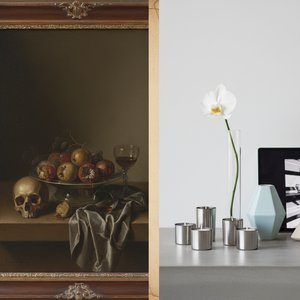
The Enduring Appeal of Still Life: A Historical & Contemporary Exploration
Explore the rich history & symbolism of still life painting with ArtsDot. Discover masterpieces from the Dutch Golden Age, learn about vanitas art, and find expert guidance for collecting timeless artworks.

Abraham Hendricksz van Beyeren: Pioneering Dutch Still Life & the Banquet Tradition
Explore the captivating world of Dutch Golden Age still life with Abraham van Beyeren. Discover his innovative techniques, symbolic banquet scenes & lasting influence on art history. Learn about collecting these masterpieces.

From Classical Still Life to Contemporary Abstraction: Elevating Villa Entertaining Spaces Through Artful Reproduction
Explore the history of still life painting & discover how artful reproductions elevate villa entertaining spaces. Expert guidance, museum-quality prints & custom artwork at ArtsDot.com.

复兴时期的宁静:比德迈尔艺术、社会与内在世界的探索
探索复兴时期的比德迈尔艺术,了解其独特的历史背景、社会影响与对内在世界的细腻描绘。ArtsDot提供精美油画复制和定制服务,助您重温经典,提升家居品味。

