


 实景预览
实景预览
 发送
发送 分享
分享
 详情
详情 指南
指南

 下载图片
下载图片
 相似作品
相似作品 X射线
X射线 幻灯片播放
幻灯片播放 统计数据
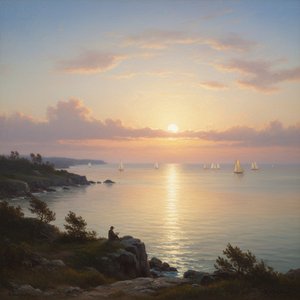
统计数据Sunset
 Oil On Canvas
- WallArt
- Hudson River School
 1872
1872- 19th Century
 46.0 x 76.0 cm
 大都会艺术博物馆
 阅读全文
阅读全文
艺术微喷/版画
博物馆级艺术微喷或帆布版画,制作高效,并提供多种饰面选择。 ( 订购此收藏品的纯手工复刻画作 切换至数字图像销售渠道)




P118B ¥10

P118H ¥10

P118W ¥10

P438Z ¥10

P508JH ¥12

P508YH ¥12

P805H ¥10

P805Z ¥10

P919BZ ¥10

P919G ¥10

P919XJ ¥10

P959ZH ¥10

P968JZ ¥12

W106C ¥8

W218G ¥10

W218JH ¥8

W218Y ¥10

W307PJ ¥10

W316G ¥10

W316PJ ¥8

W316Y ¥10

W398PJ ¥8

W4111J ¥10

W500HY ¥15

W500JH ¥15

W692G ¥12

W849H ¥8

W940BG ¥15

W953PJ ¥8




您可以从与原作比例一致的预设尺寸中进行选择。

请输入您所需的宽度和高度,以适配您的画框或墙面。由于印刷品只能进行裁剪,无法超出原图尺寸,因此若比例不一致,画面的一部分将会被裁切。在正式印刷之前,我们会为您发送一份数字效果图供您确认。本页面显示的图片并非最终裁剪后的效果——只有效果图才能展示真实的裁剪情况。


 玻璃选项仅适用于110厘米以下的尺寸。

Sunset
艺术微喷/版画
复刻品尺寸说明
-


总计金额
¥ 416
John Frederick Kensett’s Sunset on the Sea: A Luminist Meditation
The painting “Sunset on the Sea,” created by John Frederick Kensett in 1872, stands as a quintessential example of Luminism—a movement that championed atmospheric light and serene landscapes—and embodies Kensett's profound connection to the American wilderness. More than just a depiction of a coastal vista, it’s an exploration of mood, color, and the sublime beauty inherent in nature’s fleeting moments. ### Subject Matter and Composition Kensett meticulously captured the essence of Long Island Sound at dusk. The scene unfolds with remarkable clarity: a distant island punctuates the horizon line against a backdrop of expansive sky ablaze with hues of orange, crimson, and violet—colors painstakingly blended to convey the warmth and vibrancy of the setting sun. Foreground trees frame the composition, subtly guiding the viewer’s gaze towards the central vista. These trees aren't merely decorative; they serve as anchors for the eye, grounding the ethereal expanse above in a tangible reality. Scattered boats add a touch of human presence, emphasizing the scale of the landscape and hinting at the quiet contemplation of those observing it. ### Artistic Style and Technique – Luminist Philosophy Kensett’s approach aligns perfectly with the tenets of Luminism—a reaction against Romantic idealism that prioritized observation and accurate representation over dramatic emotion. Unlike his predecessors who sought to convey grandeur and awe, Kensett aimed for a more restrained aesthetic, focusing on capturing the subtle nuances of light and color as they interacted with the natural world. He achieved this remarkable feat through meticulous layering of thin glazes—a technique characteristic of Luminist painters—allowing him to build up luminous surfaces that shimmer with reflected light. This painstaking process resulted in an image that feels remarkably immediate and truthful, mirroring the experience of witnessing a sunset firsthand. ### Historical Context and Influences Kensett’s “Sunset on the Sea” emerged during a period of significant artistic innovation in America. The Hudson River School, which Kensett helped establish, championed idealized depictions of American landscapes—often infused with spiritual resonance—responding to the burgeoning Transcendentalist movement's emphasis on intuition and connection to nature. Turner’s atmospheric paintings profoundly impacted Luminist artists like Kensett, who sought to emulate Turner’s ability to convey emotion through color and light without resorting to overt narrative elements. The painting reflects a broader cultural preoccupation with capturing beauty and tranquility amidst the rapid industrialization of the era—a desire for respite from urban life and an appreciation for the enduring power of unspoiled wilderness. ### Symbolism and Emotional Impact Beyond its technical brilliance, “Sunset on the Sea” resonates deeply with viewers due to its symbolic significance. The sunset itself represents closure, transition, and the inevitable passage of time—themes explored extensively by Romantic poets and artists. However, Kensett’s Luminist style mitigates any sense of melancholy, presenting instead a vision of serene beauty and contemplative stillness. The radiant sun symbolizes hope and renewal, suggesting that even as day fades into night, light persists—a comforting reminder of the enduring presence of divine grace in the natural world. Viewing this painting evokes feelings of peace, wonder, and an appreciation for the sublime grandeur of nature—qualities that continue to captivate audiences today.问答详情
"Sunset" 融合了怎样的色调与情感?
约翰·弗雷德里克·肯塞特 的《Sunset》 的 Earthy 色调与其 Tranquil 的情感基调相得益彰。色彩是作品传达情感的表达方式之一。
约翰·弗雷德里克·肯塞特 的《Sunset》 的主导色是什么?
约翰·弗雷德里克·肯塞特 的《Sunset》 的主色调为 Rosy Brown (#9e8f83)。
建议为 约翰·弗雷德里克·肯塞特 的《Sunset》 选择哪种复刻尺寸?
约翰·弗雷德里克·肯塞特 的《Sunset》 的建议打印尺寸为 Medium。
相关艺术品


艺术家简介
生平与艺术启蒙
约翰·弗雷德里克·肯塞特(John Frederick Kensett),美国画家和雕刻家,于1816年3月22日出生在康涅狄格州的切希尔镇。他属于哈得孙河画派的第二代艺术家,其作品以宁静、明亮而著称,颂扬自然崇高的精神境界。肯塞特早年在切希尔学院接受教育,并跟随父亲托马斯·肯塞特学习雕刻技艺。1838年之前,他在纽黑文从事雕刻工作,之后移居纽约市,为银行票据雕刻图案。1840年,肯塞特前往欧洲深造绘画,在班杰明·钱普尼的指导下磨练其才华。这段经历对他后来的艺术风格产生了深远影响,使他逐渐摆脱了传统的雕刻技巧,转向更加注重光影和氛围表现的绘画创作。工作室建立与光辉主义风格
在纽约市建立工作室后,肯塞特广泛游历于东北部地区和科罗拉多落基山脉,捕捉这些壮丽景致的神韵。他的画风从早期的哈得孙河画派传统风格逐渐演变为更加精致的光辉主义(Luminism)手法,其特点是不加修饰的笔触,传达出大气光线的微妙变化和自然界空灵的美感。《华盛顿山谷景》(1851年)是他最具代表性的作品之一,被美国艺术联盟购买并分发给一万三千名订阅者。这幅画作充分展现了肯塞特对光线和色彩的精妙运用,以及他对自然景观深刻的理解。《伊顿颈,长岛》(1872年)是肯塞特光辉主义风格的典范之作,现藏于纽约大都会艺术博物馆。艺术贡献与历史地位
肯塞特是大都会艺术博物馆的创始人之一,同时也是国家设计学院的正式成员。他的作品在其生前广受赞誉,至今仍对风景画创作产生着深远的影响。他不仅是一位杰出的画家,更是一位敏锐的观察者和深刻的思想家,通过其绘画作品,将自然景观的美丽与人类的精神世界紧密联系在一起。肯塞特的作品体现了美国浪漫主义运动对自然的崇尚和对个体情感的关注,也反映了19世纪中期美国社会对风景画日益增长的需求。主要作品及相关艺术家
主要作品:- 《日落天空》(约1870年),纽约大都会艺术博物馆
- 《三英里港》(约1860年),塔拉哈西美术馆
- 托马斯·科尔
- 班杰明·钱普尼

约翰·弗雷德里克·肯塞特
1816 - 1872 , 美利坚合众国
快速概览
- Artistic Movement Or Style: 哈德逊河画派 & 光辉主义
- Artists Or Movements Influenced By This Artist: ['光辉主义']
- Artists Who Influenced This Artist:
- 托马斯·科尔
- 本杰明·钱普尼
- Date Of Birth: 1816年3月22日
- Date Of Death: 1872年12月14日
- Full Name: 约翰·弗雷德里克·肯塞特
- Nationality: 美国国籍
- Notable Artworks (List Of Titles):
- 华盛顿山谷景
- 伊顿颈,长岛
- Place Of Birth (City And Country): 康涅狄格州切希尔,美国
相关文章

Sanford Robinson Gifford: Luminism & the American Landscape Tradition
Explore the serene landscapes of Sanford Robinson Gifford, a leading Luminist painter of the Hudson River School. Discover his mastery of light, atmospheric effects & lasting influence on American art. Hand-painted reproductions available.

葛饰北斋:25幅传世名作,浮世绘大师的艺术传奇 (Katsushika Hokusai: 25 Masterpieces, The Art Legacy of the Ukiyo-e Master)
探索葛饰北斋的25幅传世名作!深入了解浮世绘大师的艺术传奇,感受《神奈川冲浪波》等经典作品背后的故事与魅力。ArtsDot.com提供博物馆级高质量复制品,为您的家居带来日本风情和艺术灵感。立即探索完整系列!
William Trost Richards: Luminism, Spirituality & the American Landscape Tradition
Explore the captivating landscapes of William Trost Richards, a master of Luminism associated with both the Hudson River School & American Pre-Raphaelite movements. Discover his spiritual connection to nature and lasting influence on American art.

John Frederick Kensett: Luminosity, Landscape & the American Identity
Explore the luminous landscapes of John Frederick Kensett, a master of Luminism and key figure in the Hudson River School. Discover his serene paintings & enduring legacy with ArtsDot.

Robert Spencer: Luminism, Narrative & the American Landscape Tradition
Explore the captivating world of Luminism & the Hudson River School with our expert analysis. Discover the history, artists, and enduring beauty of 19th-century American landscape painting. Find museum-quality reproductions at ArtsDot.


