


 实景预览
实景预览
 发送
发送 分享
分享
 详情
详情 指南
指南

 下载图片
下载图片
 相似作品
相似作品 X射线
X射线 幻灯片播放
幻灯片播放 统计数据
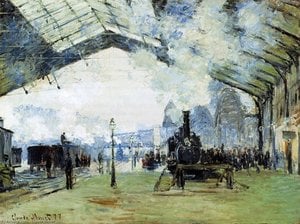
统计数据Sitges train station
 Oil
Oil- WallArt
- Impressionism
 1882
1882- 19th Century
 31.0 x 41.0 cm
 Maricel Museum
 阅读全文
阅读全文
Get a print-ready file that goes far beyond the web preview. Every digital image we sell comes from a high-resolution master in our stock database — usually 5,000 to 15,000 pixels wide — so you can print large, crop tightly, or reproduce fine detail with confidence.
No file leaves our studio untouched. A digital expert checks the colors against the original painting and corrects them if needed, then improves clarity and detail with professional retouching tools — always staying faithful to the artist's brushwork and style. The result is an image that looks like the painting, not like a filtered scan.
You approve before you're done: our expert sends the image by e-mail within 72 hours for your review. Not satisfied? Ask for improvements or corrections, or request a refund if the quality falls short.
This is the quality relied on by publishers, design studios, galleries and print shops.
数字图像
下载高分辨率文件,用于个人展示、打印及创意项目。 ( 切换至版画销售渠道 订购此收藏品的纯手工复刻画作)
每份数字图像订单均包含的内容
专业级数字交付,品质无忧
选择 ArtsDot.com,您获得的不仅仅是一张图像——您收到的是经过专业级增强、精雕细琢的数字艺术作品,并享有满意保证。以下是您的订单中自动包含的所有内容:

即时邮件交付
您的高分辨率数字图像文件将在下单后 72 小时内通过电子邮件发送给您 —— 即可立即使用。

AI 增强型数字图像
您的艺术品经过专业优化,结合先进的 AI 技术与人工修饰,确保呈现极致的细节、清晰度与色彩准确度。

终身免费重发服务
不小心删除了文件或找不到了?没关系——我们将随时为您免费重发。

无需进口税费,始终如一
即刻拥有您的艺术作品,无需支付任何关税、税费或运费——数字下载始终免税。

色彩精准保障
我们通过专业工具与色彩管理技术,确保您的数字图像尽可能真实地还原原作色彩。

100天满意保证
如果您对所购数字图像不满意,我们将在100天内为您进行修改或提供100%的全额退款——无需任何理由。

100% 退款保证
不满意?在收到数字文件后的100天内,您可以申请全额退款——无需任何理由。

批量订购优惠
购买 3 张享 10% 折扣 - 购买 5 张享 15% 折扣 - 购买 10 张以上享 20% 折扣。非常适合创意项目、画廊及机构使用。
A Moment Frozen in Steam and Light
In the evocative masterpiece Sitges train station, painted in 1882, Joan Roig Soler invites us into a fleeting moment of late nineteenth-century life, where the industrial pulse of progress meets the quiet anticipation of travel. The canvas captures the bustling energy of a Catalan railway platform, dominated by the magnificent presence of a steam engine as it pulls its heavy carts along the tracks. As the locomotive surges forward, thick plumes of billowing smoke rise into the sky, creating a dramatic interplay between the solid, dark machinery and the ethereal, transient atmosphere of the morning air. It is a scene that breathes with movement, capturing not just a location, but the very sensation of arrival and departure.
Roig Soler, a master of light and color, employs an Impressionistic sensibility to breathe life into this industrial landscape. Rather than focusing solely on the mechanical precision of the train, he directs our gaze toward the human element—the twelve figures scattered across the platform, each caught in a private moment of observation or waiting. Some lean forward with curiosity, while others sit quietly on the station benches, their silhouettes softened by the atmospheric haze. The artist’s technique allows light to dance across the scene, illuminating the textures of the steam and the subtle shadows cast by the passengers, creating a sense of depth that pulls the viewer directly onto the platform alongside the travelers.
The Intersection of Progress and Nostalgia
Historically, this work serves as a poignant window into the era of rapid modernization in Spain. The train station, once a symbol of cutting-edge technology and the shrinking of distances, is depicted here with a sense of romantic grandeur. There is a profound symbolism in the contrast between the heavy, unstoppable force of the steam engine and the fragile, transient nature of the people watching it pass. For the contemporary collector or interior designer, this painting offers more than just a historical record; it provides a sophisticated narrative of transition. The composition, which stretches across the canvas from left to right, guides the eye through a rhythmic progression of movement and stillness.
For those seeking to adorn a space with art that evokes emotion and conversation, Sitges train station is an incomparable choice. Its palette of earthy tones, punctuated by the dramatic whites of the steam, lends itself beautifully to both classical and modern interiors. Whether placed in a grand study or a contemporary living area, this reproduction brings with it a sense of timelessness and a quiet, contemplative energy. It is a piece that celebrates the beauty found in the mundane, transforming a routine moment at a station into an enduring vision of light, motion, and human connection.
问答详情
Joan Roig Soler 的《Sitges train station》 的复制品推荐用于哪些场景?
"Sitges train station" 艺术复制品的推荐用途为 Theme。
我能查看Joan Roig Soler 的《Sitges train station》的X光影像吗?
Joan Roig Soler 的《Sitges train station》 的 X 光视图可在作品的 X射线检测 页面查看:通过十一层光学图层对图像进行交互式深度解析。
Joan Roig Soler 的《Sitges train station》 的色彩是鲜艳还是柔和?
Joan Roig Soler 的《Sitges train station》 的色彩呈现出 Subtle Color 的饱和度与 Balanced 的强度。
相关艺术品




艺术家简介
The Luminous Legacy of Joan Roig Soler
In the golden age of Spanish Impressionism, few artists captured the ephemeral dance of light upon the Mediterranean coast as poignantly as Joan Roig Soler. Born in Barcelona in 1852, Soler emerged from a lineage of artistic passion, having been nurtured by a father who first ignited his fascination with the nuances of color and form. His formal training at the Escuela Superior de Bellas Artes Barcelona provided him with a rigorous foundation in Academic realism, yet it was his ability to transcend the rigid boundaries of tradition that would define his career. As the nineteenth century progressed, Soler began to weave the meticulous precision of his classical education with the burgeoning, atmospheric sensibilities of the Impressionist movement, creating a style that felt both grounded in reality and elevated by light.
The heart of Soler’s oeuvre lies within the sun-drenched landscapes of Catalonia, particularly the picturesque seaside enclave of Sitges. It was here, amidst the shimmering vistas of the Costa Brava, that he truly found his voice. He possessed a rare, almost intuitive ability to translate the fleeting textures of the Mediterranean—the way sunlight refracts through sea spray or how the midday heat softens the edges of coastal villas. His works from this period are not merely landscapes but sensory experiences; in masterpieces such as Sitges Study, one can almost feel the warmth of the sand and the salt in the breeze. This dedication to capturing the transient beauty of the coast cemented his reputation as a master of Impressionistic realism, an artist capable of freezing a moment in time while maintaining its vibrant, breathing essence.
Urban Rhythms and Industrial Echoes
While the tranquil shores of Sitges offered him a sanctuary of light, Roig Soler was equally captivated by the burgeoning energy of Spain’s urban centers. His travels to Madrid allowed him to explore a different facet of the human experience—the dynamic, often chaotic pulse of city life. In canvases such as Avenida de los catalanes, he moved away from the serene coastal horizons to embrace the complex interplay of shadow and movement found in metropolitan streets. These urban impressions showcase his remarkable versatility, proving that his mastery of light was just as effective in the narrow, shaded corridors of a city as it was on an open beach.
Perhaps most striking is his ability to find beauty within the machinery of progress. In his evocative 1882 work, Sitges train station, Soler captures a profound intersection between the industrial revolution and the quietude of daily life. The painting presents a dramatic tableau where the heavy, dark presence of a steam engine meets the ethereal plumes of billowing smoke, creating a sense of atmospheric depth that pulls the viewer onto the platform. Through this work, he explores themes of nostalgia and modernization, using the locomotive as a symbol of an unstoppable future encroaching upon the timeless landscape. By focusing on the human element—the passengers caught in moments of waiting or curiosity—he imbues the industrial scene with a deeply relatable, emotional resonance.
Artistic Influences and Historical Significance
The evolution of Roig Soler’s technique was profoundly shaped by the giants of European art. He drew significant inspiration from the works of Claude Monet and Frédéric Bazille, adopting their focus on light and broken brushstrokes to enhance the luminosity of his palettes. Yet, unlike some of his more radical contemporaries, Soler never fully abandoned the structural integrity of the Academic tradition. This unique synthesis—the marriage of expressive, Impressionistic strokes with a disciplined, realist composition—distinguishes his work from the broader movement and provides it with a lasting, sculptural quality.
Though history occasionally places him in the shadow of contemporaries like Joaquín Sorolla, the enduring significance of Joan Roig Soler lies in his role as a vital chronicler of the Catalan spirit. His paintings serve as a visual archive of a transformative era in Spanish history, capturing both the natural splendor of the Mediterranean and the rapid modernization of the late nineteenth century. Today, his legacy continues to inspire, offering a window into a world where light, color, and movement converge to tell the story of a changing nation.

Joan Roig Soler
1852 - 1909 , Spain
概览
- Full Name: Joan Roig y Soler
- Nationality: Spanish
- Date Of Birth: 1852
- Date Of Death: 1909
- Place Of Birth: Barcelona, Spain
- Notable Artworks:
- African Chief
- Sitges Study
- Alighting from the carriage
- Artistic Movement Or Style: Realist Painting & Impressionism
- Artists Who Influenced This Artist: ['Mariano Fortuny y Marsal']
- Artists Or Movements Influenced By This Artist: ['Impressionism']