

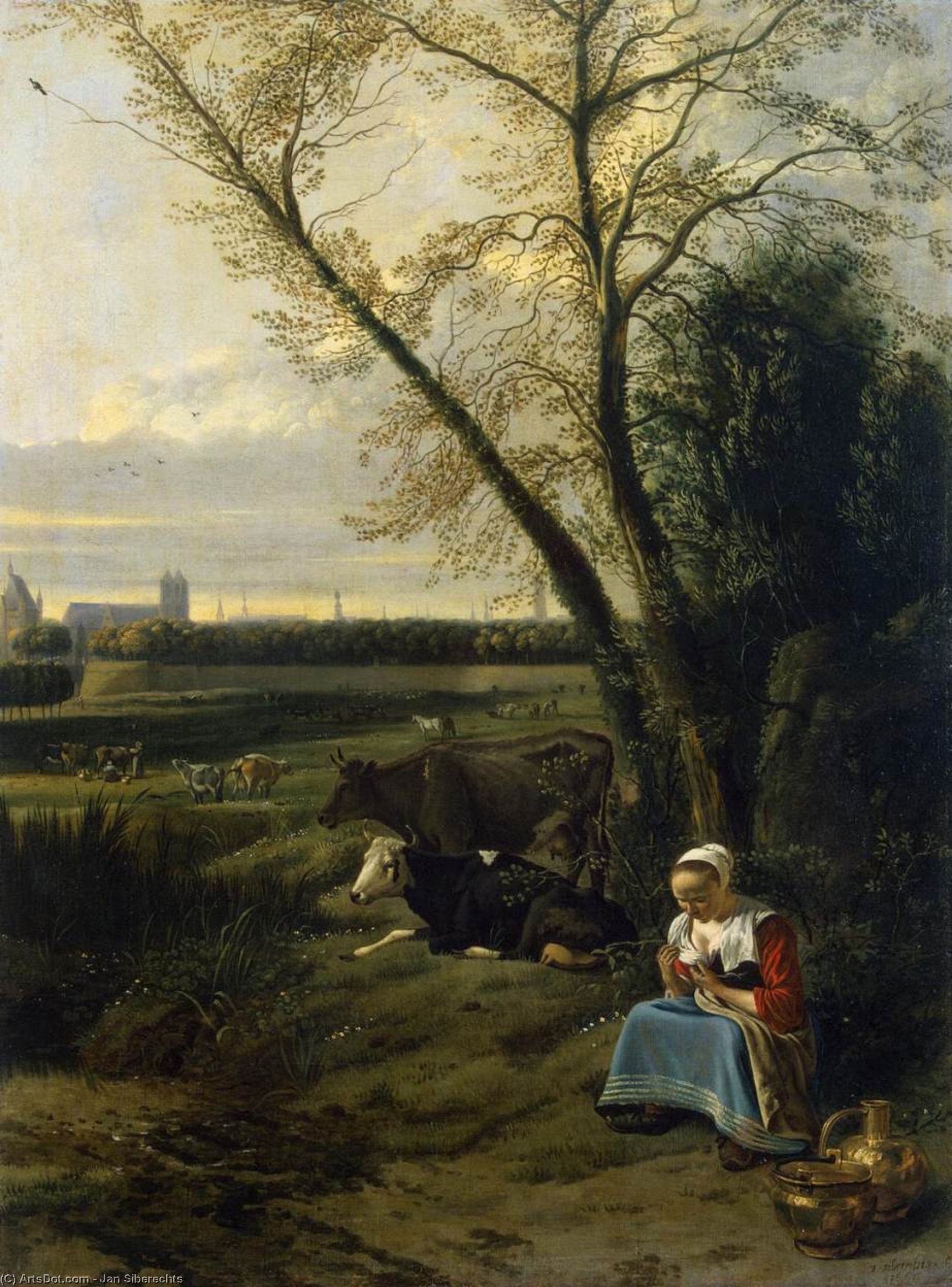
 效果预览
效果预览
 购买手绘画作
 分享
分享 分享
分享
 详情
详情

 下载
下载
 相似作品
相似作品 X射线
X射线 幻灯片播放
幻灯片播放Shepherdess
 Oil On Canvas
- WallArt
- Baroque Landscape
 1660
1660 104.0 x 78.0 cm
 冬宫博物馆 (Hermitage Museum)
 展开详情
展开详情




P118B $10

P118H $10

P118W $10

P438Z $10

P508JH $12

P508YH $12

P805H $10

P805Z $10

P919BZ $10

P919G $10

P919XJ $10

P959ZH $10

P968JZ $12

W106C $8

W218G $10

W218JH $8

W218Y $10

W307PJ $10

W316G $10

W316PJ $8

W316Y $10

W398PJ $8

W4111J $10

W500HY $15

W500JH $15

W692G $12

W849H $8

W940BG $15

W953PJ $8




从与原作比例一致的预设尺寸中进行选择。

您可以输入自定义尺寸,以适配特定的画框或空间。如果您选择的尺寸与原图比例不符,我们将对作品进行裁剪,或通过镜像填充/纯色填充边缘的方式来扩展图像。在开始制作之前,我们会向您发送一份数字效果图供您确认。
请注意,屏幕上的预览并不能反映实际的裁剪或扩展效果。只有效果图才能准确展示最终的构图。
虽然我们提供定制尺寸,但为了保持原图比例,我们建议您从预设列表中选择尺寸。


 玻璃选项仅适用于110厘米以下的尺寸。

Shepherdess
艺术微喷/版画
复制品尺寸
-


最终总价
$ 62
藏品详情
A Pastoral Vision: Jan Siberechts’ “Shepherdess”
Jan Siberechts' "Shepherdess," painted around 1660, isn’t merely a depiction of rural life; it’s a carefully constructed tableau brimming with quiet dignity and an almost palpable sense of serenity. This oil on canvas, currently residing in the Hermitage Museum in St. Petersburg, Russia, offers a glimpse into a world where humanity exists in harmonious balance with nature – a rare and profoundly affecting vision for its time. The painting immediately draws the eye to the central figure, a young shepherdess seated beneath a gnarled, skeletal tree, her posture relaxed yet imbued with an understated grace. She’s not actively engaged in labor; instead, she seems lost in contemplation, holding a small bird – a symbol of innocence and connection to the natural world – gently in her hands.
Siberechts, a Flemish artist working during a period of transition between the Dutch Golden Age and the rise of English landscape painting, skillfully blends influences. His early works, like this one, reveal a clear debt to the Dutch Italianates—artists who had embraced the idealized landscapes of Italy—noting their emphasis on golden light and tranquil scenes. However, Siberechts quickly developed his own distinct style, characterized by meticulous detail and an almost photographic realism, particularly evident in the rendering of textures – from the rough bark of the tree to the soft fur of the cow grazing nearby.
The Language of Light and Color
The painting’s power lies not just in its subject matter but also in Siberechts' masterful use of light and color. The palette is dominated by earthy tones—ochres, browns, and greens—creating a sense of groundedness and connection to the land. Yet, these muted hues are punctuated by vibrant accents – the red bodice of the shepherdess, the blue of her skirt, and the yellow of the bird – which draw the eye and inject a subtle energy into the scene. The light filtering through the branches of the tree casts dappled shadows across the landscape, adding depth and dimension to the composition.
Notably, Siberechts employed a technique known as *chiaroscuro*, skillfully contrasting areas of light and shadow to create a dramatic effect. This is particularly evident in the way he illuminates the shepherdess’s face, highlighting her features and drawing attention to her serene expression. The use of atmospheric perspective—where distant objects appear paler and less distinct—further enhances the sense of depth and space.
Symbolism and Context
Beyond its aesthetic beauty, “Shepherdess” is rich in symbolic meaning. The shepherdess herself represents innocence, purity, and a connection to the natural world – values highly prized during the 17th century. The bird she holds symbolizes hope, freedom, and the fleeting nature of life. The presence of the cow reinforces this pastoral theme, evoking images of abundance and fertility. Considering Siberechts’ later work in England, it's fascinating to note how he retained these core Flemish elements while adapting his style to suit a new audience.
Painted during a period of significant social and political upheaval in Europe, “Shepherdess” offers a respite from the turmoil of the time. It’s a reminder of a simpler way of life—a world where humans lived in harmony with nature and found contentment in the rhythms of rural existence. The painting's enduring appeal lies in its ability to transport us to this idyllic realm, inviting us to pause and reflect on our own relationship with the natural world.
A Legacy of Landscape Painting
Jan Siberechts’ “Shepherdess” holds a significant place in art history as one of the earliest examples of English landscape painting. His meticulous attention to detail, his masterful use of light and color, and his ability to capture the essence of rural life paved the way for future generations of British artists. His work influenced figures like William-Adolphe Bouguereau, whose own depictions of shepherdesses—such as “The Little Shepherdess”—demonstrate a clear debt to Siberechts’ pioneering vision.
Today, "Shepherdess" continues to captivate viewers with its timeless beauty and profound emotional resonance. It stands as a testament to the enduring power of art to transport us to other worlds and remind us of the values that matter most—peace, harmony, and connection to nature.
相似艺术品


艺术家简介
一位佛兰德斯视角下的英格兰:扬·西贝雷克茨的生平与艺术
扬·西贝雷克茨于1627年出生于安特卫普,他在欧洲艺术史上占据着一个迷人的位置——一座连接了佛兰德斯绘画充满活力的传统与英国新兴风景画传统的桥梁。他的故事,是一部关于艺术发展、幸运赞助和最终开创性影响的史诗。他是另一位名叫扬·西贝雷克茨的雕塑家的儿子,最初在他的家族工作室接受了训练,吸收了将构成其职业生涯基础的技能和审美情趣。到1648年,他在享有盛誉的安特卫普圣卢克公会获得了大师地位,这标志着他作为一名熟练工匠得到了认可。尽管确凿的证据仍然难以寻觅,但艺术史学家们推测他可能在1640年代末或1650年代初曾到意大利游历。尽管未经证实,这种潜在的对意大利式风景画的接触——其强调古典构图和大气透视法——无疑在他的不断发展的风格上留下了印记,这在他早期作品中可见,这些作品展示了佛兰德斯写实主义与意大利理想之间微妙的平衡。1652年他与玛丽亚-安娜·克罗斯(Maria-Anna Croes)结婚,标志着一个稳定的时期,使他磨练技艺,最初从尼古拉斯·贝尔赫姆和卡雷尔·杜贾尔丹等荷兰大师那里汲取灵感,他们的田园场景和微妙的光影效果与他的艺术倾向产生了共鸣。从佛兰德斯的乡村到英格兰的庄园
17世纪60年代对西贝雷克茨的艺术生涯是至关重要的转折点。他开始塑造出一种独特的个人风格,将越来越多的注意力投向家乡佛兰德斯的风景和乡村生活的韵律。这不仅仅是单纯的地形记录;它是对佛兰德斯乡村的沉浸式描绘,那里生活着健壮的人物——通常是从事日常劳作的女性——她们身着色彩鲜艳的服饰,点缀着翠绿的场景。他巧妙地运用水面倒影,创造出视觉的回响,并为他的构图增添了深度。这些画作常常呼应了戴维·特尼尔斯(David Teniers the Younger)所流行的亲密农场场景,但西贝雷克茨赋予了它们更广阔的视野和更强的大气感。这种日益增长的天赋并未被忽视。1670年,乔治·维利斯,第二代巴кин厄姆公爵,在访问安特卫普期间遇到了西贝雷克茨的作品,并深受震撼。他认识到这是一种罕见的艺术天赋,于是公爵邀请西贝雷克茨前往英格兰——这个提议彻底改变了他职业生涯的轨迹。大约在1672年,西贝雷克茨接受了邀请,开启了他在异国他乡的新篇章。英国风景画的先驱
西贝雷克茨在英格兰最初的岁月致力于一个宏伟的项目:为巴кин厄姆公爵装饰克利维登庄园(Cliveden House)。这项委托不仅为他提供了经济保障,也给了他展示艺术多才多艺的机会。然而,真正巩固其不朽声誉的是他在英格兰各地的游历。他成为了贵族阶层追捧的艺术家,接受了绘制他们庄园的无数委托——这种实践有效地使他成为英国乡村住宅肖像画的先驱。这些作品并非仅仅是宏伟建筑的描绘;它们是精心构建的构图,将宏伟的宅邸融入其周边的景观之中,常常采用鸟瞰视角和朦胧的大气迷雾。他捕捉的不仅是这些庄园的物理存在,更是它们所代表的地域感和生活方式。他的女儿们甚至为他的成功做出了贡献,其中一位曾为女王制作蕾丝——这证明了家族融入英国社会的事实。1696年,他接到了一个尤为重要的委托:描绘约翰·科格斯(John Coggs)的贝尔西兹庄园(Belsize Estate),这件作品现藏于泰特美术馆,是其地形技能和艺术视野的典范之作。西贝雷克茨一直工作到1703年于伦敦去世。遗产与艺术意义
扬·西贝雷克茨被公认为英国风景画发展史上的一个关键人物,常被称为“英国风景画之父”。他的地形景观并非仅仅是庄园的记录;它们是影响了后世一代艺术家们的艺术诠释。他为其他佛兰德斯画家——包括彼得·蒂莱曼斯、皮埃尔·安德烈斯·里斯布拉克和亨德里克·弗朗斯·德科尔等——铺平了道路,这些人继续以相似的技巧和敏感度记录着英格兰乡村。据估计,有大约一百件署名于西贝雷克茨的作品流传至今,为我们窥见了其丰硕的创作量和艺术演变历程。他的风格最初受到荷兰和意大利传统的塑造,最终绽放出了独属于他自己的光彩——其特点是鲜艳的色彩、一丝不苟的人物描绘,以及捕捉了佛兰德斯乡村生活与英格兰庄园宏伟气派精髓的大气景观。他甚至将约翰·伍顿(John Wootton)列为他的学生之一,进一步扩大了他在英国艺术图景中的影响力。西贝雷克茨的贡献不仅在于其技术上的精湛掌握,更在于他捕捉“地域感”和“归属感”的能力——这是一种至今仍能引起观者共鸣的特质。他的画作远不止于风景;它们是通往逝去时代的窗口,让我们得以一窥那些居住在其中的人们的生活与抱负。
扬·西贝赫茨
1627 - 1703 , 比利时
艺术家简介
- Artistic Movement Or Style: 巴洛克,风景
- Artists Or Movements Influenced By This Artist:
- 彼得·蒂莱曼斯
- 英国风景画
- Artists Who Influenced This Artist:
- 尼古拉埃斯·贝尔赫姆
- 卡雷尔·杜贾尔丹
- Date Of Birth: 1627
- Date Of Death: 1703
- Full Name: 扬·西贝赫茨
- Nationality: 佛兰德斯
- Notable Artworks:
- 渡口
- 带人物的风景
- 贝尔塞兹庄园
- Place Of Birth: 比利时安特卫普
相关文章

康斯塔布尔大师之作:25幅传世风景画赏析 | ArtsDot
探索康斯塔布尔的25幅传世杰作!沉浸于英国田园风光,感受浪漫主义绘画大师的光影与色彩。高清油画复制、艺术品购买尽在ArtsDot.com,为您的家居增添经典之美。立即在线探索完整系列!

Jan Brueghel the Elder: A Master of Flemish Landscape & Allegory – Exploring Innovation & Influence
Explore the captivating world of Jan Brueghel the Elder, a Flemish Baroque master renowned for his stunning landscapes & allegorical paintings. Discover his collaborations with Rubens and lasting artistic legacy.

Beyond the Horizon: 10 Landscape Masterpieces for Your Home Decor
Journey through 10 breathtaking landscape paintings by Monet, Van Gogh & more! Explore iconic artworks, artistic techniques & find inspiration for your home decor. Museum-quality reproductions at ArtsDot.com. Discover all masterpieces on ArtsDot.com

Cultivating Visions: A Historical Journey Through Rural Landscapes in Art
Explore the rich history of rural landscape painting with ArtsDot. Discover Impressionist masterpieces, key artists & movements. Find your perfect serene artwork and bring nature's beauty home.

浪漫主义画派的十部巨作:定义风景画的艺术传奇
探索浪漫主义风景画的巅峰!本文精选十部经典名作,带您领略莫奈、库尔贝等大师的艺术魅力。感受色彩与光影的诗意,重温自然风光的震撼。ArtsDot.com为您提供博物馆级别的艺术复制品和个性化家居装饰方案。尽在ArtsDot.com!

