

图片将根据您的选择进行更新: , .
藏品详情
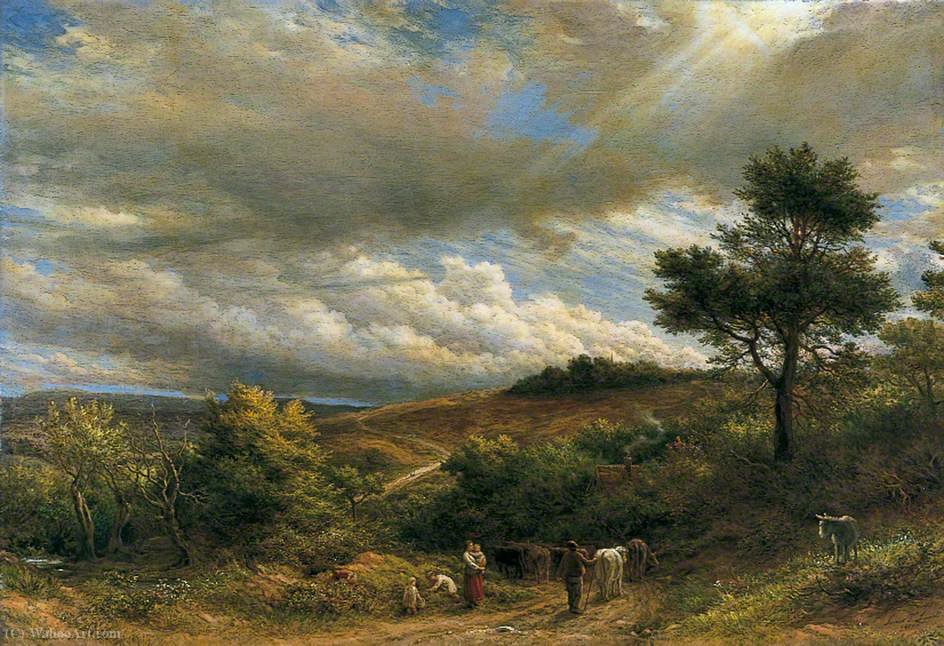
James Thomas Linnell’s "Passing Gleams" captures a romantic Welsh landscape. Oil on canvas showcases atmospheric perspective & rural life. Explore this idyllic pastoral scene.
艺术家简介
James Thomas Linnell (1820-1905) was a British artist renowned for his idyllic landscapes of Wales & England. Explore pastoral scenes, sheepfolds, & evocative light in his paintings.
 展开全文
展开全文
手工油画复制品
由我们的艺术家按需定制,为您提供您所选尺寸及画框的布面手工油画。 ( 切换至版画销售渠道 切换至数字图像销售渠道)
更多关于此画作的信息
 实景预览
实景预览
 分享
分享 分享
分享
 详情
详情 指南
指南

 下载作品
下载作品
 相似作品
相似作品 X射线
X射线 幻灯片播放
幻灯片播放 问答
问答 统计数据
统计数据只需简单四步,即可订购您的画作
请慢慢挑选。您可以随时更改任何选项;订单详情卡中的价格将随您的选择实时更新。
1 四步中的第一步
您想要哪种尺寸?
这些尺寸均保持了原画的比例。示意图展示了您所选尺寸在墙面上的效果,其位置位于一张两米宽的沙发上方。
或输入您自定义的尺寸
您可以从与原作比例一致的预设尺寸中进行选择。

请输入您需要的宽度和高度,以适配您的画框或墙面。由于作品为手工绘制,若选择不同比例的尺寸,艺术家可能会在画面边缘多画一些或稍作裁剪 —— 由您决定。在开始绘画之前,我们会为您发送一份数字效果图供您确认。本页面上展示的图片并非最终实物 —— 只有效果图才能反映真实结果。
2 四步中的第二步
您希望如何装裱:卷轴装、绷框装还是带框装?
以下价格对应您在第一步中所选的尺寸。
选择绷边画布的边缘样式
选择您的画框

白色边缘 ¥1

边缘晕染效果 ¥1

延展式 ¥1

P118B ¥10

P118H ¥10

P118W ¥10

P438Z ¥10

P508JH ¥12

P508YH ¥12

P805H ¥10

P805Z ¥10

P919BZ ¥10

P919G ¥10

P919XJ ¥10

P959ZH ¥10

P968JZ ¥12

W106C ¥8

W218G ¥10

W218JH ¥8

W218Y ¥10

W307PJ ¥10

W316G ¥10

W316PJ ¥8

W316Y ¥10

W398PJ ¥8

W4111J ¥10

W500HY ¥15

W500JH ¥15

W692G ¥12

W849H ¥8

W940BG ¥15

W953PJ ¥8

H24-GOLD ¥30

H24-SILVER ¥30

H36-GOLD ¥45

H36-SILVER ¥45
带框
边框材质: . 含框总尺寸: .
3 四步中的第三步
您想对画作进行任何修改吗?
大多数人的回答是否定的。由于每一幅画作都是手工绘制,我们的艺术家也可以为您进行定制。
下单后,ArtsDot.com 团队将通过电子邮件联系客户获取具体指令,并提供效果预览图
4 第四步(共四步)
几种饰面选项
所有选项均为可选。已选择的答案不会产生额外费用。
出自哪位艺术家之手?
像博物馆里的那样,配上一块铭牌?
青铜铭牌雕刻详情
This elegant plaque features the artist's name and the title of the artwork, finely engraved for a timeless presentation.
It is made from bronze with a refined, elegant finish. The text is precisely laser-engraved for a sharp and permanent result. Measuring 9x2 cm, the plaque is compact yet easy to read. It's built to be durable and scratch-resistant, offering a professional, museum-quality look. Mounting is simple thanks to the included adhesive backing.
透明亚克力铭牌详情
The plaque includes essential engraved details such as the artist's name, the title of the artwork, the date it was created, the type of media used-like oil on canvas or watercolor-a brief description of the piece, and a QR code that links to the complete artwork information.
It is crafted from clear acrylic, offering a sleek, modern appearance. The text is UV-engraved in black to ensure strong visual contrast. With a size of 10x15 cm, it ensures optimal readability. It comes equipped with two metal hooks for secure wall mounting. The plaque is designed to be weather-resistant, making it suitable for various environments, and it includes interactive features that work seamlessly with smartphone scanning.
黑色亚克力铭牌详情
This elegant plaque includes engraved information such as the artist's name, the title of the artwork, the date it was created, the type of media used (like oil on canvas or watercolor), a short description of the artwork, and a QR code for quick access to more information.
The plaque itself is made from refined black acrylic with a premium finish. The text is laser-engraved in white for high contrast and readability. Its size is 10x15 cm, designed to be easy to read. It comes with two metal hooks for professional mounting. The design is sleek and fits any interior style. It is also weather-resistant and durable, with built-in digital integration for mobile compatibility.
需要保护性光油吗?
您预计何时收到?
✓ 确认并下单
您的画作,正如您所订购的那样

Passing gleams
复制品材质
复刻品尺寸
-

精选资深艺术家
更丰富的细节、更精湛的工艺以及更充裕的制作时间
-

复制画装裱选项
-
-
对于任何边长超过 105 厘米(约 41 英寸)的艺术品或复制品,画框将以拆解后的组件形式发货。此方法可确保安全送达并防止运输过程中的损坏。
需由专业人员组装 —— 本产品不适用于 DIY 操作。
该组件必须由经验丰富的专业装裱师进行组装及画布绷装,过程中需使用木工胶(不随附)、画布绷边钳以及夹具,以确保在胶水干燥期间保持内框方正。组装不当或画布张力不均可能会对艺术品造成永久性损坏,且此类情况不在我们的保修范围之内。
 对于任何边长超过 105 厘米(约 41 英寸)的艺术品或复制品,画框将以拆解后的组件形式发货。此方法可确保安全送达并防止运输过程中的损坏。
包含所有实木条,尺寸精确,便于组装。
使用随附的螺丝进行组装,另需准备用于角部连接的木工胶(本品不含木工胶),请由您的装裱师自行准备。
需另备专业工具(本套件不含):画布绷紧钳以及用于在胶水干燥过程中保持木条方正的夹具。
重要提示:
角部连接处需要使用木工胶,边框条必须使用夹具固定直至胶水完全干透,且在组装好的框架上绷紧画布需要用到画布拉伸钳。以上工具均不包含在套装内。请在订购此尺寸前,预先联系经验丰富的专业装裱师。

展品铭牌
-
-

保护性清漆
光泽清漆(提亮色彩,防光防潮)
-

定制我的艺术品
定制化示例:替换面部为客户照片;添加宠物(例如,将猫替换为狗);在背景中加入隐藏信息;更改背景风景或元素。
-

加急
全球配送()仅需 3-4 周即可送达,无需等待标准时效的 5 周。(4 November)。品质始终如一,绝不妥协。
-
极速达
全球配送(),预计 5 周送达。(11 November)。
已包含
最终结算价
¥ 2101
玻璃选项仅适用于110厘米以下的尺寸。
每份订单均包含
- 全球免运费特快专递服务
- 优质亚麻画布
- 全程运输保险
- 关税退款保证
- 色彩精准还原保证
- 100天退货保障(仅限制造缺陷)
- 100% 退款保证
- 多件购买优惠


相似作品


James Thomas Linnell
1820 - 1905, United Kingdom
艺术家简介
James Thomas Linnell: A Victorian Painter of Rural Life and Luminous Landscapes
James Thomas Linnell (1820–1905) stands as a quietly significant figure within the vibrant tapestry of 19th-century British art. Often overshadowed by his more flamboyant contemporaries, he carved out a distinctive niche for himself through his evocative depictions of English rural life – scenes brimming with gentle observation, luminous light, and an underlying sense of poetic tranquility. His work, deeply rooted in the legacy of his father, John Linnell, yet possessing a unique sensibility, offers a poignant glimpse into the Victorian appreciation for both naturalism and sentimentality.
Born in London amidst a family already steeped in artistic tradition, James Thomas’s early life was profoundly shaped by his father's career. John Linnell, a versatile artist known for his portraits, religious subjects, and increasingly, his powerful landscapes, provided an unparalleled environment for the young James. The Linnell household at Redstone Wood, near Redhill, Surrey, was a hub of creative activity, fostering a deep immersion in art from the earliest years. His father’s influence was paramount; John Linnell's meticulous attention to detail, his skill in rendering atmospheric effects, and his engagement with the English landscape served as an enduring model. However, James Thomas wasn’t merely a mimic. He absorbed these foundational elements while simultaneously cultivating a style uniquely his own – one characterized by brighter palettes, softer light, and a gentle, almost ethereal quality.
The formative years were further enriched by exposure to the work of William Blake, John Linnell's patron and a figure whose visionary spirit profoundly impacted the artistic landscape. Furthermore, James Thomas’s association with Samuel Palmer, his father-in-law, proved particularly influential. Palmer’s Shoreham period paintings – intensely spiritual and poetic visions of the Kent countryside – instilled in James Thomas a sensitivity to light, color, and atmosphere that would become hallmarks of his own work. The influence of these artistic giants, combined with the rigorous training received at the Royal Academy Schools, laid the groundwork for Linnell's distinctive approach.
Linnell’s subject matter frequently focused on idyllic rural scenes – children playing in sun-dappled woodlands, harvesters resting at noon, and tranquil pastoral vistas. He eschewed the dramatic intensity often associated with his father’s work, instead finding his expressive power in the quiet poetry of everyday life. His paintings are not overtly narrative; rather, they capture fleeting moments of beauty and serenity, inviting the viewer to contemplate the simple pleasures of rural existence. His compositions are carefully constructed, utilizing a restrained palette and subtle tonal shifts to create a sense of depth and atmosphere. The use of light is particularly noteworthy – Linnell masterfully employs diffused sunlight and soft shadows to evoke a feeling of warmth and tranquility.
Despite his relative obscurity during his lifetime, James Thomas Linnell’s work has gained increasing recognition in recent decades. His paintings offer a valuable insight into the Victorian sensibility—a desire for beauty, a reverence for nature, and a longing for simpler times. His legacy rests not on grand pronouncements or revolutionary techniques, but rather on the quiet elegance of his landscapes – luminous depictions of rural England that continue to resonate with viewers today. The Forbes Magazine Collection at Princeton University Art Museum holds a significant body of his work, providing a crucial resource for scholars and art enthusiasts alike.
The Linnell Family Legacy and Artistic Environment
James Thomas Linnell’s artistic journey was inextricably linked to the broader context of the Linnell family—a lineage deeply rooted in both artistic talent and religious conviction. John Linnell (1792–1882), his father, was not only a successful painter but also a significant patron, most famously supporting the visionary artist William Blake during Blake’s final years. This familial commitment to art extended beyond mere financial support; it fostered an environment of intellectual and creative exchange within the household.
The Linnell family resided at Redstone Wood, near Redhill, Surrey, a location that profoundly influenced their artistic sensibilities. The surrounding countryside—rolling hills, verdant pastures, and picturesque villages—provided a constant source of inspiration. Furthermore, the family’s religious background – John Linnell Senior was a non-conformist – instilled in them a deep appreciation for nature's beauty as a reflection of God's creation. This spiritual dimension is subtly woven into many of Linnell’s paintings, imbuing them with a sense of peace and reverence.
The household at Redstone Wood was a vibrant hub of artistic activity, populated by a cohort of talented siblings—John Linnell Jr., William Linnell, and Mary Elizabeth Linnell. Each sibling received art instruction from their father, absorbing his techniques and stylistic preferences. The family’s close-knit environment fostered a spirit of collaboration and mutual support, encouraging each member to pursue their artistic passions. The presence of other influential artists—such as Samuel Palmer, John Linnell's son-in-law—further enriched the artistic milieu, exposing the young Linnells to diverse perspectives and techniques.
The family’s relocation to Redhill in the 1850s marked a significant shift in their lives. They built two residences nearby – Redstone Wood South (later demolished) and Hillsbrow (also demolished) – providing them with dedicated spaces for artistic practice and studio work. This move allowed James Thomas to establish his own independent career, while remaining connected to the family’s established artistic network.
Technique and Artistic Style
James Thomas Linnell's distinctive style is characterized by a harmonious blend of observation, sensitivity, and technical skill. He inherited from his father a meticulous attention to detail and a mastery of rendering atmospheric effects—qualities that are evident in many of his landscapes.
However, Linnell’s work transcends mere imitation; he developed a unique palette and approach that set him apart from his father and other contemporary artists. His colors are notably brighter and more luminous than those typically employed by John Linnell, creating a sense of warmth and vitality. He skillfully utilizes light—often employing diffused sunlight and soft shadows—to evoke a feeling of tranquility and serenity.
Linnell’s compositions are carefully constructed, utilizing subtle tonal shifts and atmospheric perspective to create depth and realism. His brushwork is generally smooth and understated, allowing the colors and light to speak for themselves. He avoided dramatic contrasts or overtly expressive gestures, instead focusing on capturing fleeting moments of beauty and quiet contemplation.
A key element of Linnell’s style is his ability to imbue his landscapes with a sense of poetry—a suggestion of something beyond the purely visual. His paintings invite the viewer to engage in a dialogue with nature, prompting reflection on themes of beauty, simplicity, and the passage of time. His work demonstrates a remarkable sensitivity to the nuances of light and color, as well as an intuitive understanding of how to capture the essence of rural England.
Historical Significance and Legacy
James Thomas Linnell’s contribution to 19th-century British art is often understated, overshadowed by more prominent figures. However, his work holds significant historical value, offering a valuable insight into the artistic sensibilities of the Victorian era.
Linnell's paintings reflect the broader trends of the time—a growing interest in nature, a desire for beauty and tranquility, and a yearning for simpler times. His landscapes capture the essence of rural England—its rolling hills, verdant pastures, and picturesque villages—providing a nostalgic vision of a bygone era.
His association with influential artists such as William Blake and Samuel Palmer highlights his place within a vibrant artistic network. Linnell’s work demonstrates the influence of these figures on his own style and approach, while also showcasing his unique contribution to the Norwich School of painters.
Despite his relative obscurity during his lifetime, Linnell's paintings have gained increasing recognition in recent decades. The Forbes Magazine Collection at Princeton University Art Museum holds a significant body of his work, providing scholars and art enthusiasts with access to his oeuvre. His legacy rests not on grand pronouncements or revolutionary techniques, but rather on the quiet elegance of his landscapes—luminous depictions of rural England that continue to resonate with viewers today.
相关文章

Cultivating Visions: A Historical Journey Through Rural Landscapes in Art
Explore the rich history of rural landscape painting with ArtsDot. Discover Impressionist masterpieces, key artists & movements. Find your perfect serene artwork and bring nature's beauty home.

浪漫主义画派的十部巨作:定义风景画的艺术传奇
探索浪漫主义风景画的巅峰!本文精选十部经典名作,带您领略莫奈、库尔贝等大师的艺术魅力。感受色彩与光影的诗意,重温自然风光的震撼。ArtsDot.com为您提供博物馆级别的艺术复制品和个性化家居装饰方案。尽在ArtsDot.com!

Masterpieces of the English Countryside: Top 25 Sir Alfred James Munnings Artworks
Explore 25 iconic Sir Alfred James Munnings masterpieces. Discover timeless equine art on ArtsDot.com.