


 效果预览
效果预览
 分享
分享 分享
分享
 详情
详情 指南
指南

 下载
下载
 相似作品
相似作品 X射线
X射线 幻灯片播放
幻灯片播放 统计数据
统计数据The Leopard Seal
 Romanticism
 1837
1837- 19th Century
 12.0 x 20.0 cm
 耶鲁英国艺术中心
 展开详情
展开详情
手工油画复制品
由我们的艺术家按需定制,为您提供您所选尺寸及画框的布面手工油画。 ( 切换至版画销售渠道 切换至数字图像销售渠道)




P118B $10

P118H $10

P118W $10

P438Z $10

P508JH $12

P508YH $12

P805H $10

P805Z $10

P919BZ $10

P919G $10

P919XJ $10

P959ZH $10

P968JZ $12

W106C $8

W218G $10

W218JH $8

W218Y $10

W307PJ $10

W316G $10

W316PJ $8

W316Y $10

W398PJ $8

W4111J $10

W500HY $15

W500JH $15

W692G $12

W849H $8

W940BG $15

W953PJ $8




从与原作比例一致的预设尺寸中进行选择。

您可以输入自定义尺寸,以适配特定的画框或空间。如果所选尺寸与原图比例不符,我们将通过裁剪作品或添加手绘元素来扩展画面。数字样稿将在制作开始前发送给您确认。
请注意,屏幕预览无法准确反映实际的裁剪或扩展效果,只有样稿才能真实呈现最终的构图。
虽然我们提供定制尺寸服务,但为了保留原作比例,建议您从预设列表中选择尺寸。
下单后,ArtsDot.com 团队将通过电子邮件联系客户获取具体要求,并提供效果预览图。


 玻璃选项仅适用于110厘米以下的尺寸。

The Leopard Seal
复制材质
复制品尺寸
-


最终总价
$ 263
A Submerged Symphony: The Vitality of Marine Life
In the quiet depths of The Leopard Seal, painted in 1837 by James Struthers Stewart, we are invited into a breathtaking underwater tableau that transcends mere naturalism to become a poetic meditation on life beneath the waves. The composition captures a moment of profound biological drama: one seal rests upon its back, head lifted in a gesture of serene vulnerability, while its companion glides through the crystalline currents nearby. This interplay between stillness and motion creates a rhythmic pulse within the frame, drawing the viewer into an aquatic world where every ripple tells a story of survival and grace. The presence of scattered birds, some soaring through the surface light and others perched upon submerged relics, adds a layer of complex ecological narrative, suggesting a seamless connection between the heavens and the deep.
The technique employed in this piece reflects the exquisite precision characteristic of mid-19th-century natural history painting. Stewart utilizes a delicate layering of tones to simulate the translucent quality of water, allowing light to filter through the scene and illuminate the rugged textures of the background rocks. The brushwork is masterful, capturing the sleek, wet sheen of the seals' coats and the ethereal movement of the surrounding avian life. This meticulous attention to detail does not merely document species; it breathes life into them, transforming a scientific observation into a romanticized vision of the natural world. For the discerning collector, this painting offers a window into an era where art and exploration were inextricably linked.
Timeless Elegance for the Modern Interior
Beyond its historical significance, The Leopard Seal serves as a captivating centerpiece for sophisticated interior design. The cool palette of blues, greys, and earthy tones provides a calming, atmospheric presence that can anchor a room, whether it be a stately library or a contemporary living space. Its subject matter—the raw, unbridled beauty of marine life—evokes a sense of tranquility and wonder, making it an ideal choice for those looking to introduce elements of the natural world into their homes. The dynamic energy of the composition ensures that the piece remains a focal point, sparking conversation and inviting prolonged contemplation.
For art lovers and decorators alike, owning a high-quality reproduction of this work means bringing a fragment of 19th-century romanticism into the modern age. It is more than a decoration; it is an emotional experience. The painting’s ability to balance the tension of the wild with the serenity of the deep makes it a versatile masterpiece, capable of complementing both classical and avant-garde aesthetics. To display this work is to celebrate the enduring allure of the ocean's mysteries and the timeless artistry of James Struthers Stewart.
相似艺术品


艺术家简介
Theodore Gericault: A Revolutionary Voice of the Romantic Era
Théodore Géricault (1791-1824) stands as a pivotal figure in the transition from Neoclassicism to Romanticism, an artist whose turbulent life and intensely dramatic works profoundly impacted the course of French painting. Born in Rouen, Normandy, into a family steeped in legal and commercial affairs, Géricault’s early fascination with horses and drawing foreshadowed his lifelong dedication to capturing movement, emotion, and the raw realities of human experience. His artistic education began informally, nurtured by his uncle, a member of the influential Géricault family circle, before he formally studied at the Lycée Louis-le-Grand in Paris and later under Carle Vernet, absorbing the traditions of English sporting art while simultaneously encountering the works of Rubens and other masters.
Géricault’s early career was marked by a restless spirit and a desire to challenge artistic conventions. He spent time in Italy between 1816 and 1817, an experience that fundamentally altered his perspective, distancing him from the rigid academicism of the French Salon and exposing him to the dynamism and emotional intensity of Italian art. This period witnessed a shift towards a more personal and expressive style, evident in works like *Flight of Argus*, a powerful depiction of a shipwrecked sailor, which foreshadowed the dramatic narratives that would define his later career.
The Raft of the Medusa: A Monument to Suffering
Géricault’s most celebrated masterpiece, *The Raft of the Medusa* (1819-20), is a monumental testament to human suffering and political indictment. Commissioned for the Salon of 1820, the painting depicts the harrowing aftermath of the wreck of the French frigate *Medusa*, which ran aground off the coast of West Africa in 1816 due to the incompetence of its captain. The survivors, abandoned on a makeshift raft, endured thirteen days of starvation, thirst, and violence before being rescued. Géricault meticulously researched the event, interviewing survivors, studying corpses at hospitals, and even constructing a scale model of the raft to ensure anatomical accuracy and emotional resonance.
Unlike traditional history paintings that glorified heroic deeds, *The Raft of the Medusa* presents a brutal and unflinching portrayal of desperation. The composition is deliberately chaotic, with figures writhing in agony, hope mingled with despair, and death looming large. Géricault’s use of dramatic lighting, intense color palettes, and dynamic brushwork amplifies the emotional impact, transforming a specific historical event into a universal symbol of human vulnerability and the consequences of political negligence. The painting was initially met with controversy due to its unflinching realism and implicit critique of the Bourbon Restoration government.
Influences and Artistic Development
Géricault’s artistic development was shaped by a diverse range of influences, including Caravaggio, Michelangelo, and the Baroque masters. He admired the dramatic lighting and emotional intensity of Caravaggio, while drawing inspiration from Michelangelo's anatomical precision and the dynamism of Baroque compositions. His visit to Italy ignited a passion for classical sculpture and architecture, which informed his later works, particularly *Jupiter and Semele*. Furthermore, he was deeply affected by the political turmoil of his time, witnessing firsthand the injustices and inequalities that fueled revolutionary sentiment.
His work evolved through distinct phases. Initially influenced by Neoclassical ideals, Géricault gradually embraced a more Romantic approach, characterized by heightened emotion, subjective experience, and an interest in contemporary subjects. He experimented with various media, including painting, sculpture, and lithography, constantly pushing the boundaries of artistic expression.
Legacy and Historical Significance
Despite his tragically short life – he died at the age of 32 from tuberculosis – Théodore Géricault left an indelible mark on the history of art. *The Raft of the Medusa* remains one of the most powerful and moving paintings ever created, a testament to the artist’s ability to capture the raw emotions of human suffering. His influence extended far beyond his own time, inspiring generations of artists, including Eugène Delacroix, who famously declared that Géricault was “the father of us all.”
Géricault's willingness to confront difficult subjects, his innovative use of composition and color, and his commitment to portraying the realities of human experience established him as a pioneer of Romanticism. His work continues to resonate with audiences today, reminding us of the enduring power of art to challenge conventions, expose injustice, and evoke profound emotional responses.

james struthers stewart
1791 - 1863 , United Kingdom
艺术家简介
- Artistic Movement Or Style: Romanticism
- Artists Or Movements Influenced By This Artist: ['Eugène Delacroix']
- Artists Who Influenced This Artist:
- Carle Vernet
- Rubens
- Guérin
- Date Of Birth: September 26, 1791
- Date Of Death: January 26, 1824
- Full Name: Théodore Géricault
- Nationality: French
- Notable Artworks:
- The Raft of the Medusa
- Charging Chasseur
- Place Of Birth: Rouen, France
相关文章

Navigating the Depths of Representation: A Historical Exploration of Marine Painting
Explore the rich history of marine painting with ArtsDot. Discover Dutch Masters, Romantic seascapes & renowned artists like Wyllie and Harris. Expert guidance for collectors & custom reproductions.
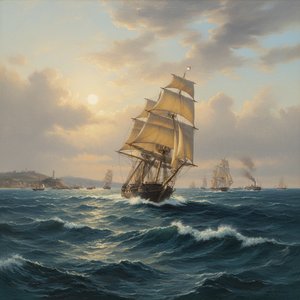
James E. Buttersworth: Navigating the Seas of Victorian Marine Painting
Explore the captivating world of James Edward Buttersworth, a foremost Victorian marine painter. Discover his meticulous ship portraits, America's Cup chronicles & enduring legacy in museums worldwide. Learn about his technique and style.

Thomas Luny (1759–1837): Maritime Mastery & the Evolution of British Marine Painting
Explore the captivating world of Thomas Luny (1759–1837), a celebrated British marine artist. Discover his dramatic naval scenes, detailed ship portraits & lasting legacy. Learn about his life, influences & artworks.

John Wilson Carmichael: Evoking Scottish Identity Through Dramatic Marine Painting
Explore the dramatic marine paintings of John Wilson Carmichael (1800-1868), a Victorian master renowned for his realistic seascapes and historical naval scenes. Discover his life, style & available hand-painted reproductions at ArtsDot.

Ludolf Backhuysen I: Master of Dutch Marine Painting & Atmospheric Realism
Explore the captivating world of Ludolf Backhuysen I, a master of Dutch marine painting. Discover his signature realism, atmospheric seascapes & lasting influence on art history. Learn about collecting and appreciating this Golden Age artist.