

 切换至版画销售渠道
 分享
分享 分享
分享
 详情
详情 指南
指南

 下载作品
下载作品
 相似作品
相似作品 幻灯片播放
幻灯片播放 问答
问答 统计数据
统计数据Figure


 展开全文
展开全文
获取远超网页预览效果的印刷级文件。我们销售的每一张数字图像均源自库存数据库中的高分辨率母版——宽度通常在 5,000 至 15,000 像素之间——因此您可以放心地进行大幅打印、局部裁剪或还原细腻的细节。
每一件作品在离开我们的工作室前都经过了精心的处理。数字影像专家会对照原作核对色彩,并在必要时进行校正,随后利用专业修图工具提升清晰度与细节表现——且始终忠实于艺术家的笔触与风格。最终呈现的图像宛如原作本身,而非仅仅是一张加了滤镜的扫描件。
您可以在最终定稿前进行审核:我们的专家将在 72 小时内通过电子邮件向您发送图像以供审阅。如果不满意?您可以要求改进或修正;若质量未达预期,亦可申请退款。
这也是出版商、设计工作室、画廊及印刷厂所信赖的品质。
每份数字图像订单均包含的内容
专业级数字交付,品质保障
选择 ArtsDot.com,您获得的不仅仅是一张图像——您收到的是经过专业级增强、精雕细琢的数字艺术作品,并享有满意保证。以下是您的订单中自动包含的所有内容:

邮件即时送达
您的高分辨率数字图像文件将在下单后 72 小时内通过电子邮件发送给您 —— 即可立即使用。

AI 增强型数字文件
您的艺术品经过专业优化,结合先进的 AI 技术与人工修饰,确保呈现极致的细节、清晰度与色彩准确度。

终身免费重发服务
不小心删除了文件或找不到了?没关系——我们将随时为您免费重发。

无需进口税费,始终如一
即刻拥有您的艺术作品,无需支付任何关税、税费或运费——数字下载始终免税。

色彩精准保障
我们通过专业工具与色彩管理技术,确保您的数字图像尽可能真实地还原原作色彩。

100天满意保证
如果您对所购数字图像不满意,我们将在100天内为您进行修改或提供100%的全额退款——无需任何理由。

100% 退款保证
不满意?在收到数字文件后的100天内,您可以申请全额退款——无需任何理由。

批量订购优惠
购买 3 张享 10% 折扣 - 购买 5 张享 15% 折扣 - 购买 10 张以上享 20% 折扣。非常适合创意项目、画廊及机构使用。
A Fragmented Vision of Humanity
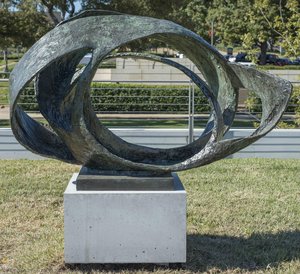
Jacques Lipchitz's "Figure," sculpted in 1930, stands as a profound testament to the transformative power of Cubism and its enduring fascination with exploring the fundamental concepts of form and perception. This bronze masterpiece transcends mere representation; it invites a deep, meditative contemplation on the very essence of human existence through a deliberately abstracted aesthetic. In an era defined by rapid societal shifts, Lipchitz utilized a fragmented language to capture the complexity of the modern soul. The sculpture presents a captivating interplay of geometric precision and organic fluidity, where the human form is not merely depicted but reconstructed through a lens of intellectual rigor and emotional depth.
The composition is a masterclass in the Cubist approach, pioneered by luminaries such as Picasso and Braque. Rather than striving for a realistic or anatomical depiction, Lipchitz dismantles the human figure into interlocking planes, presenting multiple viewpoints simultaneously. The head is rendered with striking simplicity—two oval eyes positioned above a small, triangular nose—which disrupts traditional notions of facial harmony to create a sense of enigmatic presence. Below this stylized visage, undulating vertical forms intersect with curved openings, creating a rhythmic tension between movement and stillness. This structural complexity ensures that the viewer's eye is constantly traveling across the surface, discovering new contours and depths within the bronze.
The Alchemy of Bronze and Form
The materiality of the piece is essential to its enduring impact. The choice of bronze allows for an exquisite level of detail and a rich, tactile quality that stone or wood could not achieve. Through the intricate process of bronze casting, Lipchitz was able to capture subtle variations in surface texture, from the sharp, clean edges of his geometric planes to the softer, more rounded contours of the figure's limbs. The rough, uneven patina resulting from natural oxidation lends the sculpture an ancient, weathered character, suggesting a sense of permanence and historical weight. This textured surface catches the light in a way that emphasizes the sculpture's three-dimensionality, making it a dynamic object that changes appearance depending on the surrounding illumination.
For the discerning collector or interior designer, "Figure" offers an unparalleled opportunity to introduce a piece of art history into a contemporary space. The sculpture’s neutral, earthy tones and sophisticated silhouette allow it to integrate seamlessly into various high-end environments, from minimalist modern galleries to richly textured classical studies. It serves as a powerful focal point, commanding attention through its structural integrity and the quiet strength of its presence. Owning a high-quality reproduction of this work is not merely about acquiring an object; it is about bringing a piece of the avant-garde revolution into one's personal sanctuary, fostering an atmosphere of intellectual curiosity and timeless elegance.
常见问题与解答
雅克·利普希茨 的《Figure》 的创作媒介是什么?
雅克·利普希茨 在作品《Figure》中运用了 Bronze 技法。该技法界定了原作的材质特性。
雅克·利普希茨 的《Figure》 融合了怎样的主题与氛围?
"Figure" 描绘了 sculpture, abstraction, bronze, geometric form, cubism style, human figure, texture, modern art,并传达出 Modern 的意境。
在哪里可以找到关于“Figure”的指南?
"Figure" 的指南请参阅作品的 指南 页面 —— 这是一份可打印的信息单,包含了该作品的说明、署名以及详细信息表(艺术家、日期、媒介、原尺寸、馆藏)。
相似作品




艺术家简介
A Life Sculpted by Change: The Journey of Jacques Lipchitz
Born Chaim Jacob Lipschitz in 1891 in the Lithuanian town of Druskininkai, Jacques Lipchitz’s artistic path was one dramatically shaped by displacement and innovation. His early life, rooted in a Litvak Jewish family where his father worked as a building contractor, initially steered him towards engineering studies. However, a burgeoning creative spirit, nurtured by his mother's support, propelled him toward Paris in 1909 – a city then pulsating with artistic revolution. He enrolled at the École des Beaux-Arts and the Académie Julian, immersing himself in the vibrant communities of Montmartre and Montparnasse. It was within these circles that he forged friendships with luminaries like Juan Gris, Pablo Picasso, and Amedeo Modigliani – the latter famously capturing Lipchitz and his wife Berthe in a poignant double portrait. These early connections were pivotal, laying the groundwork for Lipchitz’s embrace of Cubism, though one distinctly tempered by his own sensibility.The Crystallization of Form: Lipchitz and Cubist Sculpture
Lipchitz didn't simply translate painting into three dimensions; he *sculpted* Cubism. While deeply influenced by Picasso and Braque’s fractured perspectives, Lipchitz retained a remarkable degree of figuration in his work up to around 1915-16. His sculptures weren’t entirely abstract; they hinted at recognizable forms, imbued with a sense of emotional weight. This evolved into what became known as “Crystal Cubism,” a style characterized by faceting and transparency – an attempt to capture multiple viewpoints simultaneously within a single form. He experimented with fracturing space, creating dynamic compositions that seemed to shimmer with inner light. His 1920 solo exhibition at Léonce Rosenberg’s Galerie L'Effort Moderne in Paris cemented his position as a leading figure of the School of Paris and showcased this unique sculptural language. Works like “Harlequin with Clarinet” exemplify this period, showcasing fragmented forms that still manage to convey a sense of playful energy and human presence. He wasn’t merely deconstructing form; he was rebuilding it according to a new visual logic.Exile and Reinvention: A New World, A Renewed Vision
The looming shadow of World War II forced a profound upheaval in Lipchitz's life. As the Nazi regime tightened its grip on France and persecution of Jews intensified, he was compelled to flee his adopted homeland. With the invaluable assistance of American journalist Varian Fry in Marseille, he escaped to the United States, eventually settling in New York City and later Hastings-on-Hudson. This relocation wasn’t merely a geographical shift; it marked a turning point in his artistic trajectory. While continuing to explore Cubist principles, Lipchitz's work began to take on new dimensions, reflecting the trauma of exile and a growing engagement with existential themes. He created monumental sculptures like “Birth of the Muses” (1944-1950), commissioned in memory of Jerome Wiesner, which demonstrated his mastery of bronze and his ability to convey profound emotion through abstract forms.Late Reflections: Faith, Legacy, and a Tuscan Retreat
In his later years, Lipchitz experienced a deepening connection to his Jewish faith, embracing religious observance with renewed fervor – even studying daily and wearing tefillin at the urging of the Lubavitcher Rebbe, Rabbi Menachem Schneerson. This spiritual awakening infused his work with a new layer of meaning. He returned frequently to Europe, finding solace and inspiration in Pietrasanta, Italy, where he forged a close friendship with fellow sculptor Fiore de Henriquez. His autobiography, co-authored with H. Harvard Arnason and published in 1972 alongside an exhibition at the Metropolitan Museum of Art, offered a poignant reflection on his life and artistic journey. Jacques Lipchitz passed away in Capri, Italy, in 1973, but his body was brought to Jerusalem for burial – a testament to his profound connection to his heritage. His Tuscan villa, Bozio, now serves as a Jewish summer camp, ensuring that his legacy continues to inspire future generations. He left behind not just a remarkable body of sculpture, but also a powerful example of artistic resilience and the enduring human spirit.
雅克·利普希茨
1891 - 1973 , 立陶宛
基本信息
- Artistic Movement Or Style: 立体主义, 水晶立体主义
- Artists Who Influenced This Artist:
- 巴勃罗·毕加索
- 胡安·格里斯
- Date Of Birth: 1891年
- Date Of Death: 1973年
- Full Name: 雅克·利普希茨
- Nationality: 立陶宛-法国-美国
- Notable Artworks:
- 骑马的杂技演员
- 乐器
- 吉他手
- 皮埃罗
- 带单簧管的哈利昆
- 弹吉他的男人
- 缪斯的诞生
- Place Of Birth: 立陶宛,德鲁斯金宁卡