

 实景预览
实景预览
 分享
分享 分享
分享
 详情
详情 指南
指南

 下载作品
下载作品
 相似作品
相似作品 X射线
X射线 幻灯片播放
幻灯片播放 问答
问答 统计数据
统计数据Self Portrait


 展开全文
展开全文
艺术微喷/版画
博物馆级艺术微喷或帆布版画,制作高效,并提供多种饰面选择。 ( 订购纯手工绘制画作 切换至数字图像销售渠道)




P118B ¥10

P118H ¥10

P118W ¥10

P438Z ¥10

P508JH ¥12

P508YH ¥12

P805H ¥10

P805Z ¥10

P919BZ ¥10

P919G ¥10

P919XJ ¥10

P959ZH ¥10

P968JZ ¥12

W106C ¥8

W218G ¥10

W218JH ¥8

W218Y ¥10

W307PJ ¥10

W316G ¥10

W316PJ ¥8

W316Y ¥10

W398PJ ¥8

W4111J ¥10

W500HY ¥15

W500JH ¥15

W692G ¥12

W849H ¥8

W940BG ¥15

W953PJ ¥8




您可以从与原作比例一致的预设尺寸中进行选择。

请输入您所需的宽度和高度,以适配您的画框或墙面。由于印刷品只能进行裁剪,无法超出原图尺寸,因此若比例不一致,画面的一部分将会被裁切。在正式印刷之前,我们会为您发送一份数字效果图供您确认。本页面显示的图片并非最终裁剪后的效果——只有效果图才能展示真实的裁剪情况。


 玻璃选项仅适用于110厘米以下的尺寸。

Self Portrait
艺术微喷/版画
复刻品尺寸
-


最终结算价
¥ 423
A Window into the Soul: James Tissot’s “Self Portrait”
James Jacques Joseph Tissot's "Self Portrait," painted in 1865, isn’t merely a likeness; it’s a carefully constructed invitation into the artist’s world. Emerging from a period of intense artistic exploration and marked by influences ranging from Ingres to the burgeoning Impressionism of Paris, this work offers a poignant glimpse at Tissot's evolving style and his deep engagement with the social currents of his time. The painting immediately draws the eye with its intimate scale – a relatively small canvas that fosters an immediate sense of connection, as if the artist is sharing a private moment. He sits before an easel, bathed in soft light, a contemplative expression gracing his face. His gaze, direct and slightly melancholic, seems to hold both awareness of himself and a subtle invitation for the viewer to share in his thoughts. The muted palette – predominantly browns, greys, and ochres – contributes to the painting’s subdued elegance, reflecting Tissot's deliberate choice to move away from the bright, theatrical colors favored by earlier academic styles.Technique and Style: A Synthesis of Realism and Impressionistic Hints
Tissot’s technique is a fascinating blend of meticulous realism and subtle Impressionistic touches. He employs a highly detailed approach, rendering the textures of his clothing – the velvet jacket, the worn fabric of his trousers – with remarkable accuracy. Yet, he doesn't simply replicate reality; instead, he uses light and shadow to create an atmosphere, suggesting depth and volume. Notice how the folds of the fabric seem to ripple and shift, not through a rigid adherence to form, but through a skillful manipulation of color and value. This is particularly evident in the way the light catches on the velvet, creating a subtle shimmer that adds to the painting’s overall luminosity. Furthermore, Tissot's use of brushstrokes—often short and broken—hints at an Impressionistic sensibility, anticipating the later developments of Monet and Renoir. He captures fleeting moments of light and shadow, imbuing the scene with a sense of movement and immediacy. The composition itself is carefully balanced, drawing the eye to the artist’s face while simultaneously establishing a harmonious relationship between his figure and the surrounding space.Social Context and Symbolism: A Parisian Artist in His Prime
Painted during a pivotal period in Tissot's career, “Self Portrait” reflects his growing success as a genre painter of contemporary society. He had established himself as a keen observer of Parisian life, capturing the elegance and sophistication of the Belle Époque with remarkable skill. The painting speaks to this ambition – it’s not just a portrait of an artist; it's a statement about his position within the vibrant artistic milieu of Paris. The easel itself becomes a symbol of his profession, while the quiet studio setting suggests a dedication to his craft. The slightly worn appearance of the room and the artist’s attire hint at a life dedicated to art, perhaps tinged with a touch of melancholy – a common theme in Tissot's work. Interestingly, the inclusion of a partially visible mirror behind him subtly reinforces the idea of self-reflection and artistic identity, echoing the Renaissance tradition of artists portraying themselves within their works.Emotional Resonance: Intimacy and Quiet Contemplation
Beyond its technical merits and historical context, “Self Portrait” possesses a profound emotional resonance. The artist’s expression is not one of grand pronouncements or theatrical display; rather, it conveys a sense of quiet contemplation—a moment of introspection amidst the bustle of Parisian life. There's an underlying vulnerability in his gaze, inviting the viewer to share in his thoughts and feelings. It’s a remarkably intimate portrait, offering a rare glimpse into the inner world of a talented artist. The painting speaks to the universal human experience of self-awareness, reminding us that even amidst artistic ambition and social engagement, there is always room for quiet reflection and personal connection. Reproductions of this work offer a beautiful opportunity to bring this moment of serene contemplation into any space, serving as a reminder of the power of art to connect us with both ourselves and the world around us.常见问题与解答
“Self Portrait”的作者是谁?
"Self Portrait" 的创作者是 吉泽·乔治·蒂斯突。该作品以 吉泽·乔治·蒂斯突 的名义编入目录。
吉泽·乔治·蒂斯突 的作品《Self Portrait》是否属于公有领域?其原因是什么?
吉泽·乔治·蒂斯突 的作品《Self Portrait》已进入 属于公有领域 —— 其版权已过期。版权期限自艺术家逝世之日起计算,吉泽·乔治·蒂斯突 于 1902 年逝世。
建议将“Self Portrait”打印成多大的尺寸?
建议将“Self Portrait”打印为 Large 尺寸。其他尺寸亦可按相同比例进行制作。
相似作品


艺术家简介
Early Life and Artistic Beginnings
Jacques Joseph Tissot,出生于1836年法国南特斯,从小就怀揣着艺术热情。父亲是一位丝绸商人,培养了他对工艺和细节的欣赏——这些品质深深地塑造了他的艺术视野。与此同时,母亲是一位帽子设计师,引导他感受美与时尚的美丽世界,让他接触了巴黎社会充满活力的世界。尽管承担着家庭责任,但Tissot不懈地追求他的艺术梦想,进入巴黎国立美术学院学习,并在印象派大师如亨格斯、弗兰德林和拉莫特的指导下磨练技能。这段塑造性的时期巩固了他绘画作为职业的决心,并将其牢牢地置于巴黎影响力的艺术圈子中。The Salon Years and Recognition
Tissot在1861年的巴黎沙龙首次亮相标志着一个关键时刻——《 Faust 与 Marguerite 的会面》的揭幕,这幅戏剧性画作深深吸引了观众并从评论家那里获得了广泛赞誉。国家购买了它以纳入卢森堡美术馆,这项雄心勃勃的举措象征着Tissot作为能够捕捉复杂叙事和表达深刻情感的画家而获得声望的开端。随后的沙龙展览巩固了他艺术界的地位,展示了他的发展风格并为著名赞助人赢得了订单。早期的成功激发了信心,推动他探索新的主题和技术——一条最终定义了他辉煌职业的轨迹。他的作品以对印象派的影响力融合而著称,为捕捉维多利亚时代社会风貌和信仰的活力提供了一份无与伦比的视觉体验。Genre Painting and Parisian Society
Tissot的艺术突破发生在他创作的系列《巴黎女人》中,这是一幅细致观察了维多利亚时期伦敦美眉世界的画作。这些绘画以其鲜艳的色彩搭配和对纹理的精湛表现——特别是服装——而闻名于世,成为捕捉巴黎社会风貌和活力的象征。Tissot对细节的关注超越了单纯的视觉呈现;他寻求不仅表达外观,而且传达主题中的心理细微差别,反映了他作品的主人翁们焦虑与渴望。他的作品是艺术成就和对维多利亚时代生活与信仰的生动描绘的见证。Biblical Themes and Japonisme
在整个丰富多彩的作品中,Tissot拥抱了各种艺术灵感——从中古时期叙事到圣经场景——展现了他惊人的多样性。他的圣经题材作品充满精神深度和情感共鸣,证明了他作为视觉故事讲述者能够提升为深刻冥想的能力。与此同时,他被日本艺术与美学所吸引——维多利亚时代欧洲对日本艺术的痴迷,在构图中体现出不对称布局和微妙色彩和谐,这些色彩和谐借鉴了日本版画风格。这种风格融合反映了他对艺术思想的好奇心以及尝试创新艺术方法的意愿。Later Years and Legacy
Tissot在普法战争期间加入了法国军队,服务于法国一方——这一经历无疑塑造了他的世界观。战后,他迁往伦敦,在那里继续从事版画创作与塞缪尔·哈登合作,并通过肖像画和《时尚杂志》上的讽刺作品磨练技能。他和凯瑟琳·纽顿发展出了一段充满激情的关系,为他创作了许多绘画提供了持久的灵感。不幸的是,纽顿于1882年去世——这是对Tissot艺术创作的深刻打击。尽管经历了这悲伤的一页历史,但他继续创作杰作直至去世于1902年。今天,Jacques Joseph Tissot的遗产在于欧洲和北美博物馆中他的著名画作,其中巴黎圣约翰美术馆收藏了大量他的作品。他的绘画对类型绘画和印象主义产生了持久的影响力,巩固了他作为法国十九世纪最杰出的艺术家之一的位置。
吉泽·乔治·蒂斯突
1836 - 1902 , 法国
艺术家简介
- Artistic Movement Or Style: 印象派风格绘画
- Artists Or Movements Influenced By This Artist: ['日本艺术']
- Artists Who Influenced This Artist:
- 让奥古斯特·英格斯
- 古贝特
- Date Of Birth: 1836年10月15日
- Date Of Death: 1902年8月8日
- Full Name: Jacques Joseph Tissot
- Nationality: 法国人
- Notable Artworks: ['《 Faust 与 Marguerite 的会面 》,《 夜巴黎系列作品》']
- Place Of Birth: 法国巴黎圣丹斯市
相关文章

Masterpieces of the English Countryside: Top 25 Sir Alfred James Munnings Artworks
Explore 25 iconic Sir Alfred James Munnings masterpieces. Discover timeless equine art on ArtsDot.com.

James Sant: Capturing Victorian Childhood & the Evolving Landscape of British Genre Painting
Explore the life & art of James Sant (1820-1916), renowned Victorian portraitist to Queen Victoria. Discover his captivating depictions of childhood, landscapes, and aristocratic society. Learn about his legacy & find fine art reproductions.

惠斯勒大师25幅杰作:艺术、家居与永恒之美 | ArtsDot
探索詹姆斯·惠斯勒25幅杰作!深入了解夜曲、静谧和谐等经典油画背后的故事与艺术魅力。ArtsDot.com提供博物馆级复制品,为您的家居带来永恒之美。立即在线探索完整系列!

Reflecting the Self: A History of Portraiture & Psychological Insight
Explore the fascinating history of self-portraiture from Renaissance masters like Dürer & Rembrandt to modern interpretations. Discover the psychological insights and artistic techniques behind these iconic works. Expert analysis for art enthusiasts.
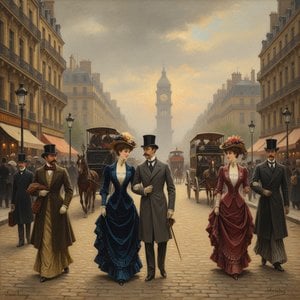
Jacques Joseph Tissot: A Chronicle of Parisian Life & Narrative Evolution
Explore the captivating world of Jacques Joseph Tissot, a master painter of Belle Époque society. Discover his realism, Impressionistic style, and lasting influence on art history. Learn more at ArtsDot.