

 实景预览
实景预览
 分享
分享 分享
分享
 详情
详情 指南
指南

 下载作品
下载作品
 相似作品
相似作品 X射线
X射线 幻灯片播放
幻灯片播放 问答
问答 统计数据
统计数据Blind Beggar

- 35.0 x 26.0 cm


 展开全文
展开全文
艺术微喷/版画
博物馆级艺术微喷或帆布版画,制作高效,并提供多种饰面选择。 ( 订购纯手工绘制画作 切换至数字图像销售渠道)




































您可以从与原作比例一致的预设尺寸中进行选择。

请输入您所需的宽度和高度,以适配您的画框或墙面。由于印刷品只能进行裁剪,无法超出原图尺寸,因此若比例不一致,画面的一部分将会被裁切。在正式印刷之前,我们会为您发送一份数字效果图供您确认。本页面显示的图片并非最终裁剪后的效果——只有效果图才能展示真实的裁剪情况。


 玻璃选项仅适用于110厘米以下的尺寸。

Blind Beggar
艺术微喷/版画
复刻品尺寸
-


最终结算价
¥ 422
相似作品


艺术家简介
The Lens of Conscience: The Life and Legacy of Jacob August Riis
In the flickering shadows of late nineteenth-century New York, where the gaslight struggled to pierce the gloom of overcrowded tenements, one man wielded a new kind of weapon: the camera flash. Jacob August Riis, a Danish immigrant whose early life was shaped by the hardships of Ribe, Denmark, did not merely observe the urban decay of the Progressive Era; he illuminated it with a startling, almost violent clarity. Born in 1849 to a schoolteacher and a homemaker, Riis carried within him an innate empathy for the marginalized, a trait forged by witnessing the struggles of his own community and the profound grief of his family. When he arrived in America, he found himself navigating the same labyrinthine poverty he would later immortalize, transforming his personal experience into a powerful journalistic crusade.
Riis’s journey from a struggling immigrant to a pioneer of social documentary was fueled by an unyielding commitment to truth. His early career as a journalist for Helsingfors Dagblad provided the foundation for his storytelling, but it was his move into the heart of New York City's slums that defined his historical significance. Alongside collaborators like the muckraking journalist Ida Tarbell, Riis embraced the burgeoning technology of photography to expose the "other half" of society—those living in the suffocating grip of disease, overcrowding, and neglect. He was not merely a reporter; he was an architect of public opinion, using the raw, unvarnished reality of the streets to demand legislative change.
A Revolution of Light and Shadow
The technical brilliance of Riis lay in his daring use of magnesium flares. At a time when photography required long, static exposures and soft, controlled light, Riis introduced a sudden, explosive illumination that could capture the dark, cramped corners of cellar dwellings and alleyways. This technique, while often criticized for its harshness, was essential to his mission. The stark, high-contrast imagery created a sense of immediacy and visceral truth that traditional portraiture lacked. In works such as Blind Beggar, the dramatic interplay of light and shadow serves as more than just an aesthetic choice; it becomes a metaphor for the sudden revelation of hidden suffering.
His methodology was a seamless blend of visual evidence and narrative weight. His magnum opus, "How the Other Half Lives" (1890), remains one of the most influential books in the history of American journalism. Within its pages, the photographs do not stand alone; they are tethered to meticulous, often heartbreaking accounts of the human condition. Riis captured the geometric despair of the Bayard Street Tenement and the chaotic density of Bandits' Roost, forcing the middle and upper classes to look directly into the eyes of the impoverished. Through his lens, the tenement was no longer an abstract social issue but a tangible, breathing reality of overcrowding and despair.
Architect of Reform and Social Memory
The impact of Riis’s work extended far beyond the printing press, catalyzing significant urban reforms in New York City. His advocacy helped drive the implementation of "model tenements" and improved sanitation laws, fundamentally altering the trajectory of urban planning in the United States. He stood as a precursor to the modern documentary photographer, proving that the camera could serve as an instrument of social justice rather than just a tool for artistic expression or vanity.
Though his life ended in 1914, the echoes of his flashbulbs continue to resonate in the history of social realism. His legacy is defined by several key contributions:
- Pioneering Photojournalism: The integration of innovative photographic technology with investigative reporting to drive political change.
- Social Reform Advocacy: The successful use of visual evidence to lobby for improved housing regulations and humanitarian aid.
- Documentary Realism: Establishing a stylistic precedent for capturing the raw, unadorned truth of marginalized populations.
Jacob August Riis remains a monumental figure whose work bridged the gap between art and activism. He taught the world that to look is not enough; one must truly see, and in seeing, one must find the courage to act.

艺术家简介
- Artistic Movement Or Style: Social realism
- Artists Or Movements Influenced By This Artist: ['Pictorialism']
- Artists Who Influenced This Artist:
- Gustav Dore
- Lewis Hine
- Date Of Birth: 1849
- Date Of Death: 1914
- Full Name: Jacob August Riis
- Nationality: American
- Notable Artworks:
- The Street, their Playground
- Blind Beggar
- How the Other Half Lives
- Place Of Birth: Hamburg, Germany
相关文章

Monochrome Visions: Exploring the Aesthetic & Historical Significance of Black & White Photography
Explore the rich history & artistic power of black and white photography. From early techniques to iconic masters like Ansel Adams, discover why monochrome continues to captivate art lovers today. Expert insights for collectors.
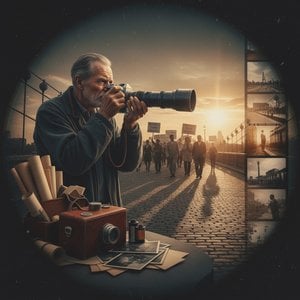
Witnessing History Through Lens & Light: Documentary Photography's Enduring Legacy
Explore the powerful history of documentary photography – from its origins to contemporary masters like Gordon Parks & W. Eugene Smith. Discover how this art form shapes our understanding of society and witness pivotal moments in time.

Timeless & Chic: Elevating Your New Home with the Sophistication of Black and White Photography
Transform your new home with the timeless allure of black and white photography. ArtsDot.com specializes in elegant monochrome decor and custom hand-painted wedding portraits that turn cherished milestones into lasting, soulful masterpieces. Elevate your space with ease.

White on Canvas: 10 Masterpieces & Timeless Elegance for Your Home Decor
Explore 10 iconic white paintings by Monet, Whistler & Rothko! Discover the stories behind these serene masterpieces and their impact on art history. Find museum-quality reproductions for your home decor at .

Beyond the Lens: Photography's Enduring Influence on Modern & Contemporary Art
Explore photography's pivotal role in shaping modern & contemporary art. Discover key movements, influential artists like Stieglitz, and expert collecting advice from ArtsDot.