


 效果预览
效果预览
 分享
分享 分享
分享
 详情
详情 指南
指南

 下载
下载
 相似作品
相似作品 X射线
X射线 幻灯片播放
幻灯片播放 统计数据
统计数据Spring Flood
 Oil On Canvas
- WallArt
- Impressionism
 1897
1897- 19th Century
 64.0 x 57.0 cm
 列夫托尔斯泰美术馆
 展开详情
展开详情
手工油画复制品
由我们的艺术家按需定制,为您提供您所选尺寸及画框的布面手工油画。 ( 切换至版画销售渠道 切换至数字图像销售渠道)




































从与原作比例一致的预设尺寸中进行选择。

您可以输入自定义尺寸,以适配特定的画框或空间。如果所选尺寸与原图比例不符,我们将通过裁剪作品或添加手绘元素来扩展画面。数字样稿将在制作开始前发送给您确认。
请注意,屏幕预览无法准确反映实际的裁剪或扩展效果,只有样稿才能真实呈现最终的构图。
虽然我们提供定制尺寸服务,但为了保留原作比例,建议您从预设列表中选择尺寸。
下单后,ArtsDot.com 团队将通过电子邮件联系客户获取具体要求,并提供效果预览图。


 玻璃选项仅适用于110厘米以下的尺寸。

Spring Flood
复制材质
复制品尺寸
-


最终总价
$ 263
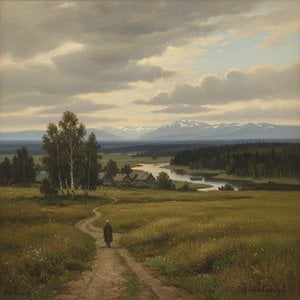
Spring Flood by Isaak Ilyich Levitan: A Serene Reflection of Nature
Isaak Ilyich Levitan's "Spring Flood," painted in 1897, is a captivating landscape that embodies the artist’s signature style – a poignant and evocative portrayal of the Russian countryside. This oil on canvas masterpiece, measuring 64 x 57 cm, resides within the esteemed collection of the Tretyakov Gallery in Moscow, Russia, serving as a testament to Levitan's profound connection with nature and his ability to translate its essence onto canvas.
Artistic Style and Technique
"Spring Flood" exemplifies Levitan’s mastery of mood landscape painting. Unlike earlier landscape artists who focused on topographical accuracy, Levitan sought to capture the emotional atmosphere and spiritual resonance of a scene. The artwork is rendered in an Impressionistic style, characterized by loose brushstrokes and a focus on capturing fleeting moments of light and color. The technique involves layering paint to build up texture and create atmospheric effects. Notice how the artist uses muted yellows, browns, and blues to evoke a sense of serenity and quietude. The delicate play of light on the water creates a sense of movement and energy, while the reflections in the water add depth and complexity to the composition. The flattened perspective is typical of Impressionism, emphasizing the surface qualities of the paint.
Subject Matter and Composition
The painting depicts a tranquil riverbank scene during what appears to be late autumn or early spring. The dominant feature is the reflection of trees and shoreline in the water, creating a symmetrical effect that draws the viewer into the heart of the landscape. A small boat rests gently on the shore, adding a subtle human element to the otherwise natural setting. The composition is carefully balanced, with the horizon line positioned slightly above the midpoint to emphasize the vastness of the sky and the surrounding environment. The inclusion of two people in the scene adds a touch of human connection to the peaceful landscape.
Historical Context and Symbolism
Levitan painted "Spring Flood" during a period of significant artistic change in Russia, as artists began to move away from traditional academic styles towards more modern approaches. The painting reflects this shift, embracing Impressionistic techniques while retaining a distinctly Russian sensibility. The flood itself can be interpreted symbolically – representing renewal and the cyclical nature of life. The muted color palette and tranquil atmosphere evoke a sense of melancholy and introspection, characteristic of Levitan’s work. It is believed that Levitan was deeply affected by personal loss during this time, which may have contributed to the painting's poignant emotional tone.
Emotional Impact and Legacy
"Spring Flood" continues to resonate with viewers today due to its ability to evoke a profound sense of peace and contemplation. The artwork’s beauty lies not only in its technical skill but also in its capacity to transport the viewer to a tranquil natural setting, inviting them to reflect on the beauty and fragility of life. As a masterpiece of Russian art, "Spring Flood" stands as a testament to Levitan's enduring legacy as one of Russia's most beloved landscape painters.
相似艺术品


艺术家简介
A Symphony of the Russian Soul: The Life and Art of Isaak Ilyich Levitan
Isaak Ilyich Levitan, a name synonymous with the evocative power of Russian landscape painting, was more than just a chronicler of nature; he was a poet of the land, a translator of its moods into visual form. Born in 1860 in Kibarty (present-day Lithuania) to a Jewish family who later settled in Moscow, Levitan’s life was marked by both profound hardship and an unwavering dedication to his art. The early loss of his mother and father instilled within him a sensitivity that would permeate his canvases with a melancholic beauty. This sense of longing, coupled with the restrictions imposed upon Jewish communities in Tsarist Russia, fueled a desire to find solace and expression in the natural world. He entered the Moscow School of Painting, Sculpture and Architecture in 1873, where he came under the tutelage of Alexei Savrasov, whose influence would prove pivotal in shaping Levitan’s artistic vision. It was Savrasov who nurtured his student's innate ability to capture not merely the appearance of nature, but its very essence—its atmosphere, its emotional resonance.The Birth of a ‘Mood Landscape’
Levitan swiftly distinguished himself as an artist capable of conveying profound emotion through landscape. He wasn’t interested in topographical accuracy for its own sake; rather, he sought to imbue his paintings with a sense of *mood*, a feeling that resonated deep within the viewer's soul. This approach earned him the title of pioneer of the “mood landscape,” a genre that moved beyond simple representation to explore the spiritual connection between humanity and nature. His palette was often subdued, favoring naturalistic colors and poetic elements over vibrant displays. He masterfully employed light and shadow, creating atmospheric effects that evoked feelings of tranquility, solitude, or even quiet despair. Works like *Autumn Day. Sokolniki* (1879), painted when he was just nineteen years old, already demonstrated this remarkable ability to capture the subtle nuances of the Russian countryside. The painting’s muted tones and delicate rendering of light create a sense of wistful nostalgia, hinting at the transience of beauty and the inevitability of change. Later masterpieces such as *The Vladimirka Road* (1892) and *Eternal Rest* (1894), prominently displayed in the Tretyakov Gallery, further solidified his reputation as a master of emotional landscape painting.Influences and Artistic Kinships
While deeply indebted to Savrasov’s influence, Levitan was also receptive to other artistic currents. He collaborated with fellow artists like Konstantin Korovin, Mikhail Nesterov, and Nikolai Chekhov—the brother of the renowned playwright Anton Chekhov, who became a lifelong friend. This circle fostered an environment of creative exchange and mutual support. Though he briefly experimented with Impressionistic techniques, Levitan never fully embraced the movement, maintaining a uniquely Russian sensibility in his work. He found inspiration not only in the visual world but also in music and literature, seeking to translate their emotional power into his paintings. His designs for scenery for Savva Mamontov’s private Russian Opera demonstrate his versatility and willingness to explore different artistic mediums. The influence of these collaborations and experiences can be seen in works like *Spring Flood*, *Stormy Day*, *Vesper Chimes* and *Silent Cloister*, each a testament to his evolving style and deepening understanding of the emotional landscape.Major Achievements and Recognition
Levitan’s dedication to artistic excellence culminated in several significant accomplishments throughout his career. Elected to the Imperial Academy of Arts in 1897, he achieved international acclaim for his masterful depictions of Russian landscapes—particularly *Vladimirka Road*, which became a symbol of melancholy beauty and spiritual contemplation. He served as head of the landscape studio at Moscow School of Painting, Sculpture and Architecture from 1898 onwards, nurturing the talent of aspiring artists and shaping the future direction of Russian landscape painting. His unwavering commitment to his craft ensured that Levitan’s legacy would endure for generations to come—a testament to the transformative power of art and its ability to capture the essence of human experience.Legacy and Enduring Resonance
Isaak Ilyich Levitan's paintings remain a cornerstone of Russian artistic heritage, embodying a profound connection between humanity and nature. His work continues to inspire artists and viewers alike with its evocative beauty and poignant emotional depth—a timeless reflection of the Russian soul. In 1941, a solemn ceremony honored his memory when his remains were transported to Novodevichy Cemetery in Moscow, alongside Anton Chekhov—a poignant union symbolizing two artistic kindred spirits who eloquently conveyed their era’s spirit through unparalleled sensitivity and grace. His contribution to the development of mood landscape painting cemented his place as one of Russia's most celebrated artists, ensuring that Levitan’s vision would resonate powerfully for centuries ahead.
伊萨克·列文塔因
1860 - 1900 , 立陶宛
艺术家简介
- Artistic Movement Or Style: 情绪风景画,现实主义风格
- Artists Or Movements Influenced By This Artist: ['俄罗斯风景画家']
- Artists Who Influenced This Artist:
- 阿列谢·萨夫罗夫
- 瓦西里·佩罗夫
- 瓦西里·普诺洛夫
- Date Of Birth: August 30, 1860
- Date Of Death: July 22, 1900
- Full Name: Isaak Ilyich Levitan
- Nationality: 俄罗斯人
- Notable Artworks:
- 秋日黄昏·索科尔尼基
- 弗拉德米尔卡之路
- 永恒的安息
- 春汛
- 风雨天气
- 圣咏时钟
- Place Of Birth: Kibarty, Lithuania
相关文章
Fyodor Vasilyev: A Poetic Vision of Russian Landscape – Life, Legacy, and the Transience of Nature
Explore the captivating world of Fyodor Vasilyev, a pioneering Russian landscape painter. Discover his lyrical style, influential works like 'Clouds' & lasting legacy. Learn about his life, artistic journey & impact on Russian art history.

浪漫主义画派的十部巨作:定义风景画的艺术传奇
探索浪漫主义风景画的巅峰!本文精选十部经典名作,带您领略莫奈、库尔贝等大师的艺术魅力。感受色彩与光影的诗意,重温自然风光的震撼。ArtsDot.com为您提供博物馆级别的艺术复制品和个性化家居装饰方案。尽在ArtsDot.com!

Aleksey Savrasov: The Poetic Realism That Defined Russian Landscape Painting
Explore the poetic realism of Aleksey Savrasov, founder of Russian lyrical landscape painting. Discover his masterpieces like 'The Rooks Have Returned' and learn about his lasting influence on 19th-century art. ArtsDot offers high-quality reproductions.

康斯塔布尔大师之作:25幅传世风景画赏析 | ArtsDot
探索康斯塔布尔的25幅传世杰作!沉浸于英国田园风光,感受浪漫主义绘画大师的光影与色彩。高清油画复制、艺术品购买尽在ArtsDot.com,为您的家居增添经典之美。立即在线探索完整系列!

Evocations of Place: A Historical Journey Through Landscape Art
Explore the rich history of landscape art with ArtsDot. Discover renowned artists, movements like Impressionism & Romanticism, and expert guidance for collecting timeless pieces. Find your perfect serene escape today!
