


 实景预览
实景预览
 发送
发送 分享
分享
 详情
详情 指南
指南

 下载图片
下载图片
 相似作品
相似作品 X射线
X射线 幻灯片播放
幻灯片播放 统计数据
统计数据Watersnakes
 Acrylic On Canvas
- WallArt
- Art Nouveau
 1907
1907 50.0 x 20.0 cm
 阅读全文
阅读全文
艺术微喷/版画
博物馆级艺术微喷或帆布版画,制作高效,并提供多种饰面选择。 ( 订购此收藏品的纯手工复刻画作 切换至数字图像销售渠道)




P118B ¥10

P118H ¥10

P118W ¥10

P438Z ¥10

P508JH ¥12

P508YH ¥12

P805H ¥10

P805Z ¥10

P919BZ ¥10

P919G ¥10

P919XJ ¥10

P959ZH ¥10

P968JZ ¥12

W106C ¥8

W218G ¥10

W218JH ¥8

W218Y ¥10

W307PJ ¥10

W316G ¥10

W316PJ ¥8

W316Y ¥10

W398PJ ¥8

W4111J ¥10

W500HY ¥15

W500JH ¥15

W692G ¥12

W849H ¥8

W940BG ¥15

W953PJ ¥8




您可以从与原作比例一致的预设尺寸中进行选择。

请输入您所需的宽度和高度,以适配您的画框或墙面。由于印刷品只能进行裁剪,无法超出原图尺寸,因此若比例不一致,画面的一部分将会被裁切。在正式印刷之前,我们会为您发送一份数字效果图供您确认。本页面显示的图片并非最终裁剪后的效果——只有效果图才能展示真实的裁剪情况。


 玻璃选项仅适用于110厘米以下的尺寸。

Watersnakes
艺术微喷/版画
复刻品尺寸说明
-


总计金额
¥ 417
A Glimpse into the Psyche: Unveiling Gustav Klimt’s “Watersnakes”
Gustav Klimt's 1907 masterpiece, *Watersnakes*, is a captivating exploration of feminine allure and the subconscious, rendered in his signature opulent style. Measuring just 50 x 20 cm, this small-scale painting possesses an immense power to draw viewers into its swirling depths – a true jewel within Klimt’s oeuvre. It's a work that embodies the core principles of Art Nouveau, prioritizing organic forms, decorative richness, and profound symbolism.Subject & Composition: Entwined Destinies
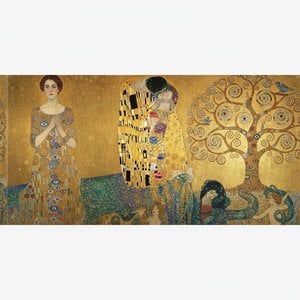
The composition centers around three female figures intimately connected in a fluid, almost claustrophobic space. The central figure is nude, her form partially obscured and interwoven with the bodies of two other women adorned in richly patterned garments. This isn’t a narrative scene but rather an evocation of psychological entanglement and shared experience. The figures aren't distinct individuals; they are facets of a singular feminine archetype, suggesting interconnectedness and perhaps even different aspects of a single psyche. Their languid poses hint at surrender or relaxation within this watery realm, while the lack of defined spatial relationships contributes to the dreamlike quality of the scene.Artistic Style & Technique: Klimt’s Golden Touch
*Watersnakes* is quintessentially Klimt. He seamlessly blends Symbolism with influences from Japanese woodblock prints – particularly in its flattened perspective and emphasis on line – and Byzantine mosaics encountered during his travels in Italy. The most striking element is, undoubtedly, the extensive use of gold leaf, a technique borrowed from medieval religious art. This isn’t merely decorative; it elevates the painting to an almost iconographic status, imbuing it with sacredness and otherworldly beauty. Klimt's meticulous application of paint alongside the shimmering gold creates a rich textural contrast. The swirling lines and geometric patterns aren’t simply ornamentation but integral components of the composition, guiding the viewer’s eye and contributing to the painting’s dynamism.Symbolism & Interpretation: Beneath the Surface Currents
The symbolism within *Watersnakes* is deliberately ambiguous, inviting multiple interpretations. Snakes have long been associated with transformation, healing, temptation, and primal energy – themes central to Klimt's work. The water element suggests the subconscious, fluidity, and emotional depth. Circular motifs scattered throughout may represent cycles of life, eternity, or even eyes, subtly suggesting a sense of being watched. Some scholars interpret the work as exploring female sexuality and the complexities of relationships, while others see it as an allegory for artistic creation – the artist submerged in a sea of inspiration. The contrast between the nude central figure and the clothed women could represent vulnerability versus societal constraints.Historical Context: Vienna Secession & Modern Sensibility
Painted during Klimt’s “Golden Phase,” *Watersnakes* reflects the spirit of the Vienna Secession – an artistic movement that rebelled against conservative academic traditions. Klimt and his fellow secessionists sought to create a Gesamtkunstwerk (total work of art) integrating painting, architecture, and design. This ambition is evident in the decorative richness and holistic approach to composition seen here. The early 20th century was a period of significant social upheaval, and Klimt’s work often grappled with themes of modernity, sexuality, and the changing role of women.Emotional Impact & Interior Design Considerations
*Watersnakes* evokes both allure and unease. Its opulent beauty is tempered by an underlying current of mystery and psychological tension. The painting's intimate scale makes it ideal for smaller spaces – a boudoir, study, or elegant dining room. The gold leaf will naturally draw the eye, creating a focal point within any interior. To complement its rich tones, consider pairing it with deep jewel colors like emerald green, sapphire blue, or ruby red. The painting’s curvilinear forms would harmonize beautifully with Art Nouveau or organic modern furniture and décor.Key Features:
- Artist: Gustav Klimt
- Year: 1907
- Dimensions: 50 x 20 cm
- Style: Art Nouveau, Symbolism
- Medium: Oil paint and gold leaf on canvas
问答详情
“Watersnakes”整体色调是偏明亮还是偏暗?
古斯塔夫·克林姆特 的《Watersnakes》 的记录数值为:亮度 brilliant,亮度感 Bright Balance。
《Watersnakes》这一Art Nouveau风格的作品传达了怎样的情感基调?
"Watersnakes" 所蕴含的 Mysterious 情感,与其 Art Nouveau 风格相得益彰。
古斯塔夫·克林姆特 还以哪些名称为人所知?
关于《Watersnakes》的创作者 古斯塔夫·克林姆特,其记录在案的其他名称包括 克利姆特, 古斯塔夫·克利姆特 (全名)。
相关艺术品


艺术家简介
克利姆特:金色的象征主义与维也纳分离派的先驱
古斯塔夫·克利姆特(Gustav Klimt,1862-1918)是奥地利最杰出的画家之一,也是维也纳分离派运动的核心人物。他以其独特的风格——融合了象征主义、装饰艺术和大胆的色彩运用而闻名于世。从他在巴姆加腾(Baumgarten)的童年时光开始,克利姆特的人生轨迹就与艺术紧密相连。他的父亲是一位金箔雕刻师,这种职业对年轻的古斯塔夫产生了深远的影响,使他对金色材质和精细的工艺产生了浓厚的兴趣。早年在维也纳应用美术学校接受正规训练,他掌握了建筑绘画的基础技能,但很快便意识到传统的学术风格无法满足其艺术追求。与兄弟埃尔内斯特·克利姆特以及弗朗茨·马奇合作成立“艺术家公司”,为公共建筑创作壁画和天花板装饰,为其后来的成功奠定了基础。维也纳分离派的诞生与克利姆特的革新
19世纪90年代末,克利姆特对维也纳保守的艺术界日益感到失望。他渴望更大的创作自由,一个能够孕育创新和突破传统的空间。这种渴望最终促成了维也纳分离派的成立,这是一个旨在挑战传统学术规范、拥抱新艺术运动(Art Nouveau)、象征主义以及日本艺术的先锋团体。克利姆特当选为分离派的首任主席,成为这场艺术革命的旗帜人物。他与约瑟夫·马里亚·奥尔布里希设计的展览大楼共同象征着分离派对传统的反叛和对现代艺术的拥抱。克利姆特的画作成为了分离派精神的集中体现,它摒弃了传统的审美标准,大胆运用装饰元素、鲜艳色彩和象征性意象。他以前所未有的坦率探索爱情、死亡和性欲等主题,挑战着社会规范,引发了赞赏与争议并存的强烈反响。金色时期的辉煌:金箔与图案的交织
进入20世纪初,克利姆特迎来了他艺术生涯中的“金色时期”,这一时期以其对金箔的大胆运用而著称。受到拜占庭马赛克和中世纪手抄本的影响,克利姆特将金箔融入到他的画作中,创造出一种闪耀、超凡脱俗的视觉效果,赋予作品深刻的精神内涵和感性的魅力。《吻》(The Kiss)无疑是这一时期的代表作,它描绘了一对情侣在金色光环中紧密相拥,他们的身体被精美复杂的图案所装饰。除了肖像画之外,克利姆特也创作了许多令人惊叹的作品,例如《阿德尔·布洛赫-鲍尔一世》(Portrait of Adele Bloch-Bauer I),展现了他捕捉人物外貌和心理复杂性的非凡能力。他逐渐模糊了绘画与装饰之间的界限,将装饰元素融入到他的构图中,创造出一种和谐统一的形态与内容的融合。日本艺术的影响也随处可见,体现在他对透视的扁平化处理、对线条的强调以及对装饰图案的使用上。争议、影响与永恒的遗产
克利姆特的职业生涯并非一帆风顺。1900年,他获得了为维也纳大学大礼堂创作壁画的殊荣,但这些作品——尤其是《哲学》——因其挑衅性的主题和色情内容而受到保守评论家的强烈批评,引发了公众的抗议,最终导致克利姆特放弃了进一步的公共委托。这一事件标志着他职业生涯的一个转折点,将他推向了更加私人的赞助人和更大的艺术自由。在漫长的职业生涯中,克利姆特受到众多艺术家和风格的影响——从汉斯·马卡特的历史画作到拜占庭和日本的装饰艺术。他还从象征主义运动中汲取灵感,探索神话、寓言和潜意识的主题。尽管他一生鲜少公开谈论个人生活,但与多位女性的关系以及育有十四个孩子的传闻也为他的艺术生涯增添了神秘色彩。1918年2月6日,克利姆特因中风并发西班牙流感去世,结束了他辉煌而充满争议的艺术生涯。他现在被公认为奥地利艺术史上的重要人物之一,维也纳分离派运动的领军人物,以及新艺术风格永恒的象征。他的画作在拍卖会上屡创天价,其影响持续至今,体现在当代艺术和设计中。关键特征与艺术风格
- 象征主义:克利姆特的作品深受象征主义的影响,经常探索爱情、死亡、性欲以及人类生存状态等主题。
- 新艺术运动:他是新艺术运动的重要代表人物,其特点是流畅的线条、装饰图案和对美的强调。
- 金色时期:他对金箔的大胆运用创造了闪耀而华丽的表面,成为了他独特的标志性风格。
- 装饰元素:克利姆特将装饰元素融入到他的作品中,模糊了绘画与装饰之间的界限。
- 女性形象:女性身体是其作品中的一个核心主题,经常以性感和心理深度来描绘。

古斯塔夫·克林姆特
1862 - 1918 , 奥地利
快速概览
- Artistic Movement Or Style: 象征主义,新艺术运动
- Artists Or Movements Influenced By This Artist:
- 埃贡·席勒
- 表现主义
- 超现实主义
- Artists Who Influenced This Artist:
- 汉斯·马卡特
- 日本艺术
- 拜占庭艺术
- Date Of Birth: 1862年7月14日
- Date Of Death: 1918年2月6日
- Full Name: 古斯塔夫·克林姆特
- Nationality: 奥地利人
- Notable Artworks: ['吻', '阿德尔·布洛赫-豪斯一世', '水蛇', '哲学']
- Place Of Birth: 奥地利维也纳附近的鲍姆加滕
相关文章
古斯塔夫·克林姆:25幅大师级杰作,点亮您的艺术生活 | ArtsDot
探索古斯塔夫·克林姆25幅传世名画,领略维也纳分离派的金色辉煌!深入了解每一件艺术品的创作故事与象征意义。ArtsDot.com提供博物馆级高质量复制品,为您的家居带来艺术灵感。立即在线探索完整系列!

Fluid Reflections: Exploring Water's Symbolism in Art History – From Myth to Impressionism
Explore the rich symbolism of water in art history – from ancient myths to Impressionism's fleeting beauty. Discover masterpieces & find your perfect serene artwork with ArtsDot.com.

艺术新潮的十个杰作:定义时代的华丽与创新
探索艺术新潮的十个杰作!高更、慕夏、克里姆特等大师作品,揭秘其背后的故事与精湛技艺。从优雅曲线到绚丽色彩,感受现代艺术的魅力。ArtsDot.com为您提供博物馆品质的艺术品复制和家居装饰灵感。在线探索完整系列!

The Enduring Allure of the Nude: A Historical & Artistic Exploration of the Human Form
Explore the captivating history of nude art! Discover iconic paintings & artists from classical to modern eras. Uncover symbolism, techniques & find museum-quality reproductions at ArtsDot.

Gustav Klimt: A Golden Legacy of Sensuality & Symbolism in Viennese Art
Explore the captivating world of Gustav Klimt with ArtsDot. Discover his iconic paintings, the Vienna Secession movement, & enduring legacy. High-quality reproductions available.


