

 实景预览
实景预览
 分享
分享 分享
分享
 详情
详情 指南
指南

 下载作品
下载作品
 相似作品
相似作品 X射线
X射线 幻灯片播放
幻灯片播放 Q&A
Q&A 统计数据
统计数据Hercules and Cacus

- 207.0 x 142.0 cm


 展开全文
展开全文
艺术微喷/版画
博物馆级艺术微喷或帆布版画,制作高效,并提供多种饰面选择。 ( 订购纯手工绘制画作 切换至数字图像销售渠道)




P118B ¥10

P118H ¥10

P118W ¥10

P438Z ¥10

P508JH ¥12

P508YH ¥12

P805H ¥10

P805Z ¥10

P919BZ ¥10

P919G ¥10

P919XJ ¥10

P959ZH ¥10

P968JZ ¥12

W106C ¥8

W218G ¥10

W218JH ¥8

W218Y ¥10

W307PJ ¥10

W316G ¥10

W316PJ ¥8

W316Y ¥10

W398PJ ¥8

W4111J ¥10

W500HY ¥15

W500JH ¥15

W692G ¥12

W849H ¥8

W940BG ¥15

W953PJ ¥8




您可以从与原作比例一致的预设尺寸中进行选择。

请输入您所需的宽度和高度,以适配您的画框或墙面。由于印刷品只能进行裁剪,无法超出原图尺寸,因此若比例不一致,画面的一部分将会被裁切。在正式印刷之前,我们会为您发送一份数字效果图供您确认。本页面显示的图片并非最终裁剪后的效果——只有效果图才能展示真实的裁剪情况。


 玻璃选项仅适用于110厘米以下的尺寸。

Hercules and Cacus
艺术微喷/版画
复刻品尺寸
-


最终结算价
¥ 416
The Raw Majesty of Hendrick Goltzius’s Hercules and Cacus
Hendrick Goltzius's “Hercules and Cacus,” painted in 1613, isn’t merely a depiction of a legendary hero; it’s a visceral embodiment of strength, conflict, and the enduring power of narrative. This monumental work, now residing within the Palazzo Vecchio in Florence, immediately commands attention with its dynamic composition and dramatic chiaroscuro – the masterful use of light and shadow that sculpts both form and emotion. Goltzius, a pivotal figure in the Northern Mannerist movement, elevates a classical tale to an intensely human level, capturing not just the physical prowess of Hercules but also the palpable tension of his struggle against the monstrous Cacus.
A Masterclass in Technique: The Swelling Line and Baroque Drama
Goltzius’s genius lies not just in his subject matter but in the extraordinary technical skill he brings to bear. He was a pioneer of the “swelling line,” a technique that allowed him to manipulate the thickness and texture of lines with remarkable precision, creating an illusion of depth and volume from a distance. Observe how this is particularly evident in Hercules’s club – it appears to swell outwards as if poised for impact, conveying both its weight and the impending force of his blow. Furthermore, he employed the “dot and lozenge” technique, meticulously placing tiny dots within larger lozenge shapes to build up subtle gradations of tone, adding incredible realism to the textures of the figures’ skin, clothing, and the rough-hewn cave walls. This meticulous attention to detail elevates the painting beyond a simple illustration; it becomes a study in light, shadow, and material.
- The Swelling Line: Creates an illusion of volume and weight.
- Dot and Lozenge Technique: Adds nuanced shading and texture.
Historical Context: Florence, Medici Power, and Artistic Rivalry
“Hercules and Cacus” is deeply embedded within the turbulent political landscape of 16th-century Florence. Commissioned during a period of shifting power between the Medici family and the republican council, the sculpture became a potent symbol – Hercules representing the strength and resilience of the victorious Medici, while Cacus embodied the vanquished opposition. The story’s narrative was deliberately manipulated to serve this political agenda; initially intended as a celebration of Florentine liberty, it was later repurposed by the Medici to assert their dominance. The work's creation was fraught with artistic rivalries too – Vasari and Cellini, both prominent artists and critics, offered scathing critiques of Bandinelli’s design, highlighting the perceived flaws in his execution and subtly undermining his reputation.
Note: The sculpture’s history is intertwined with Florentine politics and artistic debates.Symbolism and Emotional Resonance
Beyond its political significance, “Hercules and Cacus” resonates profoundly on an emotional level. The scene captures a pivotal moment of intense struggle – the hero poised to deliver the decisive blow against his monstrous adversary. The dynamic composition, with Hercules’s body coiled in anticipation and Cacus unleashing a torrent of fire, generates a palpable sense of drama and urgency. The painting isn't simply about physical strength; it speaks to themes of courage, determination, and the triumph of good over evil. The raw energy of the scene, combined with Goltzius’s masterful technique, creates an image that is both visually arresting and emotionally compelling – a testament to the enduring power of myth and art.
常见问题与解答
Goltzius, Hendrick 的《Hercules and Cacus》 的主导色调是什么?
Goltzius, Hendrick 的《Hercules and Cacus》 的主导色调为 Ochre to Sepia,这一色调构成了整个色板的基调。
在哪里可以找到关于Goltzius, Hendrick 的《Hercules and Cacus》的数据统计?
Goltzius, Hendrick 的《Hercules and Cacus》 的 访问统计 页面展示了公开访问统计数据:包括该作品的每月访问量、与艺术家最受关注作品的对比,以及访客的来源地。
Goltzius, Hendrick 的《Hercules and Cacus》传达了怎样的情感?
Goltzius, Hendrick 的《Hercules and Cacus》 传达出一种 Powerful 的情感基调。


艺术家简介
Hendrick Goltzius: Life and Legacy
Early Life and Training
- Born: 1558 in Bracht, near Viersen, North Rhine-Westphalia, Germany.
- Goltzius’s artistic journey began with training under his father, learning the craft of painting on glass.
- A pivotal moment came when he received instruction in engraving from Dirck Volckertszoon Coornhert in Cleves. This foundational training would shape his future mastery.
Artistic Development and Style
- Goltzius quickly rose to prominence as the leading Dutch engraver of the early Baroque period, also known as Northern Mannerism.
- His work is characterized by sophisticated technique, technical mastership, and a sense of “exuberance” in its compositions.
- Innovative Techniques: He pioneered the use of the "swelling line," manipulating lines to create tonal effects from a distance. He also developed the "dot and lozenge" technique for refined shading.
- Initially influenced by the style of Cornelis van Haarlem, Goltzius moved towards more dynamic and expressive forms.
Notable Works
- The Dragon Devouring the Companions of Cadmus: A print showcasing his mastery over engraving and dramatic storytelling.
- Lot and His Daughters: An example of his work held in the collection of the Rijksmuseum, demonstrating his skill in depicting complex narratives.
- Numerous portraits and mythological scenes further demonstrate his versatility and technical prowess.
Influences and Legacy
- Influenced By: Dirck Volckertszoon Coornhert played a crucial role in Goltzius’s early development as an engraver.
- Goltzius, in turn, significantly influenced subsequent generations of Dutch and European printmakers.
- As noted by A. Hyatt Mayor, he “was the last professional engraver who drew with the authority of a good painter and the last who invented many pictures for others to copy.”
- His innovative techniques and masterful engravings left an indelible mark on the art world.
Historical Significance
- Goltzius’s work reflects the artistic climate of the late 16th and early 17th centuries, bridging the gap between Mannerism and Baroque styles.
- His prints were widely circulated and admired, contributing to the dissemination of artistic ideas throughout Europe.
- Museum Collections: His works are featured in prominent museums such as Museum Boijmans Van Beuningen (Rotterdam), Rijksmuseum Amsterdam, Blanton Museum of Art (Austin), and The Metropolitan Museum of Art (New York City).
- He remains a celebrated figure in the history of printmaking, recognized for his technical skill, artistic vision, and lasting impact.

Goltzius, Hendrick
1558 - 1617 , Germany
艺术家简介
- Name: Hendrick Goltzius
- Movement:
- Northern Mannerism
- Early Baroque
- Birth Date: 1558
- Death Date: 1617
- Birth Place: Bracht, Germany
- Nationality: Dutch
- Date Of Birth: 1558
- Date Of Death: 1617
- Influenced By: Dirck Volckertszoon Coornhert
- Notable Works:
- The Dragon Devouring the Companions of Cadmus
- Lot and his Daughters
- Place Of Birth: Bracht, Germany
相关文章

The Enduring Form: Exploring Themes & Techniques in Sculpture Across Historical Periods
Explore the rich history of sculpture from ancient masterpieces to contemporary innovations. Discover key techniques, influential artists & investment potential for discerning art collectors.

Bronze Age to Modern Masters: 10 Sculptures That Redefined Art | ArtsDot
Journey through art history with 10 legendary bronze sculptures – from Michelangelo's David to Rodin’s Thinker. Explore the stories, techniques & timeless beauty of these masterpieces. Find museum-quality reproductions & elevate your home decor on ArtsDot.com.

The Enduring Form: Sculpture Across History, Technique & Emotional Resonance
Explore the rich history of sculpture with ArtsDot. Discover key techniques, influential artists & investment potential for discerning collectors. Expert insights into valuing and collecting timeless masterpieces.

Bronze Sculptures That Defined Art History | ArtsDot
Journey through art history with our Top 10 bronze sculptures! Explore masterpieces by Rodin, Michelangelo & more. Discover stories behind iconic statues and find museum-quality reproductions for your home decor at ArtsDot.com.
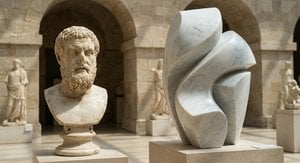
The Enduring Allure of Marble in Art History: From Classical Sculpture to Modern Abstraction
Explore the captivating history of marble sculpture from ancient Greece to modern art. Discover renowned artists like Canova & Michelangelo, carving techniques, and investment insights at ArtsDot.