

 效果预览
效果预览
 购买印刷品
购买印刷品 分享
分享 分享
分享
 详情
详情

 下载
下载
 相似作品
相似作品 X射线
X射线 幻灯片播放
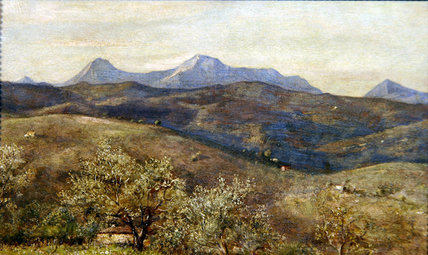
幻灯片播放Spring Landscape With A Distant

 展开详情
展开详情
购买高分辨率增强版数字图像,其品质远超在线预览。
每一份文件都由我们的内部专家使用先进工具与专业的后期润色技术精心打造。我们确保每一张图像都具备卓越的清晰度、精准的色彩还原度以及细腻的细节表现。
最终文件将在 72 小时内通过电子邮件交付,并针对专业、编辑及印刷用途进行了优化。其品质与顶级设计工作室、出版社和画廊所信赖的标准完全一致。
每份数字图像订单均包含
专业数字图像交付,品质保障
选择 ArtsDot.com,您获得的不仅仅是一张图像——您收到的是经过专业级增强、精雕细琢的数字艺术作品,并享有满意保证。以下是您的订单中自动包含的所有内容:

邮件快速送达
您的高分辨率数字图像文件将在下单后 72 小时内通过电子邮件发送给您 —— 即可立即使用。

AI 增强型数字文件
您的艺术品经过专业优化,结合先进的 AI 技术与人工修饰,确保呈现极致的细节、清晰度与色彩准确度。

终身免费重发服务
不小心删除了文件或找不到了?没关系——我们将随时为您免费重发。

无需进口费用,始终如一
即刻拥有您的艺术作品,无需支付任何关税、税费或运费——数字下载始终免税。

色彩精准保证
我们通过专业工具与色彩管理技术,确保您的数字图像尽可能真实地还原原作色彩。

60天满意保证
如果您对所购买的数字图像不满意,我们将在60天内为您进行修改或退还100%的款项——无需任何解释。

100% 退款保证
如果不满意?在收到数字文件后的60天内,我们为您提供全额退款——无需任何理由。

批量订单优惠
购买 3 张图片可享 10% 折扣 - 购买 5 张可享 15% 折扣 - 购买 10+ 张可享 20% 折扣。非常适合创意项目、画廊和机构使用。
相似艺术品




艺术家简介
Giovanni Costa: A Tuscan Visionary of Rustic Life
Giovanni Costa (1826-1903), often known as Nino Costa, was more than just an Italian landscape painter; he was a pivotal figure in the burgeoning movement to reconnect art with direct observation of nature. Born in Rome amidst a family steeped in mercantile success – his father a wool-spinning factory owner – Costa’s early life provided him with both privilege and a grounding in the realities of Roman society. His introduction to Baron Vincenzo Camuccini at the age of twelve proved transformative, igniting within him a passion for capturing the essence of the world around him through painting. This formative encounter steered him away from purely academic pursuits and towards a more naturalistic approach, a cornerstone of his distinctive style. Costa’s artistic journey began with formal training at the Jesuit college in Montefiascone and later at the Collegio Bandinelli in Rome, where he honed his drawing skills under the tutelage of Luigi Durantini. However, it was his involvement in the 1848 revolution and subsequent service as a volunteer in the war of 1859 that truly shaped his worldview – fueling an ardent patriotism and a deep connection to the Italian landscape. This commitment manifested not only on the battlefield but also in his art, reflecting a fervent desire for national unity and independence. The assault on Rome near Porta Pia in 1870 stands as a testament to this dedication, with Costa personally leading the charge, cementing his place in Italian history alongside its artistic achievements. Following the tumultuous events of the mid-19th century, Costa settled in Florence, a city renowned for its artistic heritage and burgeoning avant-garde scene. It was here that he truly blossomed as a landscape painter, developing a unique style characterized by meticulous detail, subtle tonal variations, and an intimate portrayal of rural life. He became particularly associated with the *Macchiaioli*, a group of Italian painters who championed a direct, unblended approach to color and light – a philosophy deeply resonant with Costa’s own artistic sensibilities. His work often depicted scenes of shepherds tending their flocks, cattle grazing in sun-drenched meadows, and humble farmhouses nestled amidst rolling hills—a celebration of the simple beauty of Tuscany's countryside. Costa’s artistic influences were remarkably diverse. He greatly admired the Barbizon School painters like Corot, whose emphasis on capturing atmospheric effects and the essence of nature profoundly impacted his own technique. His time in Paris allowed him to study directly with Corot, absorbing his methods and philosophies. Furthermore, he cultivated close relationships with prominent English artists such as Frederic Leighton, Lord Carlisle, and Matthew Ridley Corbet, exchanging ideas and experiences that enriched his artistic perspective. These connections extended beyond mere admiration; Costa’s work served as a significant inspiration for these European contemporaries, demonstrating the international appeal of his unique vision.A Distinctive Style: Observation and Light
Costa's paintings are immediately recognizable by their remarkable attention to detail and their masterful use of light and shadow. He eschewed the overly polished surfaces favored by many of his contemporaries, opting instead for a more tactile approach that emphasized the texture of the landscape – the rough bark of trees, the weathered stone of farm buildings, and the undulating folds of clothing worn by his figures. His palette was restrained yet vibrant, relying on subtle gradations of color to create a sense of depth and atmosphere. He wasn’t interested in grand vistas or dramatic compositions; rather, he sought to capture the quiet dignity of everyday life, revealing the beauty hidden within the mundane.Key Works: Echoes of Tuscany
Several paintings exemplify Costa's distinctive style and thematic concerns. “Donne sulla spiaggia di Porto d’Anzio” (Girls on the Beach of Porto d’Anzio), completed in Florence, is a particularly striking example of his ability to capture the fleeting effects of light and atmosphere. The painting depicts a group of women gathering driftwood on the beach, their figures rendered with remarkable sensitivity and realism. “View of Monte Amiata, Tuscany” showcases his skill in depicting the rugged beauty of the Tuscan landscape, while "Ruins in the Colli Albani" offers a poignant meditation on the passage of time and the enduring presence of history within the natural world. These works, along with numerous other landscapes and genre scenes, provide a compelling glimpse into Costa’s artistic vision.Legacy and Influence
Giovanni Costa's impact on Italian painting extends far beyond his own lifetime. He played a crucial role in shaping the *Macchiaioli* movement, encouraging a shift towards greater realism and direct observation of nature. His meticulous technique and atmospheric rendering influenced generations of artists who followed, contributing to the development of landscape painting in Italy. Though not always fully recognized during his time, Costa’s work has since been appreciated for its quiet beauty, its profound connection to the Italian countryside, and its enduring contribution to the history of art. He remains a significant figure in the narrative of 19th-century Italian painting – a testament to the power of observation, dedication, and artistic vision.
giovanni costa
1826 - 1903 , Italy
基本信息
- Artistic Movement Or Style: Macchiaioli, Landscape
- Artists Or Movements Influenced By This Artist:
- Macchiaioli
- Leighton
- Artists Who Influenced This Artist:
- Vincenzo Camuccini
- Corot
- Barbizon School
- Date Of Birth: 1826-10-15
- Date Of Death: 1903-01-31
- Full Name: Giovanni Costa (Nino)
- Nationality: Italian
- Notable Artworks:
- Donne sulla spiaggia di Porto d'Anzio
- View of Monte Amiata, Tuscany
- Ruins in the Colli Albani
- Place Of Birth: Rome, Italy

