
- 首页

- 帆布打印
- gerard thomas
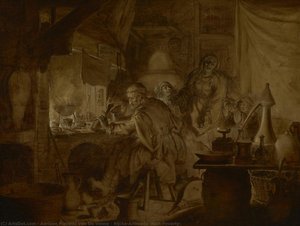
- The Alchemist’s Studio

 Preview
 定制手绘复刻品
 分享
分享 分享
分享
 详情
详情

 下载
下载
 相似作品
相似作品 X射线
X射线 幻灯片播放
幻灯片播放The Alchemist’s Studio


 展开详情
展开详情




































从与原作比例一致的预设尺寸中进行选择。

您可以输入自定义尺寸,以适配特定的画框或空间。如果您选择的尺寸与原图比例不符,我们将对作品进行裁剪,或通过镜像填充/纯色填充边缘的方式来扩展图像。在开始制作之前,我们会向您发送一份数字效果图供您确认。
请注意,屏幕上的预览并不能反映实际的裁剪或扩展效果。只有效果图才能准确展示最终的构图。
虽然我们提供定制尺寸,但为了保持原图比例,我们建议您从预设列表中选择尺寸。


 玻璃选项仅适用于110厘米以下的尺寸。

The Alchemist’s Studio
艺术微喷/版画
复制品尺寸
-


最终总价
-
藏品详情
相似艺术品



艺术家简介
The Curious World of Gerard Thomas: A Physician’s Artistic Vision
Gerard Thomas, a name perhaps unfamiliar to many outside the circles of medical history and art connoisseurship, represents a fascinating intersection of scientific observation and artistic expression. While biographical details remain somewhat elusive – he is a living artist represented by ArtsDot – his body of work speaks volumes about Victorian sensibilities, the evolving understanding of medicine, and a unique dedication to documenting the profession through paint. Thomas’s paintings aren't simply depictions of doctors or hospitals; they are windows into a world where clinical practice was interwoven with social status, artistic patronage, and a burgeoning fascination with the human body. He stands as a testament to the idea that art can be both aesthetically pleasing and profoundly informative, serving as a historical record alongside its inherent beauty.A Legacy Rooted in Observation: Themes and Techniques
Thomas’s oeuvre is dominated by scenes of medical life, particularly those centered around St Thomas' Hospital in London. He masterfully captures the atmosphere of 19th-century hospitals – not as sterile environments but as bustling centers of activity filled with dedicated physicians, anxious patients, and a complex social hierarchy. His paintings often feature portraits of prominent doctors, rendered with meticulous detail that conveys both their professional authority and individual character. Beyond portraiture, Thomas delves into the specifics of medical procedures and diagnostic tools. Perhaps most strikingly, he is known for his depictions of urine flasks – seemingly mundane objects elevated to symbolic importance through his artistic treatment. These aren’t merely clinical specimens; they represent a crucial element in Victorian diagnosis, reflecting the era's reliance on visual observation and humoral theory. His technique leans towards realism, with a focus on accurate representation of anatomy, clothing, and hospital interiors. The lighting in his works often creates dramatic effects, highlighting key figures or objects and drawing the viewer’s eye to the core narrative. He employs a rich palette, favoring earth tones and muted colors that evoke a sense of historical authenticity.Influences and Context: Victorian Medicine & Artistic Patronage
To understand Thomas's work fully, one must consider the context of Victorian medicine. The 19th century witnessed significant advancements in medical knowledge, driven by discoveries in anatomy, physiology, and bacteriology. However, it was also a period marked by social inequalities and limited access to healthcare for many. St Thomas’ Hospital, where much of Thomas's work is set, played a pivotal role in this era, serving as both a teaching institution and a public hospital. The hospital benefited from the patronage of wealthy benefactors, including members of the aristocracy, who often commissioned portraits of themselves or prominent doctors. This system of patronage likely influenced Thomas’s career, providing him with opportunities to document the lives of those associated with the hospital. Artistically, Thomas's work reflects the influence of Realism and academic painting traditions prevalent in Victorian England. He shares similarities with artists like William Powell Frith and John Everett Millais in his attention to detail and narrative focus, though Thomas’s subject matter remains uniquely centered on the world of medicine. The Baron Gerard Museum, while not directly linked as a patron, represents the aristocratic context within which such art flourished.Major Achievements & Historical Significance
While pinpointing specific “major achievements” is difficult given the limited biographical information available, Thomas’s lasting contribution lies in his comprehensive documentation of Victorian medical life. His paintings offer invaluable insights into the practices, social dynamics, and visual culture of 19th-century hospitals. The focus on seemingly overlooked objects like urine flasks elevates them to symbolic status, prompting viewers to consider the importance of diagnostic tools and the role of observation in medical practice. His work serves as a bridge between art history and medical history, providing scholars with visual evidence of past clinical environments and patient care. Furthermore, his portraits offer glimpses into the lives of prominent physicians, capturing their personalities and professional standing within society. The enduring appeal of Thomas’s paintings lies in their ability to evoke a sense of empathy for both doctors and patients, reminding us that medicine has always been a human endeavor. His legacy is one of meticulous observation, artistic skill, and a unique dedication to documenting the evolving world of healthcare.Continuing Relevance: Thomas’s Art in the 21st Century
In an age dominated by digital imaging and advanced medical technology, Gerard Thomas's paintings offer a poignant reminder of the origins of modern medicine. His work encourages us to reflect on the historical context of clinical practice and the challenges faced by physicians in past eras.- The detailed depictions of hospital interiors provide valuable insights into the evolution of healthcare environments.
- His portraits offer a humanizing perspective on the lives of doctors, challenging stereotypical representations of medical professionals.
- The symbolic importance he assigns to everyday objects like urine flasks prompts viewers to consider the role of observation and diagnostic tools in medical practice.

艺术家简介
- Artistic Movement Or Style: Medical Art
- Date Of Death: Living
- Full Name: Gerard Thomas
- Nationality: British
- Notable Artworks:
- Physician Portraits
- Hospital Scenes
- Anatomical Drawings
- Urine Flask Artwork
- Place Of Birth: London, UK
相关文章

荷兰黄金时代:十幅定义艺术史的巨作 | ArtsDot
探索荷兰黄金时代的艺术巅峰! 伦勃朗、维米尔等大师名作,带您领略巴洛克艺术的辉煌。高清画作、博物馆级品质,点亮您的家居空间。ArtsDot.com 提供精选艺术复制品和定制装饰方案。立即在线探索全系列!

纽约大都会艺术博物馆25幅必赏杰作:艺术、历史与家居灵感
探索纽约大都会艺术博物馆25幅传世杰作!从梵高、莫奈到达芬奇,深入了解艺术大师的故事与创作灵感。精美油画复制品,为您的家居带来艺术气息。立即在ArtsDot.com发现更多经典作品。

惠斯勒大师25幅杰作:艺术、家居与永恒之美 | ArtsDot
探索詹姆斯·惠斯勒25幅杰作!深入了解夜曲、静谧和谐等经典油画背后的故事与艺术魅力。ArtsDot.com提供博物馆级复制品,为您的家居带来永恒之美。立即在线探索完整系列!
美国国家艺术馆精选:25幅大师级杰作,点亮您的艺术生活 | ArtsDot
探索美国国家艺术馆的25幅大师级杰作!深入了解塞尚、马蒂斯等艺术家的故事,感受印象派与现代艺术的魅力。ArtsDot.com提供高品质油画复制品,点亮您的家居空间。立即在线探索完整系列!

荷兰黄金时代绘画:文化创新中的现实主义反思
深入探索荷兰黄金时代绘画的文化创新与现实主义反思。本文解读伦勃朗、维米尔等大师的作品,并结合玛莉特·韦斯特曼的图像学研究,揭示艺术史背后的社会语境与现代性意识觉醒。

