


 效果预览
效果预览
 切换至版画销售渠道
 分享
分享 分享
分享
 详情
详情 指南
指南

 下载
下载
 相似作品
相似作品 X射线
X射线 幻灯片播放
幻灯片播放 统计数据
统计数据Fire in the Ashes
 1989
1989 58.0 x 73.0 cm
 展开详情
展开详情
购买高分辨率增强版数字图像,其品质远超在线预览。
每一份文件都由我们的内部专家使用先进工具与专业的后期润色技术精心打造。我们确保每一张图像都具备卓越的清晰度、精准的色彩还原度以及细腻的细节表现。
最终文件将在 72 小时内通过电子邮件交付,并针对专业、编辑及印刷用途进行了优化。其品质与顶级设计工作室、出版社和画廊所信赖的标准完全一致。
每份数字图像订单均包含
专业数字图像交付,品质保障
选择 ArtsDot.com,您获得的不仅仅是一张图像——您收到的是经过专业级增强、精雕细琢的数字艺术作品,并享有满意保证。以下是您的订单中自动包含的所有内容:

邮件快速送达
您的高分辨率数字图像文件将在下单后 72 小时内通过电子邮件发送给您 —— 即可立即使用。

AI 增强型数字文件
您的艺术品经过专业优化,结合先进的 AI 技术与人工修饰,确保呈现极致的细节、清晰度与色彩准确度。

终身免费重发服务
不小心删除了文件或找不到了?没关系——我们将随时为您免费重发。

无需进口费用,始终如一
即刻拥有您的艺术作品,无需支付任何关税、税费或运费——数字下载始终免税。

色彩精准保证
我们通过专业工具与色彩管理技术,确保您的数字图像尽可能真实地还原原作色彩。

100天满意保证
如果您对所购数字图像不满意,我们将在100天内为您进行修改或提供100%的全额退款——无需任何理由。

100% 退款保证
不满意?在收到数字文件后的100天内,您可以申请全额退款——无需任何理由。

批量订单优惠
购买 3 张图片可享 10% 折扣 - 购买 5 张可享 15% 折扣 - 购买 10+ 张可享 20% 折扣。非常适合创意项目、画廊和机构使用。
相似艺术品


艺术家简介
A Life Forged in Transition: The Early Years and Artistic Awakening of George Legrady
George Legrady, born Légrády György in Budapest, Hungary, in 1950, embodies a life shaped by displacement and reinvention. His story begins amidst the turmoil of post-war Europe, a narrative irrevocably altered by the Hungarian Revolution of 1956. At just six years old, Legrady, along with his family, embarked on a journey to Canada, seeking refuge from political upheaval in Montreal, Quebec. This early experience of exile and cultural adaptation would profoundly influence his artistic trajectory, instilling a sensitivity to themes of identity, memory, and the complexities of representation. The weight of history, carried across continents, became an undercurrent in his future explorations. His family’s background was steeped in creativity; his father, Thomas Legrady, a musician and composer, nurtured an appreciation for artistic expression, while ancestral ties to lithography – through great-grandfather Légrády Tivadar, co-founder of a Budapest publishing house – and the theater – via maternal great-grandfather Váradi Antal, a playwright and director – hinted at a lineage of storytelling. These familial influences laid the groundwork for Legrady’s multidisciplinary approach to artmaking. His formative years were spent navigating two linguistic worlds—French elementary school followed by English high school—a duality that perhaps fostered his later interest in semiotics and the inherent ambiguities of communication. Before fully dedicating himself to art, Legrady engaged with the physical world through a series of demanding jobs – construction, factory work, even underground mining in northern Manitoba – experiences that grounded him in materiality and labor, providing a stark contrast to the conceptual realms he would later inhabit. Simultaneously, his passion for music continued to flourish as a keyboardist in various Montreal bands, honing his collaborative spirit and rhythmic sensibility.From Documentary Roots to Digital Frontiers: The Evolution of an Artistic Vision
Legrady’s formal artistic education began with studies in English Literature at Loyola College, where he encountered photography through the guidance of Charles Gagnon and John Max. This initial spark led him on a path of exploration, encompassing travel across Europe and the Middle East, followed by academic pursuits at Goddard College in Vermont and ultimately culminating in a Master of Fine Arts degree in Photography from the San Francisco Art Institute in 1976. His early photographic work was deeply rooted in social documentation, most notably his 1973 photo documentary of four James Bay Cree communities. This project wasn’t merely an aesthetic exercise; it was a direct response to the contentious James Bay hydroelectric conflict, demonstrating Legrady's commitment to using art as a vehicle for social commentary and giving voice to marginalized communities. However, this initial engagement with realism soon gave way to a more conceptual approach. The limitations of traditional photography – its claim to objectivity, its inherent framing – began to trouble him. This questioning led him towards the burgeoning field of digital media in the early 1980s, where he found a new set of tools and possibilities for deconstructing and re-imagining the photographic image. His time at the University of California, San Diego, under the tutelage of Harold Cohen, proved pivotal, opening his eyes to the potential of algorithmic processes and computer-generated imagery. This marked a turning point in his career, shifting his focus from capturing reality to analyzing its representation—a semiotic investigation into the very nature of the photographic medium.Interactivity, Data, and the Poetics of Information
Legrady’s work increasingly embraced interactivity and data visualization as central tenets. His projects moved beyond static images, inviting audience participation and challenging conventional notions of authorship. The 1985 photo documentary on billboards in four major Chinese cities wasn't simply a visual record; it was an analysis of the visual syntax of public space, revealing how meaning is constructed through image and text. This interest in systems of communication evolved into large-scale interactive installations that explored historical narratives and collective memory. Anecdoted Archive from the Cold War (1993), a landmark project, allowed users to navigate a complex network of information related to the Cold War era, prompting reflection on the construction of history and the power of narrative. Slippery Traces (1995), published by the ZKM Museum in Karlsruhe, further developed these themes, delving into the ephemeral nature of digital information and its impact on our perception of reality. Perhaps his most ambitious undertaking is Making Visible the Invisible (2005-present), a continuously evolving data visualization project for the Seattle Central Library. This ongoing work collects and visualizes real-time data – from library usage to environmental factors – transforming abstract information into compelling aesthetic experiences, showcased even at the Whitney Museum Artport online exhibition. Pockets Full of Memories (2001-2006), commissioned by Centre Pompidou, exemplifies his commitment to participatory art; visitors contributed personal objects which were then digitally scanned, categorized using a Kohonen self-organizing map algorithm, and projected as a dynamic visualization—a collective portrait of shared experiences.Recognition and Legacy: A Pioneer of Digital Art
Throughout his career, George Legrady has received numerous accolades recognizing his innovative contributions to the field of digital art. From Canada Council Arts Grants spanning decades (1979-2014) to prestigious fellowships from the National Endowment for the Arts (1996) and Creative Capital Foundation (2002), his work has consistently garnered critical acclaim. The University of Southern California Innovative Teaching Award (1987) acknowledges his dedication to pedagogical experimentation, while the Langlois Foundation Grant (2000) supported his continued exploration of digital media. In 2016, Concordia University bestowed upon him an Honorary Doctorate of Fine Arts, cementing his status as a leading figure in contemporary art. Legrady’s significance lies not only in his artistic output but also in his pioneering spirit—his willingness to embrace new technologies and challenge conventional boundaries. He has consistently pushed the limits of what art can be, blurring the lines between photography, data visualization, interactivity, and social commentary. His work serves as a powerful reminder that technology is not merely a tool but a medium for exploring fundamental questions about human perception, memory, and our relationship to the world around us. He continues to inspire artists and scholars alike, shaping the future of digital art with his visionary approach and unwavering commitment to innovation.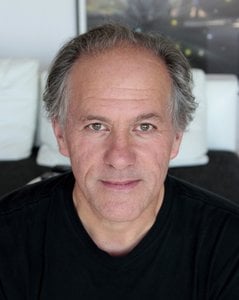
George Legrady
1950 -