

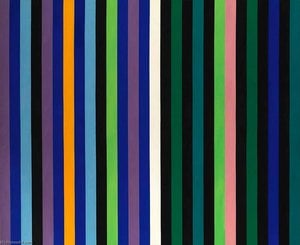
- 200.0 x 103.0 cm


图片将根据您的选择进行更新: , .
藏品详情
 展开全文
展开全文
艺术家简介
Explore the surreal & vibrant world of Gene Bernard Davis! Known for his 'Flower Machine' & evocative imagery, this artist blends nature & abstraction – a unique vision.
手工油画复制品
由我们的艺术家按需定制,为您提供您所选尺寸及画框的布面手工油画。 ( 切换至版画销售渠道 切换至数字图像销售渠道)
更多关于此画作的信息
 实景预览
实景预览
 分享
分享 分享
分享
 详情
详情 指南
指南

 下载作品
下载作品
 相似作品
相似作品 X射线
X射线 幻灯片播放
幻灯片播放 问答
问答 统计数据
统计数据只需简单四步,即可订购您的画作
请慢慢挑选。您可以随时更改任何选项;订单详情卡中的价格将随您的选择实时更新。
1 四步中的第一步
您想要哪种尺寸?
这些尺寸均保持了原画的比例。示意图展示了您所选尺寸在墙面上的效果,其位置位于一张两米宽的沙发上方。
或输入您自定义的尺寸
您可以从与原作比例一致的预设尺寸中进行选择。

请输入您需要的宽度和高度,以适配您的画框或墙面。由于作品为手工绘制,若选择不同比例的尺寸,艺术家可能会在画面边缘多画一些或稍作裁剪 —— 由您决定。在开始绘画之前,我们会为您发送一份数字效果图供您确认。本页面上展示的图片并非最终实物 —— 只有效果图才能反映真实结果。
2 四步中的第二步
您希望如何装裱:卷轴装、绷框装还是带框装?
以下价格对应您在第一步中所选的尺寸。
选择绷边画布的边缘样式
选择您的画框

白色边缘 ¥1

边缘晕染效果 ¥1

延展式 ¥1

P118B ¥10

P118H ¥10

P118W ¥10

P438Z ¥10

P508JH ¥12

P508YH ¥12

P805H ¥10

P805Z ¥10

P919BZ ¥10

P919G ¥10

P919XJ ¥10

P959ZH ¥10

P968JZ ¥12

W106C ¥8

W218G ¥10

W218JH ¥8

W218Y ¥10

W307PJ ¥10

W316G ¥10

W316PJ ¥8

W316Y ¥10

W398PJ ¥8

W4111J ¥10

W500HY ¥15

W500JH ¥15

W692G ¥12

W849H ¥8

W940BG ¥15

W953PJ ¥8

H24-GOLD ¥30

H24-SILVER ¥30

H36-GOLD ¥45

H36-SILVER ¥45
带框
边框材质: . 含框总尺寸: .
3 四步中的第三步
您想对画作进行任何修改吗?
大多数人的回答是否定的。由于每一幅画作都是手工绘制,我们的艺术家也可以为您进行定制。
下单后,ArtsDot.com 团队将通过电子邮件联系客户获取具体指令,并提供效果预览图
4 第四步(共四步)
几种饰面选项
所有选项均为可选。已选择的答案不会产生额外费用。
出自哪位艺术家之手?
像博物馆里的那样,配上一块铭牌?
青铜铭牌雕刻详情
This elegant plaque features the artist's name and the title of the artwork, finely engraved for a timeless presentation.
It is made from bronze with a refined, elegant finish. The text is precisely laser-engraved for a sharp and permanent result. Measuring 9x2 cm, the plaque is compact yet easy to read. It's built to be durable and scratch-resistant, offering a professional, museum-quality look. Mounting is simple thanks to the included adhesive backing.
透明亚克力铭牌详情
The plaque includes essential engraved details such as the artist's name, the title of the artwork, the date it was created, the type of media used-like oil on canvas or watercolor-a brief description of the piece, and a QR code that links to the complete artwork information.
It is crafted from clear acrylic, offering a sleek, modern appearance. The text is UV-engraved in black to ensure strong visual contrast. With a size of 10x15 cm, it ensures optimal readability. It comes equipped with two metal hooks for secure wall mounting. The plaque is designed to be weather-resistant, making it suitable for various environments, and it includes interactive features that work seamlessly with smartphone scanning.
黑色亚克力铭牌详情
This elegant plaque includes engraved information such as the artist's name, the title of the artwork, the date it was created, the type of media used (like oil on canvas or watercolor), a short description of the artwork, and a QR code for quick access to more information.
The plaque itself is made from refined black acrylic with a premium finish. The text is laser-engraved in white for high contrast and readability. Its size is 10x15 cm, designed to be easy to read. It comes with two metal hooks for professional mounting. The design is sleek and fits any interior style. It is also weather-resistant and durable, with built-in digital integration for mobile compatibility.
需要保护性光油吗?
您预计何时收到?
✓ 确认并下单
您的画作,正如您所订购的那样

Red Baron
复制品材质
复刻品尺寸
-

精选资深艺术家
更丰富的细节、更精湛的工艺以及更充裕的制作时间
-

复制画装裱选项
-
-
对于任何边长超过 105 厘米(约 41 英寸)的艺术品或复制品,画框将以拆解后的组件形式发货。此方法可确保安全送达并防止运输过程中的损坏。
需由专业人员组装 —— 本产品不适用于 DIY 操作。
该组件必须由经验丰富的专业装裱师进行组装及画布绷装,过程中需使用木工胶(不随附)、画布绷边钳以及夹具,以确保在胶水干燥期间保持内框方正。组装不当或画布张力不均可能会对艺术品造成永久性损坏,且此类情况不在我们的保修范围之内。
 对于任何边长超过 105 厘米(约 41 英寸)的艺术品或复制品,画框将以拆解后的组件形式发货。此方法可确保安全送达并防止运输过程中的损坏。
包含所有实木条,尺寸精确,便于组装。
使用随附的螺丝进行组装,另需准备用于角部连接的木工胶(本品不含木工胶),请由您的装裱师自行准备。
需另备专业工具(本套件不含):画布绷紧钳以及用于在胶水干燥过程中保持木条方正的夹具。
重要提示:
角部连接处需要使用木工胶,边框条必须使用夹具固定直至胶水完全干透,且在组装好的框架上绷紧画布需要用到画布拉伸钳。以上工具均不包含在套装内。请在订购此尺寸前,预先联系经验丰富的专业装裱师。

展品铭牌
-
-

保护性清漆
光泽清漆(提亮色彩,防光防潮)
-

定制我的艺术品
定制化示例:替换面部为客户照片;添加宠物(例如,将猫替换为狗);在背景中加入隐藏信息;更改背景风景或元素。
-

加急
全球配送()仅需 3-4 周即可送达,无需等待标准时效的 5 周。(9 November)。品质始终如一,绝不妥协。
-
极速达
全球配送(),预计 5 周送达。(16 November)。
已包含
最终结算价
¥ 1764
玻璃选项仅适用于110厘米以下的尺寸。
每份订单均包含
- 全球免运费特快专递服务
- 优质亚麻画布
- 全程运输保险
- 关税退款保证
- 色彩精准还原保证
- 100天退货保障(仅限制造缺陷)
- 100% 退款保证
- 多件购买优惠


Artist Background
Gene Bernard Davis was an American artist known for his contributions to the Color Field movement. His work often featured vertical stripes of color, which gave his paintings a sense of rhythm and energy. The Red Baron is a quintessential example of this style, with its bold red and orange hues evoking a sense of dynamism and movement.Painting Description
The Red Baron features two distinct sections: one predominantly red and the other mostly orange. The red section appears as a solid color, while the orange section has some texture and detail. This contrast between smooth and textured surfaces adds depth to the painting, making it more engaging for the viewer.Museum Collections
The Red Baron is part of the collection at the Smithsonian American Art Museum. You can find more information about this painting and other works by Gene Bernard Davis on the ArtsDot.com website.- The Red Baron is a significant work in the Gene Bernard Davis oeuvre, showcasing his unique style and contribution to the Color Field movement.
- The painting's bold colors and geometric shapes make it a visually striking piece that continues to captivate audiences today.
- As a leading figure in the Washington Color School, Gene Bernard Davis played an important role in shaping the development of American art in the mid-20th century.
The Red Baron is a testament to the enduring power of Color Field art, and its influence can still be seen in contemporary art today. As a masterpiece of American art, it continues to inspire and delight audiences around the world.
常见问题与解答
Gene Bernard Davis 的《Red Baron》 的版权情况是如何界定的?
Gene Bernard Davis 的作品《Red Baron》已进入 仍受版权保护。版权期限自艺术家逝世之日起计算,Gene Bernard Davis 于 1985 年逝世。
Gene Bernard Davis 的《Red Baron》 的构图以什么颜色为主导?
Gene Bernard Davis 的《Red Baron》 的主色调为 Mahogany (#e2311b)。
Gene Bernard Davis 的《Red Baron》展现了怎样的色彩和谐感?
Gene Bernard Davis 的《Red Baron》 的色彩呈现出一种 Unified Palette 的和谐感。这种和谐感描述了色彩之间的相互关系。


Gene Bernard Davis
1920 - 1985
艺术家简介
The Architect of Color: The Life and Legacy of Gene Bernard Davis
In the vibrant tapestry of mid-century American abstraction, few threads shine as brightly or as rhythmically as those woven by Gene Bernard Davis. A pioneer of the Color Field movement, Davis possessed a singular ability to transform the canvas into a rhythmic experience of light and motion. Born in Brooklyn, New York, in 1920, his artistic journey was not one of immediate abstraction but rather a gradual, profound evolution shaped by a keen observational eye and an unwavering dedication to color theory. His early years were marked by a fascinating confluence of experiences, including a youthful immersion in sports journalism and a deep engagement with the social landscape of Washington D.C., which would later inform his unique perspective on visual rhythm.
Davis’s artistic sensibilities were deeply rooted in the teachings of the European avant-garde. His formal training at Yale University under the legendary Josef Albers proved transformative, instilling in him a fascination with geometric abstraction and the complex mechanics of optical illusions. From Albers, Davis learned that color could communicate emotion and intellect simultaneously, a conviction that became the heartbeat of his career. He drew inspiration from the structured precision of Piet Mondrian and the perceptual harmonies of Albers, blending these influences to create a style that was both mathematically disciplined and emotionally resonant.
A Symphony of Stripes: Technique and Innovation
The true breakthrough for Davis arrived in 1953 with his monumental canvas, “Bay.” Executed in evocative shades of blue, this work established him as a visionary innovator within the Washington Color School. It was here that he perfected his signature technique: the deliberate layering of vertical and horizontal stripes, meticulously calibrated to create an illusion of depth, vibration, and movement. For Davis, the stripe was never merely decorative; it was a scientific tool used to investigate the fundamental principles of color perception and the relationship between pigment and surface texture.
As his career progressed, his palette expanded into breathtaking explorations of chromatic energy. His works often featured:
- Chromatic Vibrancy: The use of bold, juxtaposed colors such as red, yellow, blue, and green to create a sense of pulsating light.
- Geometric Precision: A mastery of the stripe pattern to guide the viewer's eye across the canvas in a rhythmic dance.
- Scale and Presence: Large-scale compositions, such as “The Red Witch” (1966), designed to fill the viewer's entire field of vision and envelop them in color.
This exploration reached iconic heights in works like “Flower Machine” (1964), where a colorful striped pattern of pink, purple, orange, and blue evokes a sense of joy and organic creativity, blending the boundaries between geometric abstraction and the essence of nature.
Historical Significance and Enduring Vision
Gene Bernard Davis stands as a monumental figure in the history of 20th-century art, bridging the gap between the raw energy of Abstract Expressionism and the calculated precision of Post-Painterly Abstraction. His ability to manipulate the viewer's perception through color alone helped define the aesthetic of the Washington Color School, leaving an indelible mark on American modernism. Even in his later works, such as the striking 1984 piece “Color Needles,” he continued to refine his use of gold and brown lines, proving that his fascination with Op Art and geometric rhythm remained undiminished.
Today, the legacy of Davis lives on through the enduring power of his canvases. He remains a master of the chromatic experience, reminding us that art can be both a cerebral investigation of light and a deeply visceral encounter with beauty. His work continues to captivate collectors and historians alike, serving as a testament to a life spent decoding the infinite possibilities of the spectrum.