


图片将根据您的选择进行更新: , .
藏品详情
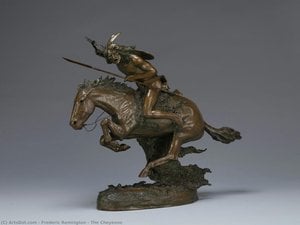
Experience Frederic Remington's iconic "Bronco Buster" sculpture – a dynamic bronze depiction of a cowboy’s daring ride. A timeless symbol of the American West, now available as a hand-painted reproduction.
 展开全文
展开全文
艺术家简介
弗雷德里克·雷明顿 (1861-1909) 是美国西部艺术大师,以其充满活力和浪漫色彩的牛仔、印第安人和骑兵绘画而闻名。他的作品生动捕捉了边疆生活的精神与冲突,是美国西部历史的重要视觉记录。
手工油画复制品
由我们的艺术家按需定制,为您提供您所选尺寸及画框的布面手工油画。 ( 切换至版画销售渠道 切换至数字图像销售渠道)
更多关于此画作的信息
 分享
分享 分享
分享
 详情
详情 指南
指南

 下载作品
下载作品
 相似作品
相似作品 幻灯片播放
幻灯片播放 问答
问答 统计数据
统计数据只需简单四步,即可订购您的画作
请慢慢挑选。您可以随时更改任何选项;订单详情卡中的价格将随您的选择实时更新。
1 四步中的第一步
您想要哪种尺寸?
这些尺寸均保持了原画的比例。示意图展示了您所选尺寸在墙面上的效果,其位置位于一张两米宽的沙发上方。
或输入您自定义的尺寸
您可以从与原作比例一致的预设尺寸中进行选择。

请输入您需要的宽度和高度,以适配您的画框或墙面。由于作品为手工绘制,若选择不同比例的尺寸,艺术家可能会在画面边缘多画一些或稍作裁剪 —— 由您决定。在开始绘画之前,我们会为您发送一份数字效果图供您确认。本页面上展示的图片并非最终实物 —— 只有效果图才能反映真实结果。
2 四步中的第二步
您希望如何装裱:卷轴装、绷框装还是带框装?
以下价格对应您在第一步中所选的尺寸。
选择绷边画布的边缘样式
选择您的画框

白色边缘 ¥1

边缘晕染效果 ¥1

延展式 ¥1

P118B ¥10

P118H ¥10

P118W ¥10

P438Z ¥10

P508JH ¥12

P508YH ¥12

P805H ¥10

P805Z ¥10

P919BZ ¥10

P919G ¥10

P919XJ ¥10

P959ZH ¥10

P968JZ ¥12

W106C ¥8

W218G ¥10

W218JH ¥8

W218Y ¥10

W307PJ ¥10

W316G ¥10

W316PJ ¥8

W316Y ¥10

W398PJ ¥8

W4111J ¥10

W500HY ¥15

W500JH ¥15

W692G ¥12

W849H ¥8

W940BG ¥15

W953PJ ¥8

H24-GOLD ¥30

H24-SILVER ¥30

H36-GOLD ¥45

H36-SILVER ¥45
带框
边框材质: . 含框总尺寸: .
3 四步中的第三步
您想对画作进行任何修改吗?
大多数人的回答是否定的。由于每一幅画作都是手工绘制,我们的艺术家也可以为您进行定制。
下单后,ArtsDot.com 团队将通过电子邮件联系客户获取具体指令,并提供效果预览图
4 第四步(共四步)
几种饰面选项
所有选项均为可选。已选择的答案不会产生额外费用。
出自哪位艺术家之手?
像博物馆里的那样,配上一块铭牌?
青铜铭牌雕刻详情
This elegant plaque features the artist's name and the title of the artwork, finely engraved for a timeless presentation.
It is made from bronze with a refined, elegant finish. The text is precisely laser-engraved for a sharp and permanent result. Measuring 9x2 cm, the plaque is compact yet easy to read. It's built to be durable and scratch-resistant, offering a professional, museum-quality look. Mounting is simple thanks to the included adhesive backing.
透明亚克力铭牌详情
The plaque includes essential engraved details such as the artist's name, the title of the artwork, the date it was created, the type of media used-like oil on canvas or watercolor-a brief description of the piece, and a QR code that links to the complete artwork information.
It is crafted from clear acrylic, offering a sleek, modern appearance. The text is UV-engraved in black to ensure strong visual contrast. With a size of 10x15 cm, it ensures optimal readability. It comes equipped with two metal hooks for secure wall mounting. The plaque is designed to be weather-resistant, making it suitable for various environments, and it includes interactive features that work seamlessly with smartphone scanning.
黑色亚克力铭牌详情
This elegant plaque includes engraved information such as the artist's name, the title of the artwork, the date it was created, the type of media used (like oil on canvas or watercolor), a short description of the artwork, and a QR code for quick access to more information.
The plaque itself is made from refined black acrylic with a premium finish. The text is laser-engraved in white for high contrast and readability. Its size is 10x15 cm, designed to be easy to read. It comes with two metal hooks for professional mounting. The design is sleek and fits any interior style. It is also weather-resistant and durable, with built-in digital integration for mobile compatibility.
需要保护性光油吗?
您预计何时收到?
✓ 确认并下单
您的画作,正如您所订购的那样

Bronco Buster
复制品材质
复刻品尺寸
-

精选资深艺术家
更丰富的细节、更精湛的工艺以及更充裕的制作时间
-

复制画装裱选项
-
-
对于任何边长超过 105 厘米(约 41 英寸)的艺术品或复制品,画框将以拆解后的组件形式发货。此方法可确保安全送达并防止运输过程中的损坏。
需由专业人员组装 —— 本产品不适用于 DIY 操作。
该组件必须由经验丰富的专业装裱师进行组装及画布绷装,过程中需使用木工胶(不随附)、画布绷边钳以及夹具,以确保在胶水干燥期间保持内框方正。组装不当或画布张力不均可能会对艺术品造成永久性损坏,且此类情况不在我们的保修范围之内。
 对于任何边长超过 105 厘米(约 41 英寸)的艺术品或复制品,画框将以拆解后的组件形式发货。此方法可确保安全送达并防止运输过程中的损坏。
包含所有实木条,尺寸精确,便于组装。
使用随附的螺丝进行组装,另需准备用于角部连接的木工胶(本品不含木工胶),请由您的装裱师自行准备。
需另备专业工具(本套件不含):画布绷紧钳以及用于在胶水干燥过程中保持木条方正的夹具。
重要提示:
角部连接处需要使用木工胶,边框条必须使用夹具固定直至胶水完全干透,且在组装好的框架上绷紧画布需要用到画布拉伸钳。以上工具均不包含在套装内。请在订购此尺寸前,预先联系经验丰富的专业装裱师。

展品铭牌
-
-

保护性清漆
光泽清漆(提亮色彩,防光防潮)
-

定制我的艺术品
定制化示例:替换面部为客户照片;添加宠物(例如,将猫替换为狗);在背景中加入隐藏信息;更改背景风景或元素。
-

加急
全球配送()仅需 3-4 周即可送达,无需等待标准时效的 5 周。(10 November)。品质始终如一,绝不妥协。
-
极速达
全球配送(),预计 5 周送达。(17 November)。
已包含
最终结算价
¥ 1762
玻璃选项仅适用于110厘米以下的尺寸。
每份订单均包含
- 全球免运费特快专递服务
- 优质亚麻画布
- 全程运输保险
- 关税退款保证
- 色彩精准还原保证
- 100天退货保障(仅限制造缺陷)
- 100% 退款保证
- 多件购买优惠


A Chronicle of the Wild West: Frederic Remington’s “The Bronco Buster”
Frederic Remington's "The Bronco Buster," sculpted in 1895 and cast in bronze, isn’t merely a depiction of a cowboy wrestling with a bucking bronco; it’s a potent distillation of the American West itself – a landscape forged by rugged individualism, relentless challenge, and an enduring spirit of frontier life. Remington, born in Canton, New York, initially distanced from the dusty trails he so vividly captured, found his artistic voice through a deep fascination with military themes and a keen eye for storytelling. His early exposure to the narratives surrounding the Civil War and subsequent westward expansion ignited a passion that would define his career, transforming him into arguably the most recognizable artist of this pivotal era.
The sculpture’s genesis lies in Remington's own sketches, notably “Pitching Broncho,” published in Harper’s Weekly in 1892. This drawing served as the foundational inspiration for "The Bronco Buster," a piece that transcends simple illustration and embodies the raw energy of the Western experience. Remington masterfully captured not just the physical struggle but also the psychological tension between man and beast, conveying a sense of both danger and controlled dominance. The dynamic pose—the cowboy’s outstretched arm grappling with the horse's mane, the stirrup swinging free—immediately draws the viewer into the heart of the action, creating an immersive experience that speaks to the fundamental human desire for mastery over nature.
A Masterclass in Bronze Casting and Realistic Detail
Technically, “The Bronco Buster” represents a significant leap forward for Remington. Moving beyond the limitations of flat paper, he embraced the three-dimensional possibilities of bronze casting – a technique that allowed him to imbue his subject with unprecedented realism and dynamism. The sculpture’s creation involved both sand-casting and later, lost-wax methods, resulting in a remarkably detailed surface texture. The rough, uneven quality of the bronze reflects the inherent materiality of the medium, while subtle variations in tone create depth and highlight the musculature of both man and horse. Close examination reveals sharp edges where details like clothing folds or the horse’s mane are sculpted, further enhancing the sense of tactile realism.
The choice of bronze itself is crucial to the sculpture's impact. Bronze possesses a remarkable durability, ensuring that “The Bronco Buster” has endured as a powerful symbol of the American West for over a century. Furthermore, the patina – the natural oxidation process that develops on copper and bronze surfaces – adds layers of history and character, subtly altering the color and texture of the metal over time. This aging process not only enhances the sculpture’s aesthetic appeal but also serves as a visual reminder of its enduring legacy.
Symbolism and the Spirit of the Frontier
Beyond its technical brilliance, “The Bronco Buster” is rich in symbolic meaning. It embodies themes of courage, skill, and the eternal struggle between man and nature – core values that defined the American frontier experience. The cowboy’s determined stance, his outstretched hand grasping for control, speaks to a relentless pursuit of mastery over an untamed environment. The rearing horse represents the unpredictable forces of nature, demanding respect and unwavering resolve. The sculpture isn't simply about conquering a wild animal; it’s about asserting one’s place within a vast and challenging landscape.
Furthermore, “The Bronco Buster” reflects Remington’s broader artistic vision – a desire to document and celebrate the vanishing West. As the frontier gradually succumbed to settlement and industrialization, Remington sought to preserve its spirit through his art, capturing the essence of a bygone era before it was lost forever. The sculpture stands as a poignant reminder of a time when individuals faced immense challenges with grit, determination, and an unwavering belief in their own capabilities.
A Legacy Enduring Through Reproduction
Today, “The Bronco Buster” continues to captivate audiences worldwide, thanks in part to the availability of high-quality reproductions. These meticulously crafted prints allow art lovers to experience the sculpture’s power and beauty without the expense or logistical challenges of owning the original. Whether displayed in a private collection or incorporated into interior design schemes, these reproductions serve as a lasting tribute to Frederic Remington's artistic genius and his enduring portrayal of the American West.
常见问题与解答
考虑到其色彩搭配,建议将 弗雷德里克·雷明顿 的《Bronco Buster》 悬挂在哪个房间?
弗雷德里克·雷明顿 的《Bronco Buster》 的 Neutrals 色调与其推荐的布置空间——Living Room 完美契合。
"Bronco Buster" 是 弗雷德里克·雷明顿 最受欢迎的作品之一吗?
弗雷德里克·雷明顿 的《Bronco Buster》 的知名度处于 Iconic 水平。这一分类反映了该作品被广泛认可的程度。
我能查看弗雷德里克·雷明顿 的《Bronco Buster》的X光影像吗?
您可以在作品的 X射线透视 页面上逐层探索 “Bronco Buster”;该交互式查看器的设计灵感源自修复师使用的光源台,通过十一层光学读数呈现图像细节。


弗雷德里克·雷明顿
1861 - 1909, 美国
艺术家简介
一位西部世界的编年史家:弗雷德里克·雷明顿的生平和艺术
弗雷德里克·萨克里德尔·雷明顿,1861年10月4日出生于纽约州坎顿市,并非他所栩栩如生地描绘的狂野西部世界的产物;相反,他是一位通过迷恋和专注研究塑造其艺术身份的东方人。他的血统暗示着一种远离尘土小径和骑兵突击的生活——法国巴斯克人的血统与坚定的新英格兰共和党根源交织在一起,他的父亲是一位内战时代的退役上校和报纸编辑,并且通过远房表亲与著名的雷明顿枪械王朝有着联系。然而,正是早期接触军事主题,加上不安分的精神和敏锐的讲故事能力,让他走上了成为美国西部最受认可的艺术家的道路。他的童年时期在伊利诺伊州的布卢明顿市度过,然后回到坎顿市,最后定居于纽约州的奥古登斯堡市,但他的想象力仍然被边疆生活的故事所吸引。尽管最初被引导到佛蒙特州主教学院接受军事教育,但雷明顿真正的使命并不在于服从命令,而在于观察和通过艺术来诠释周围的世界。他在耶鲁大学的短暂学习经历证实了这一点;足球和素描比正式的学术追求更具吸引力。从插画家到画家:塑造一种艺术愿景
雷明顿的艺术之旅并非始于宏伟的画布,而是始于墨水和纸张。《耶鲁时报》上发表的第一件作品预示着他早期捕捉动作和叙事的才能。1881年对蒙大拿州的旅行点燃了他终生的西部痴迷之情。这不仅仅是一次游客的目光;雷明顿寻求沉浸在文化中,观察牛仔、美洲原住民和当地风景本身。他最初尝试过牧场经营和采矿冒险,但这些都未能成功,使他能够全身心投入到艺术创作中。回到东方后,他很快确立了自己作为《哈珀周刊》和《柯利尔杂志》等杂志的插画家,他对西部场景充满活力的描绘吸引了渴望边疆故事的国家观众。这些插画不仅仅是报道;它们充满了戏剧性、活力和一种浪漫化的西方愿景,与公众想象力产生了深刻共鸣。正是通过这项工作,雷明顿磨练了他的构图技巧,捕捉动作,并传达情感——这些品质后来定义了他的绘画。他接受的正式训练很少,除了在耶鲁大学的一些素描课程以及艺术学生联盟短暂的学习时间外,而是发展出一种独特的风格,其特点是充满活力的笔触、大胆的色彩和对现实主义与戏剧性风格相结合的关注。捕捉一个正在消失的世界:主题和风格
雷明顿的艺术与美国历史上的一个特定时刻密不可分——旧西部的黄昏。他的画布上充斥着标志性人物:驾驶牛群的粗犷牛仔、面对流离失所的美洲原住民以及参与英勇战斗和悲惨冲突的美国骑兵士兵。他没有回避描绘边疆生活的严酷现实,但他的作品往往倾向于浪漫化的描述,强调勇气、冒险和文化的冲突。他的绘画不仅仅是历史文献;它们是探索英雄主义、失落和不可避免的进步主题的生动叙事。 雷明顿的风格随着时间的推移而演变,从更紧凑、更学院式的描绘发展到更自由、更具表现力的笔触。他是一位捕捉动作的大师——马匹在平原上奔跑,牛仔与公牛搏斗,士兵冲锋陷阵。他经常使用快速素描和照片作为参考材料,但他的艺术总是超越了单纯的模仿,充满了自己独特的愿景和情感强度。 像《我的牧场》、《月光下的等待》、《被击倒》(1905) 和《长角牛标记》(1908) 等杰作体现了他捕捉美国西部宏伟与脆弱的能力。遗产和持久影响
弗雷德里克·雷明顿于1909年意外去世,享年48岁,留下了一大批作品,至今仍在吸引着观众。他对西方艺术的影响是不可否认的;他不仅描绘了西部世界,还定义了它,为几代美国人所铭记。他确立了一种边疆的视觉语言——牛仔、印第安人和骑兵队员的标志性形象深深地融入了大众文化中。- 他的作品激励了无数其他艺术家,包括 N.C. Wyeth 和 Zane Grey。
- 纽约州奥古登斯堡市的弗雷德里克·雷明顿艺术博物馆是他持久遗产的证明,保存了他大量的绘画、雕塑和档案材料。
- 他的艺术继续在全国主要博物馆展出,包括大都会艺术博物馆和阿蒙·卡特美国艺术博物馆。
相关文章

Bronze Age to Modern Masters: 10 Sculptures That Redefined Art | ArtsDot
Journey through art history with 10 legendary bronze sculptures – from Michelangelo's David to Rodin’s Thinker. Explore the stories, techniques & timeless beauty of these masterpieces. Find museum-quality reproductions & elevate your home decor on ArtsDot.com.

The Enduring Legacy of Bronze: A Historical & Artistic Exploration for the Collector
Explore the rich history & enduring appeal of bronze sculpture with expert insights for collectors at ArtsDot. Learn about casting techniques, iconic artists, collecting tips & contemporary interpretations.

青铜艺术的永恒遗产:历史、技艺与收藏家的鉴赏之道
探索青铜艺术的辉煌历史、精湛技艺与收藏价值。深入了解失蜡法铸造工艺,掌握青铜器鉴赏技巧,规避市场风险。ArtsDot.com为您提供专业的艺术咨询和定制服务。