


 实景预览
实景预览
 发送
发送 分享
分享
 详情
详情 指南
指南

 下载图片
下载图片
 相似作品
相似作品 X射线
X射线 幻灯片播放
幻灯片播放 统计数据
统计数据Small Composition II
 Oil On Canvas
- WallArt
- Cubist Expressionism
 1914
1914- High Medieval
 59.0 x 46.0 cm
 阅读全文
阅读全文
艺术微喷/版画
博物馆级艺术微喷或帆布版画,制作高效,并提供多种饰面选择。 ( 订购此收藏品的纯手工复刻画作 切换至数字图像销售渠道)




P118B ¥10

P118H ¥10

P118W ¥10

P438Z ¥10

P508JH ¥12

P508YH ¥12

P805H ¥10

P805Z ¥10

P919BZ ¥10

P919G ¥10

P919XJ ¥10

P959ZH ¥10

P968JZ ¥12

W106C ¥8

W218G ¥10

W218JH ¥8

W218Y ¥10

W307PJ ¥10

W316G ¥10

W316PJ ¥8

W316Y ¥10

W398PJ ¥8

W4111J ¥10

W500HY ¥15

W500JH ¥15

W692G ¥12

W849H ¥8

W940BG ¥15

W953PJ ¥8




您可以从与原作比例一致的预设尺寸中进行选择。

请输入您所需的宽度和高度,以适配您的画框或墙面。由于印刷品只能进行裁剪,无法超出原图尺寸,因此若比例不一致,画面的一部分将会被裁切。在正式印刷之前,我们会为您发送一份数字效果图供您确认。本页面显示的图片并非最终裁剪后的效果——只有效果图才能展示真实的裁剪情况。


 玻璃选项仅适用于110厘米以下的尺寸。

Small Composition II
艺术微喷/版画
复刻品尺寸说明
-


总计金额
¥ 416
Franz Marc’s “Small Composition II”: A Cubist Echo of Spiritual Seeking
Franz Marc's "Small Composition II," painted in 1914, isn’t merely a visual exercise in geometric form; it’s a profound distillation of the artist’s deeply held spiritual beliefs and his pioneering role within the German Expressionist movement. This captivating oil on canvas, now housed at the Sprengel Museum in Hannover, Germany, offers a glimpse into Marc's intensely personal vision – a world where color and shape coalesce to evoke an emotional resonance far beyond their purely representational value. The painting’s compact scale—measuring 59 x 46 centimeters—only intensifies its impact, drawing the viewer into a carefully orchestrated interplay of form and feeling.
At first glance, “Small Composition II” presents a deceptively simple arrangement: a sturdy house shape anchoring the left side, a sharp triangle punctuating the center, and a luminous circle radiating outwards to the right. However, these foundational geometric elements are far from static. They’re interwoven with organic forms—a reaching tree branch, a heart-shaped object—creating a dynamic tension between the rational structure of Cubism and the intuitive language of nature. Marc masterfully employs color not as mere decoration but as a vehicle for conveying mood and spiritual significance. The vibrant reds, greens, and yellows aren’t chosen arbitrarily; they vibrate with an inner life, suggesting both earthly vitality and a yearning for something beyond.
The Language of Der Blaue Reiter
“Small Composition II” is inextricably linked to Marc's involvement with *Der Blaue Reiter* (The Blue Rider), the influential journal and artistic collective that he co-founded. This group, comprised of artists like Wassily Kandinsky and Paul Klee, sought to explore the spiritual dimensions of art through abstraction and color theory. Marc’s mature works, including this painting, reflect a shift towards simplified forms and an intensified focus on symbolic representation—a departure from his earlier, more representational landscapes. The influence of Van Gogh is palpable in Marc's bold use of color and expressive brushstrokes, yet he transcends mere imitation, forging a uniquely personal style rooted in his own spiritual quest.
The painting’s composition can be interpreted as an exploration of duality – the earthly and the divine, the tangible and the intangible. The house, a symbol of stability and domesticity, is juxtaposed with the organic forms, representing the natural world and its inherent vitality. The heart-shaped object, a potent emblem of love and compassion, further emphasizes this thematic tension. Marc wasn’t simply arranging shapes on a canvas; he was attempting to capture an elusive essence—a feeling, a state of being—that transcends literal depiction.
Cubism, Symbolism, and the Soul
While “Small Composition II” is undeniably rooted in the principles of Cubism – its fragmented forms and multiple perspectives challenging traditional notions of representation – it also possesses a distinctly symbolic quality. Marc’s use of color and shape isn't purely analytical; it’s deeply emotive, reflecting his belief that art could serve as a conduit for spiritual experience. The painting invites contemplation, prompting the viewer to engage with its underlying symbolism and emotional resonance. It’s a testament to Marc’s ability to synthesize intellectual rigor with intuitive feeling.
The work's legacy extends far beyond its immediate stylistic influences. Franz Marc’s exploration of color theory and form profoundly impacted generations of artists, including Paul Klee, who similarly experimented with expressionism, cubism, and surrealism. Reproductions of “Small Composition II,” such as those offered by ArtsDot.com, provide a remarkable opportunity to experience the beauty and complexity of Marc’s vision in one's own home, allowing collectors to connect with this pivotal moment in art history.
问答详情
马克·弗朗茨 的《Small Composition II》 是一件广为人知的艺术品吗?
“Small Composition II”的受欢迎程度被归类为Iconic。
"Small Composition II" 是否支持增强现实 (AR) 预览?
“Small Composition II” 具备增强现实预览功能:通过作品的 AR 预览 页面,您可以在兼容设备上查看该作品呈现在您专属空间的效果。
下单前可以预览 马克·弗朗茨 的《Small Composition II》 吗?
您可以在作品的预览页面查看马克·弗朗茨 的《Small Composition II》的预览。


艺术家简介
Franz Marc (1880-1916): Pioneer of German Expressionism and the Soulful Vision of Color
Franz Moritz Wilhelm Marc, born on February 8, 1880, in Munich, was a painter whose brief but intensely focused career irrevocably altered the course of German Expressionism. His story is one of profound spiritual seeking translated into a vibrant visual language—a quest to understand the essence of life through the purity he found in the natural world, particularly within the animal kingdom. Initially influenced by his father, Wilhelm Marc, a landscape painter who instilled in him a love for observation and detail, young Franz’s artistic path wasn't immediately certain. He briefly contemplated theology, grappling with questions of faith and existence before ultimately dedicating himself to art at the Academy of Fine Arts in Munich—a decision driven by an innate desire to express inner truths through visual form.Early Influences and Artistic Training
Marc’s formative years were marked by a fascination with Romantic literature and philosophy, mirroring the sensibilities of his time. He studied drawing first with Gabriel Hackl and then painting with Wilhelm von Diez at Munich University—receiving instruction from masters who championed naturalism and studio production. However, it was a transformative encounter with Vincent van Gogh’s paintings during visits to Paris that truly ignited his artistic vision. Van Gogh's expressive use of color and raw emotion resonated deeply with Marc—liberating him from conventional techniques and setting him on a path toward a more subjective and emotionally charged style. This influence is palpable in Marc’s early works, characterized by muted palettes and meticulous attention to detail—reflecting the prevailing artistic trends of his era. He sought to capture not merely what he saw but also *how* he felt—a deeply personal response to the world around him.The Birth of Der Blaue Reiter and Artistic Collaboration
Marc’s artistic development wasn't solitary; it flourished within the dynamic context of Munich’s burgeoning bohemian scene. He experimented with various artist groups, including the Neue Künstlervereinigung München, before co-founding *Der Blaue Reiter* (The Blue Rider) in 1911 alongside Wassily Kandinsky—a pivotal moment that would define his artistic trajectory and solidify his place as a leader of German Expressionism. This wasn’t merely a group or an exhibition series; it was a philosophical and artistic revolution—a concerted effort to move beyond representational art and express inner spiritual truths through abstraction and symbolic color. The journal *Der Blaue Reiter* became a platform for disseminating these ideas, showcasing not only their own work but also that of fellow artists who shared his vision—artists like August Macke and Franz Kupffer—and exploring diverse cultural influences from folk art to primitive sculpture. Marc’s contribution during this period was instrumental in establishing the core tenets of Expressionism: prioritizing emotion over rational observation and utilizing simplified forms and bold colors to convey profound spiritual concepts.Exploring Animal Symbolism and Color Theory
Marc's artistic style is immediately recognizable for its distinctive use of color—a conscious departure from naturalistic conventions that reflected his belief in art’s capacity to transcend the material realm. He eschewed descriptive color palettes, instead employing hues imbued with symbolic meaning—primarily blue (representing spirituality), yellow (signifying joy and femininity), and red (embodied violence and materiality). This systematic approach to color—informed by Kandinsky's theories of color psychology—was a hallmark of his oeuvre and underscored his conviction that art could communicate ideas beyond the literal level. His fascination with animals stemmed from their perceived purity and connection to nature—a perspective rooted in Romantic ideals and mirroring the broader cultural preoccupation with the sublime during his time. Marc’s paintings of horses, deer, foxes, and other creatures are not merely depictions of animals; they are symbolic representations of fundamental human values—innocence, harmony, courage, and vulnerability—expressed through simplified forms and vibrant colors.Legacy and Enduring Influence
Marc's untimely death on March 4, 1916, during the Battle of Verdun—a tragic consequence of his involvement in World War I—marked a devastating loss for the art world but cemented his legacy as one of the most influential figures in modern art history. His work continues to inspire awe and contemplation today—demonstrating the enduring power of art to provoke emotion and engage intellect. Marc’s paintings are exhibited in prominent museums worldwide, including the Lenbachhaus in Munich—where a comprehensive collection showcases the breadth and depth of his artistic vision. He is remembered not only as a pioneer of German Expressionism but also as a visionary artist who dared to explore the profound connection between art, spirituality, and the natural world—a legacy that transcends time and continues to resonate with audiences across generations. His exploration of color symbolism and abstraction remains a cornerstone of artistic thought—a testament to his unwavering belief in art’s ability to illuminate the human condition and inspire transformative insight.
马克·弗朗茨
1880 - 1916 , 德国
快速概览
- Artistic Movement Or Style: 德國表現主義
- Artists Or Movements Influenced By This Artist: ['抽象藝術']
- Artists Who Influenced This Artist:
- 梵高
- 德拉奧內
- Date Of Birth: 二月八日, eighteen eighty 年
- Date Of Death: 三月四日, nineteen sixteen 年
- Full Name: Franz Moritz Wilhelm Marc
- Nationality: 德國人
- Notable Artworks:
- 紅鹿
- 藍馬塔
- Place Of Birth: 慕尼黑,德國
相关文章

German Expressionism's 10 Defining Masterpieces | Art for Your Home
Explore 10 defining German Expressionism masterpieces – from Munch's 'The Scream' to Kandinsky’s abstracts. Discover the artists, stories & bold colors behind this powerful art movement. Find museum-quality reproductions at ArtsDot.com.

保罗·塞尚:25幅大师杰作,重塑现代艺术与家居美学 | ArtsDot
探索保罗·塞尚25幅经典杰作!深入了解后印象派大师的艺术生涯、独特技法与色彩运用。ArtsDot提供高清油画复制品,为您的家居带来博物馆级艺术体验。立即发现更多名画,点亮生活空间!
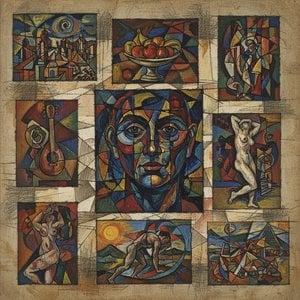
Cubist Expressionism's 10 Defining Masterpieces | Art for Your Home
Explore 10 defining Cubist Expressionism masterpieces by Picasso, Braque & more. Discover the stories behind these bold, geometric paintings and bring museum-quality art to your home with ArtsDot.com. Explore the full collection online.

Franz Marc: Expressionism, Spirituality & the Animal Symbolism of a Modern Master
Explore the profound world of Franz Marc's Expressionist paintings. Discover his spiritual connection to animals, innovative use of color, and lasting impact on modern art history. Learn more at ArtsDot.

超越复制:定制数字绘画照片打印的艺术价值与情感共鸣
ArtsDot®提供高品质定制数字绘画照片打印服务,超越复制,重塑情感记忆。专业艺术家团队,精湛技艺,个性化设计,打造独一无二的艺术品。立即咨询免费艺术顾问!


