

 实景预览
实景预览
 分享
分享 分享
分享
 详情
详情 指南
指南

 下载作品
下载作品
 相似作品
相似作品 X射线
X射线 幻灯片播放
幻灯片播放 Q&A
Q&A 统计数据
统计数据Camden Palace

- 10.0 x 10.0 cm


 展开全文
展开全文
艺术微喷/版画
博物馆级艺术微喷或帆布版画,制作高效,并提供多种饰面选择。 ( 订购纯手工绘制画作 切换至数字图像销售渠道)




P118B ¥10

P118H ¥10

P118W ¥10

P438Z ¥10

P508JH ¥12

P508YH ¥12

P805H ¥10

P805Z ¥10

P919BZ ¥10

P919G ¥10

P919XJ ¥10

P959ZH ¥10

P968JZ ¥12

W106C ¥8

W218G ¥10

W218JH ¥8

W218Y ¥10

W307PJ ¥10

W316G ¥10

W316PJ ¥8

W316Y ¥10

W398PJ ¥8

W4111J ¥10

W500HY ¥15

W500JH ¥15

W692G ¥12

W849H ¥8

W940BG ¥15

W953PJ ¥8




您可以从与原作比例一致的预设尺寸中进行选择。

请输入您所需的宽度和高度,以适配您的画框或墙面。由于印刷品只能进行裁剪,无法超出原图尺寸,因此若比例不一致,画面的一部分将会被裁切。在正式印刷之前,我们会为您发送一份数字效果图供您确认。本页面显示的图片并非最终裁剪后的效果——只有效果图才能展示真实的裁剪情况。


 玻璃选项仅适用于110厘米以下的尺寸。

Camden Palace
艺术微喷/版画
复刻品尺寸
-


最终结算价
¥ 416
An Urban Pulse Captured in Color
In the vibrant, textured world of Frank Helmuth Auerbach, the mundane streets of London are transformed into a stage of profound emotional resonance. Camden Palace serves as a breathtaking window into this kinetic urban landscape, where the heavy atmosphere of the city meets a surprisingly luminous palette. The painting presents a cityscape bathed in an ethereal yellow sky, a choice that immediately disrupts the typical grey expectations of metropolitan life. This golden light descends upon a bustling scene, casting a dreamlike glow over the traffic lights, the scattered cars, and the solitary figures navigating the streets. It is a composition that feels simultaneously grounded in the grit of reality and elevated by a sense of cosmic wonder.
The technique employed here is a masterclass in the expressive power of impasto and layered color. Auerbach, a titan of modern expressionism, utilizes thick, deliberate strokes to build a surface that possesses its own physical topography. As one observes the movement of the cars and the placement of the figures, there is a palpable sense of motion; the paint itself seems to vibrate with the energy of the street. This tactile approach does more than just depict a scene; it captures the very essence of life's friction and flow. For the collector or interior designer, this piece offers a sophisticated focal point that brings a dynamic, sculptural quality to any room, inviting the eye to wander through its rich, layered depths.
A Legacy of Resilience and Light
To truly appreciate Camden Palace, one must look through the lens of Auerbach’s extraordinary biography. Born in Berlin amidst the rising shadows of the 1930s, his life was marked by the profound trauma of displacement and the loss of his parents to the Holocaust. This history of darkness and survival informs every stroke of his brush. In works like this, there is a subtle, triumphant symbolism: the ability to find brilliance and light within the chaotic, often overwhelming structures of the modern world. The yellow sky acts as a metaphor for hope and clarity piercing through the density of urban existence.
The emotional impact of the work lies in its ability to evoke nostalgia and vitality in equal measure. It captures a fleeting moment of city life—a car passing, a pedestrian crossing—and freezes it in a state of permanent, glowing importance. For those seeking to adorn a space with art that speaks of strength, complexity, and the beauty found in the everyday, this reproduction offers an unparalleled opportunity. It is not merely a depiction of a London landmark; it is an invitation to experience the heartbeat of the city through the eyes of a master who understood, perhaps better than anyone, the preciousness of light.
常见问题与解答
Frank Helmuth Auerbach 的《Camden Palace》 为室内空间增添了怎样的氛围?
Frank Helmuth Auerbach 的《Camden Palace》 营造出一种 Bold 的氛围,推荐用于 Studio Apartment。作品的情绪感即是其为周围空间带来的意境。
在“Camden Palace”中,媒介与笔触是如何交融的?
Frank Helmuth Auerbach 的《Camden Palace》 将 Oil 技法与 Contemporary Realism 流派风格完美融合。技法与流派分别描述了作品的创作手法及其艺术风格。
Frank Helmuth Auerbach 的《Camden Palace》 的形状和尺寸是多少?
Frank Helmuth Auerbach 的《Camden Palace》 是一幅尺寸为 10 x 10 cm 的 Square 作品。
相似作品


艺术家简介
Early Life and Escape from Darkness
Frank Helmut Auerbach, born in Berlin on April 29, 1931, embodies a remarkable story of resilience woven into the fabric of his powerfully expressive art. His early life was tragically overshadowed by the rising tide of Nazi persecution. As a Jewish child in pre-war Germany, Auerbach’s parents made the agonizing decision to send him to Britain in 1939, one of six children sponsored by the compassionate writer Iris Origo. This act of desperate hope proved pivotal; while young Frank found refuge across the Channel, his parents remained behind, ultimately perishing in the horrors of Auschwitz in 1942. The profound loss and the trauma of displacement would become an unspoken yet deeply felt undercurrent throughout Auerbach’s artistic journey.
Settling in Britain, Auerbach attended Bunce Court School in Kent, where he displayed a natural aptitude for both art and drama—a path that nearly led him to the stage. However, it was his burgeoning passion for visual expression that ultimately prevailed. He embarked on formal studies at St Martin’s School of Art from 1948 to 1952, followed by a period at the Royal College of Art from 1952 to 1955. Crucially, Auerbach also benefited from the tutelage of David Bomberg at the Borough Polytechnic in London between 1947 and 1953. Bomberg’s emphasis on direct observation and emotional intensity proved a formative influence, shaping Auerbach's distinctive approach.
The School of London and a Unique Artistic Voice
Auerbach quickly emerged as a leading figure within the loosely defined “School of London,” a group of artists—including Francis Bacon and Lucian Freud—who shared a commitment to figurative painting, psychological depth, and a gritty realism. However, Auerbach’s style was uniquely his own. He rejected the prevailing abstract expressionism in favor of a deeply personal vision rooted in the urban landscape and the human form. His early works were characterized by a thick impasto technique, built up layer upon layer with palette knives and even rags, creating surfaces that are both tactile and emotionally charged.
The 1950s saw Auerbach establishing his presence through exhibitions at the Beaux Arts Gallery in London. These early shows revealed a burgeoning talent grappling with themes of memory, loss, and the complexities of modern life. He didn’t shy away from portraying the harsh realities of post-war Britain, focusing on scenes of everyday existence—busy streets, anonymous figures, and the architectural fabric of the city.
Technique as Emotional Excavation
Auerbach's distinctive technique is central to understanding his art. He doesn’t merely *represent* a subject; he seems to excavate it from the canvas itself. His method involves working rapidly, often outdoors, building up layers of paint with extraordinary physicality. This process isn’t about precise rendering but rather about capturing an essence—a feeling, a mood, a sense of presence. The resulting surfaces are dense, almost sculptural, and imbued with a remarkable energy.
His use of papier-mâché masks, created from casts of faces and then layered with paint, adds another layer of complexity to his portraits. These masks aren’t intended as literal representations but rather as vehicles for exploring the psychological depths of his subjects. They become fragmented, distorted, yet strangely compelling expressions of identity.
Major Achievements and Lasting Legacy
Throughout his career, Auerbach received widespread recognition for his contributions to contemporary art. A major retrospective at the Hayward Gallery in 1978 cemented his reputation, followed by inclusion in the groundbreaking “A New Spirit in Painting” exhibition at the Royal Academy of Arts in 1981. He represented Britain at the Venice Biennale in 1986, sharing the Golden Lion with Sigmar Polke—a testament to his international standing.
His works are held in major museum collections worldwide, and he continues to inspire generations of artists with his unwavering commitment to figurative painting and his deeply personal artistic vision. Auerbach’s paintings aren't simply images; they are emotional landscapes, born from a life marked by loss, resilience, and an enduring search for meaning in the complexities of the human experience.
Influences and Historical Significance
While firmly rooted in his own unique vision, Auerbach’s work draws upon a rich artistic heritage. The influence of David Bomberg is undeniable, particularly in his emphasis on direct observation and emotional intensity. He also admired artists like Gustave Courbet and Honoré Daumier, whose gritty realism resonated with his own desire to portray the realities of modern life.
Auerbach’s historical significance lies in his refusal to embrace prevailing trends. At a time when abstract expressionism dominated the art world, he remained steadfastly committed to figurative painting, pushing the boundaries of the medium and exploring the psychological depths of his subjects with unparalleled intensity. He is considered one of the most important British painters of the 20th and 21st centuries, leaving an indelible mark on contemporary art.

Frank Helmuth Auerbach
1931 -
艺术家简介
- Full Name: Frank Helmut Auerbach
- Nationality: British
- Date Of Birth: 1931
- Place Of Birth: Berlin, Germany
- Notable Artworks:
- Seated Figure
- Mornington Crescent – Summer Morning II
- David
- Artistic Movement Or Style: School of London
- Artists Who Influenced This Artist: ['David Bomberg']
- Artists Or Movements Influenced By This Artist: ['Francis Bacon']
相关文章
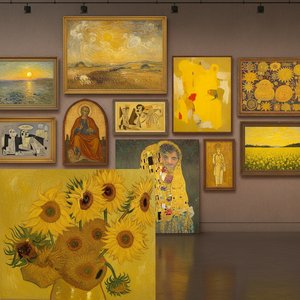
Golden Hues: 10 Masterpieces Dominated by Chrome Yellow | ArtsDot
Immerse yourself in golden light! Explore 10 famous paintings dominated by 'Chrome Yellow', from Van Gogh’s Sunflowers to Monet's Haystacks. Discover the stories behind these iconic Impressionist & Post-Impressionist masterpieces and find museum-quality art reproductions at ArtsDot.com.

Concrete Visions: Exploring the Urban Landscape in Painting – From Realism to Contemporary Art
Explore the evolution of cityscape painting from Realism to contemporary art with ArtsDot. Discover key artists & invest in timeless urban visions. Expert guidance, museum-quality reproductions.

Urban Visions: A Historical & Artistic Exploration of the Cityscape in Painting
Explore the evolution of cityscape painting from historical maps to Impressionist masterpieces. Discover artists like Caillebotte, Utrillo & Matsumoto Shunsuke. Find museum-quality reproductions at ArtsDot.
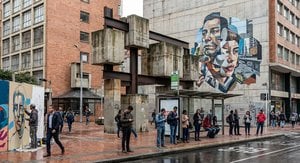
Concrete Narratives: Exploring Urban Life in Modern & Contemporary Art
Explore the evolution of cityscape painting with ArtsDot. Discover key artists from Realism to contemporary movements & invest in timeless urban visions. Expert guidance, museum-quality reproductions.

Urban Visions: A Historical & Artistic Exploration of the Cityscape in Painting
Explore the evolution of cityscape painting from historical maps to Impressionist masterpieces. Discover artists like Caillebotte & Utrillo. Find museum-quality reproductions at ArtsDot.