

 实景预览
实景预览
 分享
分享 分享
分享
 详情
详情 指南
指南

 下载作品
下载作品
 相似作品
相似作品 X射线
X射线 幻灯片播放
幻灯片播放 问答
问答 统计数据
统计数据St Andrew


 展开全文
展开全文
艺术微喷/版画
博物馆级艺术微喷或帆布版画,制作高效,并提供多种饰面选择。 ( 订购纯手工绘制画作 切换至数字图像销售渠道)




P118B ¥10

P118H ¥10

P118W ¥10

P438Z ¥10

P508JH ¥12

P508YH ¥12

P805H ¥10

P805Z ¥10

P919BZ ¥10

P919G ¥10

P919XJ ¥10

P959ZH ¥10

P968JZ ¥12

W106C ¥8

W218G ¥10

W218JH ¥8

W218Y ¥10

W307PJ ¥10

W316G ¥10

W316PJ ¥8

W316Y ¥10

W398PJ ¥8

W4111J ¥10

W500HY ¥15

W500JH ¥15

W692G ¥12

W849H ¥8

W940BG ¥15

W953PJ ¥8




您可以从与原作比例一致的预设尺寸中进行选择。

请输入您所需的宽度和高度,以适配您的画框或墙面。由于印刷品只能进行裁剪,无法超出原图尺寸,因此若比例不一致,画面的一部分将会被裁切。在正式印刷之前,我们会为您发送一份数字效果图供您确认。本页面显示的图片并非最终裁剪后的效果——只有效果图才能展示真实的裁剪情况。


 玻璃选项仅适用于110厘米以下的尺寸。

St Andrew
艺术微喷/版画
复刻品尺寸
-


最终结算价
¥ 423
St Andrew by François Duquesnoy: A Monumental Testament of Baroque Faith
François Duquesnoy’s St Andrew stands as a cornerstone of Baroque sculpture in Rome, embodying the grandeur and spiritual fervor that defined the era. Created between 1629 and 1633, this colossal marble statue resides within St. Peter's Basilica, directly opposite Bernini’s equally imposing Saint Longinus – a deliberate pairing designed to showcase contrasting artistic approaches while simultaneously reinforcing the overarching theme of Christian martyrdom.
Commission, Context & Production: A Patron’s Vision
The genesis of this masterpiece lies in a commission from Cardinal Biscia, protector of the Baker's guild. Rumours persist about whether St Andrew preceded or followed St Susanna; however, scholarly consensus points to St Andrew being initiated first, fueled by documented evidence suggesting that Duquesnoy’s success with St Susanna secured him the patronage of the guild overseeing the creation of St. Maria di Loreto. The statue’s unveiling in 1629 captivated audiences and critics alike, prompting intense debate about stylistic nuances – a discussion mirroring the broader artistic tensions between Pietro da Cortona's classical idealism and Bernini’s theatrical dynamism.
François Duquesnoy’s Style: Classicism Revisited
Duquesnoy’s artistic vision firmly rooted in classicism, yet subtly infused with Baroque sensibilities. Unlike Bernini’s expressive gestures and dramatic drapery, Duquesnoy prioritized stillness and idealized form. He demonstrated a particular affinity for Alessandro Algardi's sculptures, prioritizing clarity of line and sculptural precision. His meticulous study of ancient sculpture—famously scaling Marcus Aurelius to grasp its construction—served as the bedrock of his technique.
Symbolism & Technique: Marble’s Silent Narrative
The statue’s composition is deliberately restrained, reflecting Duquesnoy's belief in conveying spiritual truth through serene beauty. Andrew’s posture – leaning over the crux decussata (cross) – powerfully symbolizes his unwavering faith and acceptance of martyrdom. The drapery, rendered with painstaking detail, contributes to the sculpture’s overall sense of solemn dignity. Crafted from Carrara marble—renowned for its purity and luminosity—the statue exemplifies Duquesnoy's mastery of material manipulation, achieving a remarkable balance between solidity and grace.
Legacy & Significance: A Reflection of Faith
St Andrew remains an enduring emblem of Christian devotion and artistic excellence. Its placement alongside Bernini’s St Longinus underscores the multifaceted nature of Baroque art—a movement characterized by both grandeur and profound contemplation. Today, reproductions of Duquesnoy's masterpiece continue to inspire admiration for its timeless beauty and intellectual depth, offering a captivating glimpse into the spiritual landscape of 17th-century Rome.
常见问题与解答
François Duquesnoy 的《St Andrew》 的对比度表现如何?
"St Andrew" 的明暗对比度记录为 Bold。对比度描述了亮部与暗部之间的差异强度。
François Duquesnoy 的《St Andrew》 的构图以什么颜色为主导?
Quinacridone Magenta (#6e5a52) 是 François Duquesnoy 的《St Andrew》 的主导色。
这幅 François Duquesnoy 的《St Andrew》 的复制品会为房间增添怎样的氛围?
凭借其Dramatic的意境,建议将“St Andrew”装饰于Hotel Lobby。
相似作品


艺术家简介
François Duquesnoy: A Flemish Sculptor in Rome
- Born: Nettuno, Italy (1597)
- Died: 1643
Early Life and Training
- François duquesnoy, also known as Frans Duquesnoy, was born in Brussels. His father, Jérôme duquesnoy the elder, served as the court sculptor to Archduchess Isabella and Archduke Albert.
- Duquesnoy received his early training in Brussels, demonstrating talent that attracted the attention of the archduke.
- The archduke provided financial support for Duquesnoy to study in Rome, where he would spend the majority of his career.
- Upon arriving in Rome around 1618, Duquesnoy meticulously studied antique sculpture, famously climbing over the equestrian Marcus Aurelius to understand its construction.
Artistic Style and Influences
- Duquesnoy's style is characterized by a classicized approach, often contrasted with the more emotional and theatrical works of Gian Lorenzo Bernini.
- He showed greater affinity for Alessandro Algardi’s sculptures.
- Contemporary critics, like Giovanni Bellori, praised Duquesnoy's ability to restore contemporary sculpture to the quality of ancient Roman sculpture.
- Nicolas Poussin, a fellow expatriate artist, shared Duquesnoy's classicized and emotionally detached style, and they lived together in Rome for a time.
- Duquesnoy collaborated with Bernini on several projects, including designs for angels offering garlands at St. Peter’s Basilica.
Major Works and Achievements
- Santa Susanna (1629): Considered one of Duquesnoy's masterpieces, this sculpture depicts the saint with a balance of modesty and revealing draperies, earning high praise from Bellori. A marble copy resides in the Louvre.
- St. Andrew (1629-33): This larger-than-life statue adorns St. Peter’s Basilica, showcasing Duquesnoy's restrained style compared to Bernini and Francesco Mochi's contributions.
- Rondanini Faun: An early work demonstrating his skill in expanding upon antique torsos, though later criticized by neoclassicists. Now located at the British Museum.
- Apollo and Cupid: A notable sculpture showcasing mythological themes.
- Mercury: Another significant work displaying Duquesnoy's talent for depicting classical figures.
Historical Significance
- Duquesnoy played a crucial role in the Roman Baroque art scene, offering an alternative to Bernini’s dramatic style with his more restrained and classicized approach.
- Cardinal Richelieu offered him the position of royal sculptor in France, aiming to establish a royal academy of sculpture in Paris, though Duquesnoy died before he could take up the post.
- His work influenced subsequent generations of sculptors and contributed to the development of Neoclassical art.
- Bellori's high praise solidified his reputation as a restorer of classical ideals in sculpture.

François Duquesnoy
1597 - 1643 , Italy
艺术家简介
- Full Name: François Duquesnoy
- Nationality: Flemish
- Date Of Birth: 1597
- Date Of Death: 1643
- Place Of Birth: Nettuno, Italy
- Notable Artworks:
- Rondanini Faun
- St Susanna
- St Andrew
- Victory of Sacred Love
- Bacchanalia of Putti
- Artistic Movement Or Style: Baroque sculpture
- Artists Who Influenced This Artist: ['Nicolas Poussin']
相关文章

The Enduring Form: Sculpture Across History, Technique & Emotional Resonance
Explore the rich history of sculpture with ArtsDot. Discover key techniques, influential artists & investment potential for discerning collectors. Expert insights into valuing and collecting timeless masterpieces.

The Enduring Form: Exploring Themes & Techniques in Sculpture Across Historical Periods
Explore the rich history of sculpture from ancient masterpieces to contemporary innovations. Discover key techniques, influential artists & investment potential for discerning art collectors.
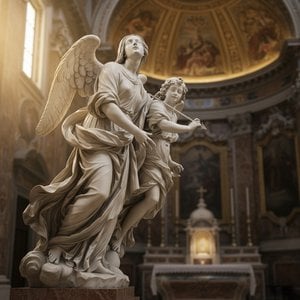
Gian Lorenzo Bernini: Sculpting Baroque Emotion & the Roman Imagination
Explore the life & revolutionary art of Gian Lorenzo Bernini, the master sculptor of the Baroque era. Discover his iconic works like David and Ecstasy of Saint Teresa – a journey into Roman artistic genius.

Theatricality & Triumph: Baroque Drama in Painting & Sculpture
Explore the dramatic world of Baroque art! Discover its history, defining characteristics, & lasting influence on painting & sculpture. Expert insights into Caravaggio, Zurbarán, and Bernini – plus high-quality reproductions at ArtsDot.

Bronze Sculptures That Defined Art History | ArtsDot
Journey through art history with our Top 10 bronze sculptures! Explore masterpieces by Rodin, Michelangelo & more. Discover stories behind iconic statues and find museum-quality reproductions for your home decor at ArtsDot.com.