


 效果预览
效果预览
 购买手绘画作
 分享
分享 分享
分享
 详情
详情

 下载
下载
 相似作品
相似作品 X射线
X射线 幻灯片播放
幻灯片播放Mechanical Elements


 展开详情
展开详情




P118B $10

P118H $10

P118W $10

P438Z $10

P508JH $12

P508YH $12

P805H $10

P805Z $10

P919BZ $10

P919G $10

P919XJ $10

P959ZH $10

P968JZ $12

W106C $8

W218G $10

W218JH $8

W218Y $10

W307PJ $10

W316G $10

W316PJ $8

W316Y $10

W398PJ $8

W4111J $10

W500HY $15

W500JH $15

W692G $12

W849H $8

W940BG $15

W953PJ $8




从与原作比例一致的预设尺寸中进行选择。

您可以输入自定义尺寸,以适配特定的画框或空间。如果您选择的尺寸与原图比例不符,我们将对作品进行裁剪,或通过镜像填充/纯色填充边缘的方式来扩展图像。在开始制作之前,我们会向您发送一份数字效果图供您确认。
请注意,屏幕上的预览并不能反映实际的裁剪或扩展效果。只有效果图才能准确展示最终的构图。
虽然我们提供定制尺寸,但为了保持原图比例,我们建议您从预设列表中选择尺寸。


 玻璃选项仅适用于110厘米以下的尺寸。

Mechanical Elements
艺术微喷/版画
复制品尺寸
-


最终总价
$ 62
藏品详情
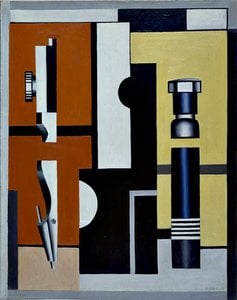
Fernand Léger’s Mechanical Elements: A Vision of Modernity Captured in Geometric Form
Fernand Léger's "Mechanical Elements," painted in 1926, stands as an arresting testament to the burgeoning fascination with industrial progress and its influence on artistic expression during the interwar period. More than just a depiction of machinery—though undeniably prominent—the painting embodies Léger’s core belief that art could actively engage with the transformative forces reshaping human experience. This analysis delves into the artwork's stylistic nuances, technical considerations, historical significance, and enduring emotional resonance.Stylistic Roots: Cubism Revisited
Léger firmly established himself within the vanguard of Cubist thought, yet he deftly steered away from its purely analytical dissection of form. Instead, he embraced a synthesis that prioritized geometric abstraction while retaining an awareness of observable reality. Unlike Picasso’s fragmented portraits and sculptures—which sought to dismantle traditional representation—Légers approach was to reconstruct visual experience through simplified shapes—cylinders, cones, cubes—creating a dynamic interplay between solidity and emptiness. This stylistic choice reflects Léger's conviction that Cubism could serve as a springboard for exploring the new aesthetic sensibilities of the machine age. The painting’s palette is deliberately restrained, favoring shades of gray and white to convey the austere materiality of industrial components, punctuated by a bold yellow element—a deliberate counterpoint—that injects vibrancy into the composition.Technique: Flat Planes and Sharp Edges – A Deliberate Aesthetic
The execution of "Mechanical Elements" is characterized by meticulous attention to detail within a remarkably reductive visual language. Léger employed flat planes of color applied with thick brushstrokes, creating a textured surface that mimics the roughness of metal surfaces. The sharp edges defining each geometric form contribute to an overall sense of precision and dynamism—a stylistic hallmark of Tubism, which Léger championed as a natural progression from Cubism. This technique wasn’t merely about replicating visual appearances; it was about conveying a feeling of immediacy and capturing the energy inherent in industrial processes. Léger's masterful blending of color and texture underscores his ambition to transcend mere imitation and forge an entirely new artistic idiom.Historical Context: Embracing the Machine Age
Painted during the height of Léger’s “mechanical period,” "Mechanical Elements" captures the zeitgeist of a society grappling with unprecedented technological advancements. The aftermath of World War I had irrevocably altered perceptions of time, space, and human existence—themes that Léger powerfully addressed through his art. He envisioned a future where humanity would coexist harmoniously with machines, recognizing their potential to liberate individuals from drudgery while simultaneously presenting new challenges to artistic creativity. Léger’s work anticipates the stylistic innovations of Pop Art, demonstrating how abstraction could serve as a conduit for communicating complex ideas about modernity and its impact on human consciousness.Symbolism Beyond Representation
While eschewing literal depictions, Léger imbues "Mechanical Elements" with profound symbolic significance. The dominant cylindrical forms represent not just physical objects but also the pervasive influence of machinery—the relentless rhythm of industrial production—upon daily life. The yellow element symbolizes optimism and vitality—a deliberate assertion of human agency amidst the perceived bleakness of postwar anxieties. Léger’s intention wasn't to offer a didactic commentary on societal transformations; rather, he sought to evoke an emotional response—a sense of wonder and apprehension—regarding the unfolding drama of technological progress.Concluding Reflection: An Enduring Legacy
“Mechanical Elements” remains a captivating masterpiece because it embodies Léger’s unwavering conviction that art could engage with the complexities of its time without sacrificing aesthetic beauty. Its bold geometric forms, textured surface, and carefully considered palette continue to inspire artists and collectors alike—a testament to Léger's enduring legacy as one of the most influential figures in twentieth-century abstraction.



艺术家简介
勒热:机器时代的诗人
让·费尔南·勒热,1881 年出生于诺曼底的阿根坦,他的名字与 20 世纪初的艺术革新紧密相连。他并非仅仅是一位画家,更是一位预言者,一位大胆地拥抱现代工业文明,并将其转化为充满活力、色彩斑斓的视觉语言的艺术家。勒热的生命轨迹,从田园牧歌般的童年到巴黎先锋艺术圈的核心,展现了一个人对艺术理想的不懈追求和对时代精神的深刻洞察。他早年的生活在农业劳动中度过,这为他日后对机械美学的探索奠定了坚实的基础。与许多同时代的抽象艺术家不同,勒热并非逃避现实,而是试图将现代性——其动态、机械形态以及本质——融入到一种既具有力量的抽象性,又深深扎根于可观察世界的视觉语言中。“管状主义”的诞生与黄金分割
勒热的艺术生涯并非一蹴而就。在接触了保罗·塞尚的作品后,他彻底颠覆了传统的绘画观念,开始解构形式、分析其内在结构,并以一种全新的强调体积和重量的方式重建画面。这种探索很快将他带入了立体主义的领域,但他并未满足于简单地模仿毕加索或布拉克。勒热发展出了一种独特的艺术风格——一种被评论家戏称为“管状主义”的个人立体主义。这种风格以圆柱形、扁平的平面和大胆的色彩对比为特征,歌颂了机械美学,远早于它成为一种广泛认可的艺术趋势。他与让·梅津格、亨利·勒弗科尼埃等艺术家一同探索着新的艺术语言,并最终参与了“黄金分割”小组(Section d'Or),这个团体致力于将数学原理融入到艺术创作中,追求和谐与秩序感。这一时期,勒热的作品开始展现出对机械元素的强烈兴趣,预示着他未来艺术风格的转变。战争、机器化与新的美学
一战的爆发深刻地影响了勒热的生活和作品。在战场上服役的经历使他亲身感受到了现代战争的残酷——炮火轰鸣、空中战斗以及机械化冲突对人性的异化。然而,这并未使他感到幻灭或拒绝现代性,反而巩固了他对机器及其力量的迷恋。他在服役期间绘制的素描记录了军事技术的朴素之美,将毁灭的工具转化为艺术思考的对象。战后,勒热的美学进一步演变,他的画作开始反映出一种更为精简、机械化的审美趣味,歌颂着工业世界的活力和效率。《士兵与烟斗》(1916)便是这一转变的典范,简化了形式,运用大胆的色彩,营造出一种机械精准的感觉。这并非单纯的美学选择,更是一种哲学宣言——对现代性进步潜力的肯定,即使在毁灭性的冲突之后。遗产与持久的影响
战后岁月,勒热继续探索艺术与工业的交叉点,创作了作品,以独特的抽象和具象相结合的方式庆祝着现代生活。《动画风景》(Paysages animés)系列(1921 年)展示了人物和动物无缝地融入到精简的构图中,模糊了有机形式和非机形式之间的界限。他还尝试雕塑和电影创作,拓展了他的艺术实践范围。勒热对后世艺术家的影响是不可否认的。他大胆的形式简化、对工业意象的拥抱以及对大众文化的庆祝,预示着波普艺术的兴起。罗伊·利希滕斯坦和安迪·沃霍尔等艺术家都清晰地继承了勒热的先驱性工作。他弥合了抽象艺术与具象表现之间的鸿沟,证明了既能具有智力深度又能引人入胜的作品是完全可以实现的。如今,费尔南·勒热的画作被世界各大博物馆收藏,包括法国的艺术与历史博物馆以及专门为他的作品设立的国家费尔南·勒热博物馆。他仍然是一位 20 世纪艺术领域的重要人物——一位敢于在机器时代发现美,并以无与伦比的胆量和独创性将其转化为画布上鲜活形象的先驱者。他的遗产不仅仅在于作为一名画家,更在于作为现代文明的预言家。一位真正的先锋,他的作品至今仍能引起观众的共鸣。
费尔南·莱热
1881 - 1955 , 法国
艺术家简介
- Artistic Movement Or Style: 立体主义、管状主义
- Artists Or Movements Influenced By This Artist: ['波普艺术']
- Artists Who Influenced This Artist: ['保罗·塞尚']
- Date Of Birth: 1881年2月4日
- Date Of Death: 1955年8月17日
- Full Name: 费尔南·莱热
- Nationality: 法国人
- Notable Artworks:
- 《塞特的女人》
- 《机械元素》
- 《大游行》
- 《城市》
- Place Of Birth: 阿根坦,法国



