
Head constructor

- 50.0 x 45.0 cm


图片将根据您的选择进行更新: , .
 展开全文
展开全文
只需简单四步,即可订购您的
请慢慢挑选。您可以随时更改任何选项;订单详情卡中的价格将随您的选择实时更新。
1 四步中的第一步
您想要哪种尺寸?
这些尺寸均保持了原画的比例。示意图展示了您所选尺寸在墙面上的效果,其位置位于一张两米宽的沙发上方。
或输入您自定义的尺寸
您可以从与原作比例一致的预设尺寸中进行选择。

请输入您需要的宽度和高度,以适配您的画框或墙面。由于作品为手工绘制,若选择不同比例的尺寸,艺术家可能会在画面边缘多画一些或稍作裁剪 —— 由您决定。在开始绘画之前,我们会为您发送一份数字效果图供您确认。本页面上展示的图片并非最终实物 —— 只有效果图才能反映真实结果。
2 四步中的第二步
您希望如何装裱:卷轴装、绷框装还是带框装?
以下价格对应您在第一步中所选的尺寸。
选择绷边画布的边缘样式
选择您的画框

白色边缘 ¥1

边缘晕染效果 ¥1

延展式 ¥1

P118B ¥10

P118H ¥10

P118W ¥10

P438Z ¥10

P508JH ¥12

P508YH ¥12

P805H ¥10

P805Z ¥10

P919BZ ¥10

P919G ¥10

P919XJ ¥10

P959ZH ¥10

P968JZ ¥12

W106C ¥8

W218G ¥10

W218JH ¥8

W218Y ¥10

W307PJ ¥10

W316G ¥10

W316PJ ¥8

W316Y ¥10

W398PJ ¥8

W4111J ¥10

W500HY ¥15

W500JH ¥15

W692G ¥12

W849H ¥8

W940BG ¥15

W953PJ ¥8

H24-GOLD ¥30

H24-SILVER ¥30

H36-GOLD ¥45

H36-SILVER ¥45
带框
边框材质: . 含框总尺寸: .
3 四步中的第三步
您想对画作进行任何修改吗?
大多数人的回答是否定的。由于每一幅画作都是手工绘制,我们的艺术家也可以为您进行定制。
下单后,ArtsDot.com 团队将通过电子邮件联系客户获取具体指令,并提供效果预览图
4 第四步(共四步)
几种饰面选项
所有选项均为可选。已选择的答案不会产生额外费用。
出自哪位艺术家之手?
像博物馆里的那样,配上一块铭牌?
青铜铭牌雕刻详情
This elegant plaque features the artist's name and the title of the artwork, finely engraved for a timeless presentation.
It is made from bronze with a refined, elegant finish. The text is precisely laser-engraved for a sharp and permanent result. Measuring 9x2 cm, the plaque is compact yet easy to read. It's built to be durable and scratch-resistant, offering a professional, museum-quality look. Mounting is simple thanks to the included adhesive backing.
透明亚克力铭牌详情
The plaque includes essential engraved details such as the artist's name, the title of the artwork, the date it was created, the type of media used-like oil on canvas or watercolor-a brief description of the piece, and a QR code that links to the complete artwork information.
It is crafted from clear acrylic, offering a sleek, modern appearance. The text is UV-engraved in black to ensure strong visual contrast. With a size of 10x15 cm, it ensures optimal readability. It comes equipped with two metal hooks for secure wall mounting. The plaque is designed to be weather-resistant, making it suitable for various environments, and it includes interactive features that work seamlessly with smartphone scanning.
黑色亚克力铭牌详情
This elegant plaque includes engraved information such as the artist's name, the title of the artwork, the date it was created, the type of media used (like oil on canvas or watercolor), a short description of the artwork, and a QR code for quick access to more information.
The plaque itself is made from refined black acrylic with a premium finish. The text is laser-engraved in white for high contrast and readability. Its size is 10x15 cm, designed to be easy to read. It comes with two metal hooks for professional mounting. The design is sleek and fits any interior style. It is also weather-resistant and durable, with built-in digital integration for mobile compatibility.
需要保护性光油吗?
您预计何时收到?
✓ 确认并下单
您的画作,正如您所订购的那样

Head constructor
复制品材质
复刻品尺寸
-

精选资深艺术家
更丰富的细节、更精湛的工艺以及更充裕的制作时间
-

复制画装裱选项
-
-
对于任何边长超过 105 厘米(约 41 英寸)的艺术品或复制品,画框将以拆解后的组件形式发货。此方法可确保安全送达并防止运输过程中的损坏。
需由专业人员组装 —— 本产品不适用于 DIY 操作。
该组件必须由经验丰富的专业装裱师进行组装及画布绷装,过程中需使用木工胶(不随附)、画布绷边钳以及夹具,以确保在胶水干燥期间保持内框方正。组装不当或画布张力不均可能会对艺术品造成永久性损坏,且此类情况不在我们的保修范围之内。
 对于任何边长超过 105 厘米(约 41 英寸)的艺术品或复制品,画框将以拆解后的组件形式发货。此方法可确保安全送达并防止运输过程中的损坏。
包含所有实木条,尺寸精确,便于组装。
使用随附的螺丝进行组装,另需准备用于角部连接的木工胶(本品不含木工胶),请由您的装裱师自行准备。
需另备专业工具(本套件不含):画布绷紧钳以及用于在胶水干燥过程中保持木条方正的夹具。
重要提示:
角部连接处需要使用木工胶,边框条必须使用夹具固定直至胶水完全干透,且在组装好的框架上绷紧画布需要用到画布拉伸钳。以上工具均不包含在套装内。请在订购此尺寸前,预先联系经验丰富的专业装裱师。

展品铭牌
-
-

保护性清漆
光泽清漆(提亮色彩,防光防潮)
-

定制我的艺术品
定制化示例:替换面部为客户照片;添加宠物(例如,将猫替换为狗);在背景中加入隐藏信息;更改背景风景或元素。
-

加急
全球配送()仅需 3-4 周即可送达,无需等待标准时效的 5 周。(19 November)。品质始终如一,绝不妥协。
-
极速达
全球配送(),预计 5 周送达。(26 November)。
已包含
最终结算价
¥ 1760
玻璃选项仅适用于110厘米以下的尺寸。
每份订单均包含
- 全球免运费特快专递服务
- 优质亚麻画布
- 全程运输保险
- 关税退款保证
- 色彩精准还原保证
- 100天退货保障(仅限制造缺陷)
- 100% 退款保证
- 多件购买优惠


A Fragmented Portrait of the Machine Age
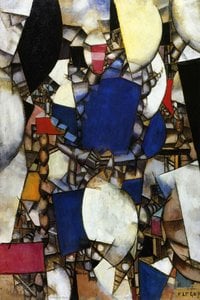
Fernand Léger’s “Head Constructor,” painted in 1950, isn't merely a portrait; it’s a distilled essence of the burgeoning modernity that gripped Europe after World War I. This striking monochrome work, rendered in a bold and assertive Cubist style, immediately commands attention with its stark contrast between the solid black outlines and the pristine white background – a deliberate choice that emphasizes the geometric forms at the heart of Léger's vision. The image presents a stylized human head, partially obscured by a simple hat or cap, a subtle detail hinting at a profession or perhaps even anonymity within the rapidly changing urban landscape.
Léger’s approach to Cubism wasn’t about deconstructing reality into an abstract puzzle; rather, he sought to integrate the dynamism and structure of the machine age directly into his representation of the human figure. He viewed industrialization not as a destructive force but as a new form of beauty – one characterized by clean lines, precise angles, and a sense of mechanical order. This is powerfully evident in “Head Constructor,” where the head itself is broken down into a series of interlocking squares, rectangles, and triangles—a deliberate rejection of traditional perspective and a celebration of geometric abstraction. The work feels less like a depiction of an individual and more like a schematic diagram, a blueprint for a new kind of human being shaped by the tools and technologies of his time.
The Language of Form: Cubism and Léger’s Vision
To understand “Head Constructor,” it's crucial to grasp the principles of Cubism as Léger embraced them. Unlike Picasso and Braque, who initially focused on dismantling objects into fragmented planes, Léger retained a sense of volume and three-dimensionality within his compositions. He didn’t entirely abandon representation; instead, he simplified forms to their most essential geometric components, creating an effect that is both abstract and strangely familiar. The thick black lines defining the head, hat, and facial features aren't delicate or subtle—they are assertive and deliberate, conveying a sense of construction and engineering. This bold use of line is characteristic of Léger’s style, which he termed “Tubism,” referencing his fascination with cylindrical forms – a visual echo of the pipes and machinery that dominated the industrial world.
The choice of monochrome—black lines on white—further amplifies this sense of construction. It eliminates any distractions from color, forcing the viewer to focus entirely on the interplay of shapes and lines. This deliberate austerity reflects Léger’s desire to strip away sentimentality and emotionalism, presenting a purely rational and objective view of the human figure. The work evokes a feeling of detachment, almost as if we are observing a machine rather than a person—a powerful statement about the increasing mechanization of modern life.
Symbolism and the Modern Condition
The title itself, “Head Constructor,” offers valuable insight into Léger’s intentions. He was deeply interested in the role of labor and industry in shaping society, and he saw the construction worker as a symbol of progress and innovation. The hat or cap worn by the figure could be interpreted as a uniform—a badge of membership within this new industrial order. The overall effect is one of both celebration and unease; Léger acknowledges the beauty and efficiency of modern technology but also hints at its potential to dehumanize individuals.
“Head Constructor” isn’t simply a depiction of a head; it's a meditation on the nature of humanity in an age of rapid technological change. It’s a work that continues to resonate today, prompting us to consider our relationship with machines and the evolving definition of what it means to be human.
常见问题与解答
费尔南·莱热 的《Head constructor》 适合悬挂在哪个房间?
费尔南·莱热 的《Head constructor》 的推荐陈列空间为 Living Room。当然,该建议也可根据您的室内装饰进行灵活调整。
哪里可以买到费尔南·莱热 的《Head constructor》的手绘复制品?
费尔南·莱热 的《Head constructor》 的手绘复制品正在 本站 发售,您可以通过其 手工油画复刻 页面进行订购:亚麻画布手工油画复制品。
根据创作日期判断,"Head constructor" (1950) 属于 费尔南·莱热 艺术生涯的哪个阶段?
鉴于其创作于1950年,作品《Head constructor》属于费尔南·莱热的Mid-Career Period时期。
更多关于此画作的信息
 实景预览
实景预览
 切换至版画销售渠道
 分享
分享 分享
分享
 详情
详情 指南
指南

 下载作品
下载作品
 相似作品
相似作品 X射线
X射线 幻灯片播放
幻灯片播放 问答
问答 统计数据
统计数据相似作品




费尔南·莱热
1881 - 1955, 法國
艺术家简介
费尔南·莱热的一生
费尔南·莱热的故事始于诺曼底下诺尔省的阿根坦村。1881年2月4日,他作为独生子降生于这个世界。他的早年生活被法国乡村的宁静以及母亲玛丽-阿德尔·道努(Marie-Adèle Daunou)的陪伴所塑造。他的父亲是一名靠贩卖牲畜为生的商人,在费尔南还很年幼时便撒手人寰,留下这个孩子在母亲的抚育下长大,那是一个充满了虔诚与谦逊气息的家庭。
这种在诺曼底乡村景观中的成长经历,与他日后在法国文化繁华中心所过着的生活形成了鲜明的对比。虽然他的根基扎于土地和农业生活的体力劳动之中,但他的精神却被现代社会的复杂性所吸引。最终,他的影响力远远超出了阿根坦的边界,成为一位跨越多种艺术领域的探索者。他并未将自己局限于画布之上,而是试图通过雕塑和电影的动态影像来表达他的视觉愿景。
他的生命轨迹是在童年时期那种有机的质感与城市中结构化的机械节奏之间不断穿梭。这种二元性定义了他的存在,随着他穿行于这个变革世纪的更迭之中。他的道路从未平坦,始终伴随着童年传统世界与未来快速工业脉动之间的张力,而他最终通过艺术,成为了定义这种未来节奏的关键人物。
早年生活、家庭与艺术启蒙
费尔南·莱热的艺术愿景,其根基深植于法国下诺曼底奥恩省阿根坦的田园风光之中。出生于一个以畜牧业为生的家庭,他的早年岁月被土地的质感与农业生活的律动所塑造。这种对真实、劳作世界的深刻感知,如同一种无声的力量,潜伏在他日后更为复杂的艺术探索之下。作为独生子,他在一位虔诚且谦逊的母亲抚育下成长,最初的生命轨迹被引向了严谨的建筑学领域。从1897年到1899年,他全身心地投入到这项技术性手艺中,学习空间的逻辑以及精确绘图的必要性。
到了1900年,城市的召唤变得愈发强烈,令他无法抗拒,于是他移居巴黎。在当时,他通过担任建筑绘图员来维持生计,这份工作要求对线条与比例有着极其敏锐的洞察力。虽然建筑学的正式训练为他奠定了结构理解的基础,但他的心早已开始向画布偏移。他曾试图考入享有盛誉的巴黎美术学院,尽管未能获得正式学生的身份,但他并未因此气馁,而是以旁听生的身份在学校学习,在学术体制的边缘汲取大师们的教诲。这段求学时光,虽然有时被视为一段迷茫的探索期,但对于磨炼他的技术功底至关重要——正是这些技艺,让他最终能够以自己的方式,去拆解并重构这个世界。
塞尚的影响与立体主义的觉醒
1907年,当这位艺术家在秋季沙龙(Salon d'Automne)邂逅塞尚的回顾展时,一场深刻的艺术变革在他内心悄然发生。这次邂逅犹如一颗催化剂,将他从少年时代那种柔和的印象主义风格中剥离出来,引向一种更具结构性的视觉感知方式。他开始穿透事物的表象,转而探寻定义世界的底层几何逻辑。到了1909年,随着他与亚历山大·阿基潘科、雅克·利普希茨、马克·夏加尔以及罗伯特·德劳内等艺术巨匠的交汇,他在巴黎创意圈的影响力日益增强。这些邂逅绝非简单的社交往来,而是新思想的激烈碰撞,共同塑造了他不断演进的艺术愿景。
随着岁月的流转,费尔南·莱热逐渐进入了“皮托小组”(Puteaux Group)的视野,这个被称为“黄金分割”(Section d'Or)的艺术家圈子成为了他的精神栖息地。他与让·梅津格和亨利·勒弗科尼埃并肩作战,共同探索这种全新艺术语言在数学与结构上的无限可能。他并不满足于仅仅追随前人的足迹,而是试图在那个时代标志性的破碎平面与重叠形态中,开辟出属于自己的路径。这段充满张力的实验时期,最终促成了他在1911年独立沙龙展(Salon des indépendants)上的首次重大亮相,并在那里展示了他的杰作——《森林中的裸体》。
- 《森林中的裸体》(1911)
战争与机械时期
第一次世界大战的动荡将这位艺术家从巴黎的画室中生生拽出,推向了前线残酷的现实。从1914年到1917年,他在法国军队中服役,在阿贡森林度过了两年艰苦卓绝的岁月。这场冲突不仅仅是他生命中的一段背景,更是一种彻底改变了他对形式认知的变革力量。1916年,一场毒气袭击险些夺走他的生命,在他休养期间,周围的世界正被工业毁灭的巨大力量重新塑造。即便是在那年短暂的休假中,他也无法抑制创作的冲动,创作出了《抽烟斗的士兵》。这件作品捕捉到了一种全新的现实感——在那个战场被机器统治的时代,人类的躯体也开始呈现出机器般的特质。
到了1917年,他的创作精神发生了显著的转向,这标志着他所谓的“机械时期”的开端。他在现代战争与工业的工具与技术中,发现了一种奇特而富有节奏感的律动之美。那些圆滑的管状形态与机械零件的精准感,成为了他全新的视觉语言。在他眼中,这些物体并非冰冷或缺乏情感的,相反,他拥抱了它们的力度,以及它们在组织现代生存之混沌中所展现出的秩序感。战争剥离了他早期作品中那些柔和的边缘,取而代之的是一种棱角分明、结构清晰的质感,如同一个正在剧烈变革的时代中,那些钢铁与活塞所散发出的力量。
技法与风格
他的画笔带着一种律动感,甚至拥有一种近乎工业化的精准,试图捕捉那个剧变时代的脉搏。他背离了过去那种柔和、晕染的阴影处理方式,转而选择通过一种充满力量感的几何语言来构建画面。这种探索催生了一种独特的个人化立体主义,被评论界戏称为“管状主义”。在这种风格中,世界通过圆柱形、圆锥形和立方体的形态被重新构想,创造出一种既厚实稳重又充满动感的体积感。他不仅仅是在描绘物体,更是在探寻物体内在的、本质的结构逻辑。
他所选用的色彩与其填充的形状一样,都充满了张力。他偏爱以原色为主的色调,并常以鲜明的黑白进行点缀,这有助于勾勒出主体清晰的边界。他并不依赖传统的错觉主义手法,而是以大胆、扁平的色块来涂抹色彩。他经常使用厚涂法(impasto),这种技法强调了颜料在画布上的物质存在感。这种质感化的处理方式确保了他的作品具有一种扎实、写实的物质感,恰好映射出他所崇尚的机器与城市建筑。他的形象往往呈现出光滑、机械化的轮廓,模糊了有机的人体形态与现代工业精密工程之间的界限。
- 《森林中的裸体》(1910)
- 《蓝衣女子》(1912)
- 《抽烟斗的士兵》(1916)
- 《机械工》 (1920)
晚年与逝世
全球冲突的动荡浪潮最终将这位艺术家从巴黎的艺术圈中抽离,带到了大西洋的另一端。在1940年至1945年间,他生活在美国,这段经历为他长期以来试图在画布上转译的现代世界提供了全新的视角。这段海外时光为他漫长的艺术演变提供了一个停顿,成为他最终回归法国故土之前的过渡时刻。
回到祖国后,他的个人生活发生了重大变化。1952年2月,他与纳迪亚·霍达塞维奇(Nadia Khodasevich)结为连理。这段婚姻开启了他生命的最终篇章,在此期间,他持续创作出风格多样的作品,从宏伟的壁画到细腻的彩色玻璃窗,不一而足。即便步入晚年,他在国际舞台上的声望依然稳固。1955年,他荣获圣保罗双年展大奖,这一至高无上的荣誉与他逝世的年份重合。1955年8月17日,费尔南·莱热在法国伊维特河畔吉夫逝世。
遗产与影响
费尔南·莱热留下的印记,早已超越了他所处时代的先锋艺术圈。通过在抽象艺术与具象表现之间架起桥梁,他为艺术家提供了一种与现代世界对话的新方式,而无需完全抛弃人类主体。他的创作手法让几何结构的逻辑与人物及物体的可识别存在之间展开了一场深刻的对话。这种在纯粹概念与触手可及的实体之间寻找平衡的能力,深刻地塑造了此后许多艺术流派的发展方向。
他对形式的大胆简化以及对大规模生产美学的痴迷,无异于波普艺术运动的先驱。他在机器时代重复且功能性的本质中发现了一种独特的美感,这种视角在后来引起了新一代创作者的强烈共鸣。诸如 罗伊·利希滕斯坦 和 安迪·沃霍尔 等艺术家,从他对大胆轮廓和机械意象的实验中,清晰地汲取灵感,并将其延伸至对大众文化的探索之中。他为那个最终歌颂工业与商业元素的时代,提前准备好了视觉语言——而那些元素,正是他曾试图将其转化为画布生命的灵魂。
今日何处寻觅他的足迹
若想亲身感受他艺术愿景的实体存在,你或许需要踏上一段前往法国南部的旅程,前往滨海阿尔卑斯省的比奥(Biot)。在这里,坐落着专门用于研究与保护其创作成果的国家费尔南·莱热博物馆(Musée national Fernand Léger)。这座博物馆就安置在马斯圣安德烈别墅(Mas Saint-André)内,这里曾是艺术家本人的居所。在这些墙垣与环绕的庭院之间,他那些色彩斑斓的陶瓷雕塑找到了最契合的归宿,让观者得以直观地观察他的艺术形态是如何与地中海景观的光影与空间交织共鸣的。
除了这处专门的艺术圣地,他的画布与雕塑作品还被珍藏在多家重要的艺术机构之中。法国的艺术与历史博物馆(Musée d'Art et d'Histoire)也保存有他的作品系列,确保他在更宏大的法国艺术叙事中占据一席之地。通过这些馆藏,人们得以持续探究他是如何将机器时代的能量转化为静止却又充满律动的视觉形式。对于那些追寻其独特美学的旅行者来说,可以在以下几家主要收藏机构中寻得他的踪迹:
虽然他的影响力也潜移默化地流淌在后世艺术家的作品中,但亲眼见证他笔触最直接的方式,仍是走进这些历史悠久的艺术殿堂。无论是在博物馆的静谧中凝视那些大胆的圆柱形构图,还是在花园的幽静中观赏他的雕塑,观者所面对的始终是那份定义了他艺术生涯的、极具结构感的清晰美学。他的遗产被稳固地锚定在这些特定的地点,那些画作中沉重而机械的律动,正静静地等待着每一位试图探寻其几何真谛的寻觅者。


相关文章

费尔南·莱热:25幅大师杰作,重塑现代艺术与家居美学 | ArtsDot
探索费尔南·莱热25幅经典杰作!深入了解这位立体主义大师的管形主义风格、机械美学与色彩构成。ArtsDot提供高清艺术复制品,为您的家居带来现代艺术气息。立即发现更多名画,打造专属艺术空间!


Industrial Revolution on Canvas: 10 Artworks That Define a Modern Aesthetic
Explore 10 iconic artworks capturing the Industrial Revolution’s grit & beauty. From Monet to Manet, discover realism, impressionism & powerful scenes of urban life. Find museum-quality reproductions for your home at ArtsDot.com.