
- 首页

- 帆布打印
- eugenie baizerman
- Warm Fruit

 定制手绘复刻品
 分享
分享 分享
分享
 详情
详情

 下载
下载
 相似作品
相似作品 X射线
X射线 幻灯片播放
幻灯片播放Warm Fruit
 Expressionism
 1934
1934 50.0 x 72.0 cm
 展开详情
展开详情




































从与原作比例一致的预设尺寸中进行选择。

您可以输入自定义尺寸,以适配特定的画框或空间。如果您选择的尺寸与原图比例不符,我们将对作品进行裁剪,或通过镜像填充/纯色填充边缘的方式来扩展图像。在开始制作之前,我们会向您发送一份数字效果图供您确认。
请注意,屏幕上的预览并不能反映实际的裁剪或扩展效果。只有效果图才能准确展示最终的构图。
虽然我们提供定制尺寸,但为了保持原图比例,我们建议您从预设列表中选择尺寸。


 玻璃选项仅适用于110厘米以下的尺寸。

Warm Fruit
艺术微喷/版画
复制品尺寸
-


最终总价
-
相似艺术品


艺术家简介
Eugenie Baizerman: A Visionary of Color and Emotion
Eugenie Baizerman (1899-1949) remains a captivating, yet somewhat elusive figure in 20th-century American art. Born in Warsaw to Polish-Jewish parents amidst the turbulent backdrop of early 20th-century Europe, her life and artistic journey were profoundly shaped by displacement, loss, and an unwavering dedication to exploring the expressive potential of color. Despite a relatively short career punctuated by infrequent exhibitions, Baizerman’s work—characterized by bold hues, dynamic brushstrokes, and a hauntingly intimate portrayal of human figures—has garnered increasing recognition as a significant voice within Abstract Impressionism and a testament to the power of subjective experience.
Baizerman's early artistic training began in Odessa, Russia, where she studied at the Grekov Odessa Art School. The family’s relocation to New York City in 1914 provided access to American art institutions like the National Academy of Design and the Educational Alliance, further shaping her evolving style. It was during this period that she met Saul Baizerman, a sculptor with whom she shared both a life partnership and an artistic sensibility. Their collaboration—though largely unspoken—influenced each other’s work, creating a unique dialogue between two distinct creative voices.
The Language of Color
Baizerman's artistic philosophy centered on the transformative power of color. Rejecting the purely representational approach prevalent in much of early 20th-century art, she embraced color not merely as a reflection of reality but as an independent language—capable of conveying emotion, atmosphere, and psychological depth. Influenced by the Impressionists’ emphasis on light and color, Baizerman pushed beyond mere observation, utilizing vibrant, often contrasting hues to evoke specific moods and sensations. Her palette was remarkably nuanced, demonstrating an extraordinary ability to discern and translate subtle variations in tone – as evidenced by Saul Baizerman's meticulous analysis of 826 color gradations within a single painting.
Her technique involved broad, gestural brushstrokes that created a sense of movement and energy. These dynamic marks, combined with her bold color choices, resulted in paintings that pulsate with life—a far cry from the muted tones often associated with early 20th-century art. She frequently depicted figures – often portraits of her husband, Saul – fragmented and abstracted, their forms dissolving into washes of color, suggesting a deeper exploration of inner states rather than literal representation.
Key Works and Artistic Development
Several paintings stand out as particularly revealing of Baizerman’s artistic vision. “Warm Fruit” (1934), for example, is a striking example of her ability to imbue seemingly simple subjects with profound emotional resonance. The painting's dark palette and fragmented forms evoke a sense of melancholy and introspection, while the vibrant splashes of color suggest an underlying current of hope. “Desert Hills (Tucson Etude 17)” showcases her exploration of landscape through color and form, capturing the essence of the Southwestern desert with a masterful use of light and shadow. “Three Figures” exemplifies her interest in portraying human relationships through abstracted forms and expressive color.
Throughout her career, Baizerman’s style evolved subtly, reflecting her ongoing experimentation with color and composition. Her work during the late 1940s, particularly those created shortly before her death in 1949, demonstrate a heightened sense of urgency and emotional intensity—a poignant reflection of the tumultuous times she lived through.
Legacy and Recognition
Despite facing challenges related to limited exhibition opportunities during her lifetime, Eugenie Baizerman’s work has gained increasing recognition in recent decades. The Krasner Gallery held a posthumous show in 1964, followed by a retrospective at the Zabriskie Gallery in 2000, solidifying her place within the canon of American art. Her paintings are now included in the collections of prestigious institutions such as the Metropolitan Museum of Art, the Whitney Museum of American Art, and MoMA – testament to the enduring power and beauty of her vision.
Baizerman’s legacy lies not only in her distinctive artistic style but also in her courageous exploration of color as a means of expressing profound human emotions. She remains an important figure for artists seeking to push beyond traditional boundaries and embrace the expressive potential of their chosen medium, demonstrating that art can be both visually stunning and deeply psychologically resonant.

eugenie baizerman
1899 - 1949
艺术家简介
- Artistic Movement Or Style: Abstract Impressionism
- Artists Or Movements Influenced By This Artist: ['Modern Art USA']
- Artists Who Influenced This Artist: ['Impressionism']
- Date Of Birth: October 14, 1899
- Date Of Death: December 30, 1949
- Full Name: Eugenie Silverman Baizerman
- Nationality: American
- Notable Artworks:
- Warm Fruit
- Desert Hills
- Three Figures
- Place Of Birth: Warsaw, Poland
相关文章

The Subtleties of Shade: Exploring Black, White & Gray Abstraction in Modern Interior Design
Explore the power of black, white & gray abstraction in modern interior design. Discover how minimalist art impacts spatial perception & creates sophisticated hotel spaces. Expert insights for designers.

Ivory Black Masters: 10 Paintings That Define Dramatic Art |
Delve into the power of 'Ivory Black' with 10 iconic paintings by masters like Rembrandt & Caravaggio. Explore dramatic chiaroscuro, gothic moods & timeless art history. Find museum-quality reproductions and elevate your home decor at

German Expressionism's 10 Defining Masterpieces | Art for Your Home
Explore 10 defining German Expressionism masterpieces – from Munch's 'The Scream' to Kandinsky’s abstracts. Discover the artists, stories & bold colors behind this powerful art movement. Find museum-quality reproductions at ArtsDot.com.
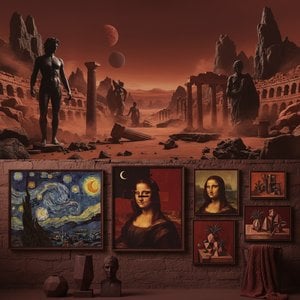
Mars Black Masterpieces: 10 Iconic Paintings & Timeless Art Decor Ideas
Delve into the power of 'Mars Black' with 10 iconic paintings by masters like Rembrandt & Caravaggio. Explore dramatic chiaroscuro, gothic art, and timeless beauty. Find museum-quality reproductions & elevate your home decor on .

埃贡·席勒:25幅震撼人心的杰作,艺术与灵魂的深度探索 | ArtsDot
探索埃贡·席勒25幅震撼人心的杰作!深入了解这位表现主义大师的绘画技巧、情感表达与生命哲思。ArtsDot.com提供高品质艺术复制品,为您的室内设计带来经典之美。立即在线探索完整系列!

