
- 首页

- 油画复制品
- 欧几何亨利·保罗·古尔涅
- M. Loulou

 购买版画
购买版画 分享
分享 分享
分享
 Details

 下载
下载
 相似作品
相似作品 X-Ray
X-Ray 幻灯片播放
幻灯片播放M. Loulou
 Oil On Canvas
- WallArt
- Post-Impressionism
 1890
1890- 19th Century
 55.0 x 46.0 cm




P118B $10

P118H $10

P118W $10

P438Z $10

P508JH $12

P508YH $12

P805H $10

P805Z $10

P919BZ $10

P919G $10

P919XJ $10

P959ZH $10

P968JZ $12

W106C $8

W218G $10

W218JH $8

W218Y $10

W307PJ $10

W316G $10

W316PJ $8

W316Y $10

W398PJ $8

W4111J $10

W500HY $15

W500JH $15

W692G $12

W849H $8

W940BG $15

W953PJ $8




 了解更多
了解更多从与原作比例一致的预设尺寸中进行选择。

您可以输入自定义尺寸,以适配特定的画框或空间。如果所选尺寸与原图比例不符,我们将通过裁剪作品或添加手绘元素来扩展画面。数字样稿将在制作开始前发送给您确认。
请注意,屏幕预览无法准确反映实际的裁剪或扩展效果,只有样稿才能真实呈现最终的构图。
虽然我们提供定制尺寸服务,但为了保留原作比例,建议您从预设列表中选择尺寸。
下单后,ArtsDot.com 团队将通过电子邮件联系客户获取具体要求,并提供效果预览图。


 玻璃选项仅适用于110厘米以下的尺寸。

M. Loulou
复制材质
复制品尺寸
-


最终总价
-
作品详情
Captivating Subject and Introspective Mood
This striking portrait captures a young girl seated gracefully amidst a vibrant, decorative setting. Her gentle, contemplative expression invites viewers into a moment of quiet introspection, evoking a sense of innocence and inner thoughtfulness. The girl's delicate features, framed by dark hair and clasped hands, serve as a focal point that exudes calmness and emotional depth. Surrounded by stylized floral and fruit motifs, including a prominent pomegranate, the composition hints at themes of fertility, life, and the cycle of nature, adding layers of symbolic richness to the work.Distinctive Style and Artistic Technique
Created in 1890, this artwork exemplifies the bold, expressive qualities of Post-Impressionism combined with elements of Symbolism. The artist employs simplified, stylized forms and a vivid, contrasting color palette to evoke emotion and decorative appeal. Thick, black outlines define the figure and floral motifs, emphasizing their flatness and decorative nature. The brushwork is lively and energetic, with visible strokes that add texture and movement, creating a dynamic surface that captures the viewer’s eye. The flat perspective and diffuse lighting further enhance the work’s emphasis on symbolic and emotional expression over realistic spatial depth.Historical Context and Artistic Significance
Produced during a period of artistic experimentation, this piece reflects the transition from Impressionism to more expressive, symbolic approaches. The artist’s use of bold colors and simplified shapes aligns with the Post-Impressionist movement’s desire to convey deeper emotional and spiritual truths. The inclusion of symbolic elements like the pomegranate connects to broader themes of vitality, mortality, and renewal, resonating with the Symbolist movement’s focus on conveying complex ideas through visual allegory. This work stands as a testament to the artist’s innovative approach to portraiture and decorative art, influencing generations of modern artists.Emotional Impact and Decorative Appeal
With its vibrant color scheme and harmonious composition, this artwork radiates warmth, introspection, and a sense of quiet strength. It invites viewers to reflect on themes of innocence, inner life, and the natural world, making it a meaningful addition to any collection or interior space. Its decorative qualities, characterized by stylized floral motifs and bold outlines, make it an ideal piece for enhancing contemporary or traditional interiors. Whether displayed in a private collection, gallery, or sophisticated home, this reproduction offers a captivating visual experience that inspires admiration and emotional connection.相似艺术品


艺术家简介
Eugène Henri Paul Gauguin: A Revolutionary Post-Impressionist Painter
Paul Gauguin, a name synonymous with bold color and defiant individualism, stands as one of the most influential figures in the transition from Impressionism to modern art—a movement that irrevocably altered the course of artistic history. Born June 7, 1848, in Paris, France, his life unfolded far from the conventional paths expected of a young man of his time, marked by an upbringing steeped in intellectual curiosity and shaped by encounters with cultures radically different from those of Europe. His father, a journalist, instilled in him a passion for storytelling and observation—traits that would prove invaluable to Gauguin’s artistic endeavors—while his mother descended from Peruvian aristocracy, carrying within her lineage the spirit of exploration and questioning established norms. This heritage profoundly impacted Gauguin's worldview, fostering an unwavering belief in the importance of authenticity and fueling his lifelong quest to capture the essence of human experience through art.Early Years & Influences
Gauguin’s formative years were spent absorbing the intellectual currents of Parisian society—a city buzzing with artistic ferment—yet he harbored a deep yearning for something beyond the confines of academic convention. He received a formal education, mastering mathematics and drawing skills, but his true vocation lay in painting—a pursuit that demanded an uncompromising commitment to personal vision. The burgeoning Impressionist movement captivated him initially, drawn to Monet’s luminous landscapes and Renoir’s sensual depictions of Parisian life. Gauguin embraced the techniques of capturing fleeting moments of light and color, experimenting with brushstrokes and palettes that sought to convey emotion rather than mere visual representation. However, he soon recognized the limitations of Impressionism's preoccupation with optical perception—its insistence on faithfully reproducing what the eye sees—and felt compelled to forge his own path toward artistic expression. This dissatisfaction stemmed partly from a fascination with Japanese prints—Japonisme—which exerted a powerful influence on Gauguin’s aesthetic sensibilities. The flattened perspectives, bold outlines, and decorative patterns of Japanese woodblock prints captivated him, inspiring him to simplify forms and embrace stylistic choices that defied traditional Western conventions.From Finance to Artistic Passion
Despite pursuing a respectable career as a stockbroker—a profession deemed acceptable by the standards of his era—Gauguin’s artistic inclinations remained stubbornly persistent. He secretly nurtured his passion for painting during his leisure hours, honing his skills and developing his distinctive style in solitude. The financial crisis of 1882 served as a catalyst for this transformation, forcing him to abandon his lucrative profession and dedicate himself entirely to his artistic vocation. This wasn’t merely a change in occupation; it represented a fundamental recalibration of priorities—a conscious decision to prioritize creative fulfillment over material success. Gauguin sought guidance from Camille Pissarro, who encouraged his experimentation with color and technique and introduced him to the avant-garde circles of Paris—circles that embraced radical ideas about art and perception. Yet, Gauguin swiftly distanced himself from Impressionistic dogma, yearning for a more profound connection to nature and to the spiritual realm. He believed that true artistic expression required an immersion in experience—a willingness to abandon conventional notions of beauty and truth in favor of conveying emotion and intuition.Tahiti & The Symbolist Vision
The turning point in Gauguin’s artistic journey arrived with his decision to embark on a voyage to Tahiti in 1891—a move that would propel him into the forefront of the burgeoning Symbolist movement. Driven by an irresistible desire to escape the pressures of European society and to reconnect with primal instincts, he sought inspiration in Polynesian culture—believing it possessed a purity lost in Western civilization. Tahiti became his artistic sanctuary—a place where he could liberate himself from societal constraints and explore themes of spirituality, mythology, and human emotion through his unique lens. He meticulously documented the landscapes and rituals of Tahiti, employing bold colors and simplified forms to convey not just what he saw but what he *felt*. Influenced by medieval art—particularly Byzantine iconography—Gauguin adopted a stylistic approach characterized by flattened perspectives, stylized figures, and symbolic imagery—techniques that reflected his conviction that art should transcend mere representation and communicate deeper truths about the human condition. Iconic paintings like “Vahine no te miti” (Woman with Mango) and “The Vision After The Sermon” emerged from this period, solidifying Gauguin’s reputation as a visionary artist—a pioneer who dared to challenge conventions and forge his own path toward artistic expression.Legacy & Influence
Paul Gauguin died May 8, 1903, on Hiva Oa, a remote island in the Marquesas archipelago—leaving behind a legacy that continues to inspire artists and art lovers worldwide. His uncompromising commitment to personal vision—his rejection of academic dogma—and his embrace of Symbolist principles profoundly impacted subsequent generations of painters. Artists such as Pablo Picasso, Henri Matisse, and Edvard Munch acknowledged Gauguin’s influence on their own work, recognizing the transformative power of stylistic innovation and emotional intensity. Gauguin's bold use of color, simplified forms, and symbolic imagery remains a cornerstone of modern art—a testament to his enduring genius and his unwavering belief in the importance of artistic freedom. He stands as an unforgettable figure—a rebel who dared to defy expectations and forge his own path toward creative fulfillment—leaving behind a body of work that continues to captivate audiences and provoke contemplation centuries after its creation.
欧几何亨利·保罗·古尔涅
1848 - 1903 , 法国
艺术家简介
- Artistic Movement Or Style: 印象派、象征主義
- Artists Who Influenced This Artist: ['卡米爾·柯羅']
- Date Of Birth: 1848年6月7日
- Date Of Death: 1903年5月8日
- Full Name: Eugène Henri Paul Gauguin
- Nationality: 法國人
- Notable Artworks:
- 清輝
- 瓦希尼·諾·泰米
- Place Of Birth: 巴黎,法國
相关文章

Masterful Portraits: 10 Artworks That Define a Genre | ArtsDot
Explore 10 iconic portrait paintings – from Mona Lisa to Van Gogh’s self-portraits. Discover the stories behind these masterpieces, artistic techniques & find museum-quality art reproductions for your home at ArtsDot.com.


Capturing Fleeting Moments: Light, Color & Emotion in Impressionistic Art
Explore the captivating world of Impressionism! Discover the techniques, artists (Monet, Renoir, Degas), and enduring legacy of this revolutionary art movement. Expert insights for collectors & enthusiasts.


Chromatic Resonance: Exploring the Emotional Impact of Vibrant Color Palettes in Painting
Explore the fascinating relationship between color & emotion in art history. Discover how master artists like Matisse & Gauguin used vibrant hues to evoke feelings and cultural meanings. A deep dive for classic art enthusiasts.
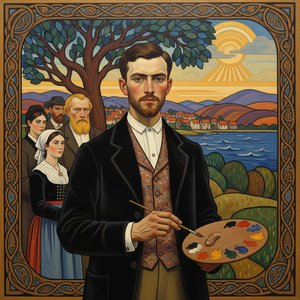
Émile Bernard: Pioneering Synthetism & the Post-Impressionist Quest for Essence
Explore the life & work of Émile Bernard, a pivotal Post-Impressionist pioneer of Synthetism. Discover his influence on Van Gogh & Gauguin and learn about collecting his art with ArtsDot.



