


 效果预览
效果预览
 分享
分享 分享
分享
 详情
详情 指南
指南

 下载
下载
 相似作品
相似作品 X射线
X射线 幻灯片播放
幻灯片播放 统计数据
统计数据Recovering
 Acrylic On Canvas
- WallArt
- École de Paris
 1744
1744 44.0 x 33.0 cm
 冬宫博物馆 (Hermitage Museum)
 展开详情
展开详情
艺术微喷/版画
博物馆级艺术微喷或帆布版画,制作高效,并提供多种饰面选择。 ( 购买手绘画作 切换至数字图像销售渠道)




P118B $10

P118H $10

P118W $10

P438Z $10

P508JH $12

P508YH $12

P805H $10

P805Z $10

P919BZ $10

P919G $10

P919XJ $10

P959ZH $10

P968JZ $12

W106C $8

W218G $10

W218JH $8

W218Y $10

W307PJ $10

W316G $10

W316PJ $8

W316Y $10

W398PJ $8

W4111J $10

W500HY $15

W500JH $15

W692G $12

W849H $8

W940BG $15

W953PJ $8




从与原作比例一致的预设尺寸中进行选择。

您可以输入自定义尺寸,以适配特定的画框或空间。如果您选择的尺寸与原图比例不符,我们将对作品进行裁剪,或通过镜像填充/纯色填充边缘的方式来扩展图像。在开始制作之前,我们会向您发送一份数字效果图供您确认。
请注意,屏幕上的预览并不能反映实际的裁剪或扩展效果。只有效果图才能准确展示最终的构图。
虽然我们提供定制尺寸,但为了保持原图比例,我们建议您从预设列表中选择尺寸。


 玻璃选项仅适用于110厘米以下的尺寸。

Recovering
艺术微喷/版画
复制品尺寸
-


最终总价
$ 62
Recovering: A Portrait of Resilience by Étienne Jeaurat
Étienne Jeaurat’s “Recovering,” painted in 1744, isn't merely a depiction of two women engaged in conversation; it’s a poignant study of connection and the quiet strength found within shared intimacy. This intimate portrait, housed within the Hermitage Museum collection, offers a rare glimpse into the burgeoning world of Parisian genre painting during a period of significant social and artistic transition – a world that Jeaurat masterfully captured with an almost Impressionistic sensitivity decades before the movement formally emerged.
The scene unfolds within a modestly furnished room, bathed in soft light that suggests either early morning or late afternoon. A simple table and chair anchor the composition, while a vase of flowers – likely lilies, judging by their delicate form – adds a touch of understated elegance to the space. The central focus is undeniably on the two women: one seated gracefully, her gaze directed towards her companion; the other standing beside her, holding what appears to be a cup or teapot, an offering of warmth and perhaps solace. Their postures are relaxed yet attentive, conveying a sense of comfortable familiarity – a silent dialogue that transcends mere words.
Jeaurat’s technique is characterized by a remarkable ability to render texture and light with subtle brushstrokes. He employs a loose, almost sketch-like approach, prioritizing the capturing of atmosphere and mood over precise detail. Notice how he uses broken color – small, distinct strokes of paint layered upon one another – to create a sense of depth and luminosity. The fabrics of their clothing are rendered with a delicate sheen, while the shadows beneath them hint at the softness of the light. This technique, reminiscent of Chardin’s work, contributes significantly to the painting's intimate and inviting quality.
A Window into 18th-Century Parisian Life
“Recovering” is firmly rooted in the vibrant social landscape of 18th-century Paris. Jeaurat was a keen observer of everyday life, documenting scenes of commerce, leisure, and domesticity with an unparalleled eye for detail. His paintings offer invaluable insights into the customs, manners, and values of the time. The presence of the teapot suggests a scene of hospitality and social interaction – a common occurrence in Parisian households. The room itself is not opulent, reflecting the realities of middle-class life rather than the extravagant displays favored by the aristocracy.
Furthermore, Jeaurat’s work aligns with the broader artistic currents of his era. He was influenced by the Rococo style, characterized by its emphasis on elegance, grace, and playful subject matter. However, unlike many of his contemporaries, Jeaurat possessed a remarkable ability to infuse his paintings with a sense of realism and psychological depth. This is particularly evident in the subtle expressions on the women’s faces – hints of amusement, contemplation, and perhaps even vulnerability.
Symbolism and Emotional Resonance
While seemingly straightforward, “Recovering” is rich in symbolic meaning. The act of offering a cup of tea can be interpreted as an expression of generosity, friendship, or reconciliation. The seated woman’s gaze suggests a receptive attitude – a willingness to listen and understand. The painting speaks volumes about the importance of human connection and the restorative power of shared moments.
More profoundly, considering the context of Jeaurat's life and the period in which he painted, “Recovering” can be viewed as an allegory for resilience and emotional recovery. The title itself – "Recovering" – immediately evokes a sense of healing and renewal. The painting’s quiet intimacy and understated beauty offer a comforting reminder that even after periods of hardship or loss, connection and solace can still be found in the simple pleasures of human interaction.
A Timeless Masterpiece for Your Collection
Reproductions of “Recovering” by Étienne Jeaurat capture the essence of this remarkable painting while offering a beautiful addition to any interior space. The delicate brushwork, evocative lighting, and subtle symbolism create a work that is both visually stunning and emotionally resonant. Whether you are an art collector, an interior designer seeking to infuse your home with character, or simply someone who appreciates the beauty of timeless artistry, “Recovering” offers a unique opportunity to own a piece of 18th-century Parisian life – a testament to the enduring power of human connection.
相似艺术品


艺术家简介
The Parisian Impressionist Before Impressionism
In the grand tapestry of eighteenth-century French art, certain names shine with a permanent, gilded luster, while others exist in the soft, flickering shadows of history. Étienne Jeaurat belongs to that evocative second group—a painter whose work possesses a rhythmic vitality that seems to pulse with the very heartbeat of pre-revolutionary Paris. Often described as a precursor to the Impressionist movement, Jeaurat did not merely paint scenes; he captured the fleeting essence of urban life, transforming mundane street encounters into enduring vignettes of human connection and atmospheric light.
Born in 1699 in Vercheny, near Auxerre, Jeaurat’s early years were shadowed by the profound loss of his father. This early tragedy, however, did not stifle his creative spirit; instead, it led him toward a destiny shaped by familial devotion and mentorship. His brother, Edme Jeaurat, an accomplished engraver, played a pivotal role in his ascent, guiding him toward the tutelage of Nicolas Vleughels. This connection proved transformative, as Vleughels—a close associate of the legendary Antoine Watteau—introduced the young artist to the sophisticated nuances of the Roman Baroque and the delicate, theatrical grace of the Rococo style.
A Journey Through Light and Shadow
The trajectory of Jeaurat’s artistic development was irrevocably altered by his time in Rome. Immersed in the cradle of classical antiquity, he absorbed the monumental grandeur of Bernini’s sculptures and the dramatic, chiaroscroll intensity of Caravaggio. Yet, Jeaurat was never a mere imitator of the past. His true genius emerged from a sophisticated synthesis of disparate worlds: he possessed the ability to marry the formal rigor of the Baroque with the quiet, understated realism found in the works of Chardin. This unique stylistic alchemy allowed him to move between the epic and the intimate, applying masterful brushwork to convey both the weight of history and the lightness of a passing breeze.
Upon his return to Paris, Jeaurat’s ascent within the prestigious Académie Royale was swift and significant. He became a member of the Academy in 1733 and eventually rose to the esteemed positions of professor and chancellor. His professional life was deeply intertwined with the French monarchy; from 1767, he served as the guardian of the king's collection of paintings at Versailles. This proximity to the pinnacle of royal patronage undoubtedly refined his eye for detail and his understanding of how art functions as both a personal expression and a monumental cultural record.
The Legacy of the Street Scene
While his official duties were centered around the halls of power, Jeaurat’s heart remained in the streets. He became celebrated for his genre paintings—lively, bustling depictions of Parisian life that breathed with an unprecedented sense of movement. Unlike the stiff, idealized portraits of the era, Jeaurat’s compositions often felt spontaneous, as if the viewer had stumbled upon a private moment in a crowded marketplace or a quiet corner of a city square. His work is characterized by:
- Atmospheric Precision: A remarkable ability to use tonal gradations to suggest the humidity of a summer afternoon or the cool dampness of a morning mist.
- Human Connection: An empathetic gaze that captured the subtle gestures, expressions, and social interplays of common citizens.
- Narrative Depth: The use of small, seemingly incidental details to hint at larger stories unfolding within his crowded street scenes.
As the eighteenth century drew to a close, Jeaurat remained a steadfast observer of a world on the brink of monumental change. He passed away in 1789, the same year the French Revolution began to reshape the landscape of Europe forever. Though he lived through the twilight of the Ancien Régime, his artistic legacy remains bright. By finding extraordinary beauty in the ordinary and capturing the ephemeral spirit of the streets, Étienne Jeaurat bridged the gap between the classical traditions of his ancestors and the modern, light-drenched sensibilities of the generations to come.

Étienne Jeaurat
1699 - 1789 , France
艺术家简介
- Artistic Movement Or Style: Rococo
- Artists Or Movements Influenced By This Artist: Chardin
- Artists Who Influenced This Artist: Nicolas Vleughels
- Date Of Birth: February 9, 1699
- Date Of Death: December 14, 1789
- Full Name: Étienne Jeaurat
- Nationality: French
- Notable Artworks:
- Girls of Pleasure at Salpétrière
- The Favourite Sultana
- Place Of Birth: Vercheny, France
相关文章

Roger de la Fresnaye: Cubism, Tradition & the Search for Order in Early 20th-Century French Painting
Explore the captivating world of Roger de la Fresnaye, a pivotal French Cubist painter. Discover his unique blend of tradition & modernity, influences, and lasting legacy with ArtsDot.
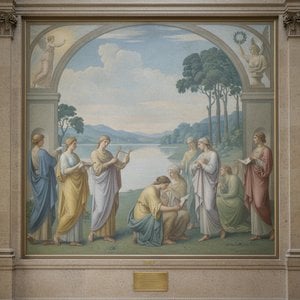
Pierre Puvis de Chavannes: Symbolism, Mural Painting, and the Pursuit of Ideal Beauty
Explore the life & work of Pierre Puvis de Chavannes, a pivotal Symbolist painter renowned for his monumental murals. Discover his aesthetic principles, key artworks like 'Hope,' and lasting influence on modern art. A deep dive into 19th-century French painting.

About Us
Discover our story! We bring world-class art into your life through expert curation, personalized creations, and free previews. Trusted by individuals and businesses since 2000.

Maurice Quentin de La Tour: Light, Shadow & the Rococo Portrait
Explore the captivating world of Maurice Quentin de La Tour, a master of Rococo portraiture. Discover his innovative pastel techniques, intimate depictions of French aristocracy, and lasting artistic legacy. Learn more at ArtsDot.

戈雅大师25幅杰作:西班牙灵魂的艺术之旅| ArtsDot
探索戈雅大师的25幅杰作!深入了解西班牙绘画巨匠Francisco Goya的艺术世界,从洛可可到浪漫主义风格,感受黑加仑时代的情感力量。ArtsDot.com提供高品质油画复制品和家居装饰灵感。立即在线发现所有名画!