

 实景预览
实景预览
 分享
分享 分享
分享
 详情
详情 指南
指南

 下载作品
下载作品
 相似作品
相似作品 X射线
X射线 幻灯片播放
幻灯片播放 问答
问答 统计数据
统计数据The calla


 展开全文
展开全文
艺术微喷/版画
博物馆级艺术微喷或帆布版画,制作高效,并提供多种饰面选择。 ( 订购纯手工绘制画作 切换至数字图像销售渠道)




P118B ¥10

P118H ¥10

P118W ¥10

P438Z ¥10

P508JH ¥12

P508YH ¥12

P805H ¥10

P805Z ¥10

P919BZ ¥10

P919G ¥10

P919XJ ¥10

P959ZH ¥10

P968JZ ¥12

W106C ¥8

W218G ¥10

W218JH ¥8

W218Y ¥10

W307PJ ¥10

W316G ¥10

W316PJ ¥8

W316Y ¥10

W398PJ ¥8

W4111J ¥10

W500HY ¥15

W500JH ¥15

W692G ¥12

W849H ¥8

W940BG ¥15

W953PJ ¥8




您可以从与原作比例一致的预设尺寸中进行选择。

请输入您所需的宽度和高度,以适配您的画框或墙面。由于印刷品只能进行裁剪,无法超出原图尺寸,因此若比例不一致,画面的一部分将会被裁切。在正式印刷之前,我们会为您发送一份数字效果图供您确认。本页面显示的图片并非最终裁剪后的效果——只有效果图才能展示真实的裁剪情况。


 玻璃选项仅适用于110厘米以下的尺寸。

The calla
艺术微喷/版画
复刻品尺寸
-


最终结算价
¥ 423
A Frenzy of Urban Emotion: Ernst Ludwig Kirchner’s “The Calla”
Ernst Ludwig Kirchner's "The Calla" isn’t merely a depiction of a street scene; it’s a visceral plunge into the anxieties and intensities of early 20th-century urban life. Painted in 1913, during a period of immense social and political upheaval in Germany, this oil on canvas explodes with a raw energy characteristic of German Expressionism. Kirchner, a founding member of Die Brücke (The Bridge), sought to move beyond the constraints of academic realism, aiming instead to capture not just what he saw, but how he *felt* about it – a deeply subjective and often unsettling experience. The painting immediately assaults the viewer with its bold color palette dominated by fiery reds, deep greens, and bruised pinks, all grounded in earthy browns, creating a sense of immediate tension and unease. These aren’t colors that describe a pleasant afternoon; they are the hues of a simmering, restless city.
The composition itself is deliberately chaotic, mirroring the perceived disorder of modern urban existence. Kirchner abandons traditional perspective, flattening the space and layering figures in an overlapping mass that seems to press forward, almost overwhelming the viewer. There’s no single focal point; instead, our eye is drawn on a journey through this crowded tableau, encountering fleeting glimpses of faces, fragments of clothing, and the suggestion of movement at every turn. Diagonal lines – evident in the arrangement of figures and the brushstrokes themselves – contribute to this sense of dynamism, as if the scene is perpetually caught in motion. The distortion of forms, particularly the simplified, almost flattened rendering of the human figures, speaks directly to the Expressionist impulse to prioritize emotional impact over accurate representation.
The Language of Distortion: Technique and Style
Kirchner’s technique is deliberately loose and expressive, a hallmark of his approach. Thick impasto – the application of paint in heavy, textured layers – is evident throughout the canvas, creating a palpable sense of physicality and immediacy. The brushstrokes are visible, not concealed or blended, adding to the painting's raw energy. Lines aren’t clean or precise; they’re blurred and gestural, contributing to the overall feeling of disorientation and anxiety. This disregard for meticulous detail is central to the Expressionist aesthetic – a rejection of photographic realism in favor of conveying inner experience. The use of complementary colors—particularly the stark juxtaposition of red and green—intensifies the visual drama and amplifies the emotional impact.
Symbolism and the Anxieties of Modernity
“The Calla” is more than just a street scene; it’s a potent symbol of the alienation and anxieties inherent in modern urban life. The densely packed figures, lost within the anonymity of the crowd, represent the individual swallowed by the overwhelming scale of the city. Kirchner masterfully captures this sense of isolation through his deliberate distortion of form and color. The faces are often obscured, their features simplified to suggest a lack of identity. The overall impression is one of unease, as if the figures are trapped in a perpetual state of agitation. Some art historians interpret the painting as a commentary on the social unrest brewing in Germany at the time, reflecting the anxieties surrounding war and political instability. The title itself, “The Calla,” might allude to the ephemeral nature of beauty and life amidst this chaotic backdrop – a fleeting moment of grace within an overwhelming world.
A Legacy of Emotional Intensity
Kirchner’s "The Calla" stands as a powerful testament to the expressive potential of art. It exemplifies the core tenets of German Expressionism, prioritizing emotional impact over objective representation. Its bold colors, distorted forms, and dynamic composition continue to resonate with viewers today, offering a glimpse into the turbulent psychological landscape of early 20th-century Europe. Reproductions of this iconic work offer a unique opportunity to experience Kirchner’s vision firsthand, bringing his intense emotions and unsettling observations to your own space. Considered alongside other works by Kirchner within the context of Die Brücke, “The Calla” provides a crucial window into the birth of modern art and its enduring exploration of the human condition.
常见问题与解答
恩斯特·路德维希·基尔希纳 的《The calla》 使用了怎样的色调?
"The calla" 的色彩构成了一个 Dark 色调。此分类描述了作品中的主导色系。
关于“The calla”的建议打印规格——尺寸与方向为何?
建议打印尺寸为 Large,构图采用 Landscape:这是为 恩斯特·路德维希·基尔希纳 的《The calla》 推荐的打印设置。
"The calla" 会为空间营造怎样的氛围?
恩斯特·路德维希·基尔希纳 的《The calla》 营造出 Dramatic 的氛围,与推荐的陈设空间——Living Room 完美契合。
相似作品


艺术家简介
挣扎与表达:恩斯特·路德维希·基尔希纳的一生
恩斯特·路德维希·基尔希纳,一个与德国表现主义的原始情感力量紧密相连的名字,诞生于一个正处于剧变边缘的世界。1880年他在阿斯恰芬堡的到来,标志着他生命与艺术创新和个人动荡深刻交织的开端。童年的不断迁徙——由他父亲的职业决定——在他心中埋下了疏离感,这种感觉后来渗透到了他的作品中。从法兰克福到佩伦,最终定居在凯默尼茨,年轻的基尔希纳吸收了迅速现代化的德国日益增长的焦虑。尽管最初被引导走向建筑之路,在德累斯顿的皇家技术学院学习,但绘画的吸引力——源于对阿尔布雷特·丢勒大师的钦佩以及对学术惯例的不满——最终定义了他的道路。他与同伴叛逆者弗里茨·布莱尔、卡尔·施密特-罗特卢夫和埃里希·黑克尔建立了联系,这些纽带将不可避免地改变20世纪艺术的进程。他们共同构想了一种新的艺术形式,一种能够捕捉到现代社会中潜藏的不安与异化的艺术。桥社的诞生:表现主义革命
1905年,基尔希纳成为“桥” (Die Brücke) 艺术家团体的创始成员。“桥”致力于弥合传统美学与更具生命力、情感色彩更浓烈的表达形式之间的差距。这不仅仅是一种风格选择,更是一种哲学立场。这个团体从既定艺术界常常忽视的来源中寻求灵感——非洲和大洋洲的原始艺术、文森特·梵高的大胆色彩以及埃德瓦德·蒙克的令人不安的心理深度。他们拒绝了学术绘画所偏爱的理想化美的表现,转而拥抱扭曲、刺眼的配色方案和富有表现力的笔触,以传达现代生活的焦虑和异化。基尔希纳早期的作品,诞生于这种合作精神中,充满了躁动不安的能量,反映了该群体摆脱艺术束缚的共同愿望。工作室成为了一个实验的熔炉,一个挑战社会规范与艺术惯例的空间。对人体的探索——尤其是女性裸体——在城市和自然环境中反复出现,使基尔希纳能够探究运动、情感以及现代存在的复杂性。都市焦虑与大胆视野:风格的形成
基尔希纳的艺术风格具有独特的辨识度。他运用色彩并非为了忠实地再现现实,而是作为一种唤起情感反应的工具——充满活力、常常是非自然主义的色调,增强了他作品中的不安或紧张感。他的笔触富有能量且可见,为整体营造出一种紧迫感和原始情感。人物和物体经常被扭曲或拉长,反映了一种主观而非客观的现实。也许最重要的是,基尔希纳捕捉到了20世纪初德国都市生活的心理影响。《街道》(1908)等画作不仅仅是城市景观的描绘;它们是疏离感的肖像,捕捉了快速变化的世界中令人疯狂的能量和情感隔离感。他毫不避讳地描绘现代性的阴暗面——孤独、匿名性以及被巨大存在压倒的感觉。这种毫不妥协的目光使他成为一位记录时代的编年史家,一位敢于直面潜藏在社会进步表象之下的焦虑的艺术家。悲剧与遗产:持久的影响
基尔希纳的生活因个人挣扎而蒙上了一层悲剧色彩。一战的恐怖引发了严重的精神崩溃,迫使他前往瑞士寻求慰藉。然而,即使在流亡中,他也继续创作,他的作品反映了他所经历的挥之不去的创伤和孤立感。 纳粹主义的兴起带来了进一步的苦难;超过600件他的作品被没收并贴上“堕落艺术”的标签——这是一个对现代艺术表达政治气候敌视的毁灭性打击。面对迫害和 declining 健康,基尔希纳于1938年在瑞士达沃斯悲惨地结束了自己的生命。尽管如此,恩斯特·路德维希·基尔希纳的遗产仍然具有深远的影响力。他作为德国表现主义的核心人物而存在,以其大胆的风格、富有情感共鸣的现代生活描绘以及对艺术真理的不懈承诺激励着几代艺术家。他的作品继续在世界各地的主要博物馆展出,提醒人们艺术持久的力量,能够直面、挑战并最终照亮人类状况。- 受影响:阿尔布雷特·丢勒, 文森特·梵高, 埃德瓦德·蒙克, 大洋洲和非洲的原始艺术
- 影响:基尔希纳的作品深刻地影响了后世表现主义和现代艺术家。他对心理主题的探索以及他创新性的色彩和形式运用继续激励着当代艺术实践。

恩斯特·路德维希·基尔希纳
1880 - 1938 , 德国
艺术家简介
- Artistic Movement Or Style: 表现主义
- Artists Or Movements Influenced By This Artist:
- 表现主义
- 现代艺术家
- Artists Who Influenced This Artist:
- 阿尔布雷希特·丢勒
- 文森特·梵高
- 爱德华·蒙克
- Date Of Birth: 1880年5月6日
- Date Of Death: 1938年6月15日
- Full Name: 恩斯特·路德维希·基尔希纳
- Nationality: 德国人
- Notable Artworks:
- 街道 (1908)
- 跳舞的舞者 (1912)
- 自画像 (1910)
- 五个女人 (1913)
- Place Of Birth: 阿斯夏芬堡,德国
相关文章

Ernst Ludwig Kirchner: Expressionism's Urban Anxiety & the Fragmentation of Modern Identity
Explore the powerful world of Ernst Ludwig Kirchner and German Expressionism. Discover his iconic paintings, Die Brücke group, and the movement's exploration of urban anxiety & modern identity. Expert analysis for collectors & enthusiasts.
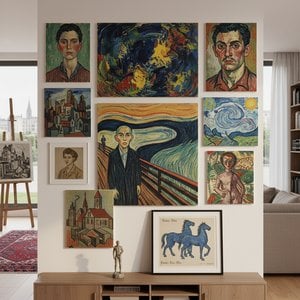
波瀾壯闊:表現主義十大名作,定義時代與靈魂
探索表现主义的灵魂!本文精选十幅名作,从莫迪里亚尼到夏加尔,揭秘大师背后的故事与艺术魅力。感受色彩的力量,重塑您的家居空间。ArtsDot.com 提供博物馆品质的艺术复制品和个性化装饰方案。立即在线探索全系列!
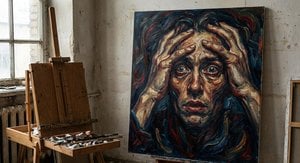

Bold Strokes & Powerful Visions: 10 Artworks That Command Attention | ArtsDot
Experience art's raw power! Explore 10 iconic paintings – Van Gogh, Kahlo & more – that define 'bold'. Discover the stories behind these expressive masterpieces and find museum-quality reproductions for your home at ArtsDot.com.

German Expressionism's 10 Defining Masterpieces | Art for Your Home
Explore 10 defining German Expressionism masterpieces – from Munch's 'The Scream' to Kandinsky’s abstracts. Discover the artists, stories & bold colors behind this powerful art movement. Find museum-quality reproductions at ArtsDot.com.


