

 效果预览
效果预览
 购买印刷品
购买印刷品 分享
分享 分享
分享
 详情
详情

 下载
下载
 相似作品
相似作品 X射线
X射线 幻灯片播放
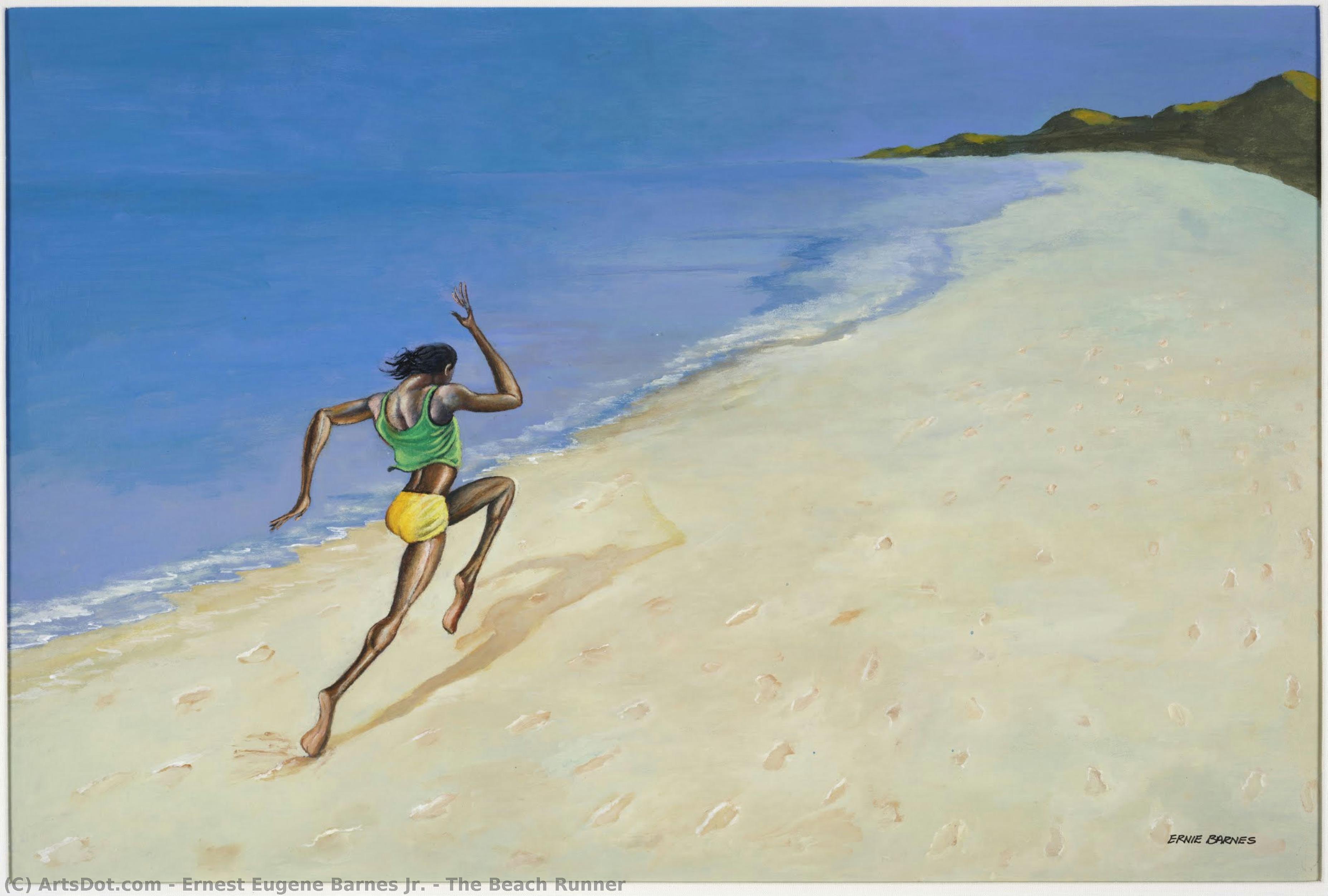
幻灯片播放The Beach Runner


 展开详情
展开详情
购买高分辨率增强版数字图像,其品质远超在线预览。
每一份文件都由我们的内部专家使用先进工具与专业的后期润色技术精心打造。我们确保每一张图像都具备卓越的清晰度、精准的色彩还原度以及细腻的细节表现。
最终文件将在 72 小时内通过电子邮件交付,并针对专业、编辑及印刷用途进行了优化。其品质与顶级设计工作室、出版社和画廊所信赖的标准完全一致。
每份数字图像订单均包含
专业数字图像交付,品质保障
选择 ArtsDot.com,您获得的不仅仅是一张图像——您收到的是经过专业级增强、精雕细琢的数字艺术作品,并享有满意保证。以下是您的订单中自动包含的所有内容:

邮件快速送达
您的高分辨率数字图像文件将在下单后 72 小时内通过电子邮件发送给您 —— 即可立即使用。

AI 增强型数字文件
您的艺术品经过专业优化,结合先进的 AI 技术与人工修饰,确保呈现极致的细节、清晰度与色彩准确度。

终身免费重发服务
不小心删除了文件或找不到了?没关系——我们将随时为您免费重发。

无需进口费用,始终如一
即刻拥有您的艺术作品,无需支付任何关税、税费或运费——数字下载始终免税。

色彩精准保证
我们通过专业工具与色彩管理技术,确保您的数字图像尽可能真实地还原原作色彩。

60天满意保证
如果您对所购买的数字图像不满意,我们将在60天内为您进行修改或退还100%的款项——无需任何解释。

100% 退款保证
如果不满意?在收到数字文件后的60天内,我们为您提供全额退款——无需任何理由。

批量订单优惠
购买 3 张图片可享 10% 折扣 - 购买 5 张可享 15% 折扣 - 购买 10+ 张可享 20% 折扣。非常适合创意项目、画廊和机构使用。
相似艺术品


艺术家简介
Georg Baselitz: A Life Forged in Destruction and Rebirth
Born Hans-Georg Kern in Deutschbaselitz, a small village in the desolate landscape of Upper Lusatia, Germany, in 1938, Georg Baselitz’s life was inextricably linked to the ruins of World War II. This formative experience—the devastation, displacement, and lingering sense of loss—became the bedrock upon which his entire artistic vision would be built. His childhood wasn't one of idyllic beauty; it was a landscape scarred by destruction, a constant reminder of shattered order and the urgent need for a new beginning. This biographical context, repeatedly referenced throughout his career, isn’t merely anecdotal; it’s a fundamental operating principle, informing every brushstroke, every inversion, every deliberate disruption within his work.
Baselitz's early artistic inclinations began to emerge during his adolescence, fueled by the powerful imagery of Wyndham Lewis’s portrait of T.S. Eliot, which hung in the assembly hall of his local school. This encounter with a distinctly modern and somewhat rebellious style ignited a passion within him—a desire to break free from established conventions and forge his own path. He initially pursued formal training at the Kunstakademie in Dresden, but was ultimately rejected, an experience that proved pivotal. It forced him to confront the limitations of academic expectations and, crucially, to begin painting independently, developing his unique voice without the constraints of institutional guidance.
The Rise of Neo-Expressionism and the Upside-Down World
The 1960s witnessed the emergence of Baselitz as a significant figure within the burgeoning movement known as Neo-Expressionism. However, he resisted easy categorization, forging his own distinct style that transcended simple labels. Initially, his work was characterized by figurative paintings—intensely expressive portraits and landscapes imbued with raw emotion. Yet, around 1969, Baselitz embarked on a radical shift: he began to paint his subjects upside down. This seemingly arbitrary decision wasn’t a stylistic whim; it represented a profound philosophical statement. As he himself explained, “I was born into a destroyed order… I didn't want to reestablish an order: I had seen enough of so-called order.”
This act of inversion—turning the familiar world on its head—became the defining feature of his oeuvre. By disrupting the conventional relationship between image and viewer, Baselitz sought to strip away the artifice of representation and expose the fundamental act of painting itself. He wasn’t interested in faithfully recreating reality; rather, he aimed to capture the essence of experience, the raw feeling behind the visual form. Influences from a diverse range of sources—Soviet era illustration art, the Mannerist period, and even African sculpture—contributed to this complex and layered artistic language.
Technique and Style: A Language of Gesture
Baselitz’s technique is instantly recognizable. His paintings are characterized by bold, gestural brushstrokes that convey a sense of urgency and immediacy. The figures emerge from the canvas with a palpable energy, as if they were being pulled into existence through sheer force of will. The paint itself—often applied thickly and directly from the tube—creates a textured surface that adds to the tactile quality of his work. He rarely uses preparatory sketches, preferring to let the image develop spontaneously on the canvas, guided by instinct and emotion.
Crucially, Baselitz consistently inverts all his paintings – turning them upside down before applying paint. This practice, initially a means of overcoming representational constraints, has become an integral part of his artistic identity. It’s not simply a technical trick; it's a symbolic gesture that reinforces the idea of subversion and challenges our conventional ways of seeing. The act of inversion forces us to reconsider the image, to engage with it on a deeper level, and to question its inherent meaning.
Legacy and Recognition
Despite initial resistance from the art establishment, Baselitz’s work gradually gained recognition throughout the 1970s and 80s. His paintings began to appear in major exhibitions around the world, attracting critical acclaim and establishing him as one of the most important artists of his generation. He received numerous awards and honors, including the Roswitha Haftmann Prize in 2009, solidifying his place within the pantheon of contemporary art.
Baselitz’s influence extends far beyond the realm of painting. His willingness to challenge conventions, his embrace of gesture and spontaneity, and his profound engagement with personal experience have resonated with artists across a wide range of disciplines. He remains a vital and provocative force in the art world, continuing to create work that is both deeply personal and universally relevant. His legacy lies not only in the beauty of his paintings but also in his unwavering commitment to artistic freedom and his refusal to be defined by any single category or style.

ernest eugene barnes jr.
1938 - 2009 , United States of America
基本信息
- Artistic Movement Or Style: Neo-Expressionism
- Artists Or Movements Influenced By This Artist:
- Gerhard Richter
- Vija Celmins
- Artists Who Influenced This Artist:
- Soviet illustration art
- Mannerist period
- African sculptures
- Date Of Birth: January 23, 1938
- Full Name: Georg Baselitz
- Nationality: German
- Notable Artworks:
- Where is the Yellow Milkjug?
- Mrs Bird?
- The Painter
- Place Of Birth: Deutschbaselitz, Germany

