

 实景预览
实景预览
 分享
分享 分享
分享
 详情
详情 指南
指南

 下载作品
下载作品
 相似作品
相似作品 X射线
X射线 幻灯片播放
幻灯片播放 问答
问答 统计数据
统计数据Interior with Cityscape


 展开全文
展开全文
艺术微喷/版画
博物馆级艺术微喷或帆布版画,制作高效,并提供多种饰面选择。 ( 订购纯手工绘制画作 切换至数字图像销售渠道)




P118B ¥10

P118H ¥10

P118W ¥10

P438Z ¥10

P508JH ¥12

P508YH ¥12

P805H ¥10

P805Z ¥10

P919BZ ¥10

P919G ¥10

P919XJ ¥10

P959ZH ¥10

P968JZ ¥12

W106C ¥8

W218G ¥10

W218JH ¥8

W218Y ¥10

W307PJ ¥10

W316G ¥10

W316PJ ¥8

W316Y ¥10

W398PJ ¥8

W4111J ¥10

W500HY ¥15

W500JH ¥15

W692G ¥12

W849H ¥8

W940BG ¥15

W953PJ ¥8




您可以从与原作比例一致的预设尺寸中进行选择。

请输入您所需的宽度和高度,以适配您的画框或墙面。由于印刷品只能进行裁剪,无法超出原图尺寸,因此若比例不一致,画面的一部分将会被裁切。在正式印刷之前,我们会为您发送一份数字效果图供您确认。本页面显示的图片并非最终裁剪后的效果——只有效果图才能展示真实的裁剪情况。


 玻璃选项仅适用于110厘米以下的尺寸。

Interior with Cityscape
艺术微喷/版画
复刻品尺寸
-


最终结算价
¥ 422
A Moment Suspended in Time
In the quietude of Interior with Cityscape, Elmer Bischoff invites us into a sanctuary of stillness, where the frantic pace of the modern world dissolves into a singular, contemplative moment. The scene unfolds within a cozy, sun-dappled interior, centered around a woman seated at a dining table. She is lost in the pages of a book, her posture embodying a profound sense of tranquility that radiates throughout the canvas. Around her, the remnants of a shared or solitary meal—cups scattered across the surface and a lone bottle resting near the edge—suggest a narrative of recent activity now surrendered to silence. In the soft distance, the faint presence of another figure adds a layer of depth, hinting at the gentle pulse of life continuing just beyond the immediate focus of our gaze.
Bischoff’s mastery lies in his ability to weave the domestic with the expansive. Through the windows of this intimate setting, a glimpse of the cityscape emerges, bridging the gap between the private sanctuary of the home and the sprawling, rhythmic energy of the urban environment. This juxtaposition creates a beautiful tension; while the interior offers a refuge of peace, the distant city serves as a reminder of the world's vastness, making the quietude of the foreground feel all the more precious and intentional.
The Lyrical Language of Color and Form
As a pivotal figure in the post-World War II Bay Area school, Bischoff transitioned from the rigorous abstractions of his early career toward a more lyrical, figurative approach. In Interior with Cityscape, this evolution is palpable through his sophisticated use of color and light. The palette is dominated by a soothing harmony of blues and greens, which bathe the room in an atmosphere of calm and relaxation. These cool tones do not merely decorate the space; they define its emotional temperature, wrapping the subject in a soft, atmospheric veil that feels almost dreamlike.
The technique employed here is nothing short of evocative. Bischoff utilizes oil on canvas to create textures that feel both substantial and ethereal. His brushwork avoids harsh outlines, opting instead for a fluid integration of shapes that allows light to appear as if it is vibrating within the paint itself. For the discerning collector or interior designer, this painterly quality offers an incredible versatility; the artwork possesses enough structural presence to anchor a room, yet its soft edges and tranquil hues allow it to blend seamlessly into sophisticated, modern, or classical decor. It is a piece that does not demand attention through noise, but rather commands it through a quiet, irresistible grace.
An Invitation to Contemplation
Beyond the technical brilliance, this painting serves as an emotional anchor. It captures the essence of leisure and contemplation—a rare commodity in our contemporary era. To possess a reproduction of this work is to bring a piece of that stillness into one's own environment. The symbolism of the reading woman suggests a retreat into the intellect and the soul, making the painting an ideal centerpiece for spaces dedicated to thought, such as a library, a study, or a serene living area.
For those seeking to curate a collection that speaks to the human condition, Bischoff’s work offers a profound connection to the beauty of the everyday. Interior with Cityscape is more than a depiction of a room; it is an invitation to slow down, to breathe, and to find the extraordinary within the ordinary. It remains a timeless testament to the power of art to transform a physical space into an emotional landscape.
常见问题与解答
Elmer Bischoff 的《Interior with Cityscape》 这件作品的色调是明亮的还是深沉的?
就视觉亮度而言,Elmer Bischoff 的《Interior with Cityscape》 呈现出 shadow 的效果。
在哪里可以找到关于“Interior with Cityscape”的指南?
"Interior with Cityscape" 的指南请参阅作品的 指南 页面 —— 这是一份可打印的信息单,包含了该作品的说明、署名以及详细信息表(艺术家、日期、媒介、原尺寸、馆藏)。
“Interior with Cityscape”的浏览量是多少?
Elmer Bischoff 的《Interior with Cityscape》 的 访问统计 页面展示了公开访问统计数据:包括该作品的每月访问量、与艺术家最受关注作品的对比,以及访客的来源地。
相似作品


艺术家简介
The Lyrical Vision of Elmer Bischoff
In the vibrant, transformative landscape of the post-World War II American art scene, few voices captured the quiet intimacy of human existence as poignantly as Elmer Bischoff. Born in Berkeley, California, in 1916, Bischoff was a central figure in a movement that redefined the boundaries between abstraction and representation. His journey was one of profound evolution, moving from the sweeping, gestural energy of Abstract Expressionism toward a deeply emotive form of figurative painting. This transition did not represent a retreat from modernism, but rather a sophisticated synthesis—a way to infuse the raw power of abstract brushwork with the soulful weight of the human figure and domestic space.
Bischoff’s early life and education laid the foundation for his disciplined yet expressive approach. Growing up in Berkeley as the son of German and Swedish-Ecuadoran heritage, he entered the University of California, Berkeley, in 1934. It was during these formative years that he encountered the influential teacher Margaret Peterson, whose unwavering dedication to the ethical value of art left an indelible mark on his creative conscience. However, the trajectory of his life was irrevocably altered by the onset of global conflict. Serving as a lieutenant colonel in the intelligence services near Oxford, England, between 1941 and 1945, Bischoff experienced a world in upheaval, an experience that would later inform the contemplative and often melancholic stillness found in his mature works.
The Bay Area Figurative Movement
Upon returning to San Francisco after the war, Bischoff found himself immersed in an era of unprecedented artistic ebullience. The city had become a crucible for avant-garde experimentation, where he rubbed shoulders with titans such as Mark Rothko and Clyfford Still. This period was marked by a fascination with scale, color, and the visceral nature of paint. Yet, alongside his contemporaries David Park and Richard Diebenkorn, Bischoff began to lead a quiet revolution known as the Bay Area Figurative Movement. This movement sought to reclaim the subject matter of the world—the light hitting a window, the silhouette of a person, the geometry of a room—while retaining the vigorous, painterly language of abstraction.
His work during this era is characterized by a unique sense of atmosphere and light. Unlike the aggressive energy of New York School abstraction, Bischoff’s paintings often possess a lyrical, almost dreamlike quality. He mastered the art of using light to sculpt space, creating scenes that feel both physically present and emotionally distant. His compositions frequently feature:
- Atmospheric Depth: A masterful use of soft edges and diffused light to create a sense of hazy, nostalgic space.
- Emotional Resonance: Figures that are often solitary or caught in moments of quiet reflection, evoking themes of longing and introspection.
- Painterly Texture: A heavy, expressive application of paint that honors the physical process of creation while serving the figurative subject.
Legacy and Lasting Significance
As his career progressed, Bischoff’s recognition grew alongside his technical refinement. His election as an associate member of the National Academy of Design in 1973, followed by full membership in 1985, stands as a testament to his enduring impact on American art. His ability to bridge the gap between the chaotic energy of post-war abstraction and the timeless tradition of figurative storytelling allowed him to create a body of work that remains profoundly relatable to modern audiences.
Today, the legacy of Elmer Bischoff is preserved not only in prestigious collections like the Oakland Museum of California but also in the way we perceive the intersection of light and life. He taught us that the most profound truths are often found in the quietest moments—in the way a shadow falls across a room or the stillness of a figure lost in thought. His contribution to the American canon remains a vital chapter in the history of 20th-century painting, reminding us that even in an age of abstraction, the human spirit remains the ultimate subject.

Elmer Bischoff
1916 - 1991 , United States of America
艺术家简介
- Full Name: Elmer Nelson Bischoff
- Nationality: American
- Date Of Birth: 1916
- Date Of Death: 1991
- Place Of Birth: Berkeley, United States of America
- Notable Artworks:
- Untitled (646)
- Untitled (520)
- Untitled (980)
- Artistic Movement Or Style: Bay Area Figurative
- Artists Who Influenced This Artist: ['Margaret Peterson']
- Artists Or Movements Influenced By This Artist: ['Abstract Expressionism']
相关文章

莫奈大师25幅杰作:光影艺术与家居臻选 | Claude Monet's 25 Masterpieces
探索克劳德·莫奈25幅杰作,沉浸于印象派大师的光影世界。从《睡莲》到《日出·印象》,感受色彩与情感的完美交融。ArtsDot.com提供博物馆级艺术复制品,为您的家居带来臻选装饰灵感!立即探索完整系列。

Verdant Visions: Exploring the Symbolism & Aesthetic Impact of Green in Art History
Explore the rich history & symbolism of green in art! Discover iconic paintings, techniques, and how to bring verdant harmony into your home with ArtsDot's expert guide.

Chrome Green Masterpieces: 10 Famous Paintings & Their Alluring Hues |
Explore 10 famous paintings where 'Chrome Green' reigns supreme! Discover Monet, Manet & Van Gogh’s masterpieces. Learn the stories behind these iconic artworks and find museum-quality art reproductions for your home at .

Slate Blue Masterpieces: 10 Iconic Paintings & Timeless Home Decor Ideas
Immerse yourself in the captivating world of slate blue! Explore 10 iconic paintings by Monet, Van Gogh & Renoir. Discover their stories, techniques & find museum-quality art reproductions for your home at .
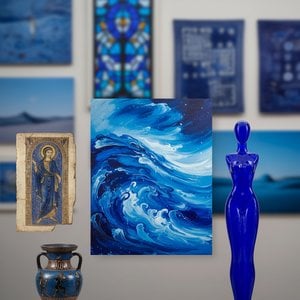
The Allure of Azure: Exploring the Symbolic & Aesthetic Depths of Blue in Art History
Explore the rich history of blue in art! Discover its symbolism, from ancient pigments to modern masterpieces by Kandinsky & Seurat. Uncover the psychological impact and cultural meanings behind this captivating hue.