


 实景预览
实景预览
 发送
发送 分享
分享
 详情
详情 指南
指南

 下载图片
下载图片
 相似作品
相似作品 X射线
X射线 幻灯片播放
幻灯片播放 统计数据
统计数据The bathing place

 阅读全文
阅读全文
艺术微喷/版画
博物馆级艺术微喷或帆布版画,制作高效,并提供多种饰面选择。 ( 订购此收藏品的纯手工复刻画作 切换至数字图像销售渠道)




































您可以从与原作比例一致的预设尺寸中进行选择。

请输入您所需的宽度和高度,以适配您的画框或墙面。由于印刷品只能进行裁剪,无法超出原图尺寸,因此若比例不一致,画面的一部分将会被裁切。在正式印刷之前,我们会为您发送一份数字效果图供您确认。本页面显示的图片并非最终裁剪后的效果——只有效果图才能展示真实的裁剪情况。


 玻璃选项仅适用于110厘米以下的尺寸。

The bathing place
艺术微喷/版画
复刻品尺寸说明
-


总计金额
¥ 416


艺术家简介
A Life Painted in Light: The Story of Edward Cucuel
Edward Alfred Cucuel, born in San Francisco in 1875, embarked on a journey that would lead him far from his Californian roots and establish him as a notable figure within the American Impressionist movement. Though he began his artistic life immersed in the practical world of newspaper illustration, Cucuel’s spirit yearned for something more—a deeper engagement with color, light, and the fleeting beauty of everyday life. His father, a newspaper publisher, initially guided his early steps, providing him with foundational training at the San Francisco School of Design. However, it was the allure of Europe that truly ignited his artistic passion. At just seventeen years old, Cucuel bravely crossed the Atlantic, seeking tutelage in Paris at the prestigious Académie Julian and later the École des Beaux-Arts. There, under the guidance of masters like Benjamin Jean-Joseph Constant, William Bouguereau, and Jean Leon Gérôme, he honed his skills and began to develop a style that would become distinctly his own.From Paris to Munich: A European Apprenticeship
Cucuel’s artistic path wasn't linear. He returned briefly to the United States in 1896, working as an illustrator in New York for approximately six months before once again succumbing to the magnetic pull of Europe. This time, his travels extended beyond Paris, taking him through France and Italy as he sought inspiration from the old masters. It was in Berlin that a pivotal moment occurred—he met Clara Lotte von Marcard, who would become his wife and artistic companion. In 1907, Cucuel settled in Munich, a city that would profoundly shape his artistic development. He fell under the influence of Leo Putz, whose emphasis on plein-air painting and warm, impasto brushwork resonated deeply with Cucuel’s own sensibilities. This period marked a turning point, as he began to fully embrace Impressionism, focusing on idyllic scenes of women in European landscapes—a subject matter that would define his career.The Essence of Leisure: Themes and Techniques
Cucuel's paintings are often described as serene and evocative, capturing moments of quiet leisure and feminine beauty. He possessed a remarkable ability to depict the interplay of light and shadow, creating an atmosphere of warmth and tranquility. His canvases frequently feature women—often reclining by lakes or enjoying peaceful afternoons in sun-dappled gardens—immersed in nature. These weren’t grand historical narratives or dramatic allegories; instead, Cucuel found beauty in the ordinary, elevating everyday scenes to a level of poetic grace. He masterfully employed a palette of soft pastels and rich impasto, building up layers of paint to create texture and depth. The influence of German Expressionism is subtly present in his work, particularly in his use of color and composition, though he never fully abandoned the Impressionist principles that guided his artistic vision. His paintings are not merely representations of reality; they are emotional landscapes—expressions of a particular mood or feeling.Recognition and Legacy
Throughout his career, Cucuel garnered increasing recognition for his distinctive style. His work was exhibited in prestigious Parisian salons, and he received a silver medal at the 1915 Panama-Pacific International Exposition in San Francisco—a testament to his growing reputation. While he maintained a strong presence in Europe for over four decades, World War II forced him to return to California in 1939, where he lived until his death in Pasadena in 1954. Today, Edward Cucuel’s paintings are held in museums and private collections across the United States, France, and Germany. He is remembered as an artist who successfully bridged the gap between American illustration and European Impressionism, creating a body of work that continues to captivate viewers with its beauty, tranquility, and emotional depth. His ability to capture the essence of leisure—the simple joys of life—remains powerfully resonant in our modern world.Major Achievements
- Early Training & European Studies: Formal art education at Académie Julian and École des Beaux-Arts, Paris.
- Development of a Unique Style: Blending Impressionist techniques with subtle Expressionist influences.
- Recognition in Salons & Exhibitions: Consistent exhibition presence in Parisian salons and the 1915 Panama-Pacific International Exposition.
- Influence on Contemporary Artists: Involvement with the “Scholle” group led by Leo Putz, Munich.
- Lasting Artistic Legacy: Paintings held in major museum collections internationally and continued appreciation for his serene landscapes.

Edward Cucuel
1875 - 1954
快速概览
- Full Name: Edward Alfred Cucuel
- Nationality: American
- Date Of Birth: 1875
- Date Of Death: 1954
- Place Of Birth: San Francisco, USA
- Notable Artworks:
- Beschneite buchen
- In autumn sunlight
- Woman Reclining by a Lake
- Artistic Movement Or Style: Impressionism
- Artists Who Influenced This Artist:
- Benjamin Constant
- William Bouguereau
- Jean Leon Gérôme
- Leo Putz
相关文章
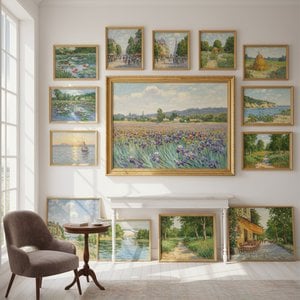
印象派风景画的十部巨作:定义艺术与家的和谐之境
探索印象派风景画的十部经典巨作!从莫奈到雷诺阿,揭秘大师们的技法与灵感。ArtsDot.com为您呈现高清油画复制和精选艺术品,点亮您的家居空间。立即发现更多艺术珍宝!

The Enduring Allure of the Nude: A Historical & Artistic Exploration of the Human Form
Explore the captivating history of nude art! Discover iconic paintings & artists from classical to modern eras. Uncover symbolism, techniques & find museum-quality reproductions at ArtsDot.

Impressionistic Landscapes: 10 Masterpieces That Changed Art & Decor
Journey into the heart of Impressionism! Explore 10 masterpieces by Monet, Renoir & Degas that revolutionized landscape art. Discover their stories, techniques & find museum-quality reproductions to elevate your home decor on ArtsDot.com.

爱德华·霍珀25幅杰作:光影中的美国孤寂与艺术传奇 (Edward Hopper's 25 Masterpieces: American Solitude and Artistic Legacy in Light and Shadow)
探索爱德华·霍珀25幅经典作品,感受美国现实主义的光影魅力与寂静之美。深入了解每件画作背后的故事、艺术技巧及文化意义。ArtsDot.com提供高清油画复制和精选家居装饰灵感。立即探索完整系列!

The Enduring Muse: Women as Subject & Symbol in Art History
Explore the rich history of women in art – from iconic muses to groundbreaking artists. Discover feminist movements, global perspectives & reclaim female narratives with ArtsDot.