
Self-portrait with cigarette Hand-painted in oil, just for your walls


The picture follows your choices: , .
藏品详情
This striking black and white drawing portrays Edvard Munch in a moment of profound introspection, utilizing bold charcoal strokes to convey melancholy and anxiety. Inspired by Rembrandt's technique, it embodies Expressionism's focus on emotion over realism.
 展开全文
展开全文
手工油画复制品
由我们的艺术家按需定制,为您提供您所选尺寸及画框的布面手工油画。 ( 切换至版画销售渠道 切换至数字图像销售渠道)
Order your painting in four simple steps
Take your time. You can change any answer; the price in your order card follows each choice.
1 Step one of four
Which size would you like?
These sizes keep the proportions of the original painting. The drawing shows your choice on a wall, above a two-metre sofa.
Or give your own measurements
您可以从与原作比例一致的预设尺寸中进行选择。

请输入您需要的宽度和高度,以适配您的画框或墙面。由于作品为手工绘制,若选择不同比例的尺寸,艺术家可能会在画面边缘多画一些或稍作裁剪 —— 由您决定。在开始绘画之前,我们会为您发送一份数字效果图供您确认。本页面上展示的图片并非最终实物 —— 只有效果图才能反映真实结果。
2 Step two of four
How should it be prepared: rolled, stretched or framed?
The prices below are for the size you chose in step one.
Choose the edges of the stretched canvas
Choose your frame

White ¥1

Blurside ¥1

Extended ¥1

P118B ¥10

P118H ¥10

P118W ¥10

P438Z ¥10

P508JH ¥12

P508YH ¥12

P805H ¥10

P805Z ¥10

P919BZ ¥10

P919G ¥10

P919XJ ¥10

P959ZH ¥10

P968JZ ¥12

W106C ¥8

W218G ¥10

W218JH ¥8

W218Y ¥10

W307PJ ¥10

W316G ¥10

W316PJ ¥8

W316Y ¥10

W398PJ ¥8

W4111J ¥10

W500HY ¥15

W500JH ¥15

W692G ¥12

W849H ¥8

W940BG ¥15

W953PJ ¥8

H24-GOLD ¥30

H24-SILVER ¥30

H36-GOLD ¥45

H36-SILVER ¥45
带框
Moulding: . Overall size with the frame: .
3 Step three of four
Would you like anything changed in the painting?
Most people answer no. Because each painting is made by hand, our artist can also adapt it for you.
After order, ArtsDot.com team will email client for instructions and provide a mockup preview
4 Step four of four
A few finishing options
All of them are optional. The answers already selected cost nothing extra.
Who paints it?
A nameplate, as in a museum?
青铜铭牌雕刻详情
This elegant plaque features the artist's name and the title of the artwork, finely engraved for a timeless presentation.
It is made from bronze with a refined, elegant finish. The text is precisely laser-engraved for a sharp and permanent result. Measuring 9x2 cm, the plaque is compact yet easy to read. It's built to be durable and scratch-resistant, offering a professional, museum-quality look. Mounting is simple thanks to the included adhesive backing.
透明亚克力铭牌详情
The plaque includes essential engraved details such as the artist's name, the title of the artwork, the date it was created, the type of media used-like oil on canvas or watercolor-a brief description of the piece, and a QR code that links to the complete artwork information.
It is crafted from clear acrylic, offering a sleek, modern appearance. The text is UV-engraved in black to ensure strong visual contrast. With a size of 10x15 cm, it ensures optimal readability. It comes equipped with two metal hooks for secure wall mounting. The plaque is designed to be weather-resistant, making it suitable for various environments, and it includes interactive features that work seamlessly with smartphone scanning.
黑色亚克力铭牌详情
This elegant plaque includes engraved information such as the artist's name, the title of the artwork, the date it was created, the type of media used (like oil on canvas or watercolor), a short description of the artwork, and a QR code for quick access to more information.
The plaque itself is made from refined black acrylic with a premium finish. The text is laser-engraved in white for high contrast and readability. Its size is 10x15 cm, designed to be easy to read. It comes with two metal hooks for professional mounting. The design is sleek and fits any interior style. It is also weather-resistant and durable, with built-in digital integration for mobile compatibility.
A protective varnish?
When do you need it?
✓ Check and order
Your painting, as you ordered it

Self-portrait with cigarette
复制品材质
复刻品尺寸
-

精选资深艺术家
更丰富的细节、更精湛的工艺以及更充裕的制作时间
-

复制画装裱选项
-
-
对于任何边长超过 105 厘米(约 41 英寸)的艺术品或复制品,画框将以拆解后的组件形式发货。此方法可确保安全送达并防止运输过程中的损坏。
需由专业人员组装 —— 本产品不适用于 DIY 操作。
该组件必须由经验丰富的专业装裱师进行组装及画布绷装,过程中需使用木工胶(不随附)、画布绷边钳以及夹具,以确保在胶水干燥期间保持内框方正。组装不当或画布张力不均可能会对艺术品造成永久性损坏,且此类情况不在我们的保修范围之内。
 对于任何边长超过 105 厘米(约 41 英寸)的艺术品或复制品,画框将以拆解后的组件形式发货。此方法可确保安全送达并防止运输过程中的损坏。
包含所有实木条,尺寸精确,便于组装。
使用随附的螺丝进行组装,另需准备用于角部连接的木工胶(本品不含木工胶),请由您的装裱师自行准备。
需另备专业工具(本套件不含):画布绷紧钳以及用于在胶水干燥过程中保持木条方正的夹具。
重要提示:
角部连接处需要使用木工胶,边框条必须使用夹具固定直至胶水完全干透,且在组装好的框架上绷紧画布需要用到画布拉伸钳。以上工具均不包含在套装内。请在订购此尺寸前,预先联系经验丰富的专业装裱师。

展品铭牌
-
-

保护性清漆
光泽清漆(提亮色彩,防光防潮)
-

定制我的艺术品
定制化示例:替换面部为客户照片;添加宠物(例如,将猫替换为狗);在背景中加入隐藏信息;更改背景风景或元素。
-

加急
全球配送()仅需 3-4 周即可送达,无需等待标准时效的 5 周。(29 October)。品质始终如一,绝不妥协。
-
极速达
全球配送(),预计 5 周送达。(5 November)。
已包含
最终结算价
¥ 1767
玻璃选项仅适用于110厘米以下的尺寸。
Included with every order
- 全球免运费特快专递服务
- 优质亚麻画布
- 全程运输保险
- 关税退款保证
- 色彩精准还原保证
- 100天退货保障(仅限制造缺陷)
- 100% 退款保证
- 多件购买优惠


A Window into Munch’s Soul: Decoding ‘Self-Portrait with Cigarette’
Edvard Munch, a titan of modern art, bequeathed to us not merely images but visceral explorations of the human condition. Born in 1863 amidst the melancholic landscapes of Norway, Munch's artistic legacy rests firmly upon canvases imbued with an unsettling honesty—a willingness to confront anxieties and grapple with mortality head-on. His magnum opus, ‘The Scream,’ solidified his reputation as a prophet of psychological unease, yet ‘Self-Portrait with Cigarette’ (1895), painted during a period of profound personal turmoil, offers an equally compelling glimpse into the artist's inner world—a self-examination rendered in charcoal and graphite that continues to resonate powerfully today.Expressionist Roots: Beyond Realistic Representation
‘Self-Portrait with Cigarette’ exemplifies Expressionism, a movement born from the crucible of late 19th-century Europe. Rejecting Impressionistic pursuit of fleeting beauty, Expressionists sought to convey subjective experience—the raw emotion underlying every moment. Munch achieved this feat not through meticulous detail but through deliberate distortion and bold color choices (though absent here due to its monochrome execution). Thick, gestural lines dominate the composition, mirroring the artist’s agitated state of mind and rejecting the conventions of academic art. This stylistic decision wasn't merely aesthetic; it was a conscious rebellion against societal norms and an assertion of artistic freedom—a desire to communicate feeling above all else.Symbolism Woven into Charcoal Strokes
The artwork’s visual language is laden with symbolism, reflecting Munch’s preoccupation with existential themes. The cigarette itself serves as a potent emblem: representing both physical decay – mirroring the pervasive fear of illness and death – and a deliberate rejection of bourgeois morality. Munch's gaze directly confronts the viewer, fostering an unsettling intimacy that underscores the vulnerability inherent in confronting one’s own demons. The muted blue background amplifies this mood of detachment, creating an atmosphere reminiscent of Rembrandt’s masterful use of chiaroscuro—a technique designed to heighten dramatic effect and illuminate psychological states.A Dialogue with Artistic Giants: Rembrandt's Influence
Munch’s compositional choices echo the stylistic innovations championed by Rembrandt van Rijn, a Dutch Baroque painter who prioritized emotional impact over photographic accuracy. Like Rembrandt, Munch utilizes dramatic lighting – specifically, illumination from below – to sculpt his face and hand against the dark backdrop, drawing attention to these focal points and emphasizing their expressive qualities. This deliberate manipulation of light serves as a testament to Munch’s erudition and his engagement with the artistic heritage of his time—a recognition that true art transcends mere imitation and strives for profound emotional resonance.Legacy: An Image That Still Screams
‘Self-Portrait with Cigarette’ stands as more than just a beautifully executed drawing; it's an enduring symbol of psychological vulnerability and artistic courage. Its influence extends far beyond the Expressionist movement, inspiring artists across generations to explore the complexities of human emotion through unconventional techniques and daring stylistic choices. Today, reproductions of this artwork continue to captivate audiences worldwide—a testament to Munch’s ability to distill profound existential anxieties into a single, unforgettable image—a visual echo of ‘The Scream,’ reminding us that art can illuminate the darkest recesses of our inner selves.常见问题与解答
在“Self-portrait with cigarette”中,融合了怎样的心境与情感?
爱德华·蒙克 的《Self-portrait with cigarette》 在整体 Dramatic 的氛围中,传达出一种 Melancholic 的情感。
爱德华·蒙克 的《Self-portrait with cigarette》 是哪种类型的艺术品?
在目录中,爱德华·蒙克 的《Self-portrait with cigarette》 被归类为 WallArt。该类别有助于查找相似作品。
"Self-portrait with cigarette"创作于何时,属于哪种艺术流派?
"Self-portrait with cigarette"创作于1908年,属于Expressionism运动。

爱德华·蒙克
1863 - 1944, 瑞典
艺术家简介
蒙克的生命:阴影与呐喊
爱德华·蒙克,1863年出生于挪威的阿代尔斯布鲁克,他的名字如今已与现代艺术中焦虑和情感动荡的象征紧密相连。他的一生笼罩在悲伤的阴影之下,童年的不幸——母亲和姐姐都因肺结核去世——深深地影响了他,并成为了他艺术创作的源泉。蒙克的父亲虔诚而又饱受精神疾病困扰,这使得蒙克的世界充满了恐惧和不安,这些感受不仅塑造了他的个人生活,也渗透到了他的绘画作品中。他并非简单地描绘场景,而是将内心的痛苦转化为视觉语言,用扭曲的形象和大胆的色彩表达人类最深层的心理挣扎。蒙克的艺术生涯并非一帆风顺,但他始终坚持探索内心世界,最终创造出了一系列震撼人心的作品,深刻影响了后世的艺术家。从传统到现代:蒙克的艺术之路
蒙克最初在基督教亚(奥斯陆)皇家美术设计学院接受过正规训练,但真正激发他创作灵感的,是与虚无主义者汉斯·耶格的相遇。耶格鼓励蒙克抛弃传统的学术风格,深入挖掘自己的主观体验,并提出了“灵魂绘画”的概念。这一转变标志着蒙克艺术风格的开端——一种以原始情感、扭曲的形态和对自然主义表现手法拒绝为特征的风格。19世纪90年代,蒙克前往巴黎,接触了蓬勃发展的后印象派运动,从中汲取了保罗·高更、文森特·梵高和亨利·德·图卢兹-劳雷克的艺术灵感。这些艺术家对色彩的大胆运用、奔放的笔触以及对情感表达的重视,深深地影响了蒙克,并促使他形成了自己独特的艺术语言。蒙克并非简单地模仿他们的技巧,而是将这些元素融入到自己的创作中,创造出一种能够传达最深刻和令人不安的人类情感的视觉形式。呐喊:现代焦虑的象征
毫无疑问,《呐喊》是蒙克最具代表性的作品,它已经超越了绘画本身,成为了现代人精神痛苦的普遍象征。这幅画作描绘了一个在血红色天空下绝望地捂着耳朵的人物,扭曲的面容和夸张的姿势传达出一种无法言喻的恐惧和焦虑。《呐喊》并非仅仅是对个人经历的回顾,而是对整个时代精神的一种深刻反思。蒙克曾描述说,他是在日落时分散步时听到了“巨大而无限的自然之声”,正是这种体验促使他创作了这幅画作。它捕捉到了现代人普遍存在的孤独感、迷茫感和对未知的恐惧,因此能够引起如此广泛的共鸣。除了《呐喊》之外,《麦达洛娜》、《忧郁一号及二号》等作品也深刻地探讨了爱情、死亡、孤独和绝望等主题,展现了蒙克对人类情感复杂性的敏锐洞察力。影响与遗产:现代艺术的先驱
爱德华·蒙克的贡献在于他大胆地探索了人类内心深处的黑暗面,挑战了传统的美学观念,并为后来的艺术家开辟了新的道路。他被认为是表现主义运动的重要先驱,他的作品对20世纪的艺术产生了深远的影响。从德国表现主义画家到后来的抽象表现主义者,无数艺术家都受到了蒙克作品的启发。蒙克的绘画风格打破了传统的写实主义框架,强调主观情感和内心体验的重要性,为现代艺术的发展奠定了基础。他不仅是一位伟大的画家,更是一位深刻的思想家,他的作品至今仍能触动人们的心灵,引发对生命、死亡和人类存在的思考。 蒙克留下的不仅仅是绘画作品,更是一种探索人性的勇气,一种敢于直面内心痛苦的精神,这种精神将继续激励着一代又一代的艺术家。Quick facts about 爱德华·蒙克
- Artistic Movement Or Style: 表现主义
- Artists Or Movements Influenced By This Artist: ['德国表现主义']
- Artists Who Influenced This Artist:
- 保罗·高更
- 文森特·梵高
- 亨利·德·图卢兹-劳雷克
- Date Of Birth: 1863年12月12日
- Date Of Death: 1944年1月23日
- Full Name: 爱德华·蒙克
- Nationality: 挪威
- Notable Artworks:
- 《呐喊》
- 《麦达罗娜》
- 《病儿》
- 《忧郁一号及二号》
- Place Of Birth: 阿代尔斯布鲁克,瑞典


相关文章

Edvard Munch: Anxiety, Modernity & the Dawn of Expressionism
Explore the profound world of Edvard Munch, pioneer of Expressionism. Discover the origins of 'The Scream' & his haunting depictions of anxiety, mortality, and love. Expert analysis & high-quality reproductions at ArtsDot.

爱德华·蒙克25幅杰作:探索焦虑与灵魂深处的艺术之旅 | ArtsDot
探索爱德华·蒙克25幅传世杰作,感受表现主义大师笔下的焦虑与灵魂深处。高清油画复制、艺术品购买及室内装饰灵感尽在ArtsDot.com!发现更多经典名画。
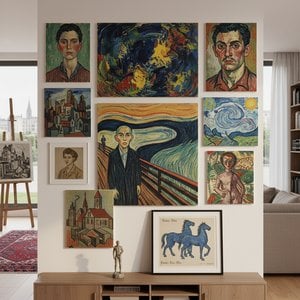
波瀾壯闊:表現主義十大名作,定義時代與靈魂
探索表现主义的灵魂!本文精选十幅名作,从莫迪里亚尼到夏加尔,揭秘大师背后的故事与艺术魅力。感受色彩的力量,重塑您的家居空间。ArtsDot.com 提供博物馆品质的艺术复制品和个性化装饰方案。立即在线探索全系列!

Unlocking Emotion: A Beginner's Guide to the Raw Power of Symbolic Expressionism Art
Discover the raw emotion of Symbolic Expressionism. Our expert guide explores how masters like Munch use color and form to convey inner feelings, offering inspiration for collectors looking to bring powerful, soulful art into their modern homes.

Dark Masterpieces: 10 Iconic Paintings Dominated by Black Tones |
Explore 10 iconic paintings dominated by black tones, from Rembrandt’s chiaroscuro to Goya's dark expressions. Discover the stories behind these masterpieces & find museum-quality art reproductions for your home at .
 实景预览
实景预览
 分享
分享 分享
分享
 详情
详情 指南
指南

 下载作品
下载作品
 相似作品
相似作品 X射线
X射线 幻灯片播放
幻灯片播放 Q&A
Q&A 统计数据
统计数据