效果预览
效果预览
 购买印刷品
购买印刷品 分享
分享 分享
分享
 详情
详情

 下载
下载
 相似作品
相似作品 X射线
X射线 幻灯片播放
幻灯片播放Consolation
 Etching
- WallArt
- Expressionism
 1894
1894- Late Medieval
 21.0 x 31.0 cm
 展开详情
展开详情




P118B $10

P118H $10

P118W $10

P438Z $10

P508JH $12

P508YH $12

P805H $10

P805Z $10

P919BZ $10

P919G $10

P919XJ $10

P959ZH $10

P968JZ $12

W106C $8

W218G $10

W218JH $8

W218Y $10

W307PJ $10

W316G $10

W316PJ $8

W316Y $10

W398PJ $8

W4111J $10

W500HY $15

W500JH $15

W692G $12

W849H $8

W940BG $15

W953PJ $8




从与原作比例一致的预设尺寸中进行选择。

您可以输入自定义尺寸,以适配特定的画框或空间。如果所选尺寸与原图比例不符,我们将通过裁剪作品或添加手绘元素来扩展画面。数字样稿将在制作开始前发送给您确认。
请注意,屏幕预览无法准确反映实际的裁剪或扩展效果,只有样稿才能真实呈现最终的构图。
虽然我们提供定制尺寸服务,但为了保留原作比例,建议您从预设列表中选择尺寸。
下单后,ArtsDot.com 团队将通过电子邮件联系客户获取具体要求,并提供效果预览图。


 玻璃选项仅适用于110厘米以下的尺寸。

Consolation
复制材质
复制品尺寸
-


最终总价
$ 288
作品详情
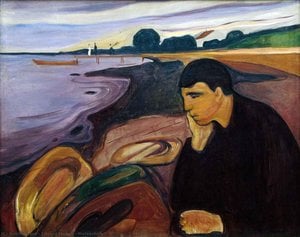
A Portrait of Anguish: Edvard Munch’s “Consolation”
Edvard Munch's "Consolation," painted in 1894, isn’t merely a depiction of an embrace; it’s a raw, visceral exploration of grief and the tentative promise of solace. This iconic work, rendered in stark monochrome etching on paper, stands as a cornerstone of Expressionism, capturing not just the outward appearance of sorrow but the profound emotional turmoil simmering beneath the surface. It's a painting that demands attention, pulling you into its shadowed depths with an almost unbearable intensity – a testament to Munch’s ability to translate his own inner demons onto the canvas.
The scene unfolds within a dimly lit interior space, dominated by the looming presence of two figures. A larger, nude male figure, embodying vulnerability and perhaps even despair, reaches out to embrace a smaller, partially obscured female form. The composition is deliberately centered around this intimate interaction, yet an unsettling sense of distance pervades the image. The background dissolves into a blurred abstraction of walls and shadows, creating a claustrophobic atmosphere that mirrors the emotional confinement experienced by both figures. Lines are aggressively textured – not smooth or refined, but jagged and restless, mirroring the turbulent emotions at play.
Technique and Materials: A Masterclass in Expressive Etching
Munch’s masterful use of etching is central to the painting's power. He employed a needle to meticulously transfer ink from a plate onto paper, creating an incredibly rich and layered surface. The deliberate scratching and layering of ink aren’t simply aesthetic choices; they are integral to conveying texture and emotion. The rough, tactile quality of the print invites viewers to almost *feel* the weight of sorrow pressing down on the figures. Notice how the darkest areas are achieved through multiple layers of ink, building up a dense, impenetrable blackness that symbolizes overwhelming grief. The subtle variations in tone – from the deepest shadows to the faintest hints of light – contribute to the painting’s dramatic intensity.
The choice of monochrome further amplifies the emotional impact. Color is often associated with joy and vibrancy; its absence here underscores the bleakness and despair at the heart of the scene. It forces the viewer to focus entirely on form, line, and texture – elements that become even more crucial in conveying the painting’s complex narrative.
Symbolism and Context: Echoes of Loss and Longing
“Consolation” is deeply rooted in Munch's personal experiences. Like much of his work, it grapples with themes of loss, illness, and mortality – subjects that haunted him throughout his life. The painting’s title itself suggests a search for comfort amidst suffering; the embrace represents an attempt to find solace in connection, yet the figures remain isolated within their own private worlds. The obscured female figure, often interpreted as a representation of Munch's sister, Laura, who died from tuberculosis, adds another layer of poignant grief.
Painted during a period of intense personal turmoil for Munch – following a mental breakdown and a failed marriage – “Consolation” reflects his own struggles with loneliness and despair. It’s not simply a depiction of sadness; it's an exploration of the *process* of grieving, capturing the awkwardness, vulnerability, and tentative hope that accompany the journey toward acceptance. The painting resonates powerfully because it taps into universal human experiences – the pain of loss, the yearning for connection, and the enduring search for meaning in a world often marked by suffering.
A Timeless Masterpiece: Reproduction and Beyond
Reproductions of “Consolation” offer a remarkable opportunity to bring this emotionally charged artwork into your home or office. High-quality hand-painted reproductions capture the intricate detail and textural richness of Munch’s original etching, allowing you to experience its power firsthand. Consider framing it in a dark wood frame to further enhance the painting's dramatic atmosphere. “Consolation” is more than just a beautiful image; it’s a profound meditation on the human condition – a timeless masterpiece that continues to resonate with viewers over a century after its creation.


艺术家简介
蒙克的生命:阴影与呐喊
爱德华·蒙克,1863年出生于挪威的阿代尔斯布鲁克,他的名字如今已与现代艺术中焦虑和情感动荡的象征紧密相连。他的一生笼罩在悲伤的阴影之下,童年的不幸——母亲和姐姐都因肺结核去世——深深地影响了他,并成为了他艺术创作的源泉。蒙克的父亲虔诚而又饱受精神疾病困扰,这使得蒙克的世界充满了恐惧和不安,这些感受不仅塑造了他的个人生活,也渗透到了他的绘画作品中。他并非简单地描绘场景,而是将内心的痛苦转化为视觉语言,用扭曲的形象和大胆的色彩表达人类最深层的心理挣扎。蒙克的艺术生涯并非一帆风顺,但他始终坚持探索内心世界,最终创造出了一系列震撼人心的作品,深刻影响了后世的艺术家。从传统到现代:蒙克的艺术之路
蒙克最初在基督教亚(奥斯陆)皇家美术设计学院接受过正规训练,但真正激发他创作灵感的,是与虚无主义者汉斯·耶格的相遇。耶格鼓励蒙克抛弃传统的学术风格,深入挖掘自己的主观体验,并提出了“灵魂绘画”的概念。这一转变标志着蒙克艺术风格的开端——一种以原始情感、扭曲的形态和对自然主义表现手法拒绝为特征的风格。19世纪90年代,蒙克前往巴黎,接触了蓬勃发展的后印象派运动,从中汲取了保罗·高更、文森特·梵高和亨利·德·图卢兹-劳雷克的艺术灵感。这些艺术家对色彩的大胆运用、奔放的笔触以及对情感表达的重视,深深地影响了蒙克,并促使他形成了自己独特的艺术语言。蒙克并非简单地模仿他们的技巧,而是将这些元素融入到自己的创作中,创造出一种能够传达最深刻和令人不安的人类情感的视觉形式。呐喊:现代焦虑的象征
毫无疑问,《呐喊》是蒙克最具代表性的作品,它已经超越了绘画本身,成为了现代人精神痛苦的普遍象征。这幅画作描绘了一个在血红色天空下绝望地捂着耳朵的人物,扭曲的面容和夸张的姿势传达出一种无法言喻的恐惧和焦虑。《呐喊》并非仅仅是对个人经历的回顾,而是对整个时代精神的一种深刻反思。蒙克曾描述说,他是在日落时分散步时听到了“巨大而无限的自然之声”,正是这种体验促使他创作了这幅画作。它捕捉到了现代人普遍存在的孤独感、迷茫感和对未知的恐惧,因此能够引起如此广泛的共鸣。除了《呐喊》之外,《麦达洛娜》、《忧郁一号及二号》等作品也深刻地探讨了爱情、死亡、孤独和绝望等主题,展现了蒙克对人类情感复杂性的敏锐洞察力。影响与遗产:现代艺术的先驱
爱德华·蒙克的贡献在于他大胆地探索了人类内心深处的黑暗面,挑战了传统的美学观念,并为后来的艺术家开辟了新的道路。他被认为是表现主义运动的重要先驱,他的作品对20世纪的艺术产生了深远的影响。从德国表现主义画家到后来的抽象表现主义者,无数艺术家都受到了蒙克作品的启发。蒙克的绘画风格打破了传统的写实主义框架,强调主观情感和内心体验的重要性,为现代艺术的发展奠定了基础。他不仅是一位伟大的画家,更是一位深刻的思想家,他的作品至今仍能触动人们的心灵,引发对生命、死亡和人类存在的思考。 蒙克留下的不仅仅是绘画作品,更是一种探索人性的勇气,一种敢于直面内心痛苦的精神,这种精神将继续激励着一代又一代的艺术家。
爱德华·蒙克
1863 - 1944 , 瑞典
艺术家简介
- Artistic Movement Or Style: 表现主义
- Artists Or Movements Influenced By This Artist: ['德国表现主义']
- Artists Who Influenced This Artist:
- 保罗·高更
- 文森特·梵高
- 亨利·德·图卢兹-劳雷克
- Date Of Birth: 1863年12月12日
- Date Of Death: 1944年1月23日
- Full Name: 爱德华·蒙克
- Nationality: 挪威
- Notable Artworks:
- 《呐喊》
- 《麦达罗娜》
- 《病儿》
- 《忧郁一号及二号》
- Place Of Birth: 阿代尔斯布鲁克,瑞典
相关文章

爱德华·蒙克25幅杰作:探索焦虑与灵魂深处的艺术之旅 | ArtsDot
探索爱德华·蒙克25幅传世杰作,感受表现主义大师笔下的焦虑与灵魂深处。高清油画复制、艺术品购买及室内装饰灵感尽在ArtsDot.com!发现更多经典名画。

Etching Masters: 10 Legendary Prints That Revolutionized Art | ArtsDot
Journey through 10 legendary etching masterpieces by Rembrandt, Dürer & Goya. Explore the history of printmaking and discover timeless art for your home. Find museum-quality reproductions at ArtsDot.com.

Edvard Munch: Anxiety, Modernity & the Dawn of Expressionism
Explore the profound world of Edvard Munch, pioneer of Expressionism. Discover the origins of 'The Scream' & his haunting depictions of anxiety, mortality, and love. Expert analysis & high-quality reproductions at ArtsDot.
波瀾壯闊:表現主義十大名作,定義時代與靈魂
探索表现主义的灵魂!本文精选十幅名作,从莫迪里亚尼到夏加尔,揭秘大师背后的故事与艺术魅力。感受色彩的力量,重塑您的家居空间。ArtsDot.com 提供博物馆品质的艺术复制品和个性化装饰方案。立即在线探索全系列!

蝕刻艺术的历史巡礼:技法、美学特征与持久的艺术意义
深入探索蚀刻艺术的历史、技法与大师之作。专业分析光影线条美学,了解伦勃朗、丢勒等大师的创作秘诀。ArtsDot.com为您提供高品质油画复制和定制服务,重现经典艺术!