

 实景预览
实景预览
 分享
分享 分享
分享
 详情
详情 指南
指南

 下载作品
下载作品
 相似作品
相似作品 X射线
X射线 幻灯片播放
幻灯片播放 问答
问答 统计数据
统计数据Pulpit

 展开全文
展开全文
艺术微喷/版画
博物馆级艺术微喷或帆布版画,制作高效,并提供多种饰面选择。 ( 订购纯手工绘制画作 切换至数字图像销售渠道)




P118B ¥10

P118H ¥10

P118W ¥10

P438Z ¥10

P508JH ¥12

P508YH ¥12

P805H ¥10

P805Z ¥10

P919BZ ¥10

P919G ¥10

P919XJ ¥10

P959ZH ¥10

P968JZ ¥12

W106C ¥8

W218G ¥10

W218JH ¥8

W218Y ¥10

W307PJ ¥10

W316G ¥10

W316PJ ¥8

W316Y ¥10

W398PJ ¥8

W4111J ¥10

W500HY ¥15

W500JH ¥15

W692G ¥12

W849H ¥8

W940BG ¥15

W953PJ ¥8




您可以从与原作比例一致的预设尺寸中进行选择。

请输入您所需的宽度和高度,以适配您的画框或墙面。由于印刷品只能进行裁剪,无法超出原图尺寸,因此若比例不一致,画面的一部分将会被裁切。在正式印刷之前,我们会为您发送一份数字效果图供您确认。本页面显示的图片并非最终裁剪后的效果——只有效果图才能展示真实的裁剪情况。


 玻璃选项仅适用于110厘米以下的尺寸。

Pulpit
艺术微喷/版画
复刻品尺寸
-


最终结算价
¥ 422


艺术家简介
Early Life and Artistic Roots
Dominikus Zimmermann, born in the humble village of Gaispoint near Wessobrunn, Bavaria, in 1685, emerged from a family deeply entrenched in the artistic traditions of Southern Germany. The Zimmermanns were part of the renowned “Wessobrunner School,” a collective of artists and craftsmen who flourished during the Baroque period, celebrated for their exceptional skill in stucco work and fresco painting. This familial legacy profoundly shaped young Dominikus’s early development; he didn't so much choose an artistic path as inherit one. Initially, he followed in his family’s footsteps, honing his talents as a stuccoist—a demanding craft requiring both technical precision and aesthetic sensibility. However, the seeds of architectural ambition were already being sown within him, nurtured by observing the grand designs taking shape across Bavaria. His older brother, Johann Baptist Zimmermann, a gifted painter and fresco artist, would become not merely a sibling but a crucial collaborator throughout Dominikus’s career, their combined talents forging some of the most breathtaking religious spaces of the Rococo era.The Rise of a Master Builder
Dominikus's transition from skilled stuccoist to respected *Baumeister* (master builder and architect) was gradual yet decisive. He wasn’t formally trained in architecture; instead, his knowledge grew through practical experience, meticulous observation, and an innate understanding of spatial dynamics. His early independent projects, like the Dominican convent church at Mödingen beginning in 1716, already hinted at a distinctive style—a delicate balance between Baroque grandeur and emerging Rococo sensibilities. The collaboration with Johann Baptist on this project proved pivotal, showcasing their synergistic approach to creating *Gesamtkunstwerke* – total works of art where architecture, sculpture, painting, and stucco seamlessly merged into a unified aesthetic experience. By the 1740s, Zimmermann had established himself as a leading architect in Bavaria, sought after for his ability to translate religious fervor into tangible form. He even served as mayor of Landsberg am Lech from 1748 to 1753, demonstrating a commitment to civic life alongside his artistic pursuits.The Pilgrimage Churches: A Synthesis of Faith and Form
Dominikus Zimmermann’s most enduring legacy lies in the magnificent pilgrimage churches he designed and built—structures that epitomize the Rococo style and capture the spiritual intensity of the era. The church at Steinhausen (1728-1733) marked a turning point, showcasing an oval floor plan, slender piers supporting a vibrantly painted vault, and delicately colored decorations. This was considered by many to be the first truly Rococo church due to its airy lightness and flowing ornamentation. However, it was the Pilgrimage Church of Wies near Steingaden (1745-1754) that cemented Zimmermann’s reputation as a master architect. Commissioned in response to a miraculous event involving a weeping wooden crucifix, the Wies church is an extraordinary expression of faith translated into architectural poetry. The exterior, deceptively simple, belies the opulent interior—a dazzling display of stucco work, frescoes, and intricate carvings. Light floods through strategically placed windows, illuminating the space and creating an ethereal atmosphere that invites contemplation and reverence.Influences and Artistic Style
Zimmermann’s style wasn't born in isolation; it was a synthesis of various influences, skillfully adapted to his own vision. The Baroque tradition provided a foundation—the emphasis on dramatic effect, opulent ornamentation, and the integration of different art forms. However, Zimmermann moved beyond the heavier, more imposing aesthetic of High Baroque, embracing the Rococo’s preference for lightness, elegance, and playful asymmetry. He drew inspiration from Italian architecture, particularly the work of Guarini and Borromini, but infused it with a distinctly Bavarian sensibility—a warmth and intimacy that resonated with local traditions. His close collaboration with his brother Johann Baptist was also crucial; their combined talents created a unique artistic synergy where architectural form and painted decoration complemented each other perfectly.Historical Significance and Lasting Legacy
Dominikus Zimmermann died near the Pilgrimage Church in Wies in 1766, leaving behind a body of work that continues to inspire awe and admiration. His churches are not merely beautiful buildings; they are powerful expressions of religious faith, skillfully crafted spaces designed to evoke spiritual experience. He is considered one of the most important architects of the Rococo period, and his influence can be seen in countless churches and palaces across Southern Germany and Austria.- Key Characteristics: Integration of architecture, stucco work, and fresco painting; delicate ornamentation; emphasis on light and space; a synthesis of Baroque and Rococo styles.
- Major Works: Abbey church, Mödingen; Pilgrimage Church in Steinhausen; Pilgrimage Church in Wies; Church of Our Lady in Günzburg.
- Legacy: Zimmermann’s churches remain iconic examples of Rococo architecture and continue to be celebrated for their beauty, spiritual intensity, and artistic innovation.

Dominikus Zimmermann
1685 - 1766 , Germany
艺术家简介
- Full Name: Dominikus Zimmermann
- Nationality: German
- Date Of Birth: 1685
- Date Of Death: 1766
- Place Of Birth: Wesobrunn, Germany
- Notable Artworks:
- Pulpit
- Weyarn Church
- Steinhausen church
- Artistic Movement Or Style: Rococo, Baroque
相关文章

Theatricality & Triumph: Baroque Drama in Painting & Sculpture
Explore the dramatic world of Baroque art! Discover its history, defining characteristics, & lasting influence on painting & sculpture. Expert insights into Caravaggio, Zurbarán, and Bernini – plus high-quality reproductions at ArtsDot.

巴洛克戏剧性:将辉煌与情感融入当代室内设计
探索巴洛克艺术的辉煌与奢华!ArtsDot提供精湛的手工油画复制、定制服务和专业艺术咨询,助您将经典作品融入当代室内设计,提升家居品味。投资艺术,传承价值。
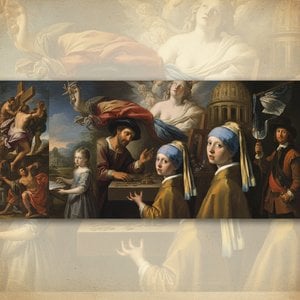
巴洛克艺术巅峰:十部巨作定义时代,点亮您的臻品格调
探索巴洛克艺术的辉煌!本文精选十部巨作,带您领略卡拉瓦乔、伦勃朗等大师的光影魔法与戏剧张力。从黄金时代到宗教绘画,感受奢华与精致。ArtsDot.com为您提供博物馆品质的艺术复制品和家居装饰灵感。尽在ArtsDot.com!

The Visceral Stage: Exploring Dramatic Narratives & Emotional Intensity in Baroque Art
Explore the dramatic world of Baroque art! Discover iconic masters like Caravaggio & Rembrandt, their techniques, and the movement's lasting impact. Expert insights for collectors & enthusiasts at ArtsDot.

巴洛克艺术的戏剧性辉煌:历史背景、风格特征与持久影响
深入探索巴洛克艺术的辉煌历史、独特风格与持久影响。了解卡拉瓦乔、贝尼尼等大师的作品,洞悉反宗教改革运动下的艺术变革。ArtsDot.com为您提供专业的艺术解读与高清画作欣赏。