

 效果预览
效果预览
 购买印刷品
购买印刷品 分享
分享 分享
分享
 详情
详情

 下载
下载
 相似作品
相似作品 X射线
X射线 幻灯片播放
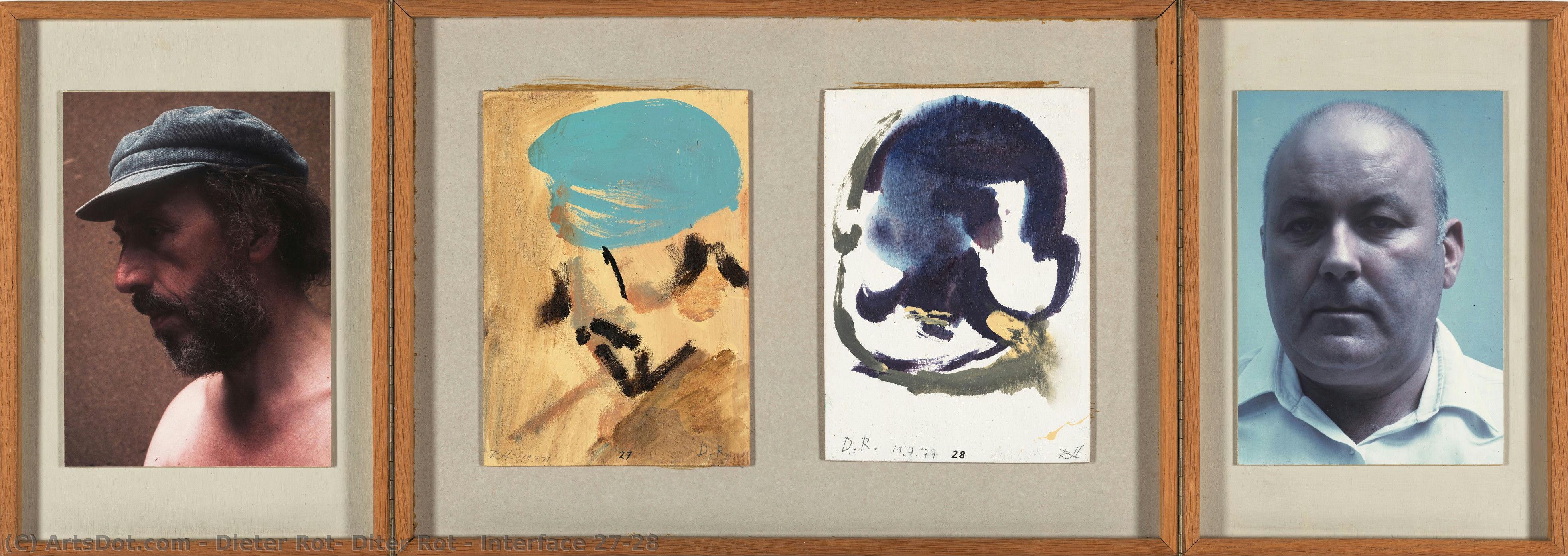
幻灯片播放Interface 27-28
 Contemporary
 1979
1979 44.0 x 61.0 cm
 塞拉尔维斯基金会
 展开详情
展开详情




P118B $10

P118H $10

P118W $10

P438Z $10

P508JH $12

P508YH $12

P805H $10

P805Z $10

P919BZ $10

P919G $10

P919XJ $10

P959ZH $10

P968JZ $12

W106C $8

W218G $10

W218JH $8

W218Y $10

W307PJ $10

W316G $10

W316PJ $8

W316Y $10

W398PJ $8

W4111J $10

W500HY $15

W500JH $15

W692G $12

W849H $8

W940BG $15

W953PJ $8




从与原作比例一致的预设尺寸中进行选择。

您可以输入自定义尺寸,以适配特定的画框或空间。如果所选尺寸与原图比例不符,我们将通过裁剪作品或添加手绘元素来扩展画面。数字样稿将在制作开始前发送给您确认。
请注意,屏幕预览无法准确反映实际的裁剪或扩展效果,只有样稿才能真实呈现最终的构图。
虽然我们提供定制尺寸服务,但为了保留原作比例,建议您从预设列表中选择尺寸。
下单后,ArtsDot.com 团队将通过电子邮件联系客户获取具体要求,并提供效果预览图。


 玻璃选项仅适用于110厘米以下的尺寸。

Interface 27-28
复制材质
复制品尺寸
-


最终总价
$ 263
相似艺术品


![Abstract Composition [triptych] — Vaclav Vytlacil, Abstract Expressionism](/media/artworks/images/thumbnails/e5/3d/e53db42ea02644b9a8e722f9d4dd3742.jpg)

艺术家简介
The Alchemy of Impermanence: The Life and Vision of Dieter Roth
Born in Hanover, Germany, on April 21, 1930, Dieter Roth—often referred to by the variation Diter Rot—emerged as one of the most radical and boundary-pushing figures of the twentieth-century avant-garde. His artistic journey was never a linear progression toward perfection, but rather a profound exploration of decay, transformation, and the beautiful instability of existence. Moving through the cultural landscapes of Europe, Roth developed a practice that defied the static nature of traditional fine art, choosing instead to embrace the organic processes of life and death. His work serves as a visceral meditation on the passage of time, where the boundaries between the creator, the medium, and the environment are perpetually blurred.
Roth’s creative evolution was deeply intertwined with the experimental spirit of the Fluxus movement. As a co-founder of the magazine Spirale, he became a central node in a network of artists dedicated to breaking down the walls between high art and everyday life. This period of his life was marked by an intense curiosity regarding how objects interact with their surroundings. He did not merely seek to represent reality; he sought to engage with its physical degradation. His fascination with found materials—ranging from discarded newspapers and magazines to the much more provocative use of organic matter—allowed him to create works that were living, breathing, and ultimately, dying.
Materiality and the Aesthetics of Decay
What truly distinguishes Roth’s oeuvre is his fearless approach to medium. While many artists of his era sought permanence through oil on canvas or carved stone, Roth found profound meaning in the ephemeral. He became renowned for his sculptures that incorporated rotting foodstuffs, a technique that challenged the very notion of what an art object could be. In pieces such as Insel, the artist utilized decomposing organic elements to create a sensory experience that engaged not just the eyes, but the sense of smell and the awareness of biological change. This focus on impermanence turned his sculptures into performances of natural entropy, where the artwork changed shape, color, and texture every day it remained on display.
Beyond his sculptural experiments, Roth revolutionized the concept of the book. His artist's books were far from passive objects of reading; they were tactile, interactive landscapes. By designing books with pages that readers could rearrange or manipulate, he dismantled the traditional hierarchy of narrative and structure. This approach mirrored his interest in Concrete Art and the deconstruction of form, inviting a participatory experience that transformed the viewer into an active collaborator. His editioned prints and works on paper further showcased this mastery of technique, blending experimental textures with a deep-seated connection to the raw materials of the modern world.
Legacy and Artistic Influence
The historical significance of Dieter Roth lies in his ability to expand the vocabulary of contemporary art. He drew inspiration from the psychological depth of Expressionism, finding echoes of the raw emotion found in the works of Edvard Munch and Francis Bacon, yet he applied these influences to a much more physical, materialist framework. His legacy is felt in every movement that seeks to challenge the sanctity of the museum object and every artist who finds beauty in the discarded or the decomposing.
Throughout his career, Roth’s work was celebrated in prestigious institutions, including the Museum Folkwang in Essen, Germany, ensuring that his radical experiments were documented within the canon of art history. Though he passed away in 1998, his impact remains undiminished. He left behind a body of work that continues to provoke thought about the nature of creation and the inevitability of dissolution, reminding us that there is a profound, haunting beauty to be found in the very process of falling apart.

dieter rot, diter rot
1930 - 1998 , Germany
艺术家简介
- Artists Or Movements Influenced By This Artist: ['']
- Artists Who Influenced This Artist: ['']
- Date Of Birth: 1930
- Notable Artworks: ['']
- Place Of Birth: WahooArt
相关文章

抽象表现主义:十幅定义艺术史的杰作
探索抽象表现主义的十幅经典杰作!波洛克、罗斯科等大师作品,揭秘艺术史上的重要瞬间。ArtsDot.com为您呈现高品质艺术品复制和精选家居装饰方案,感受现代艺术的力量与魅力。立即浏览全系列!

几何抽象艺术十大杰作:定义现代家居装饰的经典之作
探索几何抽象艺术的十大杰作!康定斯基、蒙德里安等大师作品,色彩构成与非具象之美。ArtsDot.com提供博物馆级艺术复制品,为您的家居带来现代艺术灵感。立即在线探索完整系列!

Kandinsky's Masterpieces: 25 Paintings That Define Abstract Art | ArtsDot
Journey through Wassily Kandinsky's 25 most iconic abstract paintings. Explore his revolutionary use of color, form & spiritual expressionism. Find museum-quality Kandinsky reproductions and elevate your home decor with ArtsDot.com. Discover all masterpieces on ArtsDot.com!

Navigating Abstract Expression: A Guide to Contemporary Movements for Emotional Resonance in Art Selection
Explore the evolution of Abstract Expressionism & discover contemporary movements for emotional resonance. Expert guidance for discerning art collectors seeking lasting value. ArtsDot.

解构形式与情感:当代抽象艺术鉴赏指南
ArtsDot:专业艺术品复制与定制服务。探索抽象艺术鉴赏指南,了解康定斯基、蒙德里安等大师作品。值得信赖的平台,为您提供高品质油画和艺术咨询,提升您的收藏价值。

