


图片将根据您的选择进行更新: , .
藏品详情
Deimantas Narkevičius’ ‘The Head’ – a monumental, unfinished marble bust of Marx. Explore this photographic documentation of the sculpture's creation & its symbolic weight.
 展开全文
展开全文
艺术家简介
Lithuanian artist Deimantas Narkevičius explores memory & political history through film & video. Exhibited at Venice Biennale, Centre Pompidou & more. Explore his impactful work.
手工油画复制品
由我们的艺术家按需定制,为您提供您所选尺寸及画框的布面手工油画。 ( 切换至版画销售渠道 切换至数字图像销售渠道)
更多关于此画作的信息
 实景预览
实景预览
 分享
分享 分享
分享
 详情
详情 指南
指南

 下载作品
下载作品
 相似作品
相似作品 X射线
X射线 幻灯片播放
幻灯片播放 问答
问答 统计数据
统计数据只需简单四步,即可订购您的画作
请慢慢挑选。您可以随时更改任何选项;订单详情卡中的价格将随您的选择实时更新。
1 四步中的第一步
您想要哪种尺寸?
这些尺寸均保持了原画的比例。示意图展示了您所选尺寸在墙面上的效果,其位置位于一张两米宽的沙发上方。
或输入您自定义的尺寸
您可以从与原作比例一致的预设尺寸中进行选择。

请输入您需要的宽度和高度,以适配您的画框或墙面。由于作品为手工绘制,若选择不同比例的尺寸,艺术家可能会在画面边缘多画一些或稍作裁剪 —— 由您决定。在开始绘画之前,我们会为您发送一份数字效果图供您确认。本页面上展示的图片并非最终实物 —— 只有效果图才能反映真实结果。
2 四步中的第二步
您希望如何装裱:卷轴装、绷框装还是带框装?
以下价格对应您在第一步中所选的尺寸。
选择绷边画布的边缘样式
选择您的画框

白色边缘 ¥1

边缘晕染效果 ¥1

延展式 ¥1

P118B ¥10

P118H ¥10

P118W ¥10

P438Z ¥10

P508JH ¥12

P508YH ¥12

P805H ¥10

P805Z ¥10

P919BZ ¥10

P919G ¥10

P919XJ ¥10

P959ZH ¥10

P968JZ ¥12

W106C ¥8

W218G ¥10

W218JH ¥8

W218Y ¥10

W307PJ ¥10

W316G ¥10

W316PJ ¥8

W316Y ¥10

W398PJ ¥8

W4111J ¥10

W500HY ¥15

W500JH ¥15

W692G ¥12

W849H ¥8

W940BG ¥15

W953PJ ¥8

H24-GOLD ¥30

H24-SILVER ¥30

H36-GOLD ¥45

H36-SILVER ¥45
带框
边框材质: . 含框总尺寸: .
3 四步中的第三步
您想对画作进行任何修改吗?
大多数人的回答是否定的。由于每一幅画作都是手工绘制,我们的艺术家也可以为您进行定制。
下单后,ArtsDot.com 团队将通过电子邮件联系客户获取具体指令,并提供效果预览图
4 第四步(共四步)
几种饰面选项
所有选项均为可选。已选择的答案不会产生额外费用。
出自哪位艺术家之手?
像博物馆里的那样,配上一块铭牌?
青铜铭牌雕刻详情
This elegant plaque features the artist's name and the title of the artwork, finely engraved for a timeless presentation.
It is made from bronze with a refined, elegant finish. The text is precisely laser-engraved for a sharp and permanent result. Measuring 9x2 cm, the plaque is compact yet easy to read. It's built to be durable and scratch-resistant, offering a professional, museum-quality look. Mounting is simple thanks to the included adhesive backing.
透明亚克力铭牌详情
The plaque includes essential engraved details such as the artist's name, the title of the artwork, the date it was created, the type of media used-like oil on canvas or watercolor-a brief description of the piece, and a QR code that links to the complete artwork information.
It is crafted from clear acrylic, offering a sleek, modern appearance. The text is UV-engraved in black to ensure strong visual contrast. With a size of 10x15 cm, it ensures optimal readability. It comes equipped with two metal hooks for secure wall mounting. The plaque is designed to be weather-resistant, making it suitable for various environments, and it includes interactive features that work seamlessly with smartphone scanning.
黑色亚克力铭牌详情
This elegant plaque includes engraved information such as the artist's name, the title of the artwork, the date it was created, the type of media used (like oil on canvas or watercolor), a short description of the artwork, and a QR code for quick access to more information.
The plaque itself is made from refined black acrylic with a premium finish. The text is laser-engraved in white for high contrast and readability. Its size is 10x15 cm, designed to be easy to read. It comes with two metal hooks for professional mounting. The design is sleek and fits any interior style. It is also weather-resistant and durable, with built-in digital integration for mobile compatibility.
需要保护性光油吗?
您预计何时收到?
✓ 确认并下单
您的画作,正如您所订购的那样

The Head
复制品材质
复刻品尺寸
-

精选资深艺术家
更丰富的细节、更精湛的工艺以及更充裕的制作时间
-

复制画装裱选项
-
-
对于任何边长超过 105 厘米(约 41 英寸)的艺术品或复制品,画框将以拆解后的组件形式发货。此方法可确保安全送达并防止运输过程中的损坏。
需由专业人员组装 —— 本产品不适用于 DIY 操作。
该组件必须由经验丰富的专业装裱师进行组装及画布绷装,过程中需使用木工胶(不随附)、画布绷边钳以及夹具,以确保在胶水干燥期间保持内框方正。组装不当或画布张力不均可能会对艺术品造成永久性损坏,且此类情况不在我们的保修范围之内。
 对于任何边长超过 105 厘米(约 41 英寸)的艺术品或复制品,画框将以拆解后的组件形式发货。此方法可确保安全送达并防止运输过程中的损坏。
包含所有实木条,尺寸精确,便于组装。
使用随附的螺丝进行组装,另需准备用于角部连接的木工胶(本品不含木工胶),请由您的装裱师自行准备。
需另备专业工具(本套件不含):画布绷紧钳以及用于在胶水干燥过程中保持木条方正的夹具。
重要提示:
角部连接处需要使用木工胶,边框条必须使用夹具固定直至胶水完全干透,且在组装好的框架上绷紧画布需要用到画布拉伸钳。以上工具均不包含在套装内。请在订购此尺寸前,预先联系经验丰富的专业装裱师。

展品铭牌
-
-

保护性清漆
光泽清漆(提亮色彩,防光防潮)
-

定制我的艺术品
定制化示例:替换面部为客户照片;添加宠物(例如,将猫替换为狗);在背景中加入隐藏信息;更改背景风景或元素。
-

加急
全球配送()仅需 3-4 周即可送达,无需等待标准时效的 5 周。(5 November)。品质始终如一,绝不妥协。
-
极速达
全球配送(),预计 5 周送达。(12 November)。
已包含
最终结算价
¥ 1765
玻璃选项仅适用于110厘米以下的尺寸。
每份订单均包含
- 全球免运费特快专递服务
- 优质亚麻画布
- 全程运输保险
- 关税退款保证
- 色彩精准还原保证
- 100天退货保障(仅限制造缺陷)
- 100% 退款保证
- 多件购买优惠


A Fragment of Monumental Ideals: Deimantas Narkevičius’ ‘The Head’
Deimantas Narkevičius' “The Head” stands as a striking testament to the intersection of artistic vision and historical circumstance—a monumental, unfinished marble bust of Karl Marx meticulously documented through cinematic observation. Captured in black and white film footage originating from East Germany during the creation and inauguration of the Marx Monument in 1971, this artwork transcends mere representation; it embodies the spirit of a bygone era and probes profound questions about legacy and artistic process. The photograph itself serves as both record and catalyst for contemplation, inviting viewers to consider not just what is seen but also what remains unseen—the latent potential within an incomplete work.The Sculptor’s Vision: Contextualizing Kerbel's Creation
The sculpture’s genesis lies in the ambitious project spearheaded by sculptor Lev Kerbel, commissioned to honor Karl Marx amidst the ideological fervor of the GDR. The film documentation illuminates the meticulous planning and logistical challenges inherent in erecting such a grand monument within the constraints of Soviet artistic dogma. Every frame captures the raw physicality of construction—scaffolding, marble dust, and the purposeful movements of artisans striving to realize Kerbel’s vision. This context is crucial for understanding “The Head” not simply as an aesthetic object but as a symbol of political aspiration and the enduring struggle to commemorate influential figures. The GDR's propagandistic intent underscores the artwork’s significance beyond its formal qualities, prompting reflection on how artistic endeavors are shaped by broader societal forces.Formal Analysis: Texture, Light, and Geometric Precision
A careful examination reveals a masterful command of sculptural technique combined with photographic realism. The dominant form—a colossal marble bust—commands attention through its sheer scale and assertive contours. Strong lines delineate the face’s musculature and facial features, emphasizing anatomical accuracy while simultaneously conveying solidity and permanence. The texture is deliberately rendered to convey the unfinished state of the sculpture; chisel marks and imperfections in the marble contribute to a tactile quality that invites viewers to imagine the sculptor's hand at work. Artificial lighting directs shadows across the surface, highlighting three-dimensional form and enhancing visual drama. Geometric shapes—spheres for the head and planes for facial features—provide structural stability and reinforce compositional balance. The flattened perspective of the photograph subtly diminishes atmospheric depth but effectively communicates the monument’s imposing presence.Symbolism Beyond Representation: An Unfinished Echo
The deliberate omission of completion speaks volumes about Narkevičius' artistic intent. “The Head” isn’t merely a depiction of Marx; it embodies the ongoing process of shaping historical memory and confronting complex ideological narratives. The unfinished state symbolizes not only the challenges inherent in achieving lasting legacies but also the dynamism of ideas themselves—their capacity to evolve and transform over time. Like Kerbel's sculpture, Narkevičius’ photograph invites viewers to contemplate the elusive nature of representation and the power of suggestion. It compels us to consider what is absent as powerfully as what is present, fostering a deeper engagement with both art and history.Emotional Resonance: Memory and Reflection
Ultimately, “The Head” resonates with an emotional depth rooted in its connection to Lithuania’s Soviet past. The artwork evokes feelings of contemplation, nostalgia, and perhaps even unease—a recognition that monumental gestures can simultaneously celebrate achievement and grapple with unresolved contradictions. Narkevičius' masterful use of photographic documentation transforms a simple image into a conduit for profound reflection on identity, trauma, and the enduring influence of ideology. It serves as an invitation to consider how art can illuminate the complexities of history while prompting viewers to confront their own perspectives on memory and legacy.常见问题与解答
“The Head”代表了Deimantas Narkevičius艺术生涯的哪个阶段?
在Deimantas Narkevičius的艺术生涯中,"The Head"创作于Mature Period时期。这一阶段有助于将其与艺术家的其他作品进行比较。
在Deimantas Narkevičius反复探讨的主题中,"The Head"处于怎样的地位?
在Deimantas Narkevičius已记录的主题——eisenstein's monumental forms, soviet propaganda & memory, cold war anxieties & power, lithuanian identity struggle, historical reconstruction film, marxist ideals, unfinished legacy——之中,"The Head" 则将焦点转向了marxism, sculpture, monument, history, cold war, soviet art, unfinished, portrait。
我该如何获取Deimantas Narkevičius 的《The Head》的数字文件?
您可以在 Deimantas Narkevičius 的《The Head》 的 高分辨率数字图像 页面购买其数字图像:高分辨率数字图像下载。
相似作品


Deimantas Narkevičius
1964 - , Lithuania
艺术家简介
The Cinematic Architect of Memory
In the quiet, evocative landscapes of Lithuania, where the echoes of a complex Soviet past still linger in the architecture and the atmosphere, the work of Deimantas Narkevičius emerges as a profound meditation on time itself. Born in 1964 in Utena, Narkevičius began his artistic journey not with the lens of a camera, but with the tactile discipline of a sculptor. This foundational training at the Vilnius Art Institute instilled in him a unique sensitivity to form, space, and materiality—a sensibility that would later breathe life into his cinematic explorations. While many artists use film merely as a medium for documentation, Narkevičius treats the moving image as a sculptural element, carving out narratives from the raw materials of historical footage, found photographs, and the heavy silence of abandoned industrial sites.
His transition from the physical weight of sculpture to the ephemeral nature of video and film was not a departure, but an evolution. As Lithuania navigated the turbulent disintegration of the Soviet Union and its subsequent rebirth as a democratic state, Narkeyičius found himself at the intersection of personal recollection and political upheaval. He became a chronicler of the "rupture"—that delicate, often painful space between what was lived and what is remembered. His work does not simply present history; it interrogates the very mechanisms by which we construct myths from reality, using techniques such as voice-overs, interviews, and carefully staged re-enactments to blur the lines between documentary truth and cinematic imagination.
Layers of History and the Poetics of Space
The brilliance of Narkevičius’s practice lies in his ability to transform historical trauma into a poetic inquiry. He often directs his gaze toward the remnants of the Soviet era—monumental structures, decommissioned missile bases, and industrial hubs like the town of Elektrėnai. In works such as Energy Lithuania, he explores the symbiotic relationship between human vitality and the mechanical energy of power plants, treating these sites not merely as relics of a failed ideology, but as melancholic monuments to an era of vanished utopias. Through his lens, the decay of an industrial landscape becomes a metaphor for the fragility of political structures and the enduring persistence of cultural identity.
Influenced by the atmospheric depth of filmmakers like Andrei Tarkovsky and the structural experimentation of Peter Watkins, Narkevičius employs a visual language that is both intimate and expansive. He frequently utilizes close-ups to capture the nuances of human expression, grounding his larger political critiques in the lived experiences of individuals. This approach allows him to navigate the tension between the macro-history of nations and the micro-histories of the soul. His films act as a bridge, connecting the viewer to a past that may feel unrecognizable, yet remains fundamentally intertwined with the present through the persistent pull of collective memory.
A Global Presence and Lasting Legacy
The international recognition of Deimantas Narkevičius has solidified his position as one of the most significant voices in contemporary moving-image art. His presence on the global stage is marked by participation in the world's most prestigious cultural institutions, where his work challenges audiences to confront the fluidity of truth. His achievements include:
- Representing Lithuania at the 49th Venice Biennale, a pivotal moment that introduced his nuanced explorations of identity to a global audience.
- Exhibiting in premier institutions such as the Centre Pompidou in Paris, the Tate Modern in London, and the Museum of Modern Art (MoMA) in New York.
- Contributing to the discourse of contemporary curation through his roles as an art critic and exhibition curator, further enriching the dialogue surrounding political and social art.
Ultimately, the significance of Narkevičius’s oeuvre lies in its refusal to offer easy answers. He does not seek to provide a definitive record of history, but rather to highlight the cracks and shadows where memory resides. By treating history as both material and methodology, he invites us to witness the ongoing process of creation—the way we constantly mold our past to make sense of our present. His work remains a vital, haunting testament to the power of art to navigate the complexities of time, identity, and the enduring human spirit.
相关文章

The Commanding Presence: Architectural Integration & Proportional Strategies for Monumental Art Reproductions in Luxury Interiors
Discover the art of integrating monumental reproductions into luxury interiors. Expert guidance on spatial harmony, authentic materials & bespoke design for a commanding presence in your home. Elevate your space with ArtsDot.
The Enduring Allure of Marble in Art History: From Classical Sculpture to Modern Abstraction
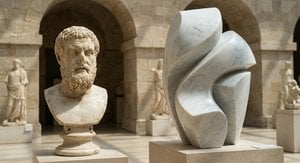
Explore the captivating history of marble sculpture from ancient Greece to modern art. Discover renowned artists like Canova & Michelangelo, carving techniques, and investment insights at ArtsDot.

Karl Blossfeldt's 'Urformen der Kunst': Pioneering Botanical Photomicrography & Aesthetic Form
Explore Karl Blossfeldt's groundbreaking *Urformen der Kunst* & pioneering botanical photography. Discover the aesthetic power of nature, New Objectivity influences, and his lasting impact on modern art. Learn about collecting key works.