

 实景预览
实景预览
 切换至版画销售渠道
 分享
分享 分享
分享
 详情
详情 指南
指南

 下载作品
下载作品
 相似作品
相似作品 X射线
X射线 幻灯片播放
幻灯片播放 问答
问答 统计数据
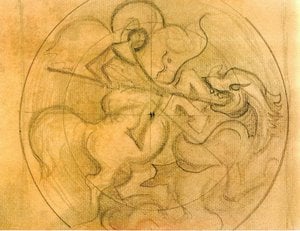
统计数据PRISE D'ASCALON.1152
 展开全文
展开全文
获取远超网页预览效果的印刷级文件。我们销售的每一张数字图像均源自库存数据库中的高分辨率母版——宽度通常在 5,000 至 15,000 像素之间——因此您可以放心地进行大幅打印、局部裁剪或还原细腻的细节。
每一件作品在离开我们的工作室前都经过了精心的处理。数字影像专家会对照原作核对色彩,并在必要时进行校正,随后利用专业修图工具提升清晰度与细节表现——且始终忠实于艺术家的笔触与风格。最终呈现的图像宛如原作本身,而非仅仅是一张加了滤镜的扫描件。
您可以在最终定稿前进行审核:我们的专家将在 72 小时内通过电子邮件向您发送图像以供审阅。如果不满意?您可以要求改进或修正;若质量未达预期,亦可申请退款。
这也是出版商、设计工作室、画廊及印刷厂所信赖的品质。
每份数字图像订单均包含的内容
专业级数字交付,品质保障
选择 ArtsDot.com,您获得的不仅仅是一张图像——您收到的是经过专业级增强、精雕细琢的数字艺术作品,并享有满意保证。以下是您的订单中自动包含的所有内容:

邮件即时送达
您的高分辨率数字图像文件将在下单后 72 小时内通过电子邮件发送给您 —— 即可立即使用。

AI 增强型数字文件
您的艺术品经过专业优化,结合先进的 AI 技术与人工修饰,确保呈现极致的细节、清晰度与色彩准确度。

终身免费重发服务
不小心删除了文件或找不到了?没关系——我们将随时为您免费重发。

无需进口税费,始终如一
即刻拥有您的艺术作品,无需支付任何关税、税费或运费——数字下载始终免税。

色彩精准保障
我们通过专业工具与色彩管理技术,确保您的数字图像尽可能真实地还原原作色彩。

100天满意保证
如果您对所购数字图像不满意,我们将在100天内为您进行修改或提供100%的全额退款——无需任何理由。

100% 退款保证
不满意?在收到数字文件后的100天内,您可以申请全额退款——无需任何理由。

批量订购优惠
购买 3 张享 10% 折扣 - 购买 5 张享 15% 折扣 - 购买 10 张以上享 20% 折扣。非常适合创意项目、画廊及机构使用。
相似作品


艺术家简介
The Soul of the Canvas: The Life and Legacy of Sébastien-Melchior Cornu
In the heart of nineteenth-century France, a period defined by the tension between classical tradition and the burgeoning romantic spirit, Sébastien-Melchior Cornu emerged as a master of light, faith, and human emotion. Born in the vibrant artistic hub of Lyon on January 6, 1804, Cornu was destined for a life steeped in aesthetic rigor. The son of Martin Lacroix, a respected architect, he inherited an early appreciation for structural harmony and the delicate balance of form. His journey into the heights of the French art world began remarkably early; at just twelve years old, he entered the École nationale supérieure des beaux-arts de Lyon. It was within these hallowed halls that his talent was nurtured under the guidance of Fleury François Richard, a lineage tracing back to the legendary Jacques-Louis David. This foundational training instilled in him a profound respect for anatomical precision and compositional clarity, elements that would become the bedrock of his enduring style.
As Cornu’s ambitions expanded beyond the borders of Lyon, his pursuit of artistic excellence led him to the epicenter of European culture: Paris. In 1826, he sought the mentorship of the great Jean-Auguste-Dominique Ingres, whose influence is palpable in Cornu’s meticulous approach to line and the pursuit of an idealized beauty. This period of intense study was further enriched by a transformative journey to Italy. From 1828 to 1835, residing in Rome alongside contemporaries like Charles Gleyre, Cornu immersed himself in the grandeur of classical antiquity and the Renaissance masters. This era of wandering and discovery allowed him to absorb the timeless elegance of Mediterranean light, a quality that would later infuse his religious compositions with a sense of divine radiance and ethereal grace.
A Tapestry of Devotion and Portraiture
While many artists of his era struggled to find a singular voice, Cornu achieved a rare duality, moving seamlessly between the sacred and the secular. He became widely celebrated for his prolific output of religious paintings, works that served as windows into the spiritual fervor of mid-nineteenth century France. His canvases did not merely illustrate biblical narratives; they breathed life into them through nuanced observation and an expressive brushwork that captured the very essence of human suffering and divine hope. The churches of Paris still bear the marks of his devotion, with his decorative masterpieces adorning the walls of Saint-Merri, Saint-Séverin, Saint-Roch, and the magnificent Saint-Germain-des-Prés. In these sacred spaces, Cornu’s work acts as a bridge between the earthly and the divine, utilizing classical aesthetics to evoke profound theological truths.
Parallel to his religious triumphs, Cornu was a sought-after portraitist of the French intelligentsia and aristocracy. His ability to capture the psychological depth of his subjects made him a favorite among the era's most notable figures. To look upon a Cornu portrait is to encounter the living presence of history; he possessed the rare gift of rendering not just the physical likeness, but the intellectual and social weight of individuals such as:
- Alexandre Dumas, the legendary novelist whose energy was captured through Cornu's lens.
- Gustave Flaubert, reflecting the introspective nature of the great realist.
- George Sand, embodying the spirited independence of the literary icon.
This mastery of portraiture was bolstered by his personal life and social connections. His marriage in 1833 to Hortense Lacroix, a writer with ties to the court of Napoleon III, provided him with access to the highest echelons of French society, leading to prestigious commissions from both the Royal Court and the Church. This intersection of personal connection and professional skill allowed his influence to permeate the very fabric of French cultural life.
The Twilight of a Master
The later years of Cornu’s life were marked by the same dedication to craft that had defined his youth. Having been named an officer in the Legion of Honor in 1859, he stood as a pillar of the French artistic establishment. His work continued to be a staple of the prestigious Paris Salons, where he remained a regular participant between 1837 and 1848, influencing a new generation of painters who looked to his balance of form and feeling as a standard of excellence. Even as the art world began to shift toward more radical movements, Cornu’s commitment to the classical ideals of his training provided a sense of continuity and stability in a changing landscape.
Sébastien-Melchiel Cornu passed away on October 23, 1870, in Longpont. He left behind a legacy that transcends simple categorization. He was not merely a painter of saints or a recorder of faces; he was an artist who understood that the true purpose of art is to capture the eternal within the ephemeral. Through his sophisticated use of light, his rigorous adherence to classical structure, and his profound empathy for the human condition, Cornu ensured that his vision would remain etched in the annals of art history, a testament to the enduring power of beauty and faith.

Cornu Sébastien Melchior
1804 - 1870
基本信息
- Full Name: Sébastien-Melchior Cornu
- Nationality: French
- Date Of Birth: 1804
- Date Of Death: 1870
- Place Of Birth: Lyon, France
- Notable Artworks:
- Saint-Merri Church Altarpiece
- Saint-Séverin Church Altarpiece
- Saint-Roch Church Altarpiece
- Artistic Movement Or Style: Classical Painting
- Artists Who Influenced This Artist: ['Jacques-Louis David']
- Artists Or Movements Influenced By This Artist: ['Jean-Auguste Dominique Ingres']